
Protection you demand. Performance you deserve.™

We introduced our new tagline: Protection you demand. Performance you deserve. It is derived from our mission and values, and it tells customers exactly what they can expect when they choose AMSOIL.
AMSOIL Partners with the Freedom Factory

We partnered with the Freedom Factory, a 3/8-mile asphalt oval racetrack in Bradenton, Fla. owned by multi-discipline motorsports enthusiast and YouTube sensation Cleetus McFarland. Freedom Factory events frequently feature influencers competing against professional racers, including a Freedom 500 win by racing legend Travis Pastrana in an AMSOIL-sponsored car.
New Enhancements Add Value to the AMSOIL Digital Experience

AMSOIL.com and AMSOIL.ca received several upgrades to provide the best customer experience on our websites. Upgrades include a homepage redesign, personalization across the AMSOIL website, a refreshed AMSOIL Locator and new license-plate lookup, autocomplete lookup, third-party login with Google* and Apple,* multifactor authentication and estimated delivery date feature.
MyAMSOILGarage™ Gets New Name, Facelift

MyAMSOILGarage was updated with a new name, new features and a new look and feel. MyAMSOILGarage is now MyGarage and includes a new repeat-and-reorder function that adds items from previous orders to your cart with the click of a button. The platform provides recurring service reminders, options for custom vehicles, a convenient search function for those with many vehicles in their MyGarage account, the ability to restore deleted vehicles and place product reorders for specific vehicle components like transmissions and differentials. MyGarage is free to use.
New AMSOIL App

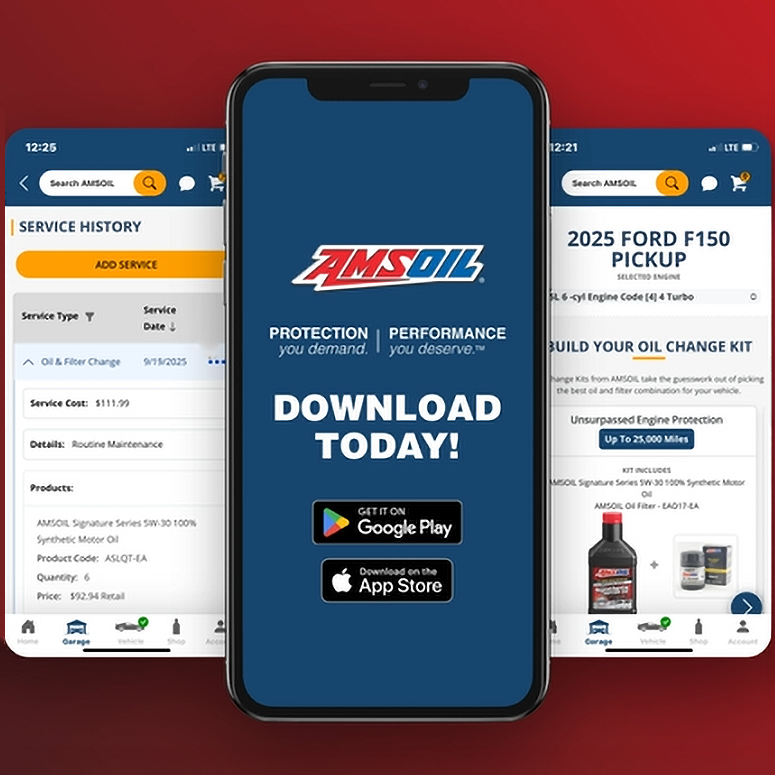
The new AMSOIL mobile app is designed to put the full AMSOIL experience in your hands. Packed with innovative features, the AMSOIL app empowers customers to shop smarter and faster, seamlessly manage vehicle maintenance and stay in the loop on the latest promotions and maintenance tips. It even allows users to receive product recommendations by scanning their license plate or VIN with their phone camera. Available on iOS* and Android.*
New Interactive Commercial Equipment Pages

We developed several new interactive commercial equipment pages on the AMSOIL website (Buy for Business>For Your Commercial Equipment: Learn More>Is the AMSOIL Commercial Program Right for Your Business?) designed to show the full breadth of AMSOIL products available for excavators/off-road contractors, trades/construction contractors, lawn & landscape contractors, regional fleets and agriculture.
Proven Powersports Performance

We tested AMSOIL Synthetic ATV/UTV Dual-Clutch Transmission Fluid in a Can-Am* Maverick R* UTV and AMSOIL INTERCEPTOR® Synthetic 2-Stroke Oil in an Arctic Cat* ZR* 858 R-XC snowmobile. We subjected both vehicles to aggressive trail riding, then pushed them even harder on our dyno. Click the links to see the test results.
Video transcript: Arctic Cat ZR RXC 858 Proof of Performance
We ran AMSOIL Interceptor in an Articat RXC858. Let’s see how it performs. Articat came out with a new engine. It was an 858.
And the first thing we do at AMSOIL when that happens is we want to test it. We want to test the proper product. We want to make sure that it’s performing the way that it’s supposed to. So that means that we get it into our protocol called a proof of performance.
So the sled was ridden in the field to establish this program and we looked at all these different parameters like coolant temp, jack shaft speeds, throttle position, exhaust gas temp. All of these things were looked at to build this profile. The goal of the profile was to put 50 hours or 1,000 miles on this snowmobile on the dyno in controlled conditions. So, we hit that 50 hour mark and we pull the sled out of the dyno and we take apart the engine.
We look at all these key pieces. We’re looking at pistons, power valves, cylinder head, and cylinders. Those are our key areas that we like to look for a two-stroke snowmobile engine. The first thing you’re going to notice about the pistons is that they’re very clean.
You move to the rings and you can see that the ring lands are very free. You’re looking for any type of carbon buildup. None of that was seen here. There is some carbon on the crown of the piston, but that’s to be expected in a two-stroke engine where the oil is consumed as part of the combustion process.
So, you’re looking for excess buildup. We didn’t see any of that. We saw normal amounts of carbon on the top of the piston. You flip the piston over, you look at the under crown.
That’s an indicator of your detergency. The piston is extremely clean, indicating that the oil is doing its job from a detergency standpoint. It’s really important in a two-stroke to keep it clean because you don’t want the rings to jam up. You don’t want carbon deposits.
You don’t want issues like that inside of an engine. So, looking at this piston in general, not only are we protecting, but we’re also keeping it clean. Exactly what you want out of your two-stroke oil. Okay.
Next, you move to the power valve. The power valve in a two-stroke engine is used to get low RPM power out of a two-stroke engine. So, you vary the size of the exhaust port. That allows you to have real good throttle response and torque down low in the RPM band.
And then the valves open and that gives you your traditional two-stroke, high revving real fun factor power out of this engine. And that’s what the power valve does. The problem is is that the power valve lives in the exhaust stream. And as I said earlier, in a two-stroke engine, you’re consuming fuel and oil as part of the combustion process, and it all goes past the power valve.
So your detergency package is critical. So, we look at the power valves for deposits. Do we want them free of deposits? No.
You want them clean and free moving. So, if there’s some deposit on the valve, that’s perfectly okay as long as the valve continues to work and move through its travel as it’s supposed to. In this case, the power valves look great. When we took them out of the snowmobile, they came out freely.
They moved freely inside of their travel, indicating no issues with the detergency package of this oil. The cylinder and cylinder head is where we move next. When you look down the cylinder, you’re looking for that crosshatch pattern that indicates we don’t have any wear. And that is the case here.
You can see the cross-hatch pattern from the machining process of building the cylinder is still visible. If you have an oil that’s not doing its job, what can happen is you see that crosshatch disappears. That shows you that the oil is not doing its job. In the case here, crosshatches are still visible.
Engine is making good compression and good power. When you look at the cylinder heads, you look at the types of deposits. When you’re looking at a cylinder head, can it be wiped away with a rag? That is what you’re looking for because the cylinder head won’t be completely clean.
There’ll always be some type of deposit on it because we’re burning the fuel and the oil. It’s part of the combustion process. In this case, cylinder head looks really good. No abnormal deposits.
There’s no flaking. There’s no hard carbon. Cylinder head is good to go. From there, you start looking at smaller pieces, but still very important pieces like rods, roller cages, wrist pins.
You’re looking for any type of discoloration, any type of heat buildup. In this case, we are not seeing any of that. The roller cages look great. The wrist pins look great.
There’s no sign of any type of gallling or sticking or discoloration that would be considered heat related in those pins. So when you look at the entire package, AMSOIL Interceptor performed exceptionally well. All of your critical areas were protected. All of your critical areas were kept clean, giving you the confidence to use AMSOIL Interceptor in your Articat 858.
Video transcript: Lab Tested, Field Proven: Can Am Maverick R Proof of Performance
Hey, AMSOIL’s launched a dual clutch transmission fluid specific for ATVs and UTVs. We put it in a 24 Can-Am* Maverick R. Let’s see how it did. The Maverick R is really a race car.
For lack of a better term, it is. It is noisy. It’s rough, but it does some things really well. It goes really well on the trail.
It does even better on the racetrack. It is a really nice piece of equipment. So when we take it out in the field and we want to collect our data, we have to use that machine in the way that it’s designed to be used. So we took it out and we ran, you know, data acquisition on the entire machine.
So we were looking at specifically the transmission. We’re looking at shift speeds. We’re looking at clutch performance. We’re looking at temperatures to to to figure out what are the temps that this thing runs at when it’s just normally trail ridden.
What are the temperatures that this machine is run at when it’s pushed in more of a track environment. And we use a combination of, you know, AMSOIL technicians to do this and we also bring in uh pro drivers to do this to make sure that we’re actually using the machine the way that it was designed. So once we get that data collected in the field, what we’ll do is bring it back to AMSOIL. We’ll download all that data and then we’ll build a program to run this machine on our dyno.
One of the key things that goes into that program is how long are we going to leave it on test? And in this case, we ran one service interval for that transmission, which is about 2,000 mi. So, we got it on the dyno and we put about 2,000 mi of variable driving. So, there was combinations of high speed, there was combinations of super high stress, and then we take it out of the dyno, we pull the engine, we pull the transmission, and we’re going to take the transmission apart and look to see how the fluid did.
A dual clutch transmission is a pretty cool device to be honest. It’s got two input shafts. It’s got two different sets of main gears. And when you switch between the gears, basically you’re alternating between those two main shafts.
There’s a couple key things going on inside this. Number one, there’s a lot of gears that are meshing. And when gears mesh, they tend to be really hard on oil. So, you need to have good solid base oil components.
You need to have the proper additive package to make sure that everything is going to work together. The complicator in this is the fact that a dual clutch transmission does have a clutch inside of it. In fact, there’s several. The fluid has to make sure that the clutches are gripping so that when you shift between the gears, you don’t get excessive slip.
You don’t burn the clutches or you don’t wear them out prematurely. So, the fluid needs to be designed engineered very specifically to provide the protection and still provide grip in those clutches. So, the main input shaft of the transmission is really where you begin. And we’re looking for any type of marring, scarring, excess wear, chatter, any of those things that can happen when you’ve got a fluid that may not be up to par, may not be doing its job.
We saw none of those indications. So, all of the gears looked great. You can see that the gear is doing its job. What that means is you can see some notice where the gears are actually meshing together.
That’s perfectly normal. That’s what we’re looking for. From there, you start looking at the clutches. These clutches are designed to slip a certain amount.
They’re small. They’re thin. There’s not a lot of wear surface, so you don’t want to damage them. If they slip too much, they get burned.
What we found in the clutches is they look great. There’s no sign of any marring. There’s no sign of any excess heat. There’s no warping on the pressure plates.
The clutch discs look excellent. These clutches are all housed in a clutch drum. So, you want to make sure that you’re looking at the outside of the drum and how it’s meshing with the gears that apply to the transmission. All of those look great.
There’s no warpage. There’s no sign of excess heat. All of the gear teeth show that they are meshing properly and that there’s no wear occurring. There’s no corrosion.
There’s there’s nothing occurring there that would indicate a problem with the fluid. When you look at the clutch hubs in the transmission, there’s two of them. All of the power that the engine generates has to flow through those clutch hubs. So, the gears look great.
There’s no sign of any overheating. There’s no chip. There’s no broken teeth. And that’s a good thing.
The scavenage pump on the on this type of transmission does a really important job. It maintains the pressure. So, it’s it’s allowing you to shift between the gears. It’s allowing the clutches to engage and disengage.
The pump in this situation looks great. There’s no sign of any excess heat, which is what you’re really looking at inside this pump, indicating that the transmission was still, you know, getting all the right pressure that it needed to do its job. There’s two gear sets inside this transmission, it being a dual clutch and all. And these two sets of gears are what’s actually making your different gear ratios for first gear through 7th gear.
Anytime you look at a gear, you’re looking at specifically the wear pattern that’s forming on the tooth to make sure that it’s the pattern that you’re looking for and not anything that would indicate excess wear, which would be chipping or marring or what would we would call galling. A lot of times that’s an indicator of loss of viscosity, poor additive combinations. We saw none of that in this situation. The gears look brand new.
So when you look at the center shaft that actually joins these two together, there’s an intermediate there’s a intermediate shaft that’s in between the two gear sets. And again, all the power is being transmitted through that. So the stress level on the center shaft is high. These look beautiful.
So the last stop on the way to the tires is to get through the final drive. When you look at the final drive gears, there’s two of them. There’s a high and there’s a low. And these are what’s taking all of the different gear ratios.
Regardless of what gear you’re in, all of the power has to travel through these final gears before it can get to the wheels. That’s the last stop. Both of these gears look like new. Once we get through all of the physical examination and the photo session for the transmission, we move into the chemical analysis of the oil.
So throughout testing, we’re actually sampling the oils. And in this case, we did it at about 300 mile intervals. As we look at the oil analysis, the first thing that you’re going to notice is the percent viscosity change. You want a low number there.
That means that you want the oil to stay at the viscosity that we put it in because viscosity equals film strength. Film strength equals protection. In the case of AMSOIL’s DCT fluid, we’re looking at singledigit shear, which is really, really good. That means that we are using very robust base oils with proper additives.
All of it being very high quality, which means you’ve got a very robust backbone protecting that transmission. So, we saw very little viscosity change. The next place that you look are wear metals. That’s your indicator that you’re wearing out gears or you’re wearing out different parts of the transmission.
In this case, the metal looks great. The iron is very low. The aluminum is very, very, very low. All of these numbers are to be expected, right?
So there’s some in there because we have gears touching together. Your number won’t be zero, right? When gears work, they will make some wear metal. So inside of a gearbox, you always expect something.
So based on these results, after 2,000 mi of torture on the dyno, all kinds of different conditions, AMSOIL has proven you can trust us with your dual clutch transmission. We’ll see you on the trail.
New AMSOIL Synthetic ATV/UTV Dual-Clutch Transmission Fluid

New AMSOIL Synthetic ATV/UTV Dual-Clutch Transmission Fluid is engineered to ensure stable synchronizer engagement that prevents shudder, producing consistently fast, smooth shifting and helping extend the life of dual-clutch transmissions. We tested and proved its superior anti-wear protection in the new Can-Am Maverick R dual-clutch transmission under heavily loaded, high-temperature operation, making it the first, best and only alternative to the manufacturer-branded DCT fluid.
New Oil Analyzers All-In-One Kit

The new Oil Analyzers All-In-One Oil Analysis Kit combines everything needed to pull used oil samples in a convenient all-in-one kit. Kit includes a vacuum sample pump, 25 feet of sample tubing, three sample bottles and three oil-analysis tests (same test package included with the OAI Full-Service Kits). This is a great option for first-time Oil Analyzers customers who are new to oil analysis, or existing customers who haven’t purchased the vacuum pump or sample tubing. Three oil-analysis tests provide the option to test multiple components from the same vehicle (engine, differential, transmission) or test the same component three times for better trending of wear patterns. This kit can be used for all drivetrain fluids, but cannot be used for coolant. NOTE: The All-In-One Oil Analysis Kit is not part of the Commercial Oil Analysis Program.
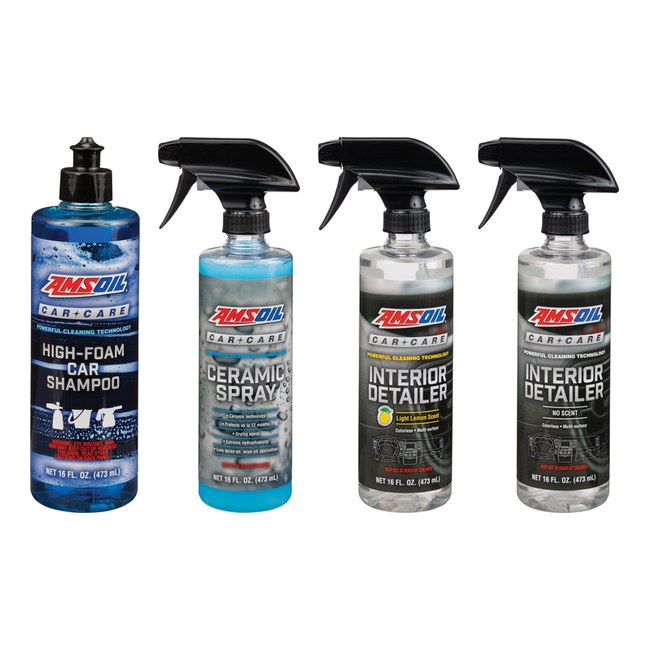
AMSOIL Car Care: Seven New Products

The AMSOIL Car Care line expanded with seven new premium products and accessories: AMSOIL Quick Detailer, AMSOIL Wheel + Tire Cleaner, AMSOIL Tire + Trim Protectant, AMSOIL Foam Cannon, AMSOIL Microfiber Detailing Towel, AMSOIL Drying Towel and AMSOIL Microfiber Wash Mitt.
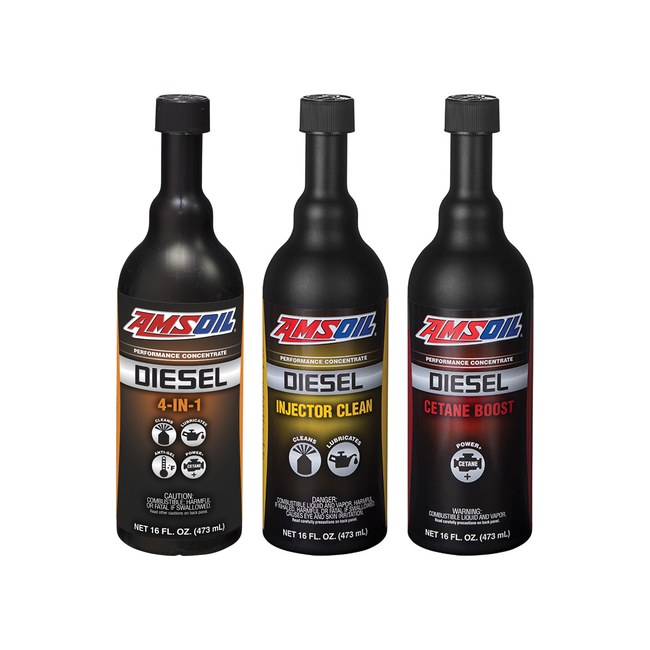
New Name for AMSOIL Diesel All-In-One

AMSOIL Diesel All-In-One is now AMSOIL Diesel 4-IN-1. AMSOIL Diesel 4-IN-1 better describes what customers receive when they use this product – four distinct benefits.
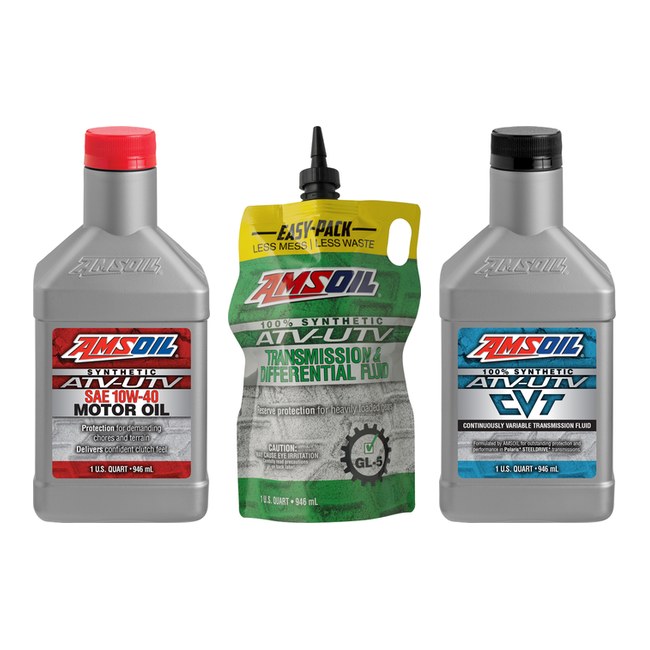
New AMSOIL 100% Synthetic ATV/UTV Continuously Variable Transmission Fluid

New AMSOIL 100% Synthetic ATV/UTV Continuously Variable Transmission Fluid is engineered to ensure smooth, consistent driving, prevent shudder and help extend CVT life. We’ve tested and proven its superior anti-wear protection in the new Polaris* Ranger* XD 1500 under heavily loaded, high-temperature operation, making it the first, best and only alternative to the manufacturer-branded CVT fluid.
AMSOIL Synthetic Greases Produced by Aerospace Lubricants Enter the Market

Several AMSOIL grease products produced by Aerospace Lubricants in Columbus, Ohio have begun rolling out. The new formulations deliver enhanced protection and performance, providing equal or superior benefits compared to previous formulations – while maintaining full compatibility.
AMSOIL 100% Synthetic High-Viscosity Lithium Complex Grease
AMSOIL X-Treme 100% Synthetic Food-Grade Grease
AMSOIL NLGI #2 100% Synthetic Polymeric Truck, Chassis and Equipment Grease
AMSOIL NLGI #2 100% Synthetic Polymeric Off-Road Grease
AMSOIL 100% Synthetic Multi-Purpose Grease
AMSOIL 100% Synthetic Water-Resistant Grease
AMSOIL NLGI #1 100% Synthetic Polymeric Off-Road Grease
AMSOIL NLGI #1 100% Synthetic Polymeric Truck, Chassis and Equipment Grease
Video transcript: Engineered for What you Drive and How you Drive
Whatever you drive. However you drive. AMSOIL specially engineers lubricants to maximize power, performance, and protection in your vehicles so you can work hard and play hard with confidence. Order online at amsoil.com
Comments
Joel Youngman is Lead Technical Writer at AMSOIL and associate editor of AMSOIL Magazine. He develops and edits content covering lubricant technology, product testing, vehicle systems, maintenance practices and equipment applications. Youngman also coordinates magazine articles and Tech Talk columns, working with engineers, product specialists and Communications personnel to maintain technical accuracy, editorial consistency and clear customer communication.
Share: