


The days are getting shorter and the temps are getting cooler, which can only mean one thing – deer hunting season is here.
You know what I’m talking about. It’s hunting season and many of you are ramping up. I know I am. I’ve already been through all my gear to ensure it’s in tip-top shape. Any malfunction is unacceptable. If it’s questionable, it gets replaced. There is a price to bagging a 30-pointer, and for me I’d empty my bank account.
This post is for all you deer hunting enthusiasts gearing up to go after the elusive whitetail deer.
Before I continue, I must publicly pronounce that I’m no professional hunter. I’m an everyday guy just like you who loves to get out in the woods in search of the biggest buck I can find. So my methods are my methods, which may not be your methods. Everyone is different. We may all hunt differently. And, in the end, some of us are successful and some not. This may be due to skill or luck. My recommendations are based on personal success and not the success or methods of others.

1) Sight in your weapon and practice shooting
Most often, I’m a northern-Minnesota deer hunter. If you’ve been here before, you know a long-distance shot is 50 yards. The brush is so thick you can’t see much farther than that. But, no matter the distance of the shot, make sure your rifle or bow is sighted in and capable of shooting straight.
Spend some time at the range. Practice makes perfect. As a friend of mine who once missed a great big elk in Colorado can attest, knowing your weapon, knowing your distance and knowing how to use your weapon at that distance are of utmost importance. If you don’t, you’ll go home empty-handed and frustrated at yourself for not practicing more.
To this day I give my friend grief for his mistake. Start with the normal distance at which you shoot and practice. Then reach out to a distance maybe 50-100 yards farther. It doesn’t hurt to be able to successfully shoot farther than your normal distance.
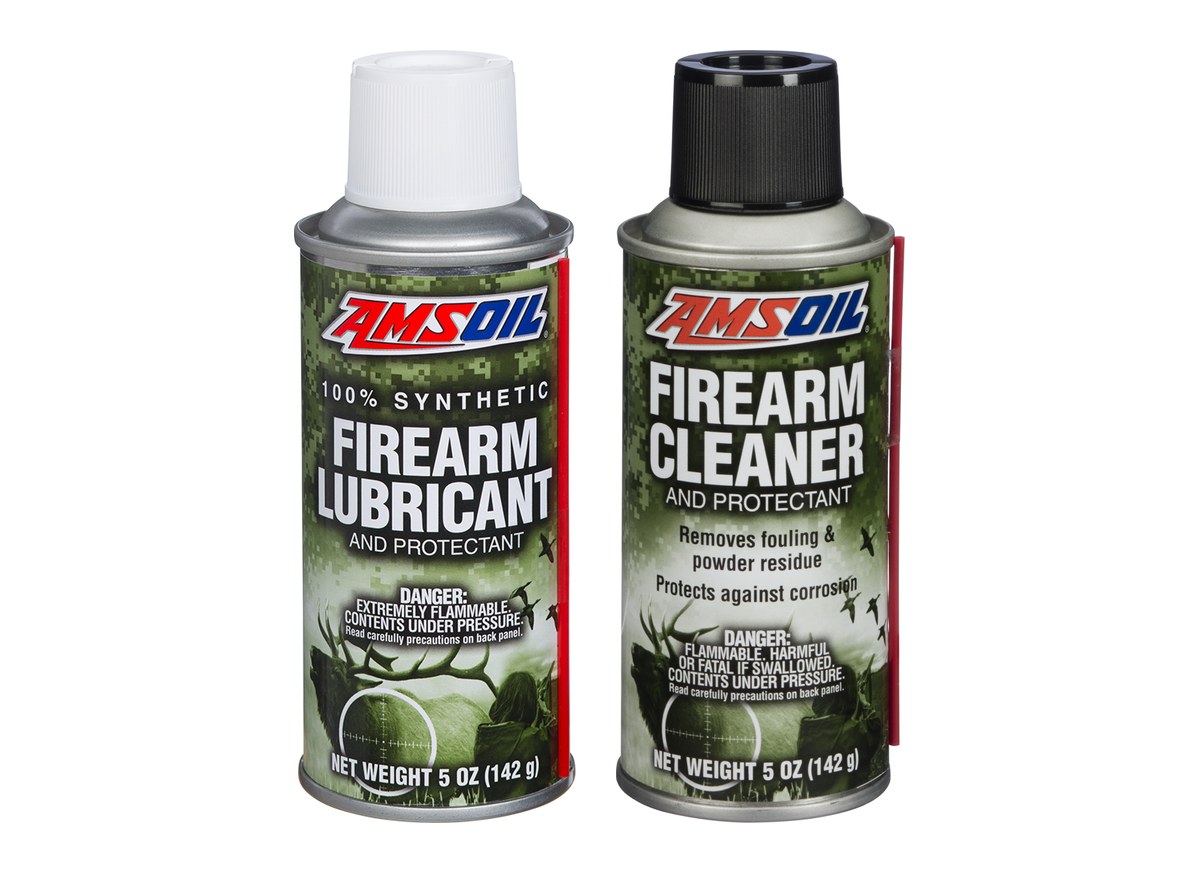
While you’re at it, make sure you clean and lubricate your firearm so it works properly when that big deer finally approaches. AMSOIL Firearm Cleaner and Protectant and AMSOIL 100% Synthetic Firearm Lubricant and Protectant are perfect for the job.

Buy AMSOIL Firearms Lubricants
2) Scout and choose a good hunting spot
Tip number two is almost as important as being able to shoot. It’s knowing where to hunt. This opens up a conversation about private land vs. public land, high ground vs. swamps, ground blinds vs. tree stands and on and on.
Knowing how to hunt a given area takes planning and practice. Get out and scout the forest floor for tracks and sign. Look for trails, bedding areas and food sources. Outside of a buck in extreme rut, deer are pretty simple animals that follow either man-made or natural trails, need food and look for places of advantage when they bed.

Video transcript: A Company of Enthusiasts: We’re Into Hunting
I’m Mark Nyholm, Product Manager for Heavy-Duty, and I’m into hunting. [ Music ] I’ve been hunting since a little kid. I was probably ten when my dad first introduced me to a pellet gun in the backyard. And ever since then he would take me with him typically grouse hunting.
In the fall, that was the family outing. We’d take the camper and go up north and we’d chase birds around. Shooting winged birds for me is the best because it’s the toughest challenge. You’ll never get more than a millisecond notice that there’s going to be a bird in front of you.
And all of a sudden it flushes. Your skills are now at test. And, if you’re good, you’re going to get it. I used to hunt alone, and then about 5 1/2 years ago I invested in a companion.
That’s my dog Tucker. I got Tucker as a 10-week-old puppy, and I wanted the challenge of training him myself. You can take a hunting dog and send him off to somebody else that’s a professional and they come back preprogrammed, and they’re a good hunting dog. That’s not what I wanted for myself.
I wanted to put in the effort to train him to do the hunting like the way I want to hunt. So I spent countless hours at lunch from work and then after work every day for at least two hours a day training him to be a good hunting dog. He always runs around with his little electronic collar, more so that I can tell where he is sometimes if the grass is real tall or the brush is real thick. You can beep him so you can hear where he is.
He’s been the ultimate in hunting companions. Today we’re sitting in the Proctor Gun Club. This is the place that I go in the off-season from hunting to sharpen my skills. Whether you’re shooting clays here at the club or whether you’re out hunting, if a gun doesn’t work, you’re going to be pretty disappointed.
I’m the Product Manager for heavy-duty at AMSOIL. I’m in product development. And we pushed a project at AMSOIL in order to develop a gun cleaner and gun lubricant. We spent lots of time both in the lab and at the gun range shooting different guns to ensure that the product that we came up with was the best that you could find.
Ever since I got my dog Tucker, the hunting experience has been completely different. When the dog is working in front of you and gets really excited because there’s birds in the air and starts chasing through the grass and when he pushes the bird up and you shoot that one, the bird drops and the dog goes chasing through the grass to try to find it. And then he brings the bird back to you, and the dog is as happy as he could ever be. So for me the excitement now is everything about the dog.
I’m Mark Nyholm, Product Manager for Heavy-Duty, and I’m into hunting.
If you can find a place on their route, your chances of success increase greatly. A game camera is a great tool. Buy one, find a trail in the woods and strap it to a nearby tree to see if the trail is active.
Pay attention to when deer are using the trail. If it’s at midnight, that’s not such a good place to sit and wait. But, if they frequently use the trail near sunrise, that’s perfect. Get their early and wait. You just might get a chance.
3) Blend in with your surroundings
If you haven’t figured it out by now, the whitetail has the advantage in the woods. They can see, smell and hear much better than humans. That’s strike one for us hunters.
Deer also live in the woods 365 days a year. They know it well and how to navigate their territory. They also know change, so when something happens, they go on alert. That is strike two for us.
Now, before we strike out, we hunters have the element of surprise. We think differently than our prey and can outsmart them. So, whether you hunt on the ground or in a tree, make sure you blend into your surroundings so you don’t stick out visually.
Camo patterns you ask? We aren’t going there. Talk about a topic about which everyone has an opinion. Put on your hunting cloths and imagine yourself deer hunting in your typical surroundings. If you think you stand out, imagine what the deer thinks.
4) Be aware of your scent scaring away game
Also, make sure you don’t stink like a trash dump. Deer can smell – and well. Wash your cloths in non-scented detergent. Shower with non-stinky soap. And for those of you who can’t go anywhere without cologne, leave it at home. Human scent in the woods can ruin a deer hunting trip. The wind only magnifies our presence and worsens the situation.
Again, I’m sure all of us can think of a time when all or none of this applied. It’s called life, where nothing is written in stone. If you try any of these tactics and they work, great news. If you try and are unsuccessful, don’t come running to me with complaints. Better luck next year. It’s called “hunting” for a reason. If we were all successful every year it would be called “gathering” or “harvesting.” And, since I’m not a professional hunter, I consider myself more lucky than skilled.
Best of luck this season. Be safe.