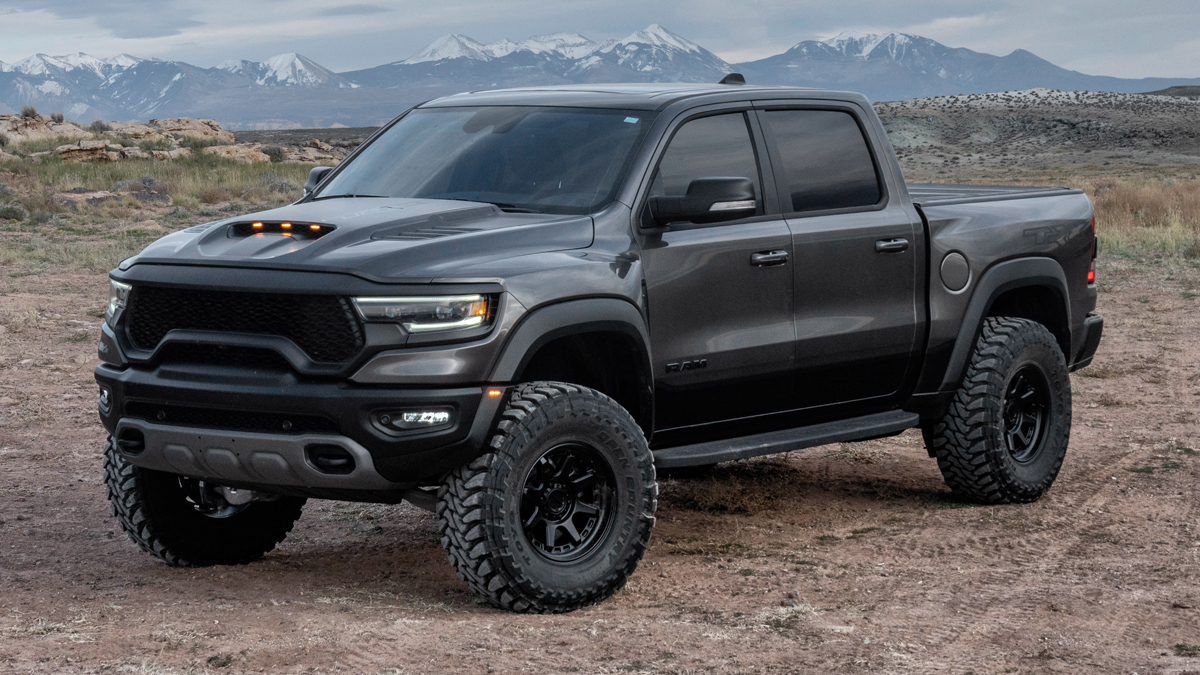

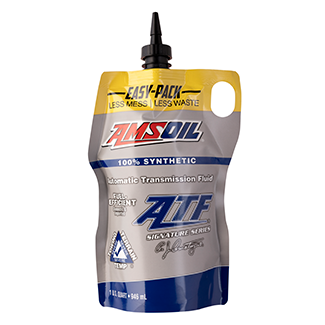
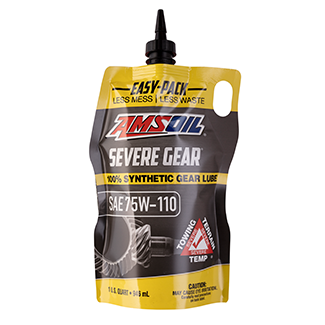

Whether navigating snow-covered roads or tackling rugged trails, four-wheel-drive (4WD) and all-wheel-drive (AWD) vehicles rely on a critical component to deliver power where it’s needed most. That mechanical hero is the transfer case, and protecting it is essential for your vehicle’s long-term performance and longevity. We explore the fundamentals of the transfer case below, from its core function and different types to its operational modes and lubricant requirements.
What is it?
drive mode distributes engine power to all four wheels, roughly doubling traction for improved acceleration and maintaining movement through low-grip conditions like mud, snow or sand. The transfer case is used in both four-wheel and all-wheel-drive systems to divide the torque output from the transmission between the front and rear axles.
directly to the rear of the transmission and use a system of gears or chains to power output shafts that connect the vehicle’s front and rear drive axles. In 4WD vehicles, putting the vehicle into four-high or four-low typically sends power to the front axle. AWD vehicles are commonly front-wheel drives, so the transfer case usually sends power to the rear wheels when engaged.
A transfer case can be gear-driven or chain-driven. Gear-driven designs are more durable and are usually used on large truck applications. Chain-driven transfer cases are lighter and operate more quietly; they are usually installed on compact and full-size trucks and SUVs.
Automatic transfer cases
Transfer cases can be operated with a selector lever or electronically controlled with a push button or dial on the dashboard. Both styles allow the operator to choose between two-wheel and four-wheel-drive modes. Some transfer cases also include high or low four-wheel-drive gear ratios (4WH or 4WL).
Full-time transfer-case units remain in four-wheel drive until the vehicle reaches a predetermined cruising speed, such as 30 mph (48 kph), at which point they change to two-wheel drive for safer handling.
Vehicles with a 2WD/4WD selector lever operate differently from those equipped with a full-time transfer-case unit. In two-wheel-high (2H) mode, only the rear axle is driven. During the four-wheel-high (4H) mode, the transfer case divides torque to both the front and rear drive axles and allows the axles to rotate at different speeds.
In the low-gear mode (2L/4L), the transfer case engages a second set of reduction gears that lock the axles together, forcing them to rotate at the same speed. This mode, while not ideal for driving on a dry road, is well-suited for off-road conditions with steep grades, uneven terrain and low traction conditions.
Comments
Brad Nelson is a staff writer for AMSOIL. Outside of work he enjoys family adventures, wilderness exploration and riding/wrenching on vintage metric motorcycles.
Share: