


Most motorists are aware of the important role motor oil plays in keeping their vehicles running smoothly and efficiently, but in order for it to do its job, proper oil pressure must be maintained. If it’s too low, it can affect your vehicle’s performance and lead to engine damage.
Video transcript: Low Oil Pressure Symptoms and Causes
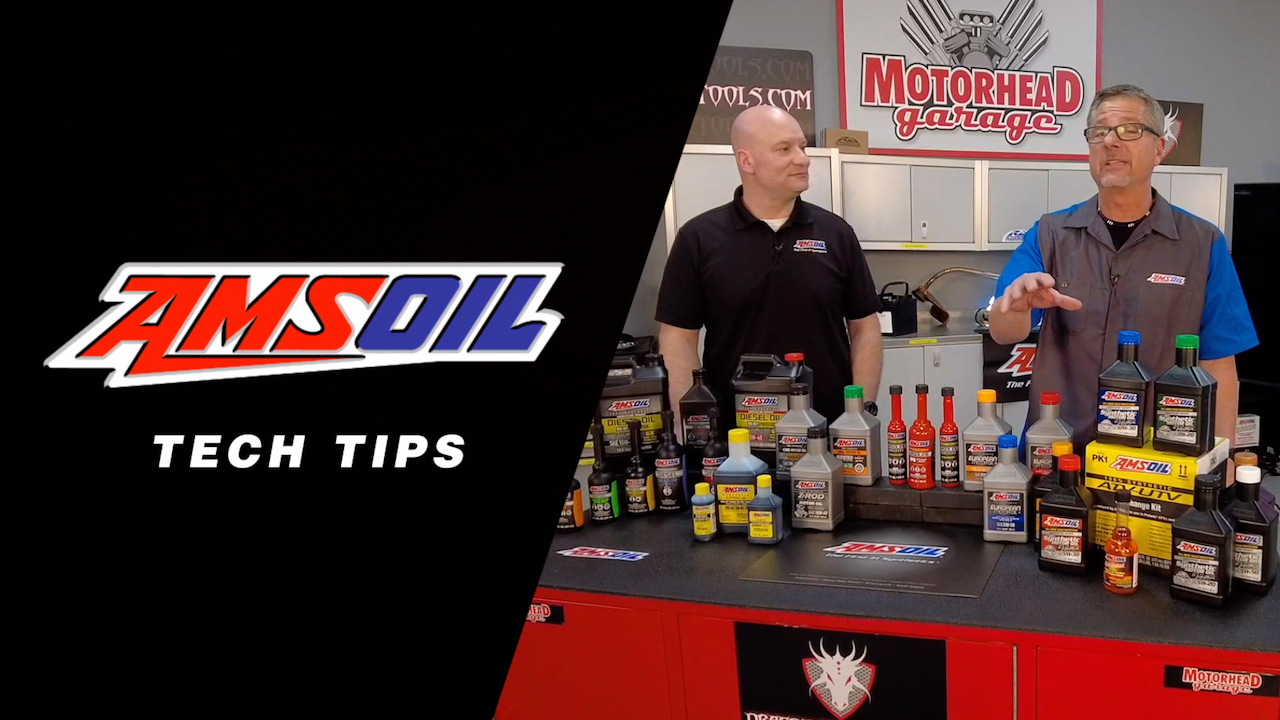
Featuring John Gardner, ASE Master Certified technician, automotive technology instructor and host of Motorhead Garage, with AMSOIL Director of Product Marketing Len Groom.
John Gardner: Well, there’s something you never wanna see when you’re driving along. Your oil pressure dropped to zero. It might just be an oil pressure sending unit or you may have a real problem. Welcome to this AMSOIL tech tip.
It’s all about the oil pressure. You can see right here is an electrical gauge. It uses electrical signals, so that could fail and you may have oil pressure. So what you wanna do is you wanna run a manual oil pressure test.
Just look at your manufacturer specification, find an oil plug in there, pull out your sending unit, put your gauge in there, fire up the vehicle, and read your oil pressure. What should your oil pressure be? Well, once again, you’re following your manufacturer specifications. Ours is fine there.
But, Len, that’s not the case all the time. You got these oil pressures and you got these technologies, man, like variable valve timing. Oil drives these wipers to the left or to the right. Oil has to go through these tiny little passages to get there.
Len, all this technology has to function and heat plays an important part when it comes to oil pressure.
Len Groom: That’s correct. Heat has a direct relationship with oil pressure. As the heat goes up, the pressure can come down and there’s a number of things that can affect that. Just the temperature outside can have an effect on that.
What you’re doing to the vehicle can have effect on that. If you’re towing, you have the air conditioning on. Different environmental factors will have an influence on that. My point is, we build the oil to be able to deal with all of that.
So we have the proper base oils in there, they’re very robust, very strong so that they don’t fall apart under heat and you see that oil pressure loss.
John Gardner: Well, you think about that, I had a Dodge* and the manufacturer called for three to five at idle oil pressure, not a good thing.
Len Groom: No, it’s not a good thing. Right. You want to make sure that you’re built properly, providing that protection.
John Gardner: You’ll end up with zero oil pressure, Len. I know you never wanna see this, and I don’t either. So if you don’t wanna see this, make sure you go to AMSOIL.com. You can get all these products and make sure your car is gonna run-in tip top shape.
Low oil pressure symptoms
How do you know if your vehicle’s oil pressure is low? Look for any of these warning signs.

1) Oil warning light/oil-pressure gauge
When the vehicle’s oil pressure drops to a certain level, a light on the dashboard illuminates to warn the driver of a problem.
2) Engine noise
Too little oil in the crankcase may fail to provide adequate lubrication to all critical components, leading to clunking, grinding, knocking, ticking or whining sounds.
3) Burning-oil smell
This usually indicates oil is leaking and dripping onto hot metal surfaces.
4) Decreased engine performance
Low oil pressure decreases the oil’s ability to reduce friction and provide proper lubrication, causing the engine to work harder and resulting in premature wear and failure.

5) Engine overheating
The oil’s decreased ability to reduce friction also leads to increased heat, which can lead to overheating. Engine overheating may also indicate a head gasket leaking oil into the coolant, reducing its ability to transfer heat through the cooling system.
Causes and solutions
A number of factors can cause low oil pressure.
Low oil level
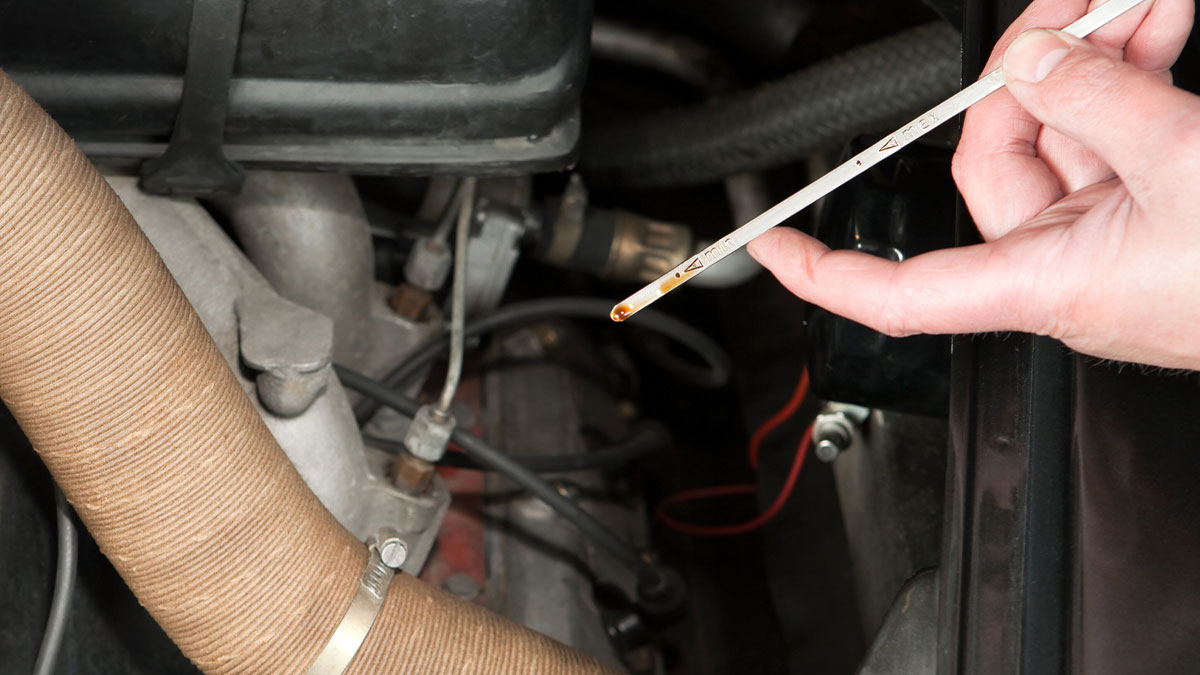
Low oil level is the most common cause of low pressure; it’s also the easiest to fix. Oil changes are important, and between oil changes, it’s equally important to regularly check your motor oil level and top it off as necessary. It’s especially important to be vigilant with older, higher-mileage vehicles, which tend to be prone to leaks.
Wrong oil viscosity
Vehicle manufacturers recommend specific motor oil viscosities in the owner’s manual, and it’s best to stick with this recommendation. Using a lower viscosity than recommended produces less resistance to flow, and the vehicle’s pressure sensor could interpret it as low oil pressure. On the other hand, using a higher viscosity than recommended produces more resistance to flow, which could result in low oil pressure and inadequate engine lubrication. Fuel dilution can also cause issues.
Dirt, debris or sludge in the pickup pipe
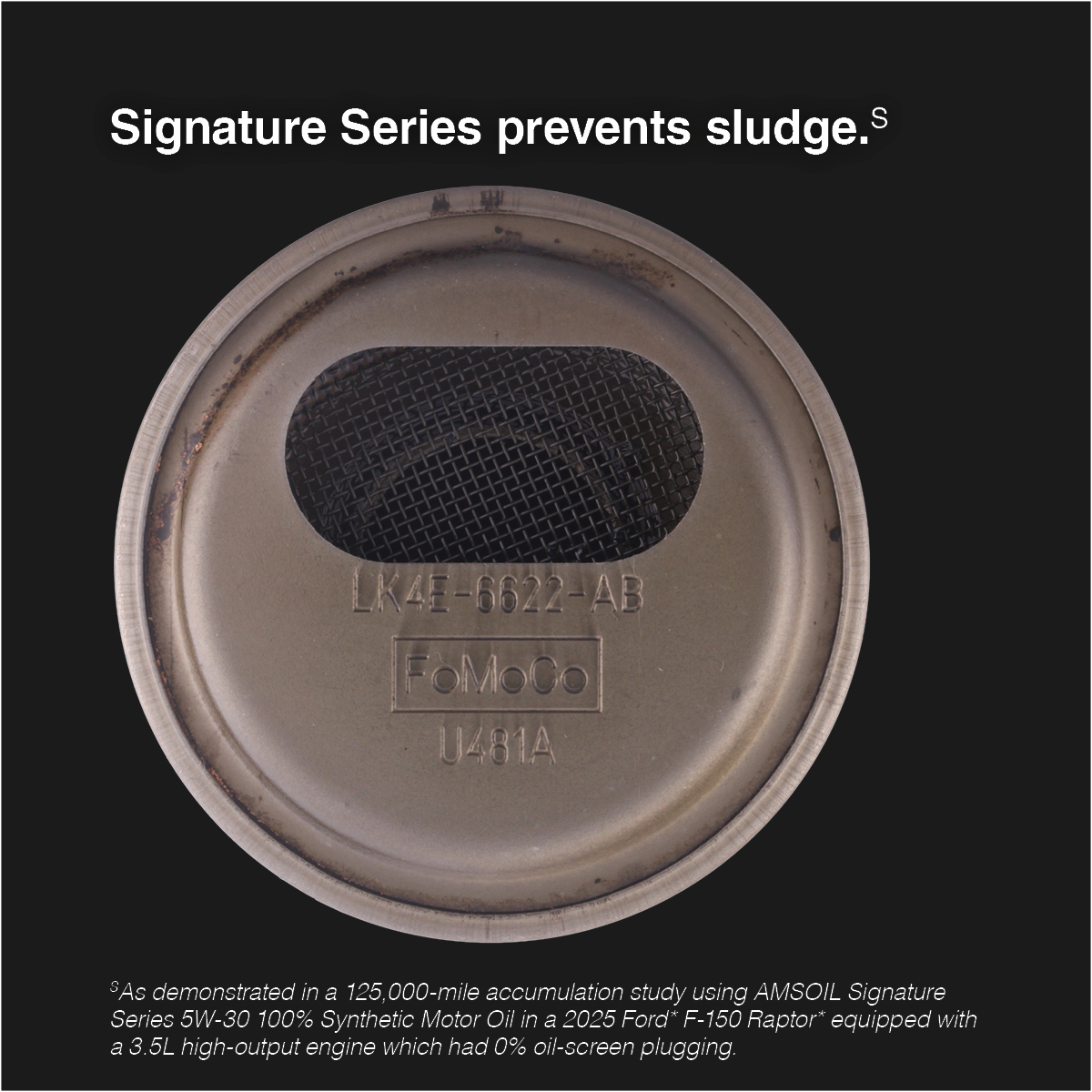
Another possible cause is the accumulation of dirt, debris or sludge in the pickup pipe from the oil pan to the oil pump. If it prevents enough oil from going up the pipe, it can cause low pressure. AMSOIL Signature Series Synthetic Motor Oil does a great job fighting sludge to keep the oil pickup tube screen clean and the oil flowing properly.
Damaged oil pump
Oil-pump failure can result from incorrect installation, oil contamination, poor oil maintenance or running the engine with an inadequate oil level. Oil pumps can also wear out with time and usage. If a problem with the oil pump is discovered, it’s important to replace it.
Internal oil leak
Leaking in the vehicle’s oil passages can also lead to low pressure. Internal oil leaks can be caused by a myriad of factors, including worn piston rings and valve seals or PCV valve failure. While external oil leaks can be relatively easy to fix, internal oil leaks often require the assistance of a professional mechanic.
Engine wear
Friction and heat subject engine components to wear. When camshaft and crankshaft bearings wear down with time and use, the “holes” through which they insert can grow wider, allowing the oil to flow easier and lowering its pressure.
Oil-pressure gauge problem
The gauge itself can also be the source of the problem by providing a false reading. Like any other engine part, the gauge can eventually fail and need to be replaced.

Oil-filter problem
An oil filter obstruction or blockage can also cause oil pressure to suffer. Oil filters include pressure relief valves. If this valve is damaged, oil will easily pass right through, reducing pressure. It may go without saying, but it is important to also change the oil filter with each oil change.
These issues should be addressed sooner rather than later. If ignored for too long, they can lead to serious and expensive engine problems.


Comments
Brad Nelson is an AMSOIL Technical Writer II who develops content about lubricant technology, product performance and vehicle maintenance. He works with engineers and product specialists to translate testing, application requirements and approved performance claims into clear customer guidance. Nelson’s work includes AMSOIL Blog articles, AMSOIL Magazine features and technical explanations concerning motor oils, gear lubricants, vehicle systems and maintenance practices.
Share: