Site icon AMSOIL Blog

Neglected Maintenance: Brake Fluid

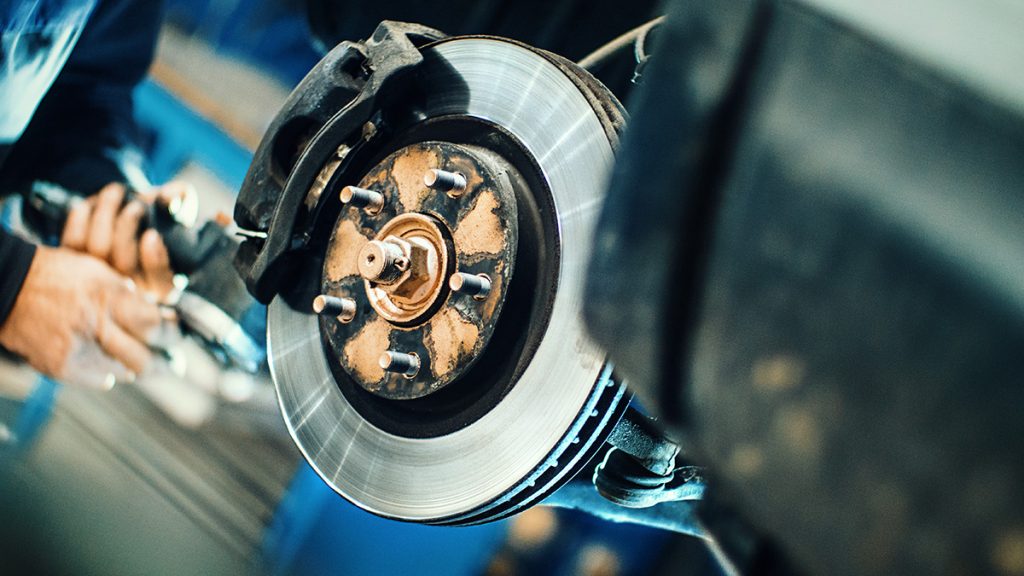
A mechanic works on a vehicle's brake system.

Most drivers don’t think about brake fluid until there’s a problem. They wait for the telltale grinding from worn pads, then replace the pads. But they are actually playing a dangerous game — consistent brake-fluid maintenance is essential for firm, dependable braking.

Ignoring brake-fluid service can lead to diminished braking performance and corrosion of critical components. Brake fluid doesn’t last forever, and it can go bad over time. Even though it plays a vital role in both safety and performance, it remains one of the most commonly overlooked maintenance items on a vehicle.

Brake Fluid Breaks Down

Brake fluid is hygroscopic, meaning it attracts and absorbs moisture. Over time, water enters the system through seals, hoses and even the reservoir during routine opening. As moisture builds, the fluid’s boiling point drops. That’s where trouble starts: If the fluid boils, it can lead to brake fade. Lower boiling points increase the risk of brake fade and can leave you with a soft, spongy pedal when you need solid braking the most.

Dry vs. Wet Boiling Points

When brake fluid reaches its boiling point during operation, vapor forms in the brake lines, making it compressible. This produces a soft or spongy brake pedal that can undermine brake performance.

Since brake fluid is hygroscopic, required industry testing simulates real-world field conditions. The wet and dry boiling points are tested to help illuminate the quality of a brake fluid.

Dry equilibrium reflux boiling point (ERBP): Boiling point of the fresh fluid right out of the bottle before being contaminated by moisture.

Wet equilibrium reflux boiling point (WERBP): Boiling point of fluid after it has absorbed moisture from its surroundings (3.7% water contamination).

Moisture Contamination

Brake fade from boiling fluid is an immediate safety concern, but moisture contamination causes deeper, long-term issues as well. Water inside the system accelerates corrosion of internal metal components, including calipers, master cylinders and ABS modules. Over time, this can lead to rust buildup, seal damage, leaks and costly repairs that could have been avoided with routine service.


AMSOIL
SHOP BY VEHICLE TOOL

  • Find products for your vehicle: passenger cars and light trucks, motorcycles, ATV/UTVs, snowmobiles, marine, heavy duty and more.
  • Vintage vehicle lookup guide.
  • Filter lookup and cross-reference guides.
Check out the guides

AMSOIL DOT 3 & 4 Synthetic Brake Fluid

The unique chemistry behind AMSOIL synthetic brake fluids increases boiling points well beyond DOT standards, even when contaminated with 3.7% water. AMSOIL brake fluids maintain a stable viscosity over a wide temperature range and flow easily at the high pressures generated in modern automotive brake systems to deliver solid, reliable braking. A nitrogen blanket is added to each bottle during manufacturing to purge moisture and ensure the maximum level of performance.

AMSOIL DOT 3 & 4 Synthetic Brake Fluid (BFLV) is overbuilt for extra safety and performance. Its wet boiling point of 368°F (187°C) far exceeds the minimum requirements of 284°F (140°C) for DOT 3 fluid and 311°F (155°C) for DOT 4 fluid.

In addition, its low-viscosity formula ensures excellent responsiveness in modern ABS and traction-control systems. AMSOIL DOT 3 & 4 Synthetic Brake Fluid maintains low compressibility under severe heat, delivering a steady and firm pedal feel. It protects calipers, lines and seals, helping extend the life of key brake-system components.

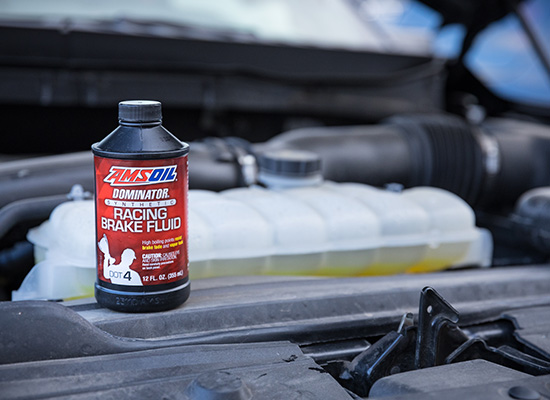
AMSOIL DOMINATOR® DOT 4 Synthetic Racing Brake Fluid

AMSOIL DOMINATOR DOT 4 Synthetic Racing Brake Fluid (BFR) provides racers with superior high-temperature performance, helping prevent brake fade and vapor lock. High boiling points of 580°F/304°C (dry) and 399°F/204°C (wet) minimize vapor formation.

When to Change Brake Fluid

Brake-fluid service intervals can vary depending on driving conditions, vehicle type and how the vehicle is used. As a general rule, change brake fluid every two years for maximum performance. When hauling heavy loads, engaging in high-performance driving or regularly navigating long descents, replacing brake fluid annually is recommended to maintain peak performance. For racing applications, change AMSOIL DOMINATOR DOT 4 Synthetic Racing Brake Fluid once a year for maximum performance.

Maintain Safety and Performance

It’s easy to delay brake-fluid service, but putting it off allows moisture to accumulate, encourages corrosion and ultimately weakens braking performance. Brake fluid isn’t just another maintenance item — it’s a critical part of a vehicle’s safety system. With the right fluid and consistent maintenance, you can keep your brake system sharp and responsive for when it matters most.