


If you are new to snow bikes, welcome to the club! A snow bike is technically a dual-sport or dirt bike that has had the rear end converted to a track and the front end to a ski, so that it can be ridden in snow, which is a severe challenge for most motor oils.

Year-Round Fun
Paul Novack has been involved with dirt-bike-powered snow bikes since 2016. Over the last few years, he’s converted more than a dozen others, and their bikes, to a one-ski life. Snow bikes typically start life as a big-bore four-stroke dirt bike.

Get Converted
To convert a large dirt bike for winter use, Paul starts with a Timbersled* snow bike kit, then installs an aftermarket thermostat assembly and engine blanket to increase the engine temperature, which helps reduce condensation and keeps the motor from over-fueling due to low ambient temperatures. Electric heated grips require a lot of electricity to operate, which dirt bikes lack, so the handlebars are liquid heated by running the engine’s high-temperature coolant through them.

Extreme Stress
Paul adds that the choice of engine oil is very crucial, as a lower viscosity is needed to help the engine turn over in cold conditions. The engines are also stressed well beyond the manufacturers original design, and frequently pushed to their limits for extended periods of time climbing mountains and pushing the bike through heavy snow. The snow bike kit also adds substantial weight that stresses the engine even further in such extreme conditions.

Watch for Wear
“Dirt bikes were never intended to be ridden under the conditions we put them through, with the added strain of a heavy track assembly” Paul said. “I ran a 500cc KTM* for a couple years and when it was time to do a top end rebuild, I installed a 570 big-bore kit, then put another 120 hours of hard use on before rebuilding it. When the piston came out it showed almost no wear at all, due to superior lubrication.”

Push it Harder
After that success, Paul also built a 450cc bike with an aftermarket ECU that increases rpm, fueling and timing to cope with the harsh conditions, and a Rekluse* automatic clutch that freewheels at low rpm, increasing friction and the associated risk of oil breakdown.

An Ounce of Prevention
Due to the extreme conditions and elevated exposure to moisture, heat and friction, Paul recommends snow bike riders change the oil and filter after only a few rides, totaling about 10 hours of operation. Paul spares no expense on engine protection and repeatedly emphasized the importance of high-quality lubricants that don’t break down under extreme conditions.

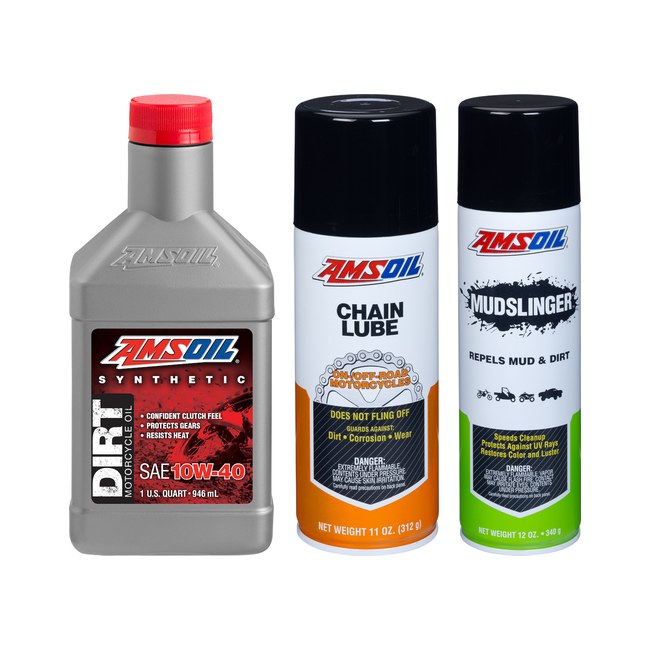
Paul recommends AMSOIL Formula 4-Stroke® Powersports 0W-40 Synthetic Motor Oil to protect engines under extreme operation and in tough environments, adding that it is the preferred oil for many snow bike enthusiasts.
Protect your powersports engines during extreme exposure with AMSOIL products.
Photos: Paul Novack
Video transcript: Grizzly Lodge Rental Torture Test
This sled is part of a cooperative effort between AMSOIL and Grizzly Lodge. We wanted to torture a snowmobile, and there’s no better way to do that than embed it in a rental fleet and put it in the mountains. A day in the life of a rental sled here specifically, they put on a pile of trail miles going down to our staging area which varies from 20 to 30 kilometers away to pick clients up. Clients are strapping their big bags on the back of these things, hauling their bags up here back up the trail so they’re running hot sometimes.
Next morning it’s up the mountain and into the mountains on the pin all the time. People like to ride hard, and they seem to like to ride rental sleds even harder. We also use them to tow each other up and down the hill sometimes when we have to deliver a bunch of rental sleds to our staging area. We don’t have the space to keep them all in a heated shop, so they all live outside.
We have often minus 35 in the wintertime. That means a lot of cold starts so lubrication is extremely important. If the sled fails, that’s something we don’t want to see. If it fails on the trail or if it fails in the mountain, either way it’s inconveniencing the customer.
And, basically, we need to find a way to get another sled up to them or they need to find a way to get back down to us, and it costs them a day of riding. So when you’ve come for three nights and two days riding and one of those days is taken up by rescuing a machine out of the backcountry, we really want to avoid those things at all cost. So it’s really, really important to us to keep them running in as top-notch condition as we can keep them. All of our rentals take a great deal of abuse during the season, but we specifically made sure this sled got most of the abuse.
Grizzly Lodge has rented this sled. They’ve guided on it. They’ve done all kinds of terrible things to it. We’re going to take it apart.
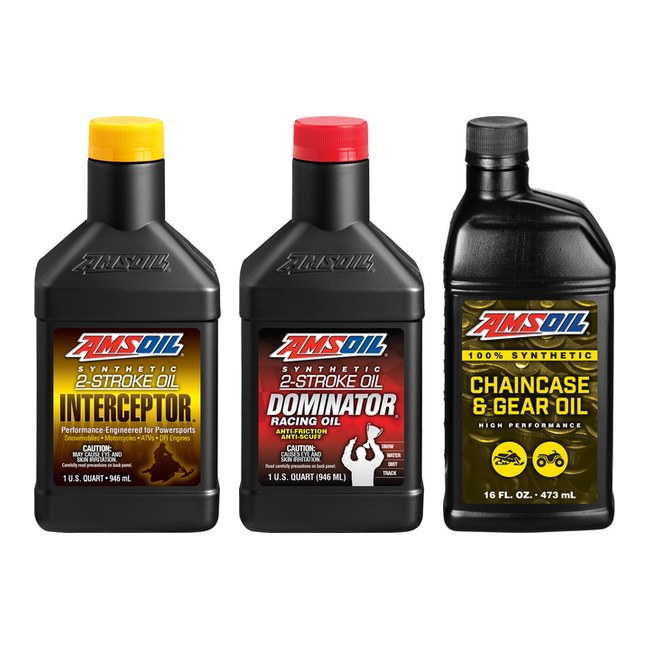
We’re going to show you how great Interceptor performed under those extreme conditions. You can see these are moving all the way open and then all the way closed which indicates that the power valves are free and working. The cylinder head looks beautiful. There’s no sign of any major carbon deposits on there.
There’s a little bit of coloration around the exhaust port but, other than that, it looks really good. So we’re checking the rings, and the rings are free, indicating there’s no carbon buildup in the lands. The pistons look good. You can see the skirts are not scuffed.
We’re going to check the rod bearings and make sure that there’s no axial play, there’s no lateral movement of the rod bearings. Crank still turns freely so everything looks good as far as the rod bearings go. I mean, the cross hatches are still in the cylinder. There’s no excess carbon depositing on the crowns.
It’s a very, very thin layer of carbon which is normal. You can tell that it’s thin because of the fuel wash bands on top of the piston. It gives you kind of an idea of how thick that carbon is and it’s very, very thin. So that’s a good sign.
Under crowns of the pistons don’t show any excess staining, and generally that’s a sign of how much heat that piston is seeing. Oil without enough detergency will generally put a black stain on the bottom of that piston. We’re not seeing that here. Overall I’d say this engine for a field engine with this amount of time on it, this thing looks good.
This article is part of our Snowmobile Oil and Maintenance guide. See every article in the guide.


Comments
David Hilgendorf is an AMSOIL Technical Writer who develops content for automotive, powersports and industrial audiences. His work includes technical data sheets, magazine articles, blog posts, white papers, product literature and application guidance. Hilgendorf works with engineers, laboratory personnel and technical specialists to communicate lubricant testing, product performance, maintenance practices, metalworking fluids, grease, motorcycles, marine equipment and industrial reliability.
Share: