

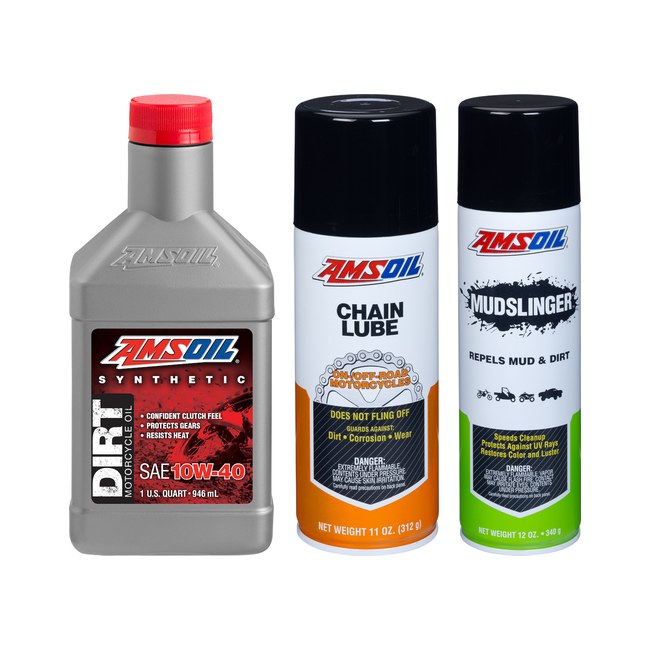
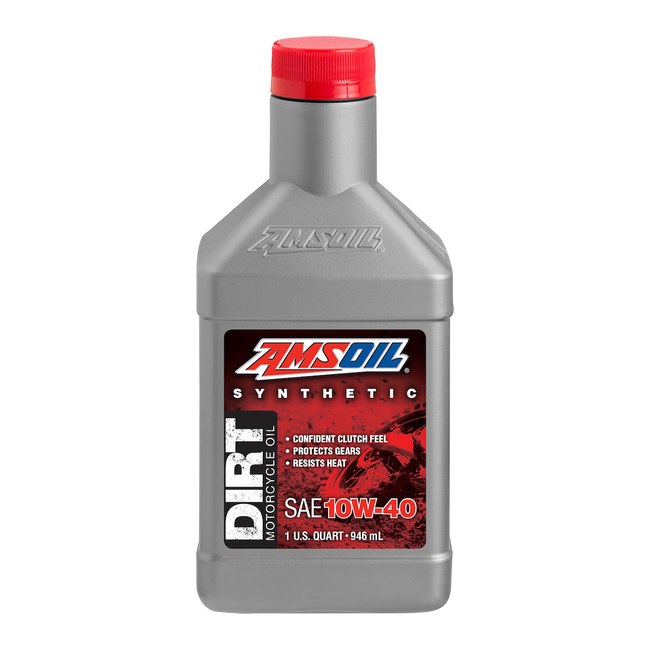

Like other vehicles, modern dirt bikes make more power from smaller engines. In many cases, only about a quart of oil is responsible for protecting against wear and the devastating effects of extreme heat. Clearly, you want to use the best dirt bike oil to ensure maximum protection and engine life.
This being the AMSOIL blog, we think AMSOIL Synthetic Dirt Bike Oil fits the bill. Read on to find out why.
Video transcript: How to Improve Clutch Feel with AMSOIL Dirt Bike Oil
Hi. I’m Len Groom. Welcome to Tech Tips. Today we’re talking about dirt bike oils.
Now, dirt bike oils need to do several things. They need to provide wear protection for the engine, gear protection for the transmission and they also need to do something that isn’t maybe talked about a whole lot in the industry and that’s provide good clutch feel. Now, we’ve worked with our professional riders, and we’ve developed a feature that has given them a distinct advantage. So let’s take a look at all the work that went into developing this feature in AMSOIL Dirt Bike Oils.
Clutch feel is important. It’s critical when you’re starting from a dead stop, when you’re negotiating an obstacle or when you’re performing on the race track. In order to talk about clutch feel, we have to describe the situation. So let’s say we’re going to do a gate start.
What needs to happen is the rider will hold the clutch in, apply some throttle. Then you’re going to let the clutch out just until the bike wants to move and you’re going to hold. At that point you wait for the gate to drop. When it does, you’re going to give it as much throttle as you can; and you’re going to feed in as much clutch as you can as quickly as you can.
So what you’ll see is the lever starts to slowly come out because the bike needs to go from a dead stop to moving. You just want to do that very quickly. So what you’ll see here is the clutch comes out very slow when the gate drops. Then you’re going to see him quickly shift into the next gear, and then you’ll see him very quickly shift into the next gear.
At AMSOIL, we recognized this was so important that we developed a special test called the extreme start test to simulate these racing starts. So, once we got the bikes on the dyno, we did start after start after start. We ran the bike through the gears. Generally, we did second-gear starts.
We ran all the way to fourth gear. That allowed us to test the clutch, the clutch feel; but at the same time we were testing the durability of the product in the transmission and the engine. So not only were we able to provide rock-solid wear protection for the engine and gear protection for the transmission, we were also able to provide a very consistent, a very confidence inspiring, a very repeatable clutch action that will continue to work time and time again. So, if those are your requirements, AMSOIL Dirt Bike Oil’s got you covered.
Thanks for watching. We’ll see you next time.
What dirt bike oil must do
Whether you’re riding the trails near home or competing in sanctioned motocross races, you want to ride as effectively as possible. Maybe that means getting out in front of your buddies on the trail or grabbing the holeshot and riding your way to the checkered flag.
As such, you’re constantly on the throttle, with some dirt bike engines revving as high as 10,000 rpm.
Add a little summer heat to the mix and your engine has a challenge on its hands. Hot ambient temperatures combined with a high-revving engine create severe conditions that can reduce performance and shorten engine life.
Heat stresses your engine
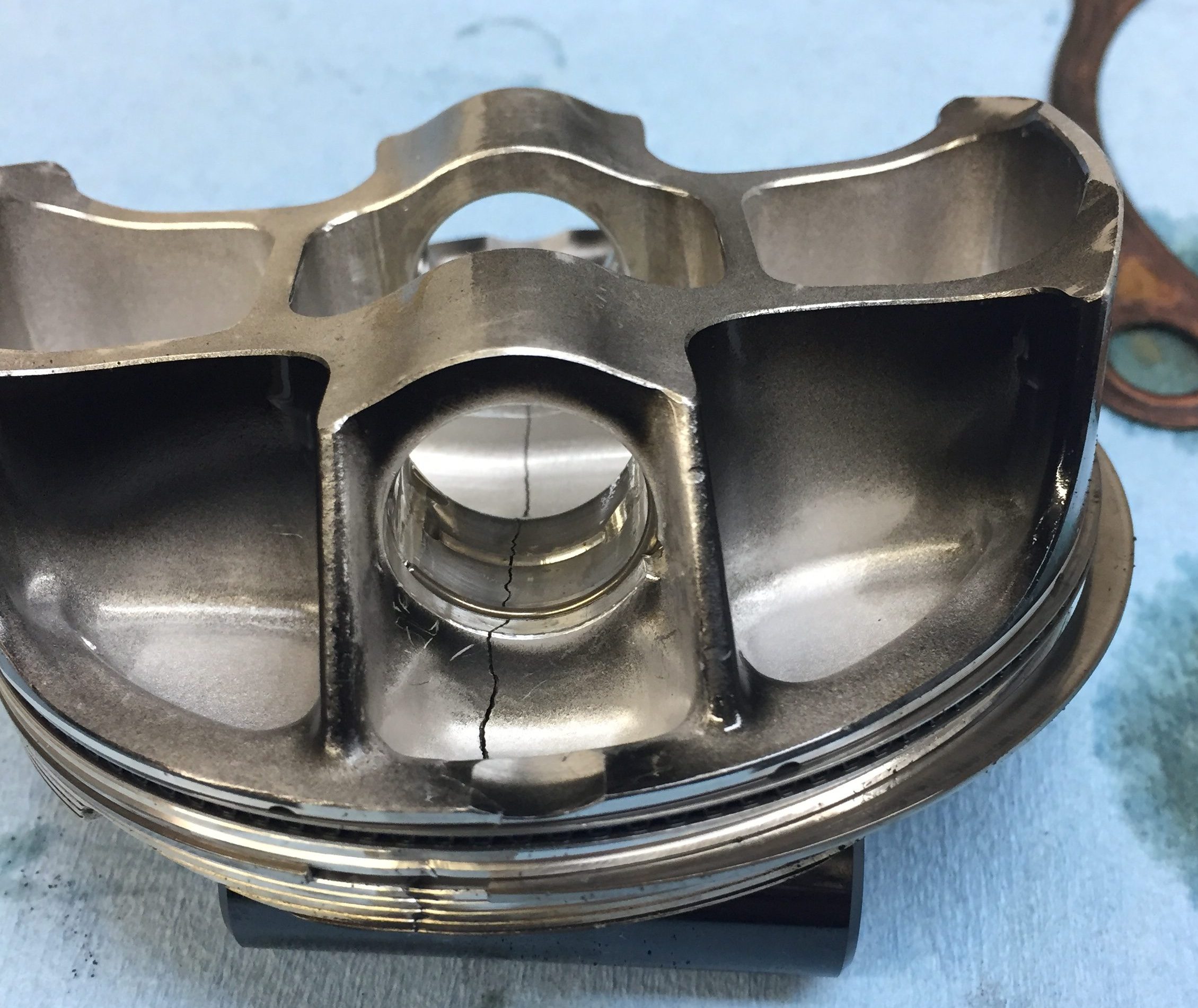
Heat causes metal engine components to expand. If, for example, the piston expands beyond normal tolerances, it can break the lubricant film separating it from the cylinder wall and rub directly against the metal, causing scuffing and wear. Eventually, the piston will fail and wreck the engine.
Minimum oil, maximum stress
Motor oil is your number-one defense against piston scuffing and wear. The oil absorbs heat and dissipates it into the atmosphere via the oil sump.
It should also form a thick, resilient film on engine parts to prevent metal-to-metal contact. Its detergents and dispersants must hold combustion byproducts in suspension and prevent them from forming harmful engine deposits that can lead to piston-ring sticking and power loss. Most dirt bikes, however, hold only about a quart of oil.
| Make/Model | Horsepower | Quarts of Oil |
| KTM 450 EXC-F | 52 | 1.27 |
| Honda CRF450R | 53 | 1.1 |
| Kawasaki KX 450 | 52 | 1.0 |
A minimal amount of oil is asked to perform the daunting task of resisting extreme heat and wear in your expensive, powerful dirt bike engine. The oil had better be up to the challenge or else the engine can wear out and fail.
Most dirt bikes use about the same volume of oil as a push lawnmower despite making 10X the power.
AMSOIL Synthetic Dirt Bike Oil isn’t merely a rebadged automotive oil. We identified the suffering points of modern dirt bikes by working with professional Supercross and Motocross riders. We validated the oil on the track and in our mechanical lab.
The result is an advanced oil that delivers excellent protection against wear and extreme heat in high-revving, powerful bikes. In addition, we designed it to provide confident clutch feel. Riders need an oil that provides not only wear protection, but consistent clutch feel from the time the gate drops until you cross the finish line.
Oils that break down due to heat and stress lead to clutch slippage and sloppy, inconsistent clutch feel, reducing rider performance. Here, too, AMSOIL Synthetic Dirt Bike Oil proves superior, as the test results show.
In extreme simulated-start testing, AMSOIL provided superior wear protection and kept clutch plates looking new.¹

You can see the importance of using an oil specifically designed for dirt bikes. Given its excellent wear protection and heat resistance combined with its ability to deliver confident clutch feel, we think AMSOIL Synthetic Dirt Bike Oil is the best on the market and the oil you should be using.



Comments
David Hilgendorf is an AMSOIL Technical Writer who develops content for automotive, powersports and industrial audiences. His work includes technical data sheets, magazine articles, blog posts, white papers, product literature and application guidance. Hilgendorf works with engineers, laboratory personnel and technical specialists to communicate lubricant testing, product performance, maintenance practices, metalworking fluids, grease, motorcycles, marine equipment and industrial reliability.
Share: