

Several factors influence grease selection, including its consistency and thickener type, along with your operating conditions. Here’s what you need to know to determine what kind of grease you need.
What is grease?
Grease is made up of three basic components:
- Base oil
- Thickeners
- Additives
The National Lubricating Grease Institute (NLGI) uses a grease penetration classification. NLGI #2 is the most widespread classification and is used in many automotive and heavy-duty applications, such as ball joints and other suspension components. Chances are you’ve used an NLGI #2 grease before.
Numbers range from NLGI #000, which has the consistency of cooking oil, to NLGI #6, which is as thick as cheddar cheese.
| NLGI# | Penetration | Consistency | Food Analogy |
| 000 | 445 – 475 | Fluid | Cooking Oil |
| 00 | 400 – 430 | Semi-Fluid | Applesauce |
| 0 | 355 – 385 | Very Soft | Brown Mustard |
| 1 | 310 – 340 | Soft | Tomato Paste |
| 2 | 265 – 295 | “Normal” Grease | Peanut Butter |
| 3 | 220 – 250 | Firm | Vegetable Shortening |
| 4 | 175 – 205 | Very Firm | Frozen Yogurt |
| 5 | 130 – 160 | Hard | Smooth Paté |
| 6 | 85 – 115 | Very Hard | Cheddar Cheese |
Performance specifications
Consider the appropriate specifications when determining what kind of grease you need. The grease industry provides performance specifications for chassis greases (LA and LB) and wheel bearing greases (GA, GB and GC).
GC-LB signifies the grease meets the most demanding test standards for chassis components and wheel bearings. Greases that meet the GC-LB specification typically also meet most automotive original equipment manufacturer requirements.
Choosing the Right Grease
Consistency and base-oil viscosity are the most important factors to consider when selecting grease. Grease consistency is defined by the NLGI grade, which indicates how soft or firm the grease is. Softer grades like 000, 00 and 0 are semi-fluid and ideal for centralized lubrication systems, while NLGI #1 works well in colder climates or where pumping is difficult. NLGI #2 is the most commonly used grade, offering balanced performance for general-purpose applications. Harder grades, such as NLGI #3 and above, are suited for high-load or high-temperature conditions where leakage is a concern. Base-oil viscosity reflects the oil’s thickness — lower viscosities like ISO 68 are best for high-speed, light-load components like electric motors, while higher viscosities like ISO 460 are better for slow-speed, heavy-load applications such as gear couplings. Matching grease properties to your equipment’s speed, load and lubrication method ensures optimal protection and performance.
Compatibility Issues
Grease compatibility is a critical consideration when switching grease, as using incompatible greases can lead to performance issues and equipment damage. Compatibility primarily depends on the interaction between three components: the thickener, base oil and additive package. Different thickeners — such as lithium, calcium or polyurea — may not blend well, potentially causing the grease to soften, harden or separate. Similarly, mismatched base oils and additives can interfere with each other’s chemical stability and performance characteristics. The most common symptom of incompatibility is loss of consistency, which compromises the grease’s ability to lubricate and protect components. For questions about AMSOIL grease compatibility, contact AMSOIL Technical Services ([email protected], 715-399-8324).
Do not assume one grease fits all. For optimum performance, it’s best to use a specialized grease designed for the application. Key factors to consider include the following:
1. Application
Rotating bearing, pivot bushing, two pieces sliding together?
2. Operating Environment
Inside or outside, wet or dry, hot or cold, dusty or clean?
3. Bearing Speed
High speeds (>10,000 rpm), low speeds (<10,000 rpm), sliding or non-rotating?
4. Bearing Load
Heavy, light, impact?
5. Manufacturer Recommendations
NLGI grades, thickener, tacky or non-tacky, OEM specifications?
Use the table below as a guide for selecting the proper AMSOIL synthetic grease based on application. For questions about AMSOIL grease recommendations, contact AMSOIL Technical Services ([email protected], 715-399-8324).
| Non-rotating Bearings and Sliding Motions | General Purpose/ Rotating Bearings | Rotating Bearings Operating Under Heavy Impact Loads | Specialty/Food-Grade | |
|---|---|---|---|---|
| Lithium Complex | AMSOIL Synthetic High-Viscosity Lithium-Complex Grease (GVC) | |||
| Calcium Sulfonate Complex | AMSOIL Synthetic Polymeric Off-Road Grease (GPOR1, GPOR2) | AMSOIL Synthetic Multi-Purpose Grease (GLC) AMSOIL Synthetic Water-Resistant Grease (GWR) AMSOIL DOMINATOR® Synthetic Racing Grease (GRG) | AMSOIL Synthetic Polymeric Truck, Chassis and Equipment Grease (GPTR1, GPTR2) | AMSOIL Synthetic EP #00 Grease (GSF) |
| Other | AMSOIL X-Treme Synthetic Food-Grade Grease (GXC) |
Which grease to use?
Factors that affect grease selection include…
- Thickener type
- Consistency
- Dropping point
- Temperature range
- Worked stability
- Oxidation stability
- Wear resistance
The most important property of any lubricant is its viscosity, which is typically selected based on the application requirements.
A common mistake when selecting grease is to confuse the grease consistency with the base oil viscosity. You must consider the application, environment, speeds, loads and OEM recommendations.
Here are some popular grease applications and the kind of grease to use:
Rotating bearings
This category includes, but is not limited to:
- Roller bearings
- Plain bearings
- Thrust bearings
- Gears
- Electric motors
- Presses
- Winches
- Bushings
- Wheel bearings
- Chassis lubrication
- Universal joints
- Ball joints
- Tie-rod ends
- Steering knuckles
You’ll commonly find these components in heavy- and light-duty applications found in manufacturing facilities; automobiles; trailers; and landscaping, agricultural and powersports equipment.
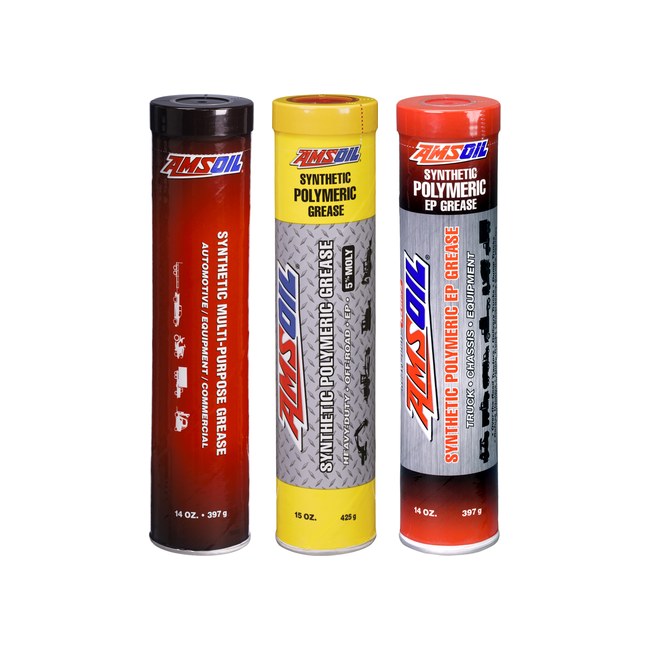
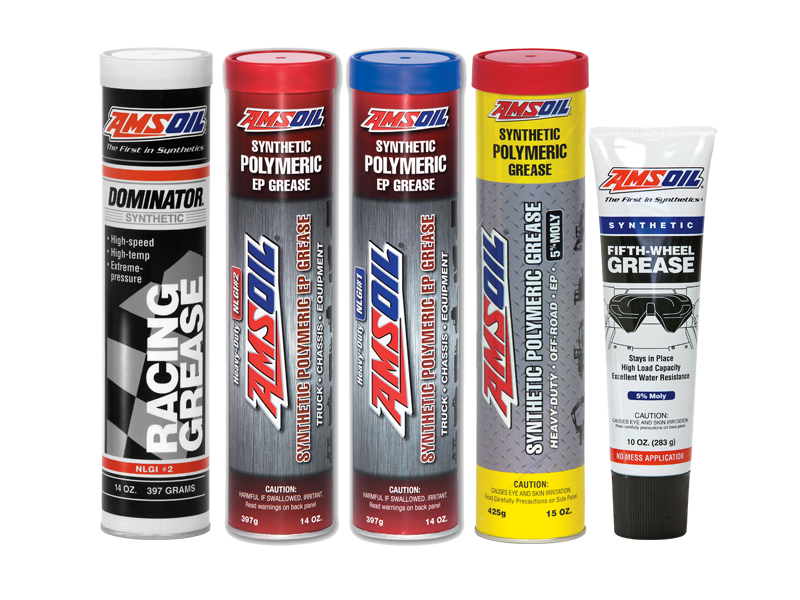
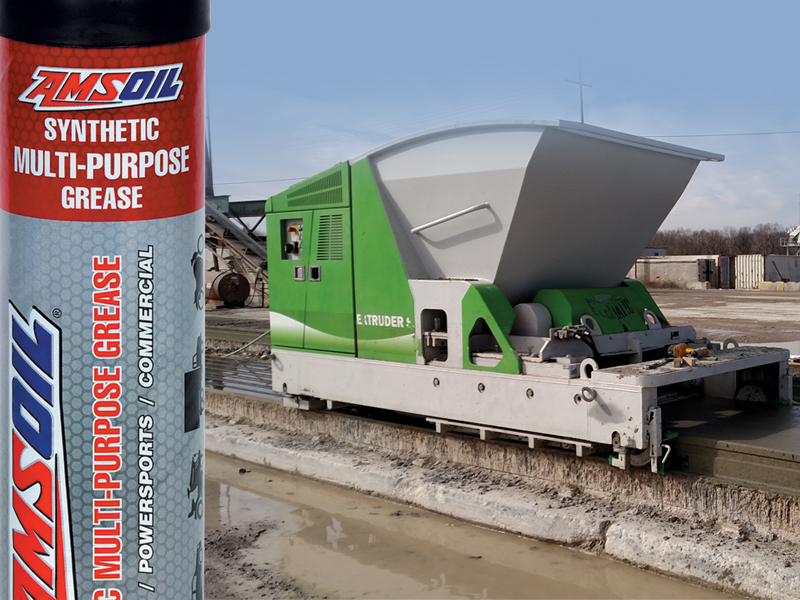
General, multi-purpose greases work great, including AMSOIL Synthetic Multi-Purpose Grease, Synthetic Water-Resistant Grease and DOMINATOR® Synthetic Racing Grease.
Bearings under heavy-impact loads
These components include, but are not limited to, heavily loaded:
- Chassis grease points
- Wheel bearings
- Axle assemblies
- Universal joints
- Pivot pins
- Steering linkages
- Spring pins
- King pins
- Ball joints
- Water-pump bearings
- Other greased heavy-duty components
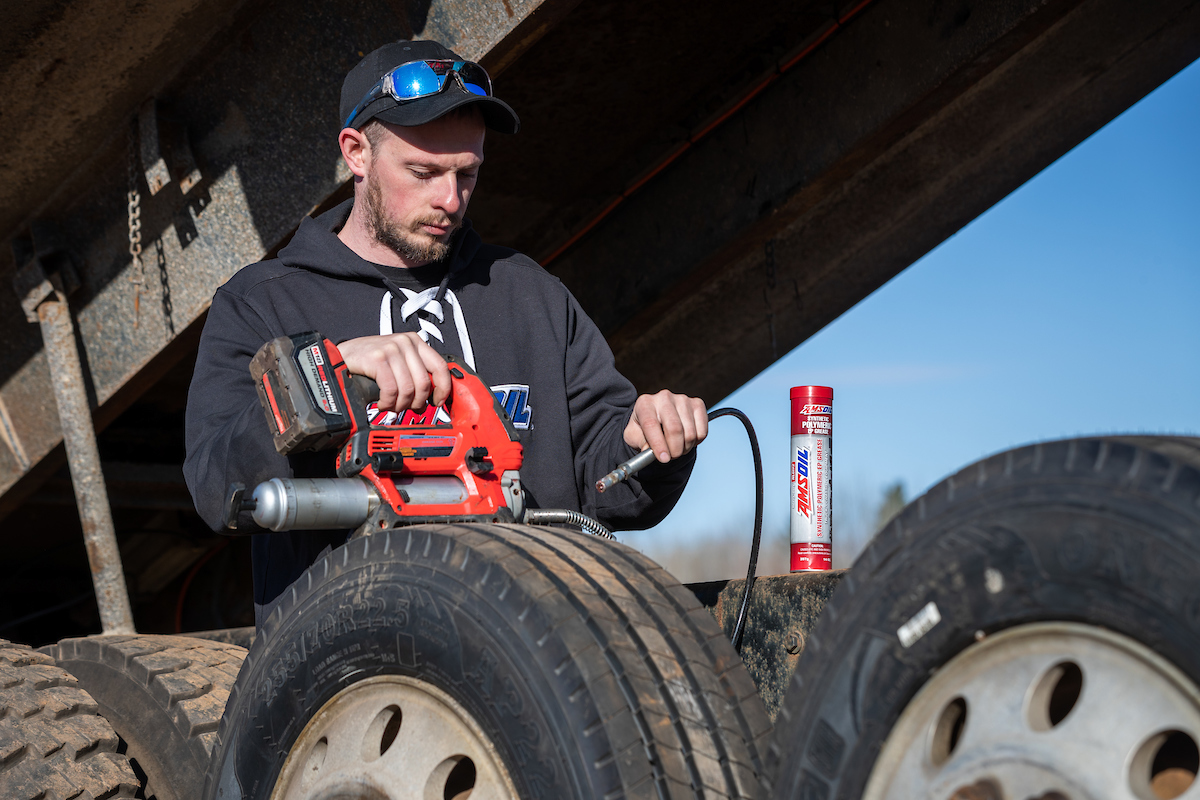
These applications require specialty greases formulated for heavy-duty equipment subjected to severe-service conditions. The grease is designed to provide additional protection beyond what a multi-purpose grease provides.
AMSOIL Synthetic Polymeric Truck, Chassis and Equipment Grease and High-Viscosity Lithium-Complex Synthetic Grease are great for these applications.
Non-rotating bearings and sliding applications
These applications include, but are not limited to, heavily loaded:
- Pivot pins
- King pins
- Bucket pins
- Fifth-wheel hitch plates
- Bushings
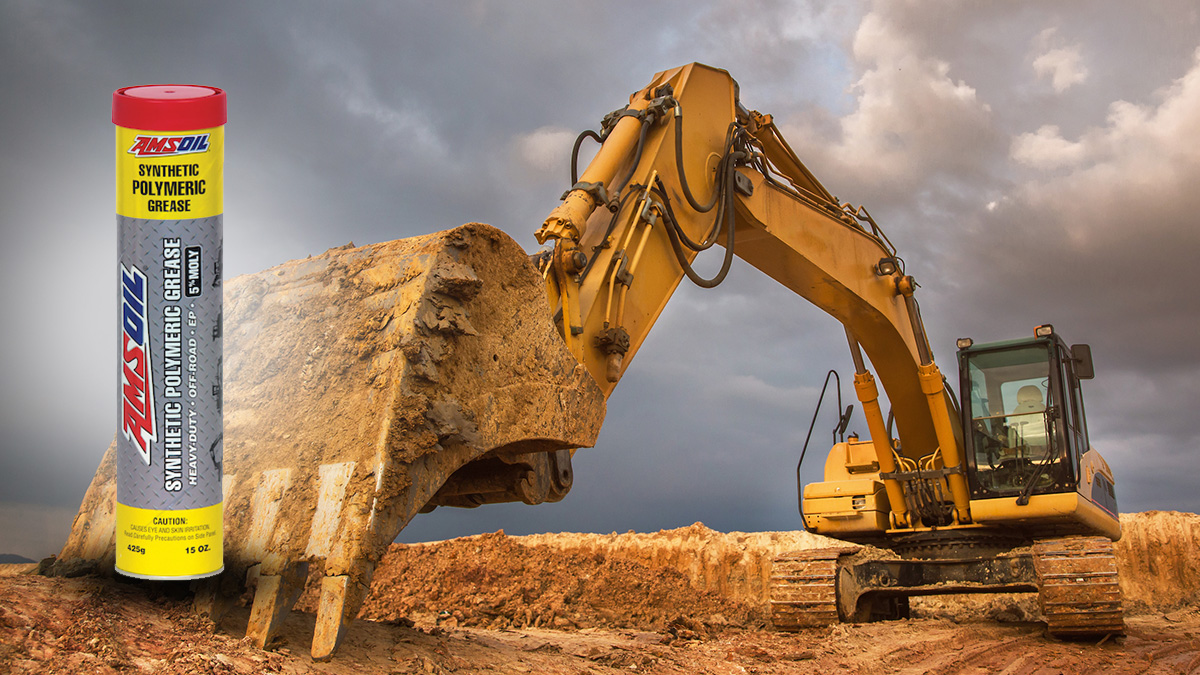
Greases formulated for these applications are designed to provide additional protection, impact resistance and tackiness beyond what a multi-purpose grease can provide. They are specialty greases that typically identify the type of application and the extreme conditions common to these applications.
AMSOIL Synthetic Polymeric Off-Road Grease and Synthetic Polymeric Truck, Chassis and Equipment Grease are excellent choices.
Specialty applications
These include equipment used in the food service or pharmaceutical industries. They often require NSF-Approved grease, such as AMSOIL X-Treme Synthetic Food Grade Grease, which is designed for a wide operating temperature range.
Some applications require a grease with exceptional cold-weather pumpability, like arctic drilling rigs. Most grease isn’t designed for sub-zero temperatures and will have difficulty pumping and protecting in below freezing temperatures. AMSOIL DOMINATOR® Synthetic Racing Grease has excellent cold temperature properties, including extreme-low-temperature torque performance as low as -40°F.
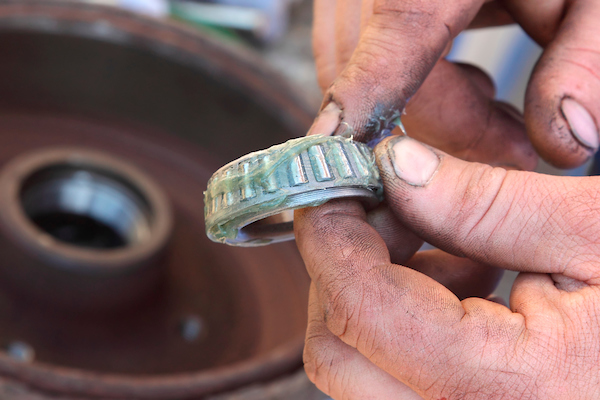
Hopefully, this helps you determine what kind of grease is right for your application. If you need further assistance selecting the right AMSOIL products for specific applications, AMSOIL Technical Services is always happy to help at [email protected] or 715-399-TECH.
AMSOIL grease for every application
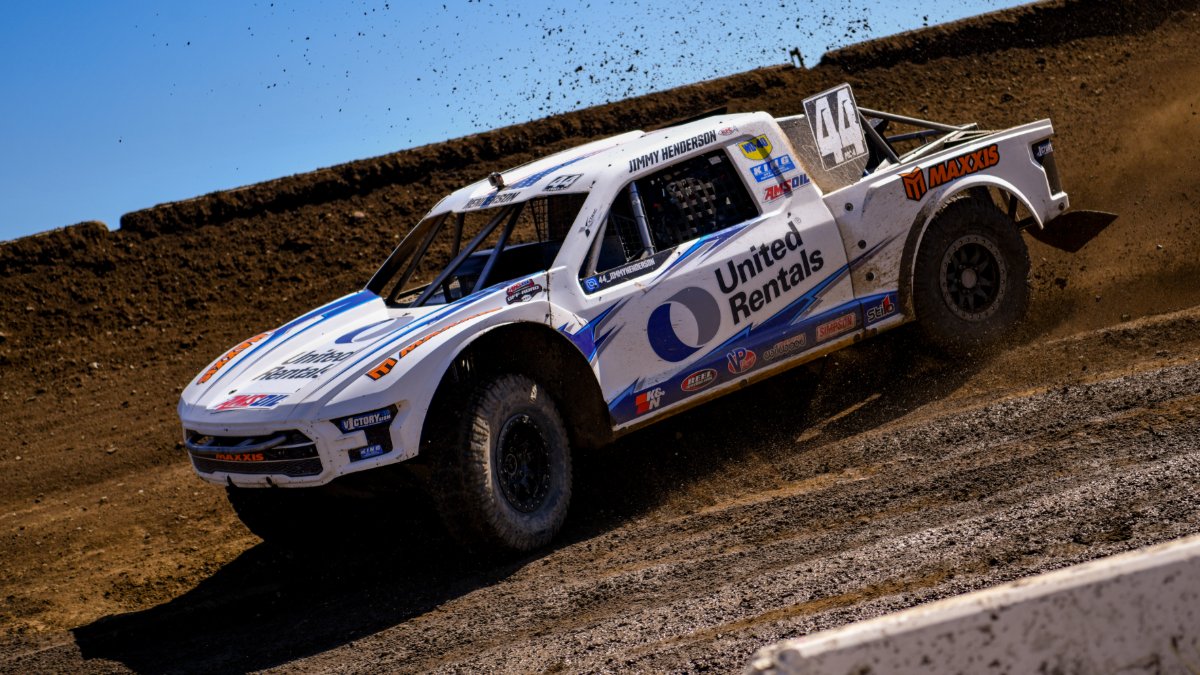
DOMINATOR® Synthetic Racing Grease
NLGI #2, GC-LB
High-performance protection for racing applications under heavy load, high-speed and extreme high- and low-temperature operation on snow, dirt, water or track.
Synthetic Polymeric Truck, Chassis and Equipment Grease
NLGI #2 and NLGI #1
Heavy-duty over-the-road applications, including tractors and trailers, delivery fleets, dump trucks, refuse haulers, utility fleets, emergency service vehicles and fifth-wheel hitches.
Synthetic Polymeric Off-Road Grease
NLGI #2 and NLGI #1
Heavy-duty off-road applications, including agricultural, construction, landscaping, logging and mining equipment and fifth-wheel hitches used in trucking and trailer applications.
Synthetic Multi-Purpose Grease
NLGI #2, GC-LB
Heavy- and light-duty applications, including automotive wheel bearings.
Synthetic Water-Resistant Grease
NLGI #2, GC-LB
Designed for vehicles and trailers frequently exposed to water, mud, snow and ice.
High-Viscosity Lithium-Complex Synthetic Grease
NLGI #2
Heavy-duty industrial and off-road applications under adverse conditions.
X-Treme Synthetic Food Grade Grease
NLGI #2, NSF-APPROVED (Formerly USDA H-1)
Engineered for food service and pharmaceutical industry equipment.
Comments
David Hilgendorf is an AMSOIL Technical Writer who develops content for automotive, powersports and industrial audiences. His work includes technical data sheets, magazine articles, blog posts, white papers, product literature and application guidance. Hilgendorf works with engineers, laboratory personnel and technical specialists to communicate lubricant testing, product performance, maintenance practices, metalworking fluids, grease, motorcycles, marine equipment and industrial reliability.
Share: