

The short answer: today’s ultra-low-sulfur diesel has lost much of its natural lubricity, fuel quality varies from pump to pump, and modern high-pressure injectors are easily fouled by deposits. Additives restore lubricity, clean injectors, raise cetane and keep fuel flowing in the cold, all of which protect power, fuel economy and expensive fuel-system parts.
Adequate diesel fuel lubricity is essential for protecting the precision components in modern diesel engines. This is especially true for high-pressure common-rail (HPCR) engines, where increased wear and deposits can interfere with an optimum spray pattern, reducing power and fuel economy. Find out how to keep your diesel engine running strong all year long with premium diesel fuel additives.
Video transcript: Diesel Fuel: Don’t neglect This Crucial Aspect!
Featuring John Gardner, host of Motorhead Garage, and Leonard “Len” Groom, AMSOIL Director of Product Marketing (author profile).
John Gardner: Diesel and water just don’t mix. A clean running diesel is a happy diesel. Welcome to this AMSOIL tech tip on diesels and diesel fuel. Let’s take a look at a diesel system and see how it works.
So right here, we actually have the fuel tank down here. Now in our fuel tank, have a fuel pump. So think about that once again. We’re submerging it down in there, so we’re gonna have some issues with the fuel that we’re gonna have to address.
Then we come up through here. We’re coming through a water separator. Now we’ll take a look at that in a minute, but that’s critical because we have to separate that water from that diesel fuel or we’re gonna have issues on the other side. Then we come up here to the high pressure fuel pump thirty, forty, fifty, sixty thousand PSI.
That’s where we got our high pressure coming over to a common rail, and then we’re going into the injector and injecting it directly into the cylinder into a harsh climate with a lot of temperature with a small pintle. Whew, that’s a lot going on there, Len. Now I’m talking about this water separator. All the diesels have it.
Boy, they really like clean fuel, don’t they?
Len Groom: They do. They do. And you need to take care of that fuel. You need to treat the fuel depending on where you’re at in the country, depending on what type of diesel you have, you need to treat it.
John Gardner: Len, there’s different climates and different additives that go in the package because I’m in Florida. I got a lot of moisture, microbes, things going on in the diesel fuel that you may not have up there shoveling snow.
Len Groom: That’s correct. All of our additives are biodiesel friendly so the microbial protection is there regardless. Yourself, you might default to maybe just an injector clean, maybe some cetane boost, get a little more bang for your buck out of the fuel. Versus myself, I’m in northern Minnesota, I might want to use our cold flow improver which will keep that fuel from gelling up. It drops that cold filter plug point down and really takes care of those cold temperature problems that I see that you may not.
John Gardner: And it’s a complete system. So I mean, we’re addressing the injectors, fuel and everything with these products, right?
Len Groom: That’s correct. You’re taking it from the system wide, from the tank as you described earlier, all the way to where it’s pushed into the motor.
John Gardner: Well, you have it. So go to their website at AMSOIL.com pick you up these products and so many other phenomenal products.

Less lubricity
Diesel fuel traditionally had high lubrication properties, but the desulfurization process that helps diesel fuel meet modern ultra-low-sulfur diesel (ULSD) requirements also strips it of the organic compounds responsible for lubrication. Although the ASTM D975 standard for diesel fuel provides a minimum level of lubricity, it’s not as much as the Engine Manufacturers Association (EMA) recommends.
To meet stringent government mandates for reduced emissions, nearly all diesel fuel sold in North America today is ULSD, which contains a maximum of 15 ppm sulfur. Compare that to as much as 5,000 ppm in traditional diesel fuel available prior to EPA regulations taking effect in 2006. Additionally, ULSD is compatible with modern exhaust treatment devices, such as diesel particulate filters (DPF), that further assist in emissions reduction.

The solution to ULSD
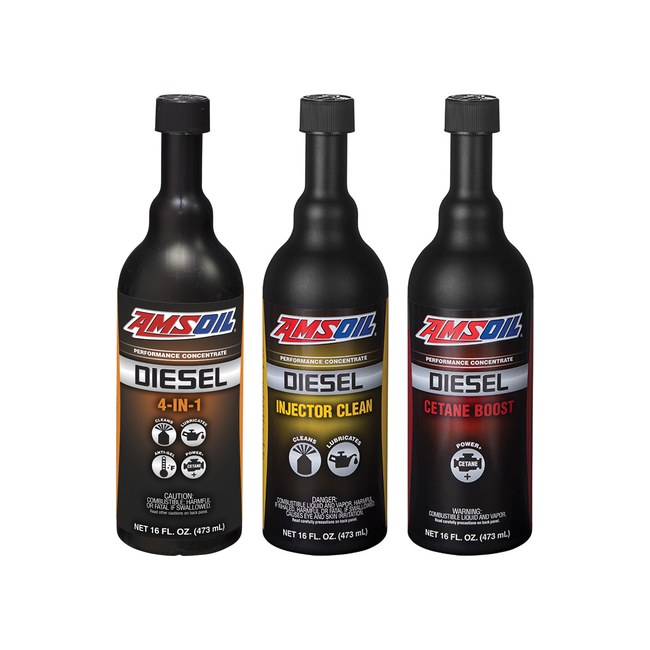
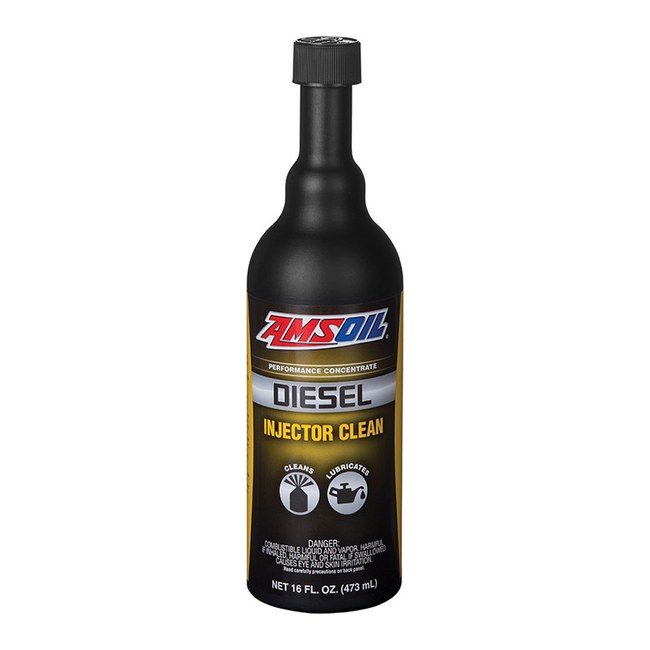
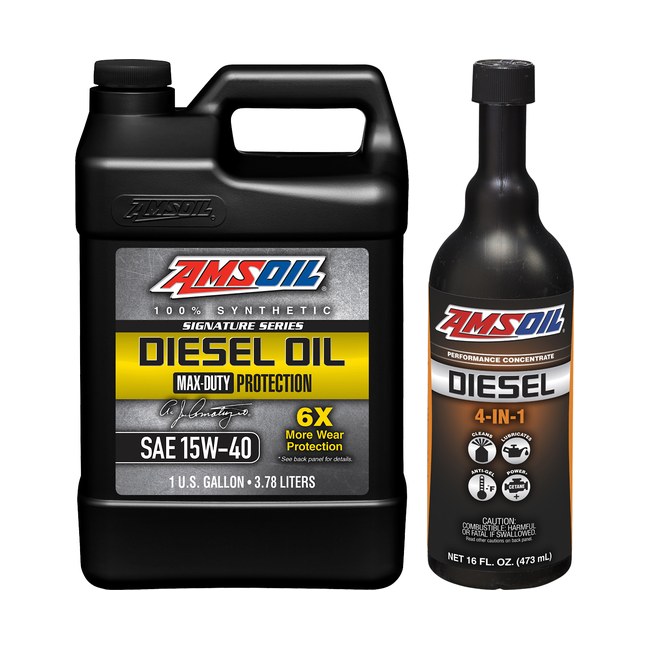
The best way to increase fuel lubricity is to use a fuel additive designed specifically for this purpose, like AMSOIL Diesel Injector Clean, Diesel Injector Clean + Cetane Boost, or Diesel 4-in-1, which combines the benefits of AMSOIL Diesel Injector Clean, Diesel Cold Flow and Diesel Cetane Boost in one convenient package.
AMSOIL diesel fuel additives also provide additional benefits designed to keep diesel engines operating at their maximum performance.
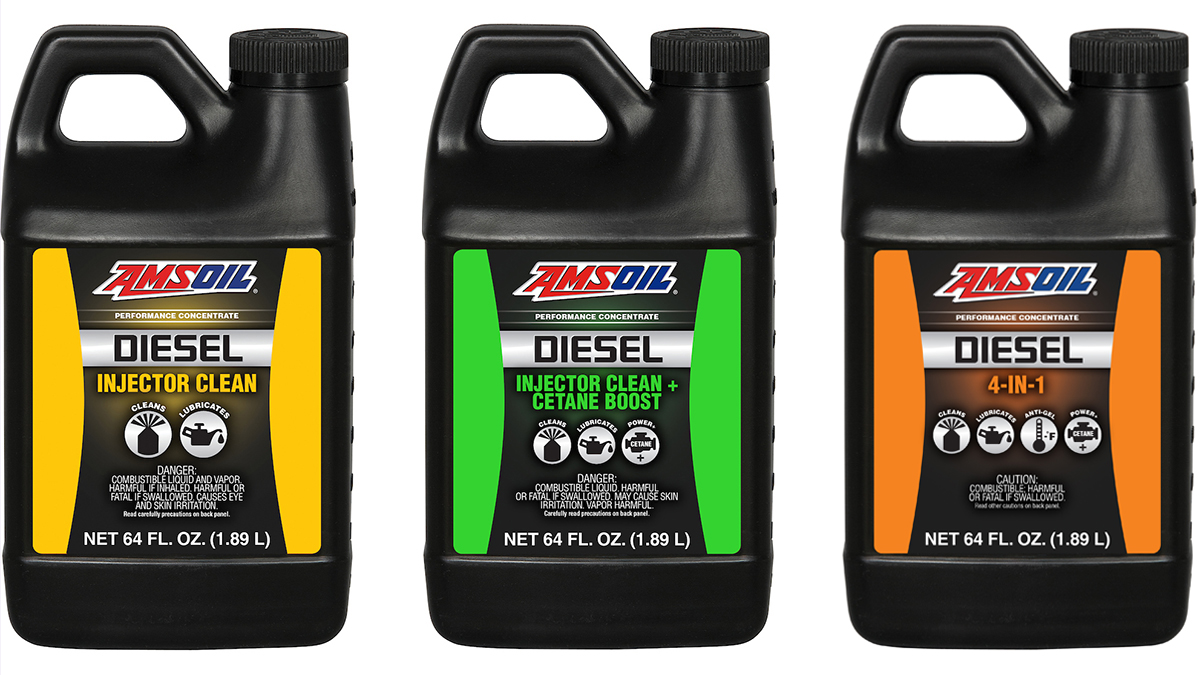
The concentrated formula lubricates to reduce fuel pump and injector wear and rapidly targets and eliminates accumulated nozzle deposits, combustion-chamber deposits and internal-diesel-injector deposits found in HPCR injectors to maximize horsepower and increase fuel economy up to 8%.
Diesel Injector Clean + Cetane Boost
Combines the superior deposit-removing properties of Diesel Injector Clean and the cetane-boosting benefits of Diesel Cetane Boost in one convenient package that delivers outstanding detergency, reduces smoke and emissions, improves lubricity and increases cetane and horsepower.
Combines the superior detergency of Diesel Injector Clean, the excellent anti-gelling properties of Diesel Cold Flow and the increased cetane benefits of Diesel Cetane Boost in one convenient package that helps remove deposits and improves lubricity, cold flow and horsepower.
AMSOIL Diesel 4-in-1 is proven to improve diesel fuel lubricity and protect against injector wear based on independent ASTM D6079 testing.

Lubricity isn’t the only diesel-fuel problem
Poor diesel fuel can foul injectors, speed up injection-pump wear, cause rough running and hard starting, and stall an engine in the cold. Match the additive to the problem:
| Problem | AMSOIL additive |
|---|---|
| Injector deposits, low lubricity | Diesel Injector Clean |
| Low cetane: hard starts, smoke, lost power | Diesel Cetane Boost (raises cetane up to eight points) |
| Gelling risk in cold weather (prevention) | Diesel Cold Flow |
| Fuel already gelled, or a frozen fuel filter | Diesel Recovery, an emergency treatment that liquefies gelled fuel and thaws frozen filters |
| All of the above in one bottle | Diesel 4-in-1 |
Cold-weather terms to know
- Cloud point: the temperature at which wax crystals start to form in diesel fuel, usually around 32°F (0°C) and sometimes as high as 40°F (4°C).
- Cold-filter plugging point (CFPP): the temperature at which wax crystals clog the fuel filter.
- Pour point: the lowest temperature at which the fuel still flows.
Winter-blend diesel is #2 diesel cut with some #1, which has less wax but delivers less energy. Refiners blend for forecast temperatures, so a sudden cold snap can still gel fuel. More on that in How to Prevent Diesel Fuel Gelling in Cold Weather.
Diesel fuel lubricity is essential for the protection of modern diesel engine components. Keep your engine operating at peak performance with AMSOIL Diesel fuel additives.



Comments
Joel Youngman is Lead Technical Writer at AMSOIL and associate editor of AMSOIL Magazine. He develops and edits content covering lubricant technology, product testing, vehicle systems, maintenance practices and equipment applications. Youngman also coordinates magazine articles and Tech Talk columns, working with engineers, product specialists and Communications personnel to maintain technical accuracy, editorial consistency and clear customer communication.
Share: