

Why Does Gasoline Go Bad?

Chemical and physical changes in gasoline can lead to poor engine performance and potential damage.

Shop the article

AMSOIL Gasoline Stabilizer
by Alex Thompson
December 26, 2025

Gasoline is a blend of hydrocarbons and performance-enhancing additives. Over time, this mix can degrade due to chemical and physical changes, leading to poor engine performance and potential damage. The main culprits? Oxidation, evaporation, contamination and polymerization.

Oxidation: The Silent Fuel Killer

Oxidation is the leading cause of gasoline degradation. When hydrocarbons react with oxygen, they form unstable compounds like peroxides. These break down into aldehydes, ketones and acids, which thicken the fuel, reduce its volatility and leave behind sticky deposits. These deposits can clog fuel injectors, carburetors and fuel lines, choking your engine’s performance.

Evaporation: Losing the Lightweights

Gasoline contains light, volatile hydrocarbons like butane and pentane. These evaporate easily, especially in warm environments or poorly sealed containers. As these lighter elements disappear, the fuel becomes harder to ignite, leading to sluggish starts and reduced power.

Contamination: Water and Ethanol Don’t Mix Well

Water can enter fuel tanks through condensation. Ethanol-blended fuels are especially vulnerable because ethanol absorbs water. Above certain concentrations, this can trigger phase separation, where a water layer forms at the bottom of the tank due to its heavier density compared to gasoline. When your engine pulls from this layer instead of pure fuel, it can misfire, stall or experience corrosion.

Polymerization: Gum and Varnish Build-Up

Over time, hydrocarbons and additives in gasoline can link together to form long-chain molecules. This process, accelerated by heat, light and oxygen, creates gum and varnish that coat fuel system components, restricting flow and causing performance issues.
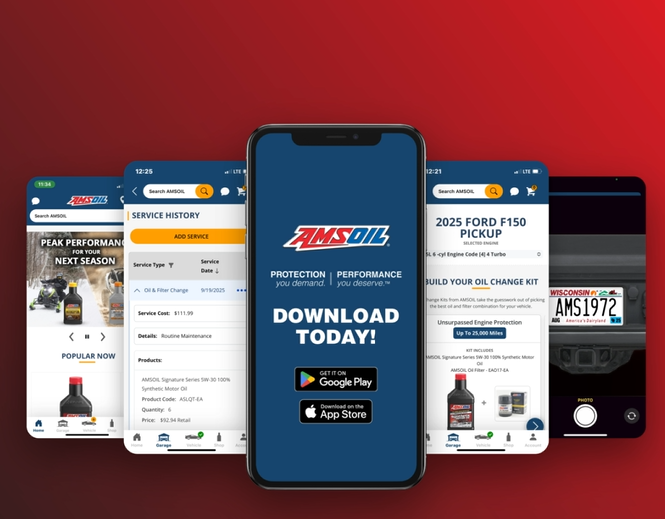
Get the AMSOIL App

MyGarage access

License plate and VIN scanner

Shop and reorder with ease

Maintenance notifications

Fast, secure access

Get the AMSOIL App

How Bad Gas Affects Your Engine

Degraded gasoline doesn’t just sit quietly — it actively harms engine performance. Here’s how:

• Hard starts: Loss of volatile compounds makes ignition difficult, especially in cold weather.
• Poor combustion: Oxidized fuel disrupts combustion, reducing power and increasing emissions.
• Clogged components: Gum and varnish block fuel injectors and lines, causing misfires and rough idling.
• Engine knock: Lower octane levels from degraded fuel lead to premature detonation, damaging pistons and spark plugs.
• Corrosion: Water in fuel promotes rust in tanks, lines and injectors.
• Phase separation: Ethanol-water mixture causes stalling and poor combustion.
• Loss of power: Altered fuel chemistry reduces energy output.
• Increased emissions: Incomplete combustion releases more pollutants.
• Severe engine damage: Long-term use of bad gas can lead to costly repairs — or even engine replacement.

How to Prevent Gasoline Degradation

Proper storage is key. Follow these tips:
• Use airtight, approved containers to limit oxygen exposure.
• Store in a cool, dry place, ideally below 68°F (20°C).
• Choose opaque containers to block sunlight and prevent photochemical reactions.
• Add a gasoline stabilizer to extend fuel life and protect your engine.

AMSOIL Gasoline Stabilizer: Your Fuel’s Best Friend

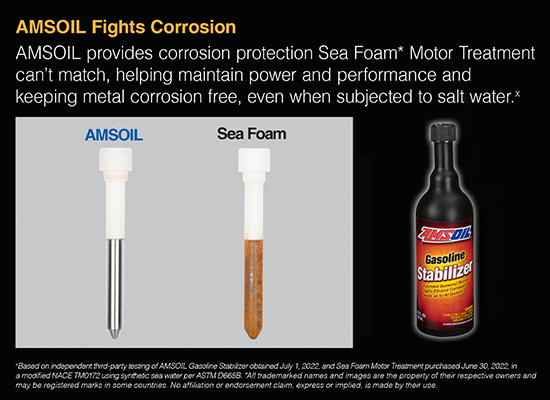
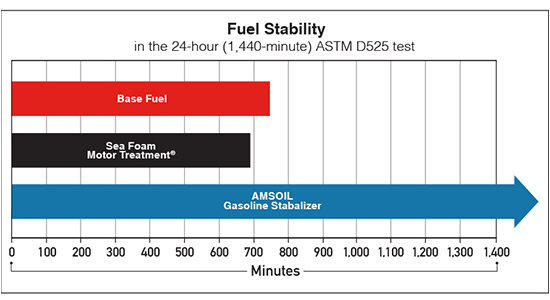
AMSOIL Gasoline Stabilizer keeps fuel fresh for up to 12 months, making cold starts easier and preventing gum and varnish buildup. It works with ethanol-blended fuels and includes corrosion inhibitors to protect metal components. Compared to Sea Foam Motor Treatment,* AMSOIL delivers…

• Superior corrosion protection, even when subjected to salt water.¹
• 8X longer fuel stability in ASTM D525 testing.²

Keep Your Engine Running Strong

Gasoline degradation is inevitable, but preventable. By understanding the science and using the right products, you can keep your fuel fresh, your engine clean and your performance sharp. Whether you’re storing a classic car or lawnmower for winter, smart fuel management keeps your vehicles and equipment ready to roll.

Check out our “How to Choose an Effective Fuel Additive” video and share it with your customers and prospects on social media.

1Based on independent third-party testing of AMSOIL Gasoline Stabilizer obtained July 1, 2022, and Sea Foam Motor Treatment purchased June 30, 2022, in a modified NACE TM0172 using synthetic sea water per ASTM D665B.

2Based on independent third-party testing of AMSOIL Gasoline Stabilizer obtained July 1, 2022 and Sea Foam Motor Treatment purchased June 30, 2022 in a triple-length gasoline oxidation stability test (ASTM D525) using test fuel containing no oxidation-stability-improving additives.

by Alex Thompson

AMSOIL Market Manager and product expert.

Shop the article

AMSOIL Gasoline Stabilizer

More like this