

There are a few different reasons your engine might make a knocking, ticking or pinging sound. Let’s break each down and talk about what might be happening.
Video transcript: What is a Knock Sensor?
Featuring John Gardner, host of Motorhead Garage, and Leonard “Len” Groom, AMSOIL Director of Product Marketing (author profile).
John Gardner: Welcome back to Motorhead Garage presented by dragonfiretools.com. Well, it’s great to be back here at Motorhead Garage with my good friend Dave and the best crew in the business. And you guys are gonna love this. AMSOIL stepping up to the plate and bringing us fifty-two tech tips.
We all love the tech tips. Perhaps your car is a little bit sluggish. Well, maybe you’re going along and you’re losing performance. Well, that might just mean that your knock sensor is doing its job.
What is a knock sensor? What does it do and how does it work? Well, a knock sensor does exactly what it says it does. It senses knocks or vibrations in the coolant.
How does that work? Well, here’s a demonstration of a cylinder, and the piston’s going up and down in here. And it comes up to the compression stroke, and then bam, it fires. That’s the power stroke.
Well, we want everything clean. We want everything good in here so that piston’s not rattling from side to side. When it rattles from side to side like that, well, you’re actually getting that right there. And that actually, inside of the coolant, causes vibrations in the coolant and then the knock sensor’s sitting right there in the coolant jacket.
It’s a piezoelectric generator. It actually senses that and then it tells the computer, hey, that piston’s rattling. And when that piston’s rattling, bam, we retard timing, losing performance. Not a good thing.
And you can look at the graphic right there. You can see the computer on the top. It’s actually sensing that vibration. And down below, you see the knock retard at zero.
Nothing’s going on. When it starts rattling, it’s at three degrees. Len, if I’m at three degrees retard, I’m losing power. That’s not a good thing.
Len Groom: You are. And people may not even notice that until they go to fill up at the gas station. They’re noticing they’re using more fuel. The car isn’t as responsive.
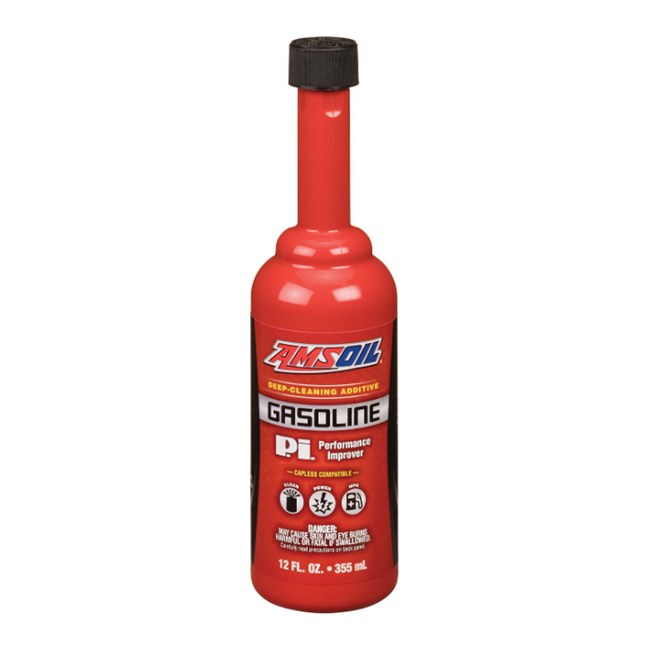
So why not keep the generator from doing its job in the first place by doing some simple maintenance items? And we’re talking about AMSOIL Performance Improver today. It’s an extremely potent detergent. It’s got some really cool technology inside of it that’s designed to keep deposits from happening on top of the piston that’s going to create detonation pre ignition like you were discussing earlier and cause that knock sensor to do its job.
So by using the proper combination of chemistry in here, we can keep that all from happening, keep the engine clean, keep the performance level and fuel economy up, and basically just keep that car happier.
John Gardner: Absolutely. If I’m not retarding the time and I don’t have to push the gas as much, I’m saving gas as well, and that’s a huge thing today. Now if you wanna know more about these products, just check them out on the website, AMSOIL.com
Is it an engine knocking sound, tick or ping?
One driver’s knock is another driver’s tick. Or ping. Still others compare the engine knocking sound they hear to marbles rolling around inside a coffee can.
The spontaneous ignition of air/fuel inside the cylinders is a common source of engine knock.
While the description of the sound may differ, the circumstances under which it occurs are often the same – low-speed, high-torque conditions common when you’re accelerating.

How engine knock occurs
Say the clock has struck 5:00 and you make a bee-line to your truck and take off for home. When you mash the accelerator out of the parking lot, that’s when you hear an engine knocking sound. Or ping. When you let off the gas, it goes away.
This is likely due to either pre-ignition or detonation. They’re effectively the same phenomenon, but they occur at different times.
In a properly running engine, spark-triggered ignition typically occurs a few degrees before the piston reaches top dead center (TDC). This careful timing ensures the downward force of the exploding fuel/air mixture works in tandem with downward piston momentum, resulting in optimum efficiency and power.
That’s bad timing
Pre-ignition (and its cousin, low-speed pre-ignition [LSPI]) are abnormal combustion events that throw off this precise balance. Under certain conditions, the fuel/air can spontaneously ignite too early in the combustion cycle. Sometimes low-octane fuel is to blame; sometimes it’s deposits on the piston crown.
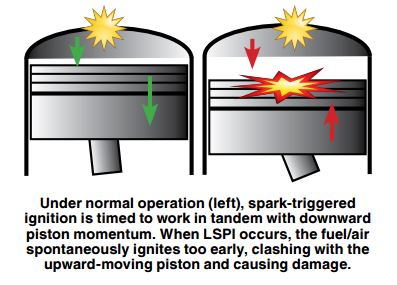
Fuel with too low an octane rating for your engine can sporadically ignite prior to the piston reaching TDC.
Or, chunks of carbon can heat up and create a hot spot that effectively ignites the fuel/air before the plug fires. Then, when the plug does fire a fraction of a second later, the two flame fronts collide. In certain conditions, they can clash with the upward-moving piston. The resulting shock wave rattles the piston inside the cylinder, creating the knock, ping or can-of-marbles sound you hear.
Detonation has the same effect, except it occurs after the plug fires.
Computers in modern vehicles can detect engine knock and compensate by adjusting engine timing. Though it saves your engine from destroying itself, performance and fuel economy can suffer.
Tick, tick, tick
Say your engine is ticking like a time bomb, especially in the morning when it’s cold. You likely have a valvetrain issue.
Your engine uses intake valves to feed clean air into the cylinders and exhaust valves to kick spent combustion gases out. The valves open and close thousands of time per minute in a choreographed whirlwind of activity.
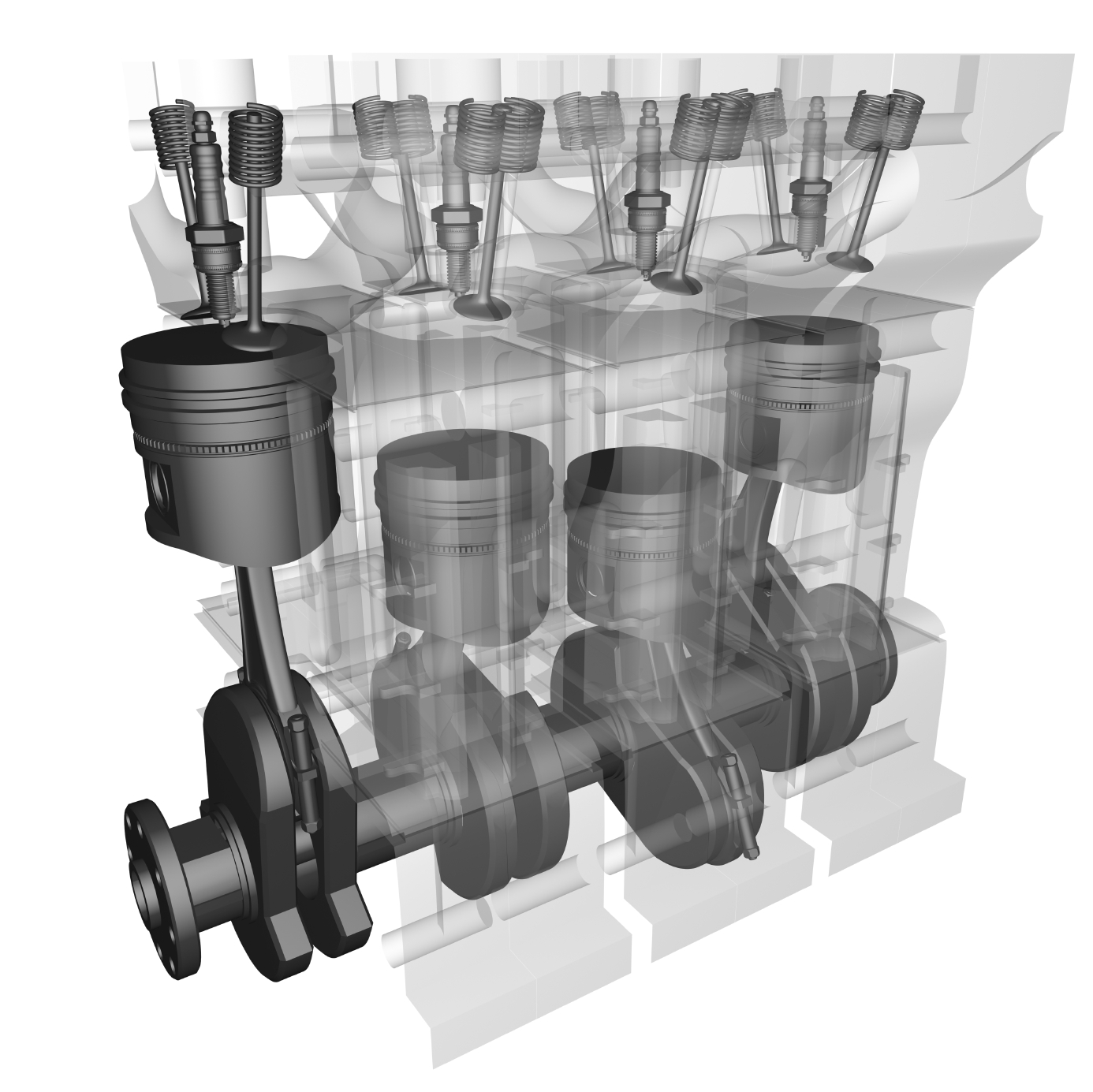
A finely balanced system of parts – rocker arms, valve stems, cam lobes, lifters – control their movements. The clearances between these parts, known as lash, can become loose (or sloppy, in automobile nomenclature). When that happens, all those moving parts clattering against each other can create a ticking sound.
It’s especially noticeable in the morning before the oil has had a chance to circulate throughout the upper end of the engine.
Many engines use hydraulic lifters, which use an oil-pressure-assisted plunger and spring to compensate for lash, helping ensure the system runs smoothly and quietly.
Proper oil pressure plays a big role in valvetrain operation and noise. Low oil pressure can reduce the effectiveness of hydraulic lifters, increasing lash. This is most likely to occur with a low-quality conventional oil that thins at high temperatures, preventing the engine from developing good oil pressure.
If the rods are knockin’…
Rod knock is yet another possible explanation for your engine knocking sound.
Your engine is built with a designed clearance between the crankshaft journals and the connecting rods. In a properly running engine using a good oil, the motor oil fills those clearances and prevents metal-to-metal contact.
But, let’s say you’ve been using a poor-quality conventional oil.
At high temperatures, the oil thins and the fluid film weakens. The pressure between the crank journals and connecting rods squeezes the oil from the clearances. Now, metal is riding on metal, wearing the surfaces and widening the clearances. Eventually the clearances widen so much that you begin to hear the metal surfaces clattering against each other. Eventually, they’ll weld together and destroy the engine.
Quieting a noisy engine
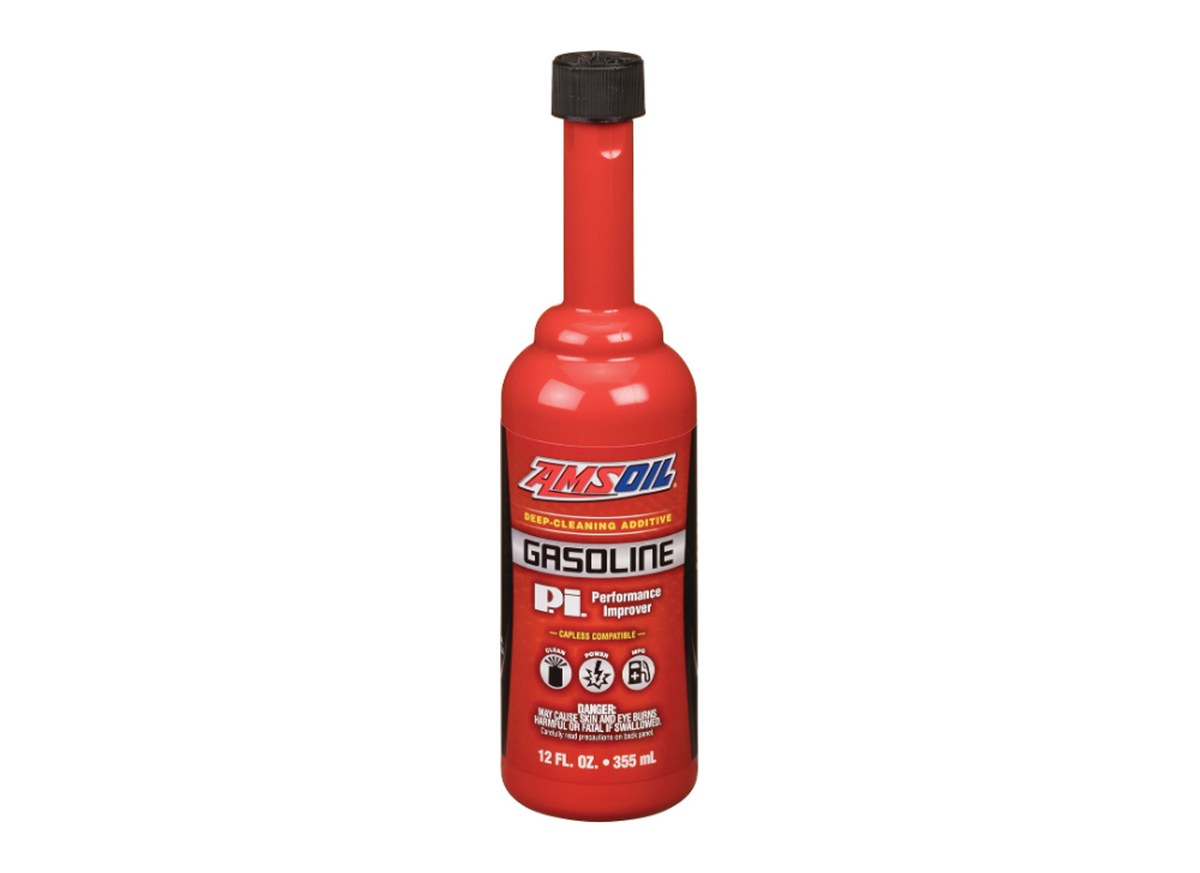
This all sounds dire. But you can sometimes address pre-ignition by using a higher octane gas or by cleaning deposits from your engine with a fuel-system cleaner like AMSOIL P.i.® Performance Improver.
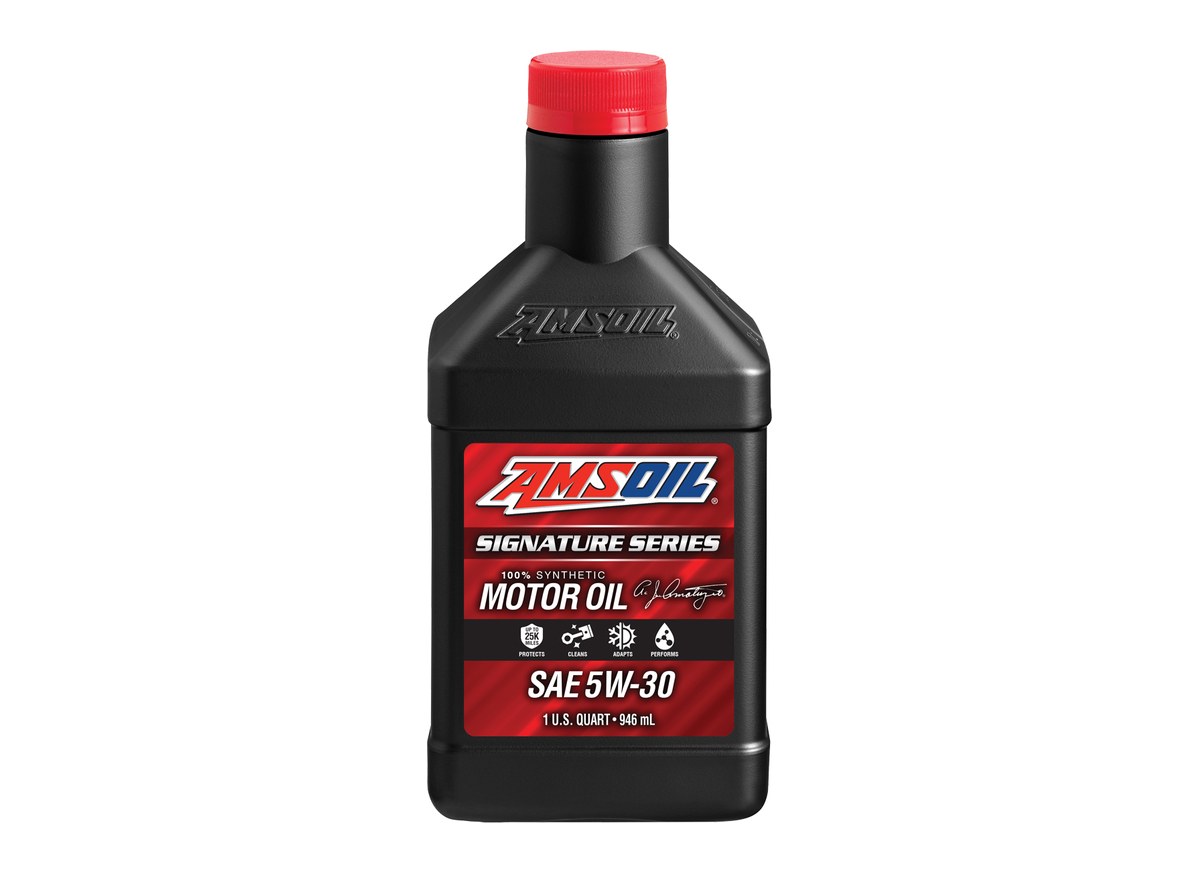
Using a higher-quality oil that flows better in cold weather and maintains its viscosity when hot can sometimes quiet a valvetrain tick.
Rod knock is the worst of the three. Once the clearances between the crank journals and connecting rods have widened due to wear, it’s just a matter of time before catastrophic damage.
In any case, visit your mechanic and take care of the problem before it gets worse.
The bottom line…
The moral of the story is simply to pay a little more now to maintain your vehicle rather than spend a lot later to fix it.
Use a high-quality oil that stands up to extreme heat and maintains correct oil pressure. Periodically clean combustion chamber deposits with a fuel additive, such as AMSOIL P.i.
Doing so can help keep your vehicle running properly and quietly for years.
Updated. Originally published: June 2, 2017.



Comments
AMSOIL Staff articles draw on the combined expertise of AMSOIL engineers, chemists, Technical Services specialists, technical writers and product marketers. Content is developed from AMSOIL data sheets, laboratory and field testing, oil-analysis results and more than 50 years of synthetic-lubricant development. Topics span automotive, diesel, powersports, marine, small-engine, agricultural and industrial equipment, covering lubrication fundamentals, maintenance practices, product selection and real-world customer experience.
Share: