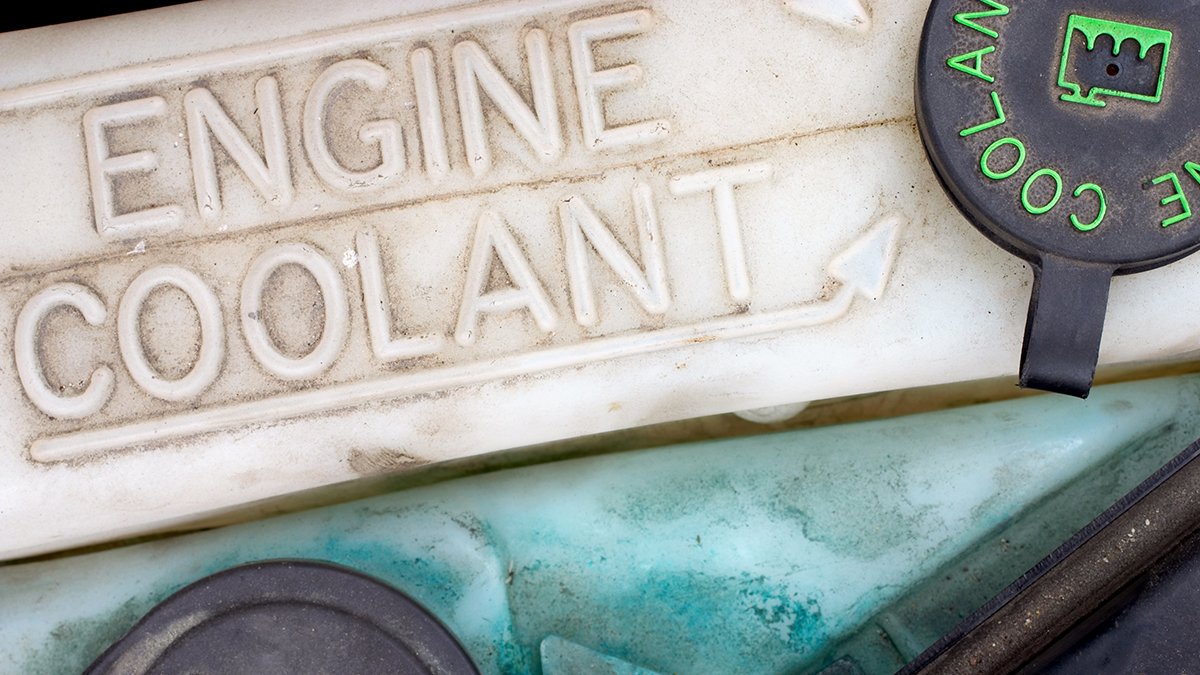

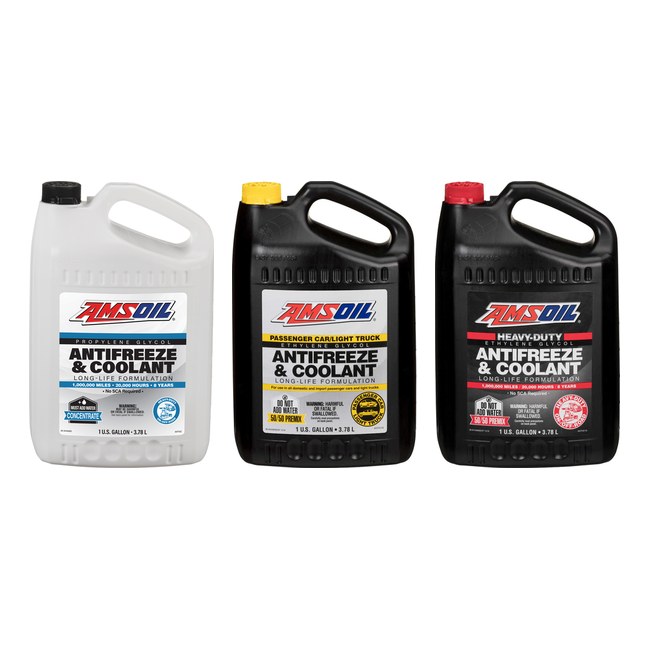
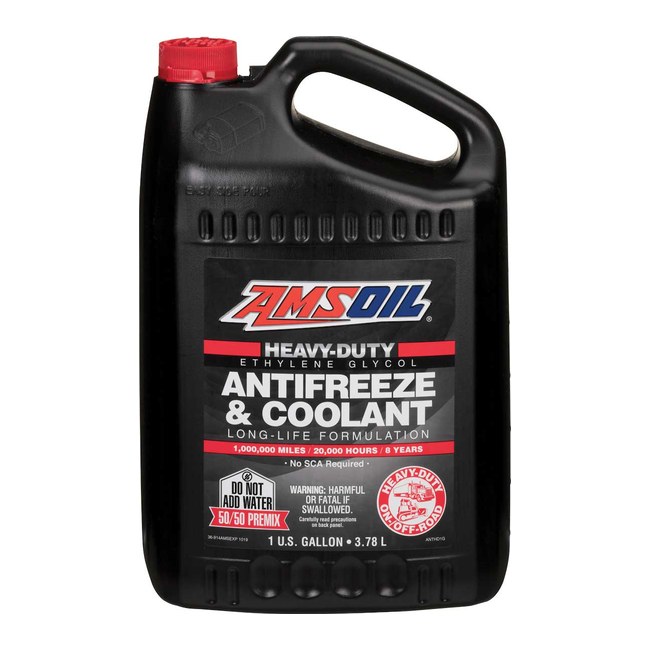

Antifreeze & coolant is critical to proper engine operation. Vehicle owners usually understand the importance of keeping their coolant reservoir full, but it’s often overlooked when performing preventative maintenance. One reason may be that they don’t realize the importance of a properly functioning cooling system for maximum engine performance. Another reason is the confusion surrounding the different “colors” of coolants on the market and potential problems when mixing incompatible coolants.
Video transcript: How to Check Your Engine’s Coolant System
Featuring John Gardner, host of Motorhead Garage, and Leonard “Len” Groom, AMSOIL Director of Product Marketing (author profile).
John Gardner: We were rolling along on our way here to the shop, and look what we found. A vehicle broken down. Fortunately, we had our tools with us, so we went up under the hood and we found a coolant failure. One of the hoses actually blown off.
Welcome to this AMSOIL Tech Tip. Yeah. It’s all about the coolant system. And if we get into the coolant system, we have to look at how it functions.
And you can see here, it starts at the bottom there with the water pump. It’s gonna actually take the fluid up to the water pump through the block. Once it goes through the block, out a thermostat, and then returns back to the radiator. It’s all about that law of thermodynamics, and I have it for you right here.
You can actually see it. If I fire it up, I said it starts at the water pump, and then what’s happening here is it’s coming in through the bottom and out through a thermostat, which we don’t have on this motor, so it’s allowed to flow here and return to the radiator. I’m taking the heat from the motor, taking it to the outside air, boom, getting rid of it. Once again, that law of thermodynamics.
But you’re going to have to have a thermostat, and you can see a thermostat right there on this graphic. It’s actually open or closed. When it’s closed, it’s going to bypass and let the engine get up to temperature very quickly, kind of in emissions reasons. I got one right here and you can see it.
So when it opens and closes, hey, better yet, I can actually show it to you opening and closing. What we did is we took one of these thermostats and with temperature, we went ahead and boiled it. And once we boiled it, we got it above the temperature of where it needed to be open. You see the gap right there?
Well, that’s actually an open thermostat. So what do we do with it? Well, we put it in cold water. And once we put it in that cold water, you can actually see it start to close.
That’s pretty cool. Anytime you do any coolant repair, you want to have a thermostat. Now to check the coolant systems, you can do a couple things. Up on the screen, I got a refractometer.
You just look through it. You can see the glycol level. You can see if your coolant’s good. You can do test strips or you can do a hydrometer.
But Len, the deal is there’s all collage there of different color coolants. Manufacturers use specific coolant. That’s important with the vehicles today.
Len Groom: Right. There’s not just one or two types of coolant anymore. And the reason for the dye is to their specific type of coolant. But the reasoning behind that is the metals that we’re using to build the components, the engine block, the cylinder heads, the radiator aren’t just a couple different types of metal anymore. They’re aluminums. They’re alloys. There’s all different kinds and we need to be providing protection.
John Gardner: Now AMSOIL has that coolant for multiple engines?
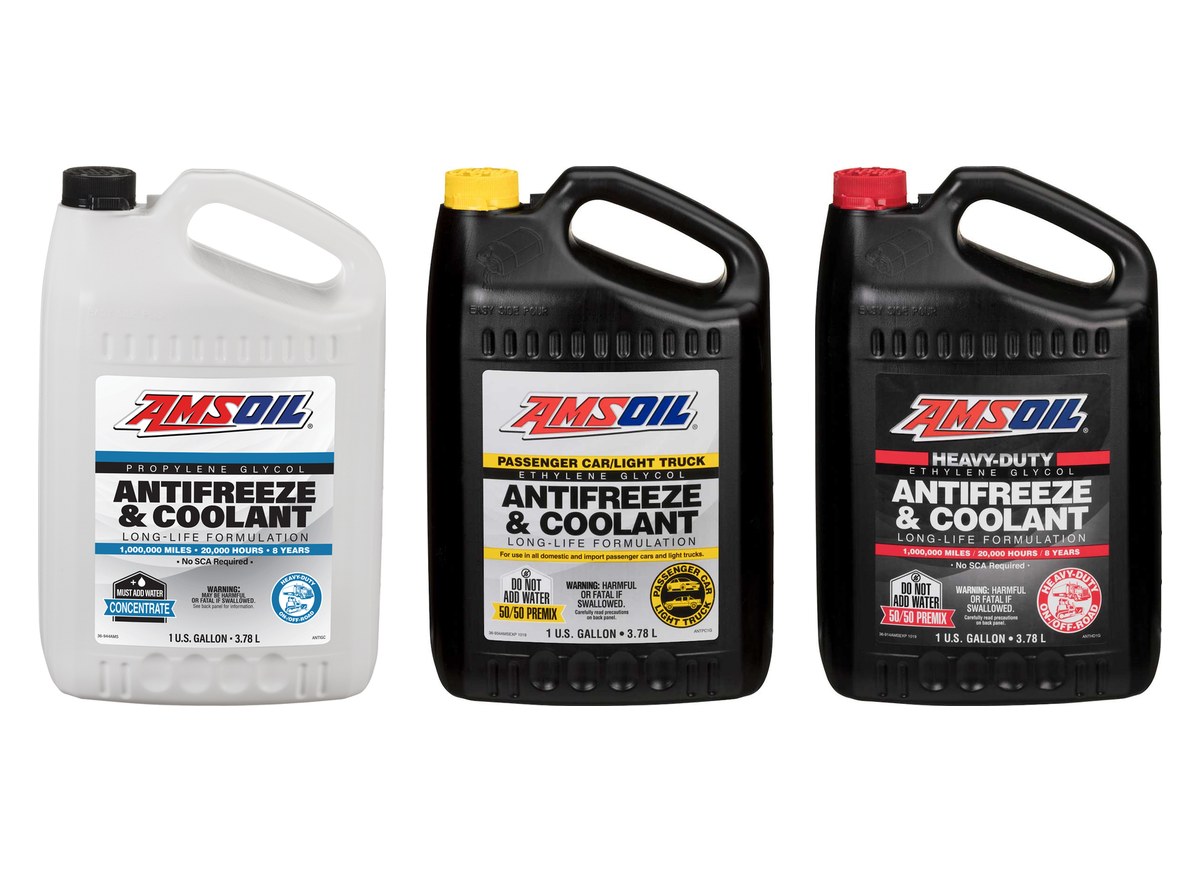
Len Groom: That’s correct. We’ve got coolant for all your needs. Just got to look it up, what it fits, and go from there.
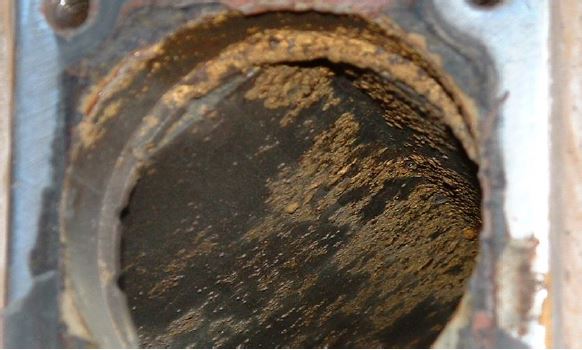
John Gardner: Now also tell me about this. This holds it looks pretty good, Len, but if you look inside, man, it’s totally rotted out and deteriorated. Right. Here’s a water pump right here. The fins are totally missing. That’s not going to produce any flow, man. Corrosion, big problem.
Len Groom: Right. Dissimilar metals, corrosion. It’s basically the coolant reacting with the engine block or the heads or the water pump, and that reaction creates corrosion. Metal can actually be stripped away.
John Gardner: Len, that’s incredible, and that’s why it’s so important to use AMSOIL coolant. You know, maintenance, maintenance, maintenance. You got it? Whether it’s your coolant system or any other system on your vehicle, AMSOIL has you covered. For a comprehensive and simple to use website, just go to AMSOIL.com.
What is Antifreeze & Coolant?
Like motor oil, antifreeze & coolant consists of a base component mixed with additives. The base, either ethylene glycol (EG) or propylene glycol (PG), helps regulate engine temperature, lowering the freeze point of water to protect the engine during winter while raising the boiling point of water to help prevent engine overheating in the summer. It must first be mixed with distilled or high-purity water (usually 50/50), either by the antifreeze manufacturer or the consumer, before it goes into the vehicle’s radiator.
- Ethylene Glycol is the more common of the two. Compared to PG at a similar mix ratio, it offers a slightly better freeze point and heat-transfer ability. Plus, it’s less expensive.
- Propylene Glycol formulations are required by some racetracks and off-road parks.
Antifreeze & coolant must provide more than just freeze and boil protection. It also must guard against corrosion, cavitation, scaling and additive drop-out, and it’s up to the additives to achieve these tasks. There are three essential categories of additives, and any of them can be blended with the two glycols mentioned above.
Why Can’t I Just Use Water?
Because water boils at 212°F (100°C) and freezes at 32°F (0°C), it doesn’t have the temperature range to provide boil-over protection for normal engine operating temperatures or freeze protection fir normal winter temperatures.
However, mixing water 50/50 with antifreeze raises boil-over protection to around 265°F (129°C) and lowers freeze protection down to around -34°F (-37°C). Interestingly, the freeze point of straight antifreeze is only about 0°F (-18°C), underscoring the importance of mixing it with distilled or high-purity water.
Not only does antifreeze keep your engine’s temperature in check, it also provides the following benefits:
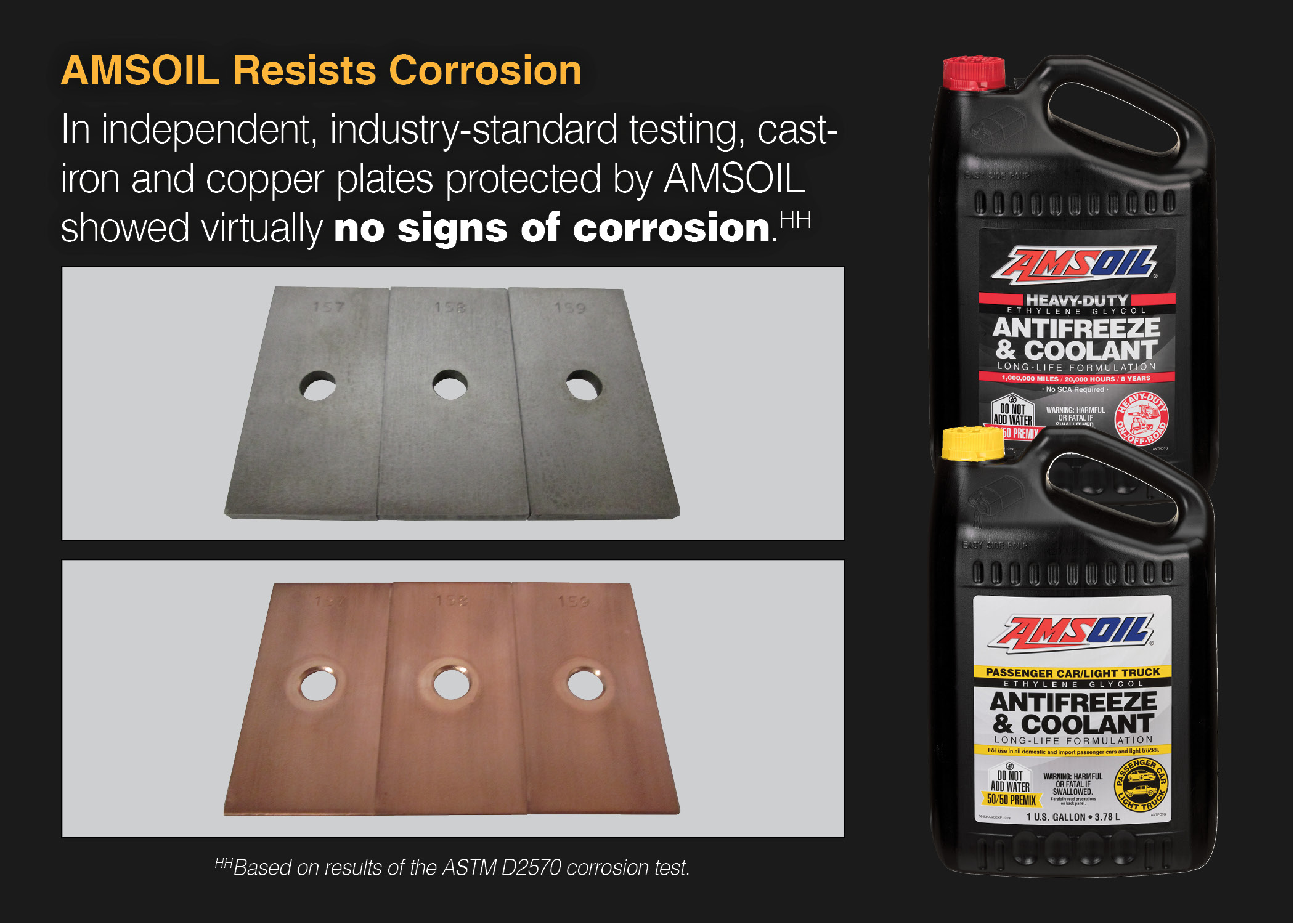
- Protects against corrosion that damages metal components
- Protects against scaling that interferes with heat transfer
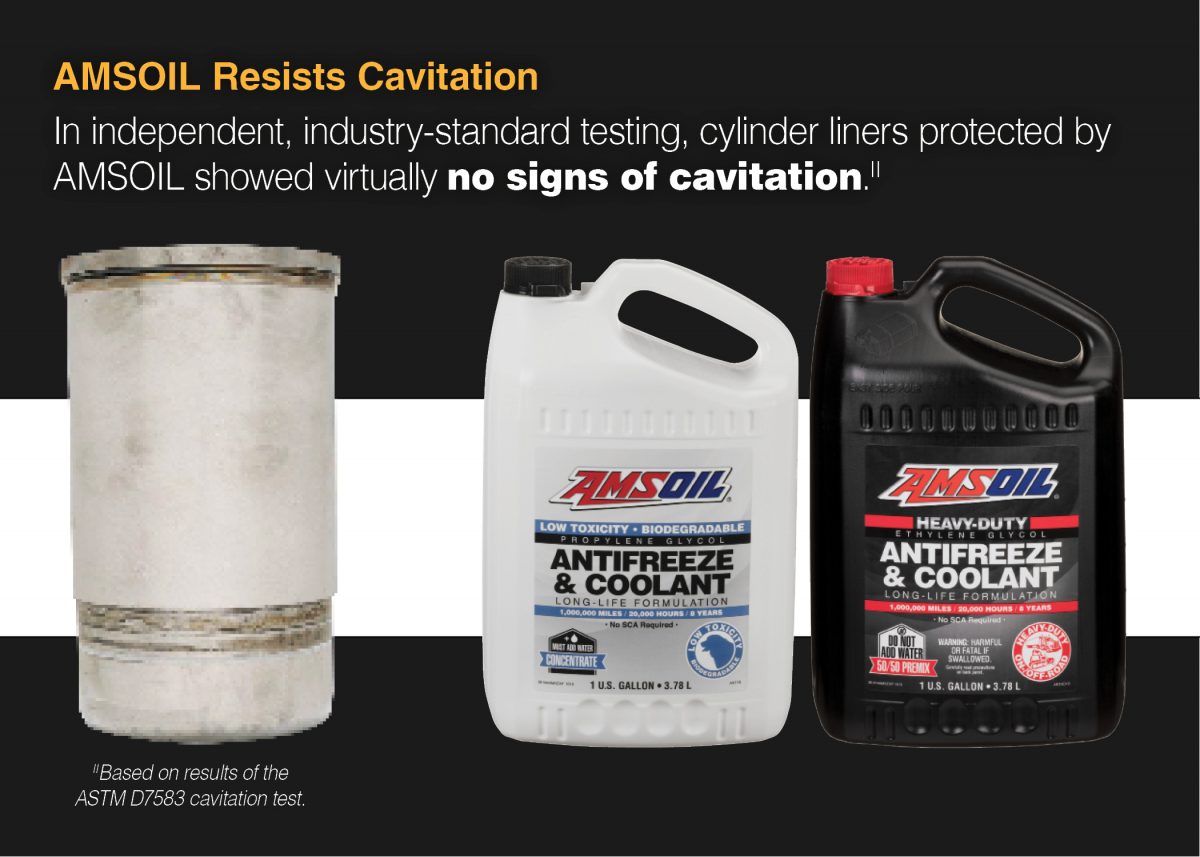
- Protects against cavitation and pitting that damages cylinder liners (heavy-duty applications)



Comments
David Hilgendorf is an AMSOIL Technical Writer who develops content for automotive, powersports and industrial audiences. His work includes technical data sheets, magazine articles, blog posts, white papers, product literature and application guidance. Hilgendorf works with engineers, laboratory personnel and technical specialists to communicate lubricant testing, product performance, maintenance practices, metalworking fluids, grease, motorcycles, marine equipment and industrial reliability.
Share: