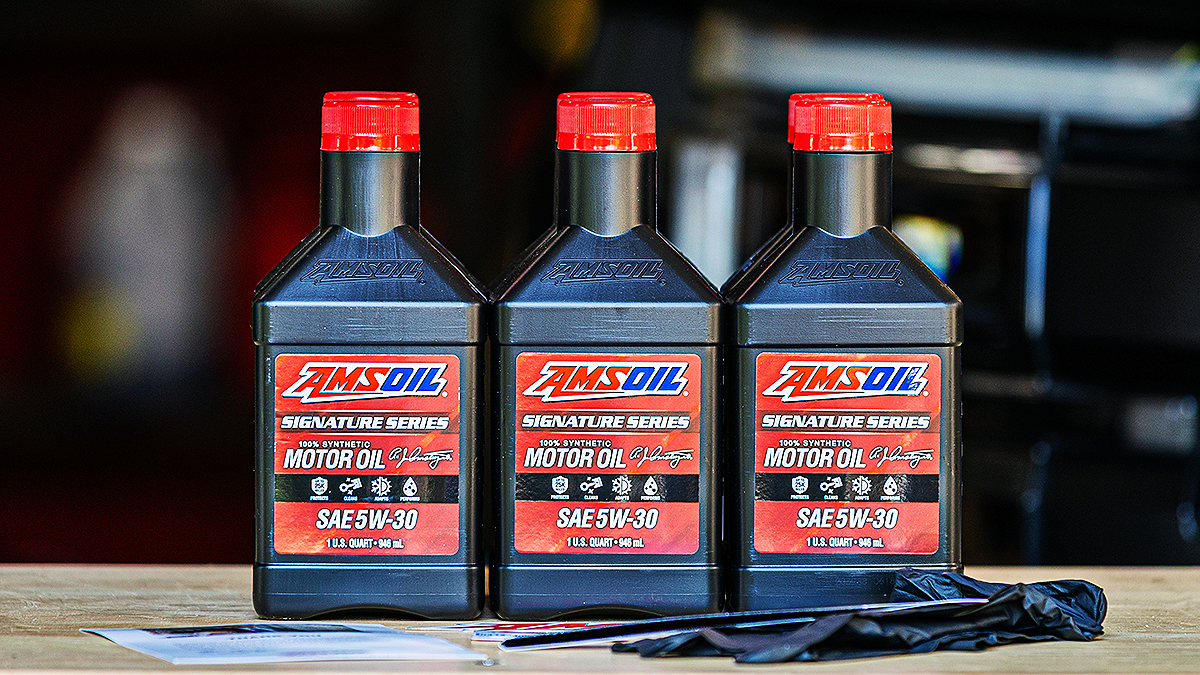

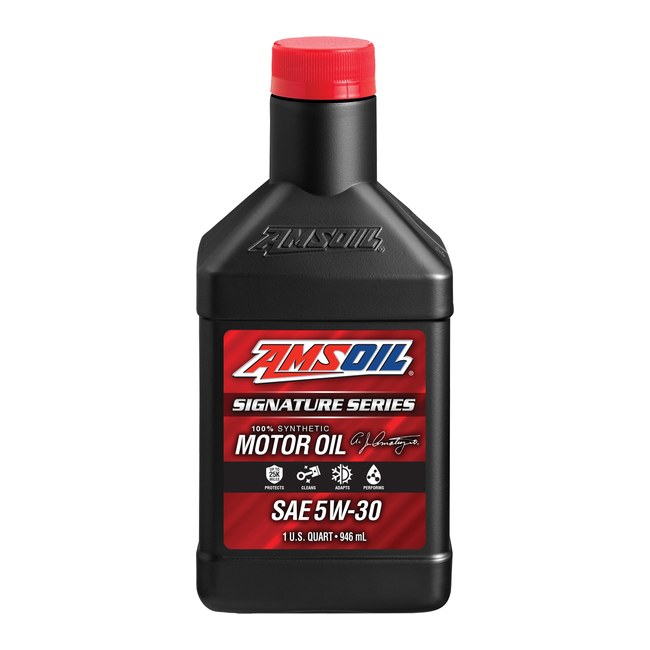

Changing your oil every 3,000 miles is a practice passed down for generations. The origin stems from the noble effort to provide consumers with a simple vehicle-maintenance rule that left plenty of room for error. However, times – and oil quality – have changed. In this post, we’ll look at whether you still need to change oil every 3,000 miles.
Video transcript: Your Top Oil Change Questions Answered!
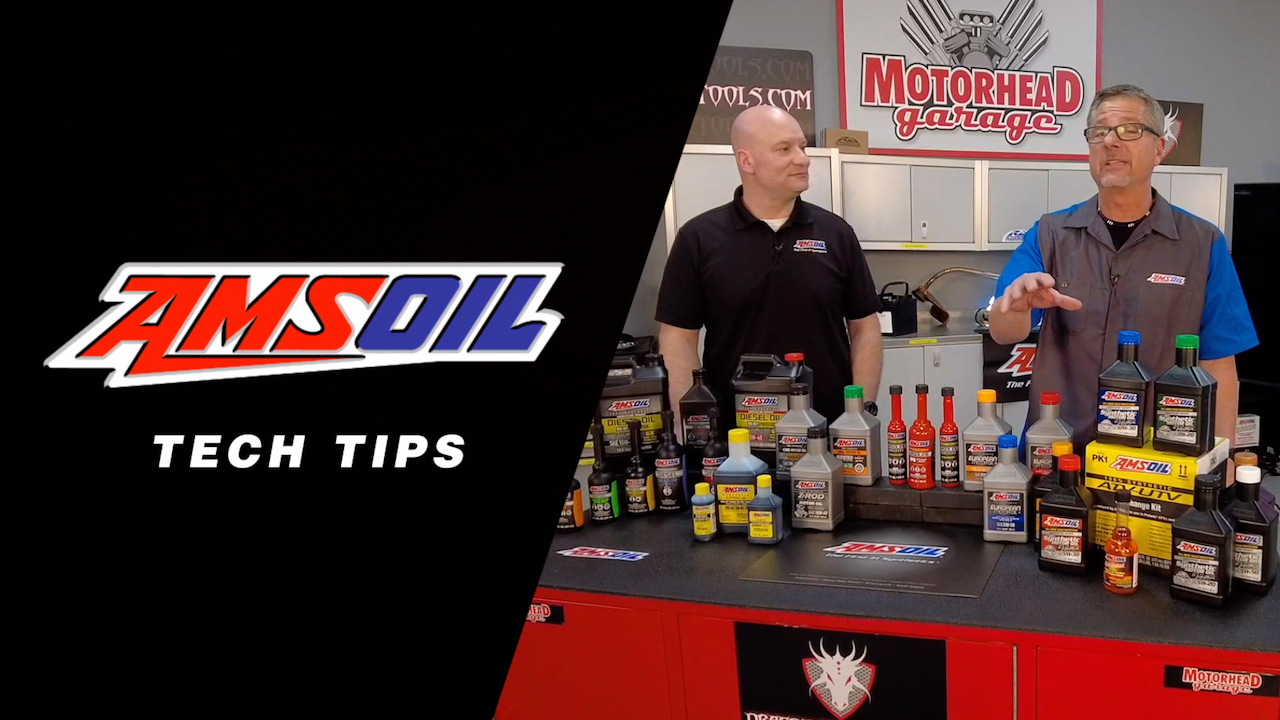
Featuring John Gardner, ASE Master Certified technician, automotive technology instructor and host of Motorhead Garage, with AMSOIL Director of Product Marketing Len Groom.
John Gardner: Well, you guys have been blowing up the internet with phenomenal questions. The AMSOIL Tech Tip seems to be a huge success. We love the comments and feedback. We hear you, but you also sent some questions, so we’ve got our expert here, Len. Len, let’s talk about a few of these questions that got sent in and see if we can explain a little bit about what’s going on.
Phil from Santa Fe, New Mexico, says, “Should I change my oil when it turns black?” Great question. What do you say to that?
Len Groom: I would say no, you do not need to do that. The oil turning color is the natural progression of the oil going through its lifespan. Things get in the oil. Anything that the car consumes, such as gasoline, ends up in the oil through many different ways, blowby being one of them.
John Gardner: Yeah, now blowby, that’s pretty cool. We actually have a graphic right here, Phil. What’s happening is when it fires, it actually blows some of that by the rings, and it’s by design. It’s going to get by there no matter what. You’ve got a massive amount of compression, so whether it’s oil, like you said, gasoline, whatever’s up in there, carbon, soot, it’s going to go down in the oil, and it’s going to turn black pretty quickly.
Len Groom: Right. And as long as the oil is designed to handle those byproducts of combustion, if you will, there’s no issue.
John Gardner: Now, our next email: “Do I really need to change my oil every 3,000 miles?” Dennis from Orlando. Dennis, great question. I do, but I don’t know if you have to anymore. What do you think, Len?
Len Groom: Well, buy a new car and look at the owner’s manual. Most of them have moved to 5,000 miles. I would say that’s pretty much table stakes now. Some are at 7,500. In fact, John, we’ve got an oil at AMSOIL, our Signature Series, that’ll go out to 25,000 miles. So as long as the oil is formulated to deal with the byproducts of combustion, it can handle that. The dispersant package, the detergency package, all those technical things: as long as we’ve covered our bases, there’s no problem leaving that oil in there longer.
John Gardner: Yeah, it’s a great idea. Len, thank you for shedding a light on some of these questions. You guys keep the feedback coming. These Tech Tips are phenomenal. Go to the AMSOIL website and check out all their products.

Marketed by fast lubes
Fast-lube chains, which first entered the market in the 1970s, adopted and amplified the 3,000-mile-oil-change message through sustained marketing campaigns. Owned by major oil manufacturers, fast-lube chains had a financial interest in seeing customers frequently and selling more oil, the vast majority of which was conventional.

Endorsed by your dad and mechanic
While this timeline helps provide context, it does little to address the emotional connection to changing oil every 3,000 miles.
The reason so many motorists dutifully change oil every 3,000 miles is because their fathers and their mechanics – two of the most influential groups in automotive circles – told them they should.
For many people, the 3,000-mile oil change is a tradition that ties them to the person who taught them many important life lessons, like how to keep your car running properly.
Tradition updated with new technology
Many families pass down traditions, and while the spirit of the tradition is upheld, many elements are updated to reflect current technology and lifestyles.
Your call to a distant relative during the holidays may now require Skype instead of a rotary phone. Likewise, your annual family vacation may start at the airport instead of in the family station wagon.
In the case of the 3,000-mile oil change myth, we can preserve the noble spirit of taking good care of our vehicles by establishing a habit of changing oil periodically, but not necessarily every 3,000 miles.
Since the advent of the 3,000-mile oil change, advances in lubrication and automotive technology have rendered it outdated, like adding water to automotive batteries, replacing ignition points and adjusting the carburetor. Now, many vehicle manufacturers recommend changing oil every 5,000 miles (8,000 km) or longer, with some calling for up to 15,000 miles (24,000 km) between oil changes.
Synthetic motor oil technology
Synthetic lubrication technology plays a significant role in busting the 3,000-mile oil change myth. Synthetic motor oil offers better wear protection, improved resistance to temperature extremes and increased cleanliness properties compared to conventional oil. For that reason, it’s safe to use it longer than 3,000 miles (4,800 km).
AMSOIL products provide confidence with additional protection that goes beyond the standard. It’s what your dad or grandfather may have called the “belt-and-suspenders” approach. For example, AMSOIL Signature Series Synthetic Motor Oil…
- Maintains horsepower and torque throughout a 125,000-mile test.¹
- 4X more piston protection against LSPI than the industry standard requires, even after 25,000 miles.²
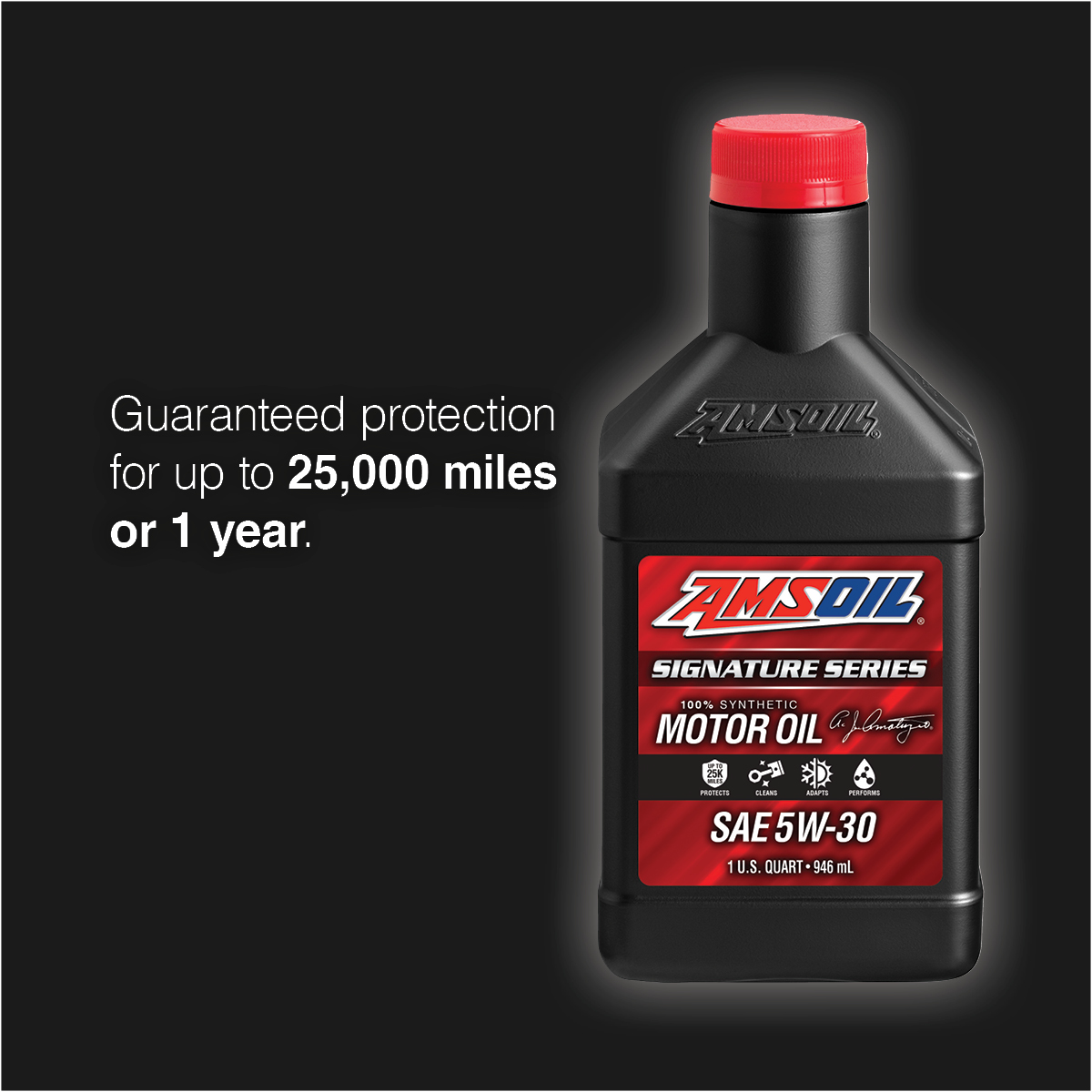
- Guaranteed protection for up to 25,000 miles or 1 year
So, while it’s vital to change your oil and take care of your vehicle, it’s also important to advance your methods in lockstep with the latest technology. And modern synthetic oils have made the 3,000-mile oil change as dated as the rotary phone.
¹Based on comparative start- and end-of-test horsepower and torque measurements in a 125,000-mile accumulation study with AMSOIL Signature Series 5W-30 100% Synthetic Motor Oil in a 2025 Ford* F-150 Raptor* equipped with a 3.5L high-output engine. ²Based on AMSOIL Signature Series 5W-30 100% Synthetic Motor Oil in the Sequence IX aged-oil LSPI test after 25,000-mile service interval.
This article is part of our Motor Oil Basics guide. See every article in the guide.



Comments
Brad Nelson is an AMSOIL Technical Writer II who develops content about lubricant technology, product performance and vehicle maintenance. He works with engineers and product specialists to translate testing, application requirements and approved performance claims into clear customer guidance. Nelson’s work includes AMSOIL Blog articles, AMSOIL Magazine features and technical explanations concerning motor oils, gear lubricants, vehicle systems and maintenance practices.
Share: