


Outboard motors are used to power a variety of watercraft, from small fishing boats to large yachts. These motors are subjected to constant moisture and high-rpm loads, which can negatively affect their performance and have a significant impact on your overall enjoyment of boating.
Understanding the top five things that affect outboard performance is key to ensuring that your outboard motor is running at its best and doesn’t leave you stranded on the water.
#1 Fuel quality
The quality of fuel has a significant impact on the performance and reliability of your outboard motor. You should always use a reliable source of fresh, clean, ethanol-free fuel that meets the manufacturer’s specifications for the engine. Gasoline with a low octane rating or containing water, ethanol or other contaminants can cause significant engine performance problems.
Ethanol is an alcohol and solvent that also readily absorbs water from the air, which can damage fuel system components, cause corrosion, reduce power and even cause the engine to fail. These problems are exacerbated by extended periods of storage, when water can separate from the fuel and contaminated gas can clog up the system, making for hard starts and poor performance.
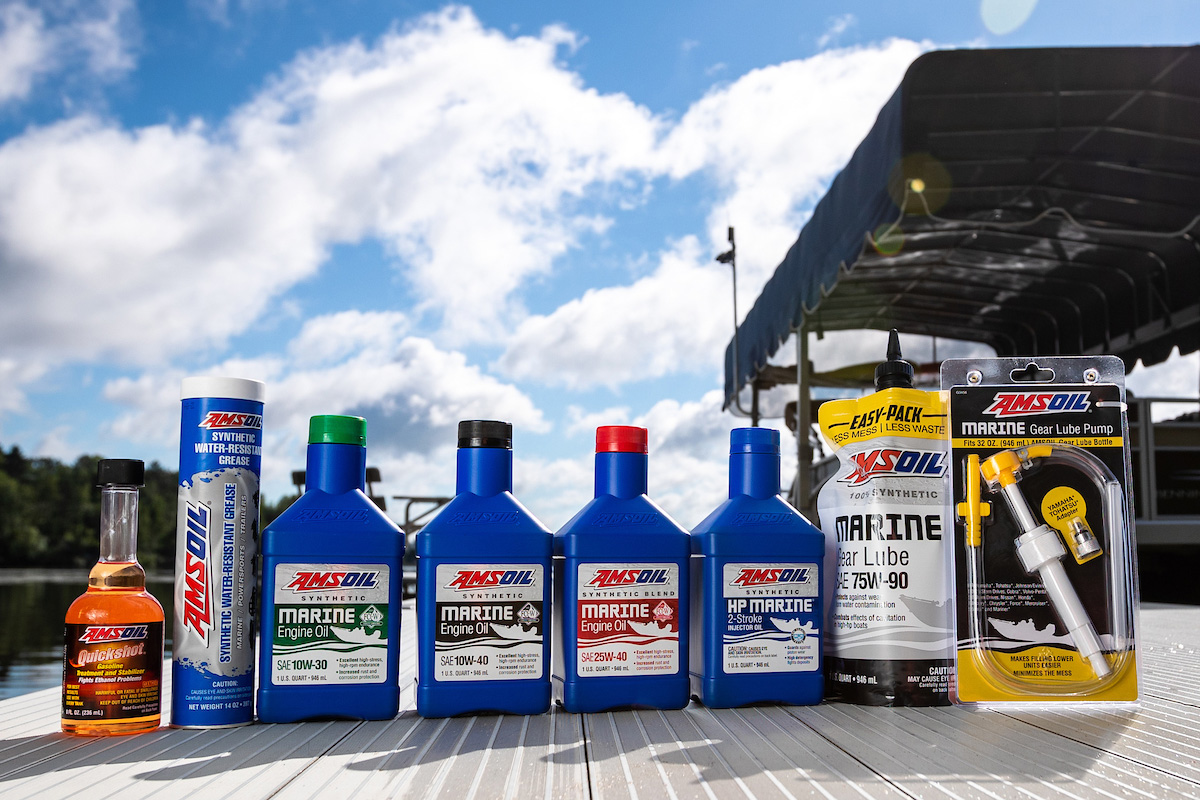
To maintain peak outboard engine performance in severe-service marine environments, AMSOIL Synthetic Marine Engine Oil provides increased engine protection against rust and corrosion caused by moisture entering the engine. And don’t forget to add AMSOIL Gasoline Stabilizer or Quickshot to the fuel tank for additional protection anytime you are storing your boat.

#2 Maintenance
Proper maintenance is essential for keeping your outboard motor running at its best. This includes regularly changing the spark plugs, motor oil, and oil and fuel filters, as well as checking the belts and hoses for wear. Neglecting to perform regular maintenance will reduce the performance of your outboard motor, until it eventually needs to be repaired or replaced.
Spark plugs are essential for igniting the fuel-air mixture in the cylinders. Worn, dirty or fouled plugs cause poor combustion, misfires, loss of power and increased fuel consumption. Inspect and replace spark plugs according to the maintenance schedule in your owner’s manual.
The exhaust system of your outboard motor is designed to expel the burned gases from the engine and to reduce noise. However, clogged, damaged or leaking exhaust can affect the performance and efficiency of your engine, so check your exhaust system periodically and repair any problems immediately.
The lower unit of your outboard motor is continuously submerged when in use, making it prone to water intrusion and lubrication failure, which can cause damage to the gears that propel your boat. AMSOIL Synthetic Marine Gear Lube reduces friction and wear, and protects against rust and corrosion, providing excellent gear and bearing protection, even when contaminated with 15% water.
#3 Engine size and height
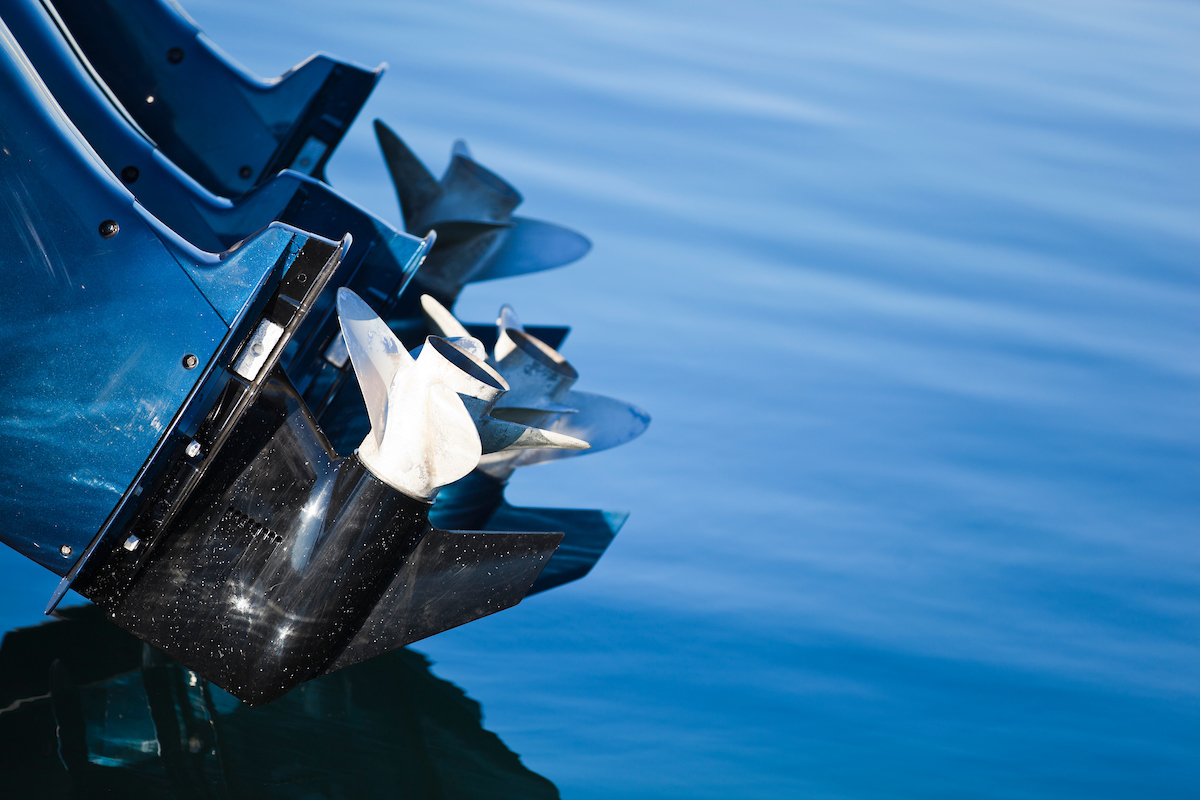
Changing the position of the outboard motor optimizes your motor’s performance for different water conditions. The trim angle refers to the angle of the outboard motor in relation to the water’s surface, which significantly impacts the boat’s speed, fuel consumption and handling performance.
Raising the engine higher also raises the bow, lightens the steering, reduces drag and increases boat speed. However, raising it too high can cause ventilation, which is the result of air or exhaust gases being pulled into the propeller blades and causing the blades to lose their grip on the water. It can also create cavitation, which is an extreme reduction in pressure on the back side of the propeller blades that reduces performance.

#4 Propeller selection:
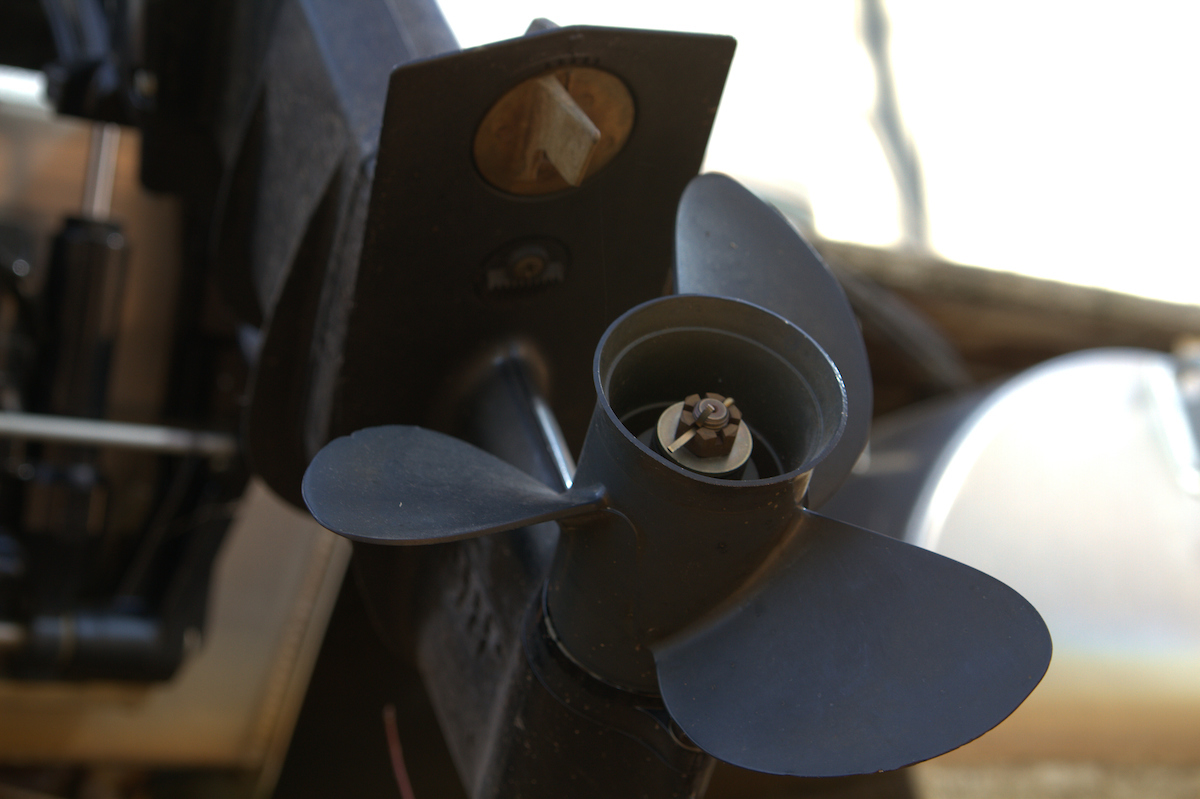
The propeller is responsible for transmitting the engine’s power to the water and plays a crucial role in speed, acceleration, fuel efficiency and handling. If your propeller cannot smoothly cut through the water, it will cause disturbances that often result in cavitation and reduced performance.
Choosing the right propeller involves a combination of factors, including the size and weight of your boat, the engine’s horsepower, and the type of water you’ll be boating in. You may need to try different props when seeking the right balance of material, diameter, pitch, number of blades and cupping for your specific boating needs.
The right propeller allows your motor to achieve maximum speed and efficiency, while the wrong one can decrease performance, increase fuel consumption and potentially damage your engine.

#5 Weight distribution
The amount of weight and distribution of people and gear on the boat can also affect performance, and an overloaded boat will put more stress on the outboard motor. An uneven distribution of weight can cause your boat to sit too low in the water, reducing its speed and increasing fuel consumption. Conversely, a high bow can cause your boat to plane poorly, leading to potentially dangerous handling. Be sure to balance the weight distribution to get the maximum performance from your outboard motor.


Other factors
Environmental conditions can also affect outboard performance. In rough water, your boat will need more power to push through the waves. In shallow water, you may need to raise the prop to prevent it from hitting the bottom. In cold weather, your engine takes longer to warm up and produce power. In hot weather, your engine may need to run at lower RPM to avoid overheating. If you are boating at high elevation, your engine may need to work harder to overcome the lack of oxygen in the air.
Each factor is interconnected, so a problem in one area can lead to issues in others, causing chain reactions that can negatively impact performance. Therefore, inspecting your outboard motor regularly and performing routine maintenance is crucial to achieving maximum performance. AMSOIL marine products are engineered to protect your outboard motor and ensure it runs at peak performance under any conditions, so you have a better, more efficient and trouble-free boating experience.

Video transcript: How to Use the AMSOIL Easy-Pack to Change Outboard Motor Lower-Unit Oil
Welcome to Tech Tips. Today we’ll be changing the lower unit oil on an outboard motor. Changing oil in the lower unit isn’t a difficult process, but it’s extremely important. The process is the same whether it’s a small outboard or a large inboard.
We recommend that you’re changing the oil every fall for seasonal use people. The first thing you need to do is assemble the proper tools. For this project, all you need is a flat-end screwdriver, a drain pan and a rag. Locate the drain plug and the vent plug.
In this case, the drain plug is located here and the vent oil-level plug is here. What you want to do is loosen the vent plug. Then you move down to the drain plug and remove that. While it’s draining, you can remove the vent plug.
While the fluid is draining, it’s a good time to check its condition. A milky or creamy appearance would indicate water intrusion, and that means you could have a bad seal. At that point you need to find the problem before proceeding. The condition of this fluid looks very good, so we’re going to proceed.
Okay. To refill this lower unit, I’m holding the traditional option. We’ve got a pump. We’ve got the traditional gear lube bottle that you’ll find in any parts store.
Once we start adding fluid to this, the motor will fill up. And this pump usually results in some type of a mess because the hose is still full of fluid. If the quart runs dry before we’re done filling the motor, we have to try and swap another one on there. Anyone who’s done this understands that this can be messy.
Instead of all that mess, today we’ll be using the AMSOIL easy-pack to refill this lower unit. What you need to do first is just snip the end down about 1/8 of an inch. So you just want to push forward on the easy-pack a little bit, turn it and it will thread itself right into the hole. Once you thread it in, you’re going to gently squeeze on the pack.
And you’ll start pushing oil into the motor into the lower unit. Once you see it come out the vent plug on the top, that means it’s full, okay? Once it starts pushing out of the top, we’re going to put the vent plug back in. Tighten your vent plug.
Now you’re ready to remove the easy-pack and put your drain plug back in. Once the plugs are all tight, clean up any excess oil and you’re done. So there you have it. A few simple steps and your outboard is ready for another season.
Thanks for watching. We’ll see you next time.
This article is part of our Marine Engine Maintenance guide. See every article in the guide.