
Here are a few common reasons why your transmission may shift hard, jerk or hesitate.
Video transcript: How to Address Transmission Slipping
Featuring John Gardner, host of Motorhead Garage, and Leonard “Len” Groom, AMSOIL Director of Product Marketing (author profile).
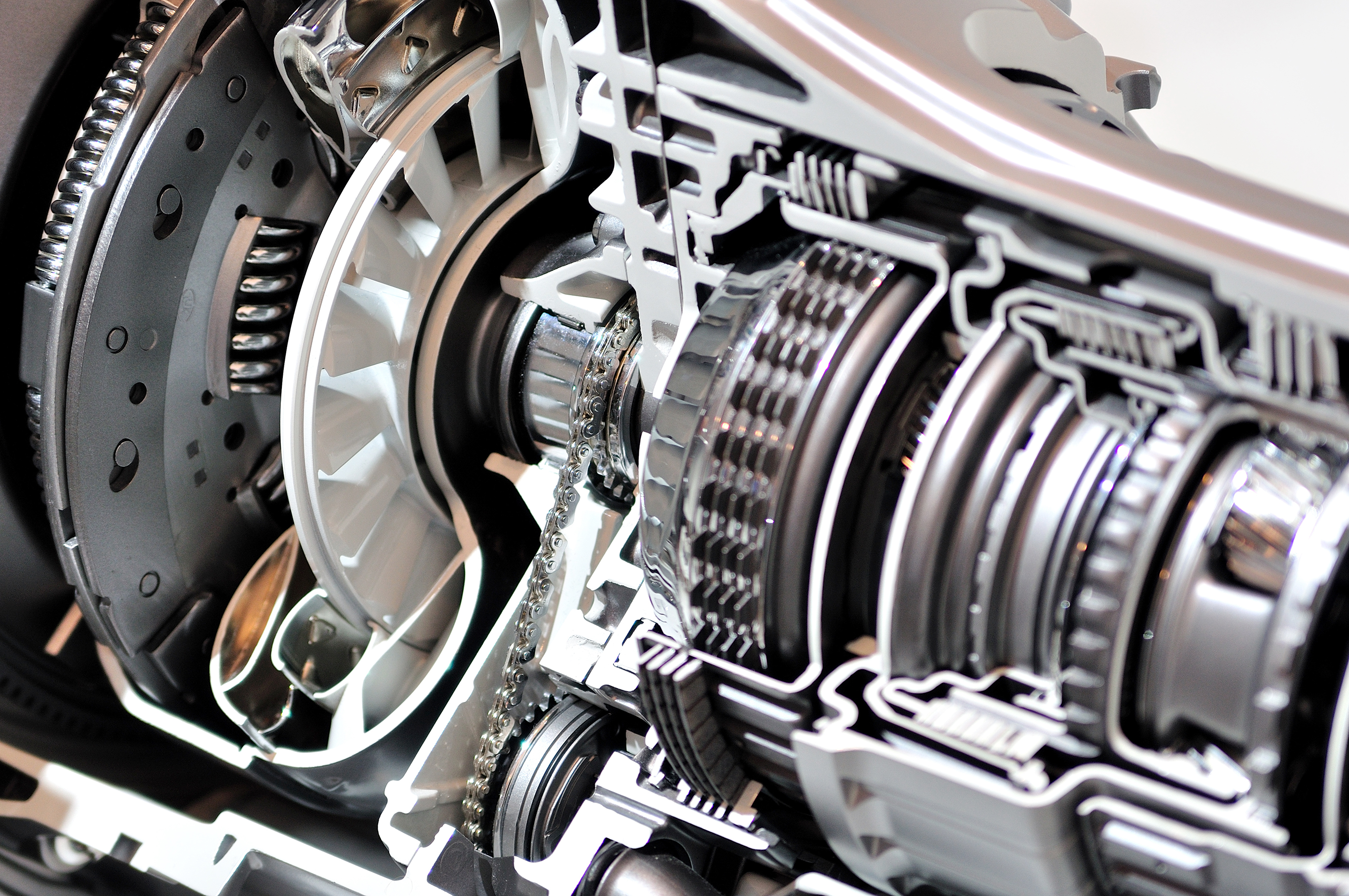
John Gardner: Transmission slipping or perhaps it’s not moving at all. Well, let’s take a look inside to see why that might be happening. Welcome to this AMSOIL tech tip. We’re going deep inside the transmission, and we’re taking a look at the clutch packs.
Where are they? Well, they’re located inside there. You can see them right there inside the transmission. What do they do?
Well, it holds different members of the transmission to achieve gears. It’s a pretty complex machine. But you can see here, there’s friction material, steel plates, friction material, and then a drum with a piston. Better yet, I have one right here on the table.
You can see this is the actual drum. Now, there would be a band around here that would hold the outer and the inner is some members that causes the gears to shift. So I can pull them out here. There’s a little snap ring.
I’ll pull them out, show you the clutches. So you have the actual steel and then in between there, you have these fibers. Steel and fibers. So what’s going on is they’re spinning in there and then down here is a piston assembly.
So when the fluid gets directed to this clutch pack, it actually pushes that piston up, bam, and it squeezes those clutches and it holds those clutches in place. You can see it right here on the graphic. It’s actually got the clutches right here and then the pistons pushing in on squeezing them. Now, here’s a whole range reference chart.
What’s going on here? Oh, we don’t expect you to know that, but it actually shows what’s held and applied to achieve all these different gears. But, Len, these gears are not going to happen without fluid.
Len Groom: Nope. This whole thing requires fluid to make it all work. That’s kind of the cool part, And it’s all fluid under pressure as as you’ve discussed. The thing of it is is that fluid needs to be reliable. It needs to be able to hold up to different kinds of heat, but mainly pressure. And pressure is the keyword there.
I have
John Gardner: a pressure solenoid right here, Len.
And what’s happening with the newer transmission is, well, it might start slipping. The transmission boosts line pressure. Slipping. Boosts line pressure. And then all of a sudden, it doesn’t move at all and you wind up with these clutches, man. AMSOIL has a product that’s gonna help this situation.
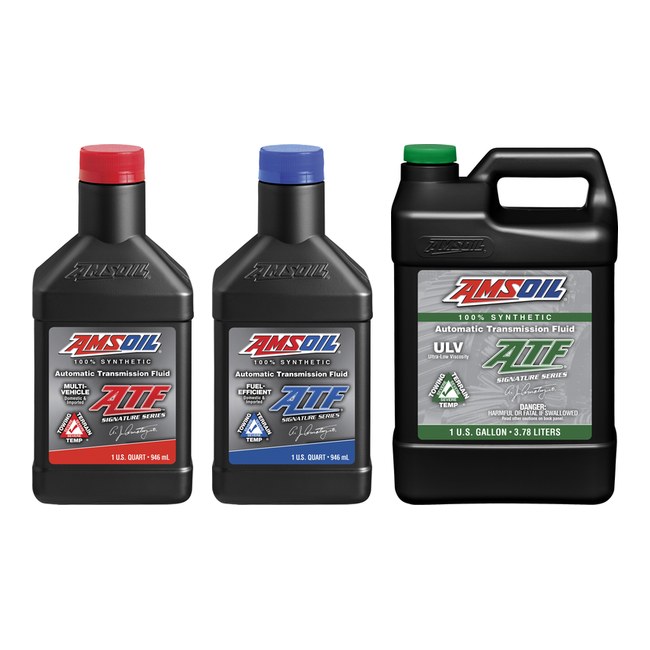
Len Groom: It does. And and our Signature Series Transmission Fluid is designed to hold its viscosity under those insane heat conditions. And then we don’t have to continue to boost those pressures and then increase the heat which causes that clutch slippage. If the fluid will hold together due to, you know, really good base oils, properly formulated additives, you don’t run into any of these problems. So avoid it by using a good product. Simple.
John Gardner: And there you go. You can check them out on the website at AMSOIL.com. Find this fluid and so many others.
• Low fluid level
• Depleted fluid frictional properties
• Poor cold-temperature fluidity
Start with the easiest fix
There’s an old adage when troubleshooting: start with the least expensive and simplest fix.
In this case, check the transmission fluid level first. Low fluid can lead to a transmission that shifts hard.
It’s important to find out why the fluid is low and fix any problems. It could be a leaky seal or other mechanical defect. Otherwise, adding new fluid won’t ultimately solve the problem.
Worn fluid can lead to hard shifts
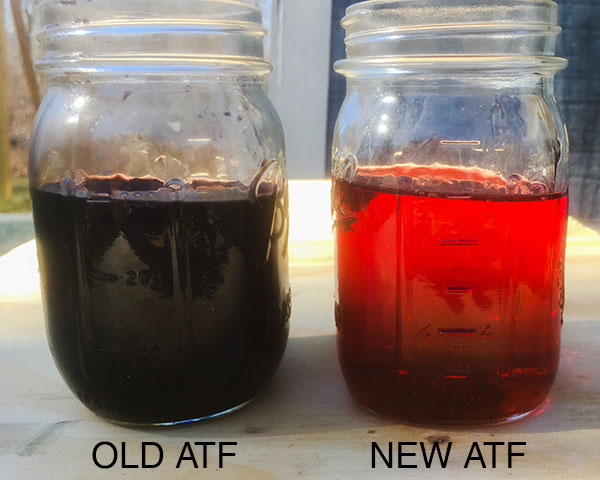
Transmission fluid that has aged and lost some of its frictional properties can also lead to poor shift quality.
When your vehicle’s computer tells the transmission to shift gears, hydraulic pressure (provided by the fluid) squeezes a series of plates together inside a clutch pack to connect the engine to the transmission output shaft and route power to the wheels. The fluid’s frictional properties play a vital role in ensuring the clutch plates bind together properly and gear shifts occur seamlessly.
Over time, the fluid’s frictional properties can degrade, leading to hard, jerky or inconsistent shifts. In this case, it’s time for a fluid change.
How do you know for sure the fluid is worn?
The only definite way to find out is to conduct used fluid analysis. However, fluid that smells burnt or appears dirty is likely due for a change. You can opt for a transmission flush or pan drop.
It’s best practice to change the fluid before the frictional properties are depleted and you experience poor shifting.
Those poor shifts can cause the clutches to wear more rapidly and lead to bigger issues that need mechanical repairs.
Be aware of “adaptive” transmissions
One interesting note affects newer vehicles equipped with adaptive transmissions.
These units “learn” your driving habits and the characteristics of the fluid to adjust shifts accordingly. As the fluid loses its frictional properties, the computer compensates and adjusts transmission performance.
If you’ve recently changed your fluid, the computer may still operate as if old fluid is installed, causing poor shift quality. In these cases, keep driving and eventually the computer will “relearn” your driving habits and the behavior of the new fluid and adjust accordingly. The problem was significant enough on some 2012-2013 Ford* F-150s to cause Ford to issue a technical service bulletin (TSB 13-1-10).
What do “frictional properties” look like?
We know what good, crisp shifts feel like. Can we dive in even further and see what they look like?
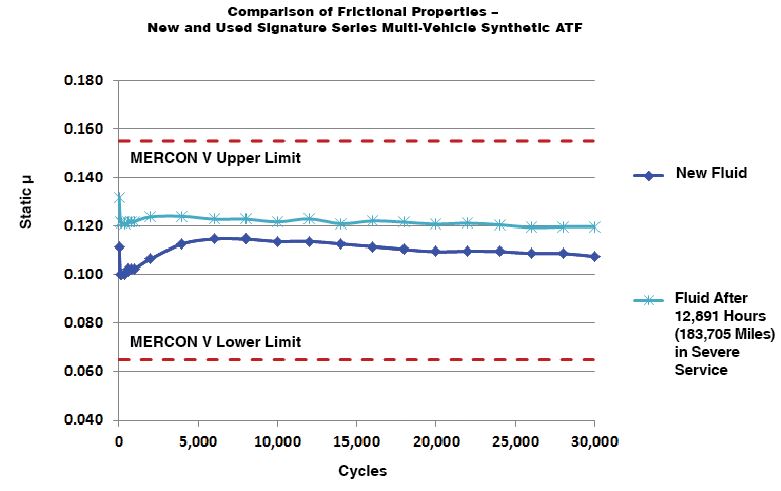
We can, and they appear as a flat, boring line on a graph.
The dark blue line represents the frictional properties of new AMSOIL Signature Series Synthetic Automatic Transmission Fluid. The light blue line shows the frictional properties of the same fluid after more than 180,000 miles in taxi cabs operating in the intense heat of Las Vegas.
As you can see, the lines are extremely close, with no abrupt spikes or dips. This means, after 180,000 miles of severe service, the fluid continued to deliver crisp, confident shifts.
Granted, it’s not exciting to look at – unless you love driving and want to protect your transmission.
Cold weather can lead to a transmission that shifts hard
When the temperature drops, transmission fluids with poor cold-flow properties can thicken and cause elongated and hard shifts until the fluid has warmed up enough to flow properly.
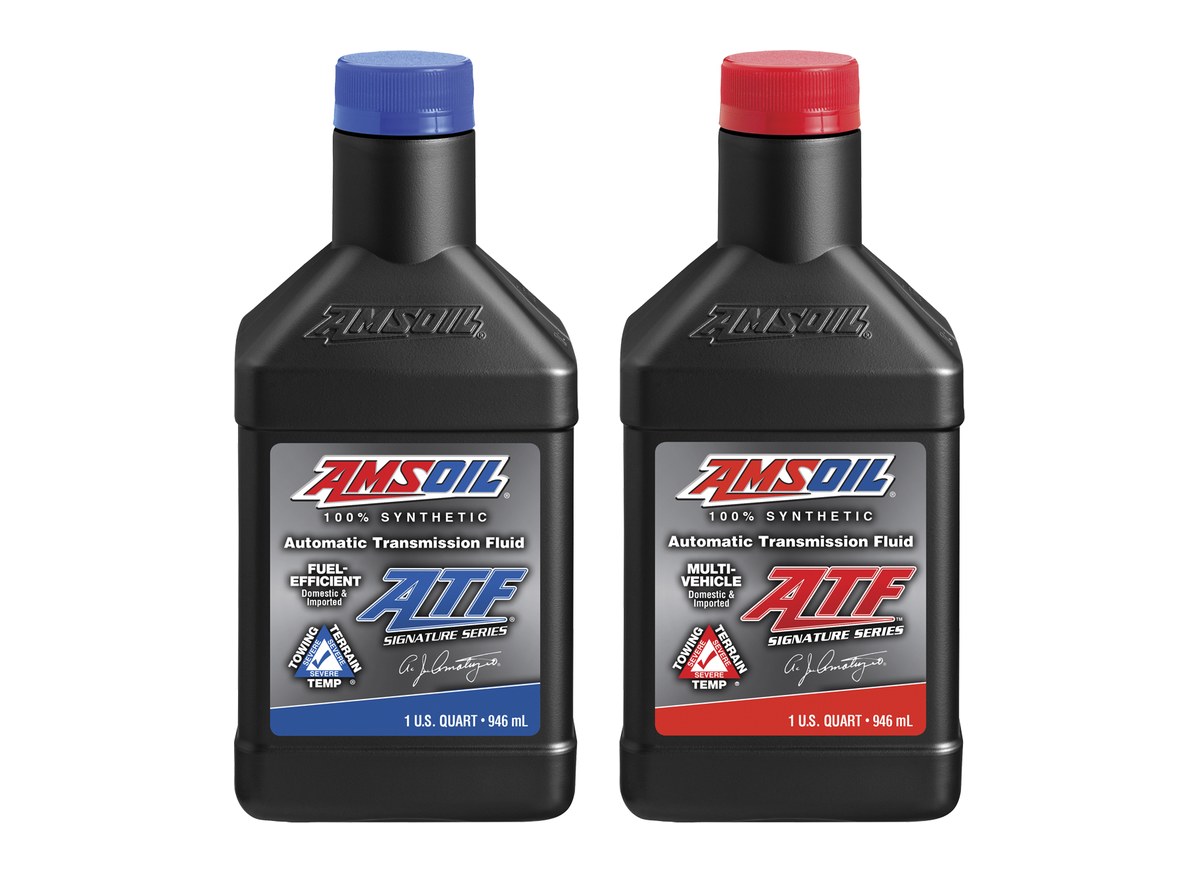
Switching to a high-quality synthetic transmission fluid will help.
Synthetics don’t contain waxes, as conventional fluids do, meaning they remain fluid at lower temperatures for improved shifts during cold weather.
The best transmission fluid available won’t fix a broken transmission. But using high-quality synthetic fluid can help improve shift quality and maximize transmission life.
This article is part of our Transmission and Gear Oil guide. See every article in the guide.

Comments
AMSOIL Staff articles draw on the combined expertise of AMSOIL engineers, chemists, Technical Services specialists, technical writers and product marketers. Content is developed from AMSOIL data sheets, laboratory and field testing, oil-analysis results and more than 50 years of synthetic-lubricant development. Topics span automotive, diesel, powersports, marine, small-engine, agricultural and industrial equipment, covering lubrication fundamentals, maintenance practices, product selection and real-world customer experience.
Share: