


Automatic, manual, CVT or dual-clutch transmission, front or rear differential: every part of your driveline depends on the right fluid, changed at the right time. Start here to understand how each system works, what fluid it needs and how to keep it shifting smoothly.
What transmission fluid and gear oil do
Every driveline component is designed to carry engine power to the wheels, and the fluid inside helps protect those components from wear. Automatic transmission fluid (ATF) serves as a hydraulic fluid, a coolant and a lubricant simultaneously. It transmits the hydraulic pressure that applies clutches and bands to change gears, carries heat away from the torque converter and gearsets and maintains a protective film on gears, bearings and bushings. Its frictional properties are precisely balanced so clutches engage smoothly, without slipping or shuddering.
Manual transmissions, transfer cases and differentials rely on gear oil or a dedicated manual transmission fluid. Gear teeth slide and roll against each other under extreme pressure, so these fluids are formulated to maintain a strong lubricating film and contain extreme-pressure additives that help prevent metal-to-metal contact when that film is stressed. Manual transmission fluids also provide the frictional properties brass synchronizers need to match gear speeds for smooth shifts.
The wrong fluid can lead to harsh or slipping shifts, shudder, gear noise and accelerated wear, so always confirm the fluid type and specification in your owner’s manual. Learn more in Which Automatic Transmission Fluid Do I Need? and Automatic Transmission Fluid vs. Manual Transmission Fluid.
Transmission fluid change vs. flush
A transmission fluid change, also called a pan drop, drains the fluid from the transmission pan and replaces it with new fluid. It’s simple and inexpensive, but it replaces only a portion of the total fluid capacity, because much of the old fluid remains in the torque converter, valve body and cooler lines. A flush uses a machine to exchange nearly all the old fluid for new fluid. The better choice depends on the transmission’s condition, its service history and the vehicle manufacturer’s recommendation. Read the full comparison in Transmission Flush vs. Fluid Change: Which Is Better?
What affects the cost of a transmission fluid change
The cost of a transmission fluid change depends on how much fluid the transmission holds, whether the service is a pan drop or a flush, whether the transmission has a replaceable filter and which fluid the manufacturer specifies. Many late-model transmissions have no dipstick and require a specific fill and level-check procedure, often at a set fluid temperature, which adds labor. Doing the job yourself eliminates the labor cost, but the fluid type and fill procedure still need to be correct. If your transmission is marketed as filled for life, read Should I Change the Fluid in a Filled-for-Life Transmission?
How often to change transmission fluid and gear oil
There isn’t a single fluid change interval for every application. The right interval depends on the vehicle and how hard it works. Towing, hauling, mountain driving, extreme heat and stop-and-go traffic raise fluid temperatures and accelerate oxidation, which shortens fluid life. That’s why many owner’s manuals list a shorter severe-service interval for those conditions. See How Often Should I Change Transmission Fluid? and How Often Should I Change Differential Fluid?
Harsh, delayed or slipping shifts, a burnt odor and dark fluid are signs your transmission fluid is due for a change. Whining, howling or clunking from the differential can indicate degraded gear oil or gear wear. If your transmission jerks or hesitates, start with Common Fixes for a Transmission That Shifts Hard.
GL-4 vs. GL-5 and gear oil viscosity
GL-4 and GL-5 are API service categories that define a gear oil’s level of extreme-pressure protection. GL-5 gear oils contain a higher concentration of extreme-pressure additives to protect the heavily loaded hypoid gears in most differentials. Some manual transmissions with brass synchronizers specify GL-4, so use the category your vehicle manufacturer recommends. Gear oil viscosity grades such as 75W-90 are measured on a separate SAE scale from motor oil, so the numbers can’t be compared directly. Learn more in GL-4 vs. GL-5 Gear Oil and How to Read a Gear Oil Viscosity Chart.
Choosing AMSOIL transmission fluid and gear oil
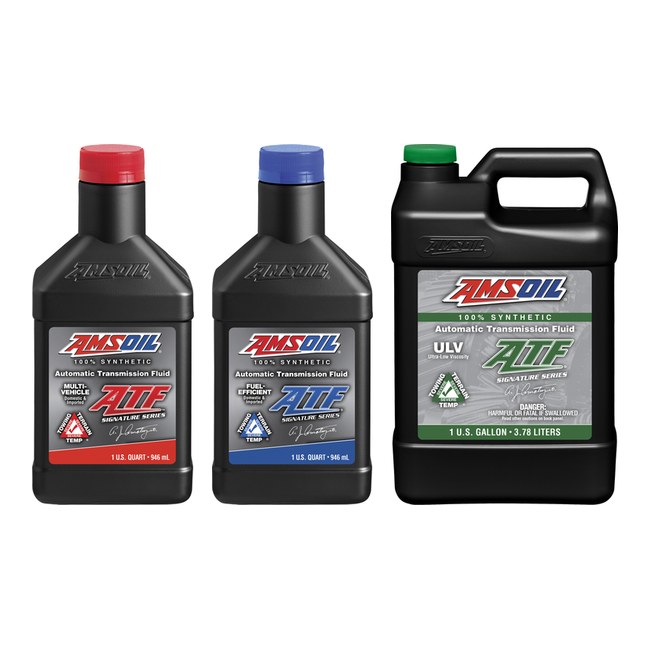
AMSOIL Signature Series Multi-Vehicle 100% Synthetic Automatic Transmission Fluid is built to withstand the rigors of heavy towing, elevated temperatures and challenging terrain. It remains fluid in sub-zero temperatures and provides reserve protection during heavy use and abuse.
AMSOIL OE Multi-Vehicle 100% Synthetic Automatic Transmission Fluid protects against wear, resists harmful sludge and promotes smooth, shudder-free shifts, with excellent cold-weather performance.
AMSOIL 100% Synthetic CVT Fluid provides the exceptional metal-to-metal frictional properties continuously variable transmissions require. It guards against thermal breakdown, protects against wear and helps prevent slipping.
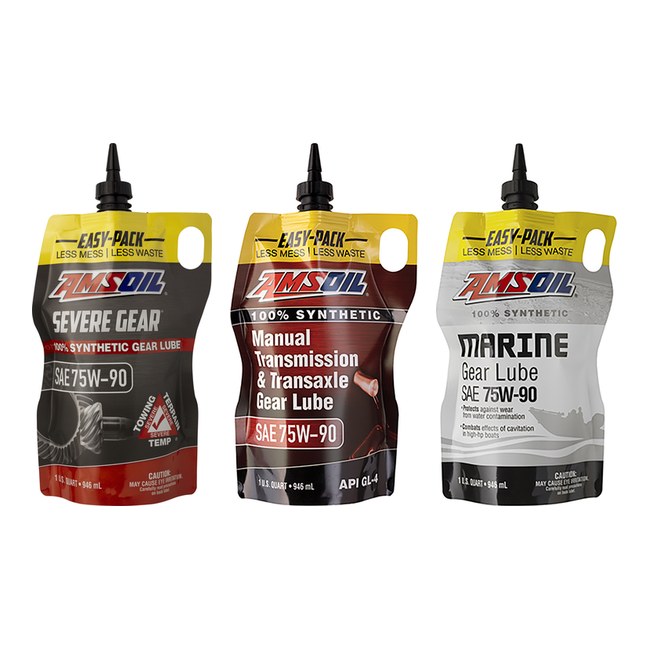
AMSOIL Manual Transmission & Transaxle Gear Lube protects brass synchronizers and offers outstanding cold-flow properties. It also inhibits rust and corrosion for long service life.
AMSOIL SEVERE GEAR® 100% Synthetic Gear Lube provides advanced protection against wear and controls thermal runaway to help reduce operating temperatures. It contains friction modifiers for limited-slip applications.
AMSOIL Slip Lock® Differential Additive contains advanced friction modifiers that help eliminate gear housing chatter in clutch-type limited-slip differentials. See What Does a Limited-Slip Additive Do?
Find the exact fluids for your vehicle in the AMSOIL Product Guide.
Transmission and gear oil FAQ
Does transmission fluid freeze?
Instead of freezing the way water does, it thickens as temperatures drop, which slows shifting until the fluid warms up. A synthetic transmission fluid remains more fluid at low temperatures, so the transmission shifts normally sooner.
Can I add transmission fluid to my engine oil to clean the engine?
It’s an old trick, and it isn’t a good idea. Learn why in Can I Use Transmission Fluid in Oil to Clean My Engine?
Is gear oil the same as motor oil?
No. Gear oil is formulated for the sliding, high-pressure contact between gear teeth, while motor oil is formulated for the conditions inside an engine. See Gear Oil vs. Engine Oil.
Automatic transmission fluid
- What is Transmission Fluid?
- Which Automatic Transmission Fluid Do I Need?
- How Often to Change Transmission Fluid (By Type)
- Why Change Transmission Fluid?
- Should I Change Fluid in a Filled-for-Life Transmission?
- Transmission Flush vs Fluid Change: Which is Better?
- Can I Use Transmission Fluid in Oil to Clean My Engine?
- Do Transmission Fluid Additives Work?
- How Does an Automatic Transmission Work?
- Common Fixes for a Transmission that Shifts Hard
- Advanced Transmission Technology Requires Advanced Protection
- How to Check Your Car’s Fluids: All Six, in 15 Minutes
- Two New Drivetrain Products
- Premium Valve-Body Protection
- Why Is My Transmission Slipping? Clutch Packs, Fluid Pressure and Heat
- AMSOIL Synthetic Transmission Fluid Tames Texas Heat
- AMSOIL Transmission Fluid Saves Cost of New Tranny
CVT, dual-clutch and manual transmissions
- What Is a CVT? How a Continuously Variable Transmission Works
- How Does a Dual-Clutch Transmission (DCT) Work?
- AMSOIL 100% Synthetic DCT Fluid: Protect the Thrill
- Manual vs. Automatic Transmission Fluid: The Difference
- See How the CVT Transmission in Your ATV Works
- Testing a Turbo UTV Dual-Clutch Transmission
- AMSOIL CVT Fluid Helps Altima Reach 655,000 Miles
Gear oil and differentials
- Limited-Slip Differential: How It Works and Which Gear Oil to Use
- How Often Should I Change Differential Fluid?
- GL-4 vs. GL-5 Gear Oil: What’s the Difference?
- What Is Hypoid Gear Oil? How It Compares to Regular Gear Oil
- How to Read a Gear Oil Viscosity Chart
- Gear Oil vs. Engine Oil: What’s The Difference?
- The New SEVERE GEAR Easy-Pack Makes Changing Gear Oil Easy
- Why Upgrade Your Differential Cover?
- Dissecting the Transfer Case
- Harley-Davidson Transmission Oil Change Instructions
- The SEVERE GEAR Easy-Pack
- Cleaner. Faster. Easier.
- More AMSOIL Products Available in the Award-Winning Easy-Pack
- What Does a Limited-Slip Additive Do?
- All-Wheel Drive (AWD) vs Four-Wheel Drive (4WD)
- Carry That Weight
Looking for brake fluid, power steering fluid or suspension fluid? See Brake, Steering and Suspension Fluid.


Comments
Brad Nelson is an AMSOIL Technical Writer II who develops content about lubricant technology, product performance and vehicle maintenance. He works with engineers and product specialists to translate testing, application requirements and approved performance claims into clear customer guidance. Nelson’s work includes AMSOIL Blog articles, AMSOIL Magazine features and technical explanations concerning motor oils, gear lubricants, vehicle systems and maintenance practices.
Share: