

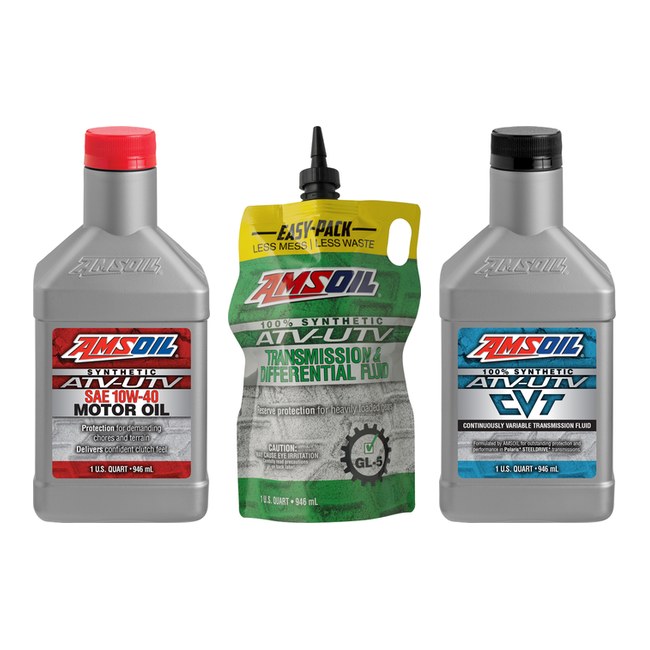

When the team at AMSOIL wants to collect data, we take machines into the field and use them the way they are designed to be used. We recently tested AMSOIL Synthetic ATV/UTV Dual-Clutch Transmission (DCT) Fluid in a performance-oriented 2024 Can-Am Maverick R* dual-clutch transmission. We measured clutch operation, shift speed and operating temperatures during normal trail riding, and then pushed it even harder and stressed it for an entire transmission service interval on our dyno. Then we pulled the engine and disassembled the transmission to review the results.

Dual-clutch transmissions
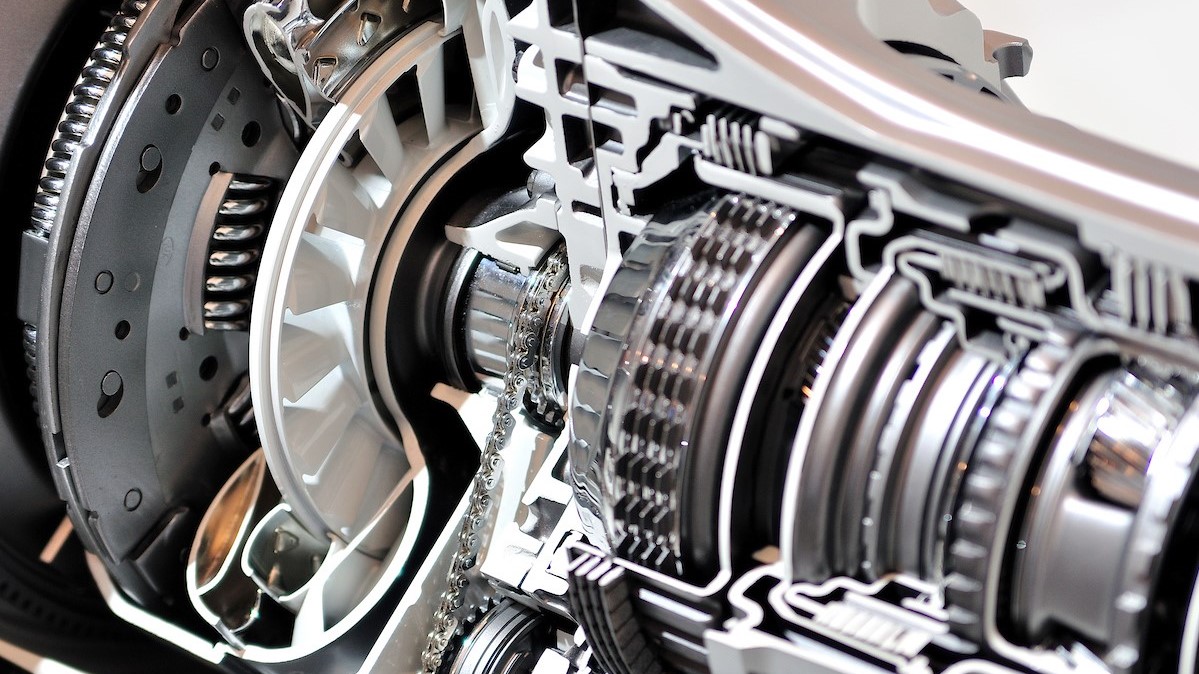
DCTs have two sets of gears that alternate between two input shafts to create different gear ratios. The clutch plates are small and thin, with minimal surface area, so it’s relatively easy to damage or burn them. There are also a lot of constantly meshing gears, which is hard on the mechanical structure of oil. A scavenge pump maintains the oil pressure, allowing the clutches to engage and disengage to shift gears.

Gear protection
As power is transmitted through the gears, specific wear patterns form on the gear teeth. Any chipping, marring or galling indicates excess wear, which is often caused by viscosity loss or incorrect additive combinations in the oil. DCT fluid must be specifically engineered to provide smooth shifting in extreme conditions; protect the transmission components from marring, scarring, excess wear and chatter; and ensure that multiple clutch plates grip without slipping, burning or wearing under high temperatures and pressure.

DCT wear analysis
When we examined each individual DCT component after the teardown, the gears and shafts still looked brand new, with no signs of marring, warping, corrosion, chipping or wear on the pressure plates, drums or hubs. There were also no signs of excess heat, indicating the transmission maintained correct pressure.

Consistent viscosity
Viscosity measures oil film strength and is a great way to determine the protective ability of an oil. We sampled AMSOIL Synthetic ATV/UTV DCT Fluid at roughly 300-mile intervals throughout the test to analyze how it held up over time. AMSOIL Synthetic ATV/UTV DCT Fluid showed only a single-digit percentage change in viscosity over 2,000 miles, indicating the high-quality base oils and additives held up throughout the test. The wear metals naturally created by gears meshing were also well below tolerance levels.
Watch the video below for a deeper dive into the test results.
Video transcript: Lab Tested, Field Proven: Can Am Maverick R Proof of Performance
Hey, AMSOIL’s launched a dual clutch transmission fluid specific for ATVs and UTVs. We put it in a 24 Can-Am* Maverick R. Let’s see how it did. The Maverick R is really a race car.
For lack of a better term, it is. It is noisy. It’s rough, but it does some things really well. It goes really well on the trail.
It does even better on the racetrack. It is a really nice piece of equipment. So when we take it out in the field and we want to collect our data, we have to use that machine in the way that it’s designed to be used. So we took it out and we ran, you know, data acquisition on the entire machine.
So we were looking at specifically the transmission. We’re looking at shift speeds. We’re looking at clutch performance. We’re looking at temperatures to to to figure out what are the temps that this thing runs at when it’s just normally trail ridden.
What are the temperatures that this machine is run at when it’s pushed in more of a track environment. And we use a combination of, you know, AMSOIL technicians to do this and we also bring in uh pro drivers to do this to make sure that we’re actually using the machine the way that it was designed. So once we get that data collected in the field, what we’ll do is bring it back to AMSOIL. We’ll download all that data and then we’ll build a program to run this machine on our dyno.
One of the key things that goes into that program is how long are we going to leave it on test? And in this case, we ran one service interval for that transmission, which is about 2,000 mi. So, we got it on the dyno and we put about 2,000 mi of variable driving. So, there was combinations of high speed, there was combinations of super high stress, and then we take it out of the dyno, we pull the engine, we pull the transmission, and we’re going to take the transmission apart and look to see how the fluid did.
A dual clutch transmission is a pretty cool device to be honest. It’s got two input shafts. It’s got two different sets of main gears. And when you switch between the gears, basically you’re alternating between those two main shafts.
There’s a couple key things going on inside this. Number one, there’s a lot of gears that are meshing. And when gears mesh, they tend to be really hard on oil. So, you need to have good solid base oil components.
You need to have the proper additive package to make sure that everything is going to work together. The complicator in this is the fact that a dual clutch transmission does have a clutch inside of it. In fact, there’s several. The fluid has to make sure that the clutches are gripping so that when you shift between the gears, you don’t get excessive slip.
You don’t burn the clutches or you don’t wear them out prematurely. So, the fluid needs to be designed engineered very specifically to provide the protection and still provide grip in those clutches. So, the main input shaft of the transmission is really where you begin. And we’re looking for any type of marring, scarring, excess wear, chatter, any of those things that can happen when you’ve got a fluid that may not be up to par, may not be doing its job.
We saw none of those indications. So, all of the gears looked great. You can see that the gear is doing its job. What that means is you can see some notice where the gears are actually meshing together.
That’s perfectly normal. That’s what we’re looking for. From there, you start looking at the clutches. These clutches are designed to slip a certain amount.
They’re small. They’re thin. There’s not a lot of wear surface, so you don’t want to damage them. If they slip too much, they get burned.
What we found in the clutches is they look great. There’s no sign of any marring. There’s no sign of any excess heat. There’s no warping on the pressure plates.
The clutch discs look excellent. These clutches are all housed in a clutch drum. So, you want to make sure that you’re looking at the outside of the drum and how it’s meshing with the gears that apply to the transmission. All of those look great.
There’s no warpage. There’s no sign of excess heat. All of the gear teeth show that they are meshing properly and that there’s no wear occurring. There’s no corrosion.
There’s there’s nothing occurring there that would indicate a problem with the fluid. When you look at the clutch hubs in the transmission, there’s two of them. All of the power that the engine generates has to flow through those clutch hubs. So, the gears look great.
There’s no sign of any overheating. There’s no chip. There’s no broken teeth. And that’s a good thing.
The scavenage pump on the on this type of transmission does a really important job. It maintains the pressure. So, it’s it’s allowing you to shift between the gears. It’s allowing the clutches to engage and disengage.
The pump in this situation looks great. There’s no sign of any excess heat, which is what you’re really looking at inside this pump, indicating that the transmission was still, you know, getting all the right pressure that it needed to do its job. There’s two gear sets inside this transmission, it being a dual clutch and all. And these two sets of gears are what’s actually making your different gear ratios for first gear through 7th gear.
Anytime you look at a gear, you’re looking at specifically the wear pattern that’s forming on the tooth to make sure that it’s the pattern that you’re looking for and not anything that would indicate excess wear, which would be chipping or marring or what would we would call galling. A lot of times that’s an indicator of loss of viscosity, poor additive combinations. We saw none of that in this situation. The gears look brand new.
So when you look at the center shaft that actually joins these two together, there’s an intermediate there’s a intermediate shaft that’s in between the two gear sets. And again, all the power is being transmitted through that. So the stress level on the center shaft is high. These look beautiful.
So the last stop on the way to the tires is to get through the final drive. When you look at the final drive gears, there’s two of them. There’s a high and there’s a low. And these are what’s taking all of the different gear ratios.
Regardless of what gear you’re in, all of the power has to travel through these final gears before it can get to the wheels. That’s the last stop. Both of these gears look like new. Once we get through all of the physical examination and the photo session for the transmission, we move into the chemical analysis of the oil.
So throughout testing, we’re actually sampling the oils. And in this case, we did it at about 300 mile intervals. As we look at the oil analysis, the first thing that you’re going to notice is the percent viscosity change. You want a low number there.
That means that you want the oil to stay at the viscosity that we put it in because viscosity equals film strength. Film strength equals protection. In the case of AMSOIL’s DCT fluid, we’re looking at singledigit shear, which is really, really good. That means that we are using very robust base oils with proper additives.
All of it being very high quality, which means you’ve got a very robust backbone protecting that transmission. So, we saw very little viscosity change. The next place that you look are wear metals. That’s your indicator that you’re wearing out gears or you’re wearing out different parts of the transmission.
In this case, the metal looks great. The iron is very low. The aluminum is very, very, very low. All of these numbers are to be expected, right?
So there’s some in there because we have gears touching together. Your number won’t be zero, right? When gears work, they will make some wear metal. So inside of a gearbox, you always expect something.
So based on these results, after 2,000 mi of torture on the dyno, all kinds of different conditions, AMSOIL has proven you can trust us with your dual clutch transmission. We’ll see you on the trail.
AMSOIL Synthetic ATV/UTV DCT Fluid held up flawlessly against more than 2,000 miles of torture on the trail and the dyno. It did an excellent job protecting a high-performance dual-clutch transmission in exactly the type of tough environments owners typically enjoy.
Use the AMSOIL Product Guides to quickly find the right products for your specific vehicle.

Comments
David Hilgendorf is an AMSOIL Technical Writer who develops content for automotive, powersports and industrial audiences. His work includes technical data sheets, magazine articles, blog posts, white papers, product literature and application guidance. Hilgendorf works with engineers, laboratory personnel and technical specialists to communicate lubricant testing, product performance, maintenance practices, metalworking fluids, grease, motorcycles, marine equipment and industrial reliability.
Share: