
What is Transmission Fluid?

Transmission fluid is a lubricant formulated to protect your vehicle’s transmission gears and clutch packs while enabling smooth, crisp shifts.

Shop the article

AMSOIL Synthetic Automatic Transmission FluidAMSOIL Synthetic Automatic Transmission FluidAMSOIL OE Multi-Vehicle 100% Synthetic Automatic Transmission FluidAMSOIL OE Multi-Vehicle 100% Synthetic Automatic Transmission FluidAMSOIL Signature Series 100% Synthetic Motor OilAMSOIL Signature Series 100% Synthetic Motor Oil
Brad Nelson
by Brad Nelson
September 16, 2021

Most people know what motor oil is and that it needs to be changed regularly, but transmission fluid is often less understood or appreciated. So, what is transmission fluid?

Transmission fluid is a lubricant formulated to protect your vehicle’s gears and clutch packs while enabling smooth, crisp shifts. Without it, your vehicle’s gears would rapidly wear out or overheat, resulting in a short life for your transmission and a big repair expense for you. Transmission fluid is just as essential as motor oil.
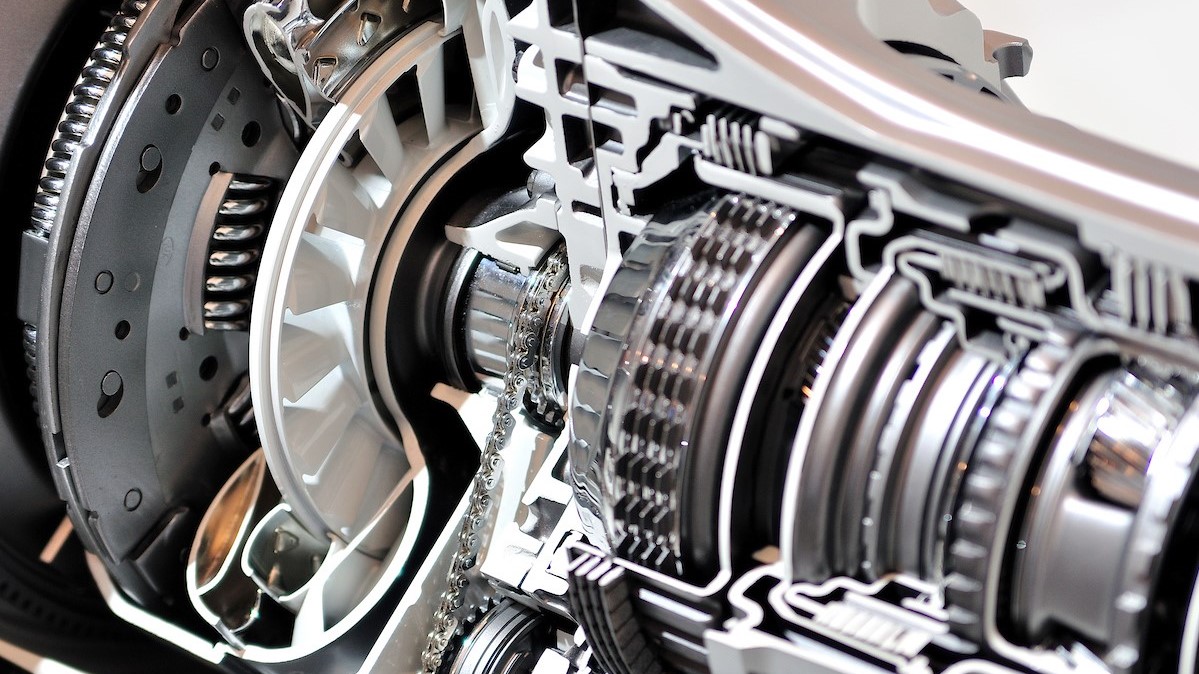
What is transmission fluid?

First, let’s talk about the work that all lubricants do.

The main job of any lubricant is to create a fluid film between surfaces to prevent contact and reduce friction. In so doing, lubricants protect against wear and fight the damaging effects of extreme heat.

Transmission fluid must…

  • Function as a hydraulic fluid
  • Deliver the proper frictional requirements
  • Protect gears and moving parts from wear
  • Fight heat

Examples of a lubricant’s physical properties include viscosity, high- and low-temperature performance, shear stability and volatility. These physical properties are fundamental to all lubricants, but they can be optimized for each application with appropriate base oils and additives.

Pickup truck driving in mountains
Automatic transmission fluid must lubricate and cool, while also excelling at other tasks.

Properties of automatic transmission fluid

Transmission fluid not only lubricates and cools the moving parts of the transmission, a good fluid also excels at the following tasks.

  1. Function as a hydraulic fluid
    Automatic transmissions use pressurized transmission fluid to change gears. This stressor can cause the oil to shear and lose viscosity.
  2. Deliver the right frictional requirements
    Engagement and disengagement of the clutch packs must happen flawlessly for optimum performance.
  3. Protect gears from wear
    Automatic transmissions contain a system of sun, planet and ring gears that require a durable lubricant film to prevent metal-to-metal contact.
  4. Fight heat
    Automatic transmissions generate more heat than manual transmissions. Heat accelerates oxidation, the chemical breakdown of the lubricant. Oxidation leads to sludge and varnish, which can clog narrow oil passages and contribute to clutch glazing. Without the right protection, your vehicle can begin to shift hard, jerk or hesitate.

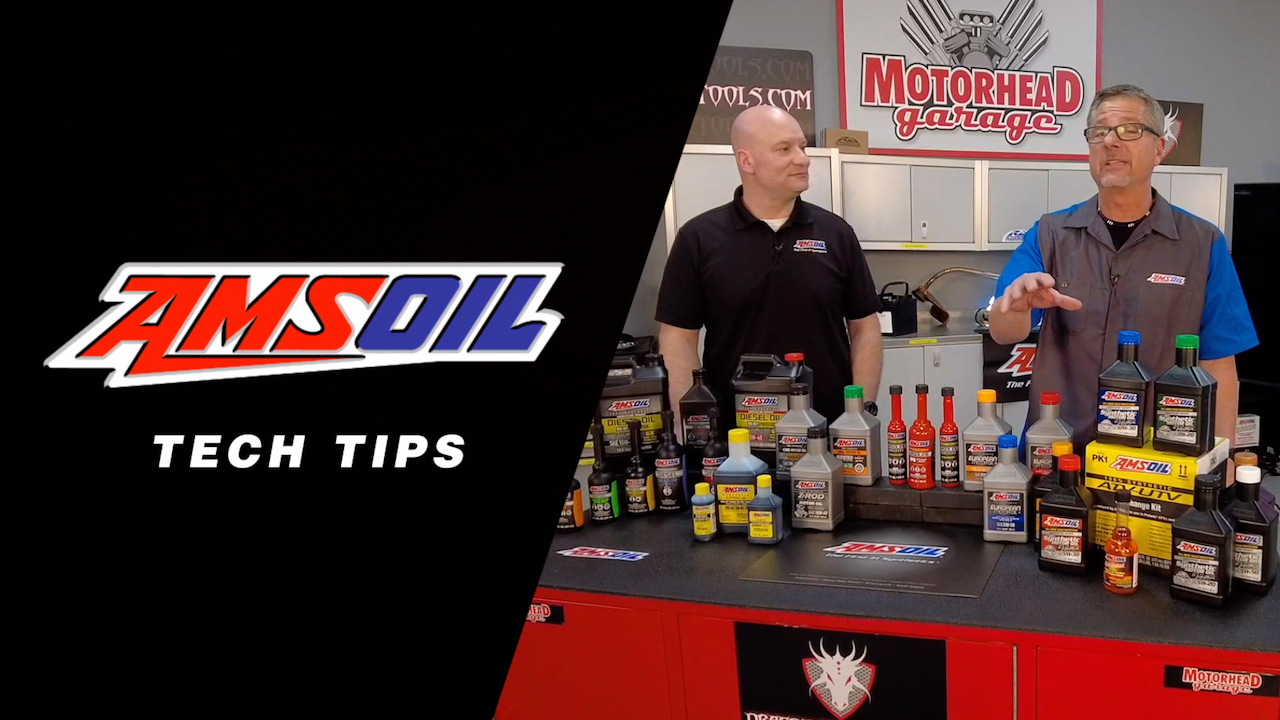
Get an inside glimpse of an automatic transmission that failed from degraded fluid in this AMSOIL Tech Tip.

Video transcript: An Inside View of the Innerworkings of an Automatic Transmission

Welcome to Tech Tips. I’m Len Groom. Today we’re talking about automatic transmissions. Automatic transmissions are somewhat of a mystery to most people.

You put the car in drive and it goes forward. You put the car in reverse, it goes backwards. But what goes on inside that transmission to make that happen? We went out and talked to an industry expert to get maybe the inside view, if you will, on the inner workings of the automatic transmission.

Let’s listen to what he had to say. This is a torque converter out of an automatic transmission. This torque converter works as a coupling device; therefore, there’s propellers and there’s fins and there’s sprags and clutches inside of it. What this does is bolts to your engine, and this transfers your power to your transmission, thus drives your wheels.

This is the lower side of your automatic transmission. This is a transmission pan where all your fluid is held. You can see solenoids, shift valves. This thing is submerged in oil its whole life.

Let me show you how complicated it is. Fluid has to run through all these passages at certain times: to shift valves, to make your car shift. There you can see how crucial it is to keep a good clean fluid in here so you don’t gum up the valves and have transmission problems. Move this aside.

These are all the parts that come out of an automatic transmission: the clutch drums, the planetaries, the pump, sprags. These are all the rotating parts of an automatic transmission. This is a clutch from Fuller clutches. The clutches look like this, friction and steel.

And what happens is ATF fluid applies pressure to the pistons which applies pressure to the clutches which allows your car to make the shift. Let me pull these clutches out of here. Let’s take a closer look. As you can see in the clutch drum, with the clutches removed, you can see from like lack of maintenance the fluid breaking down.

You can see the wear we’re getting. There you can see it’s crucial to keep your transmission fluid clean. This is a clutch drum and a band out of the transmission. You’ve heard of people talking about their band slipping.

This is what they’re talking about. This is the band which wraps around this drum. And, as you can see, the drum is starting to slip; therefore, once it slips, it will create more heat, break the fluid down. And eventually you are replacing all these parts.

I do have some transmission fluid out of this transmission. This transmission fluid is completely broken down. It looks like tar. This transmission fluid has been overheated and has been in this transmission way too long, and this is what caused this transmission to fail.

Here’s an example of what your automatic transmission fluid should look like. It’s a bright red and it has no contaminants, and that’s what should be running through your transmission. This is basically how an automatic transmission works or, in this case, how it failed. The number one cause of the automatic transmission failing is not servicing your transmission fluids.

Well, as you can see, there’s a lot going on inside that transmission. But there are a couple of really important things to remember. Number one is that heat can kill an automatic transmission. The other thing is don’t leave the fluid in there too long.

So you want a fluid that has an ability to last and also to be able to take some heat. AMSOIL’s Automatic Transmission Fluid is up to that task. Thanks for watching. We’ll see you next time.
AMSOIL mobile app shown on three smartphone screens with Google Play and App Store download buttons

Get the AMSOIL App

  • Add vehicles with plate and VIN scanner
  • Track maintenance in MyGarage
  • Fast and secure online ordering
  • Quick delivery right to your door
Get the AMSOIL App
AMSOIL mobile app shown on three smartphone screens with Google Play and App Store download buttons

Wait, what is a transmission?

Simply put, the transmission transfers power from the engine to your vehicle’s wheels.

The transmission houses the gears, clutches, solenoids and other components that select the proper gear for the operating conditions. For example, when you start driving or pull a heavy load, your vehicle uses a lower gear that provides more torque. As you pick up speed on the highway, a higher gear is used to reduce engine rpm, which increases efficiency.

Types of transmissions

There are two primary types of transmissions, manual and automatic, and each places unique demands on the transmission fluid. A manual transmission requires the driver to engage the clutch and shift the gears at the appropriate time, whereas an automatic transmission shifts on its own as speed and power demands change. Other transmission designs include continuously variable transmissions (CVT) and dual clutch transmissions (DCT).

To keep your car running properly, it’s important to know the type of transmission you have and the specific fluid it requires. Consult your owner’s manual for that information or use the AMSOIL product guide to find the right transmission fluid.

Properties of manual transmission fluid

Manual transmission fluid has fewer jobs to perform than automatic transmission fluid. Some manual transmissions work with or even require ATF. However, there are attributes where quality manual transmission fluids must excel, such as protecting soft metal (brass) synchronizers from corrosion, as we talk about in this post.

Do I need to change my transmission fluid?

Yes. Over time, transmission fluid oxidizes and becomes contaminated with particles and sludge. While transmission fluid doesn’t need to be changed as frequently as motor oil, it’s important to check it regularly.

If your transmission fluid level is low or the fluid has started to break down, you may notice that your vehicle shifts poorly. Running low can damage transmission components and lead to catastrophic failure and/or expensive repairs.

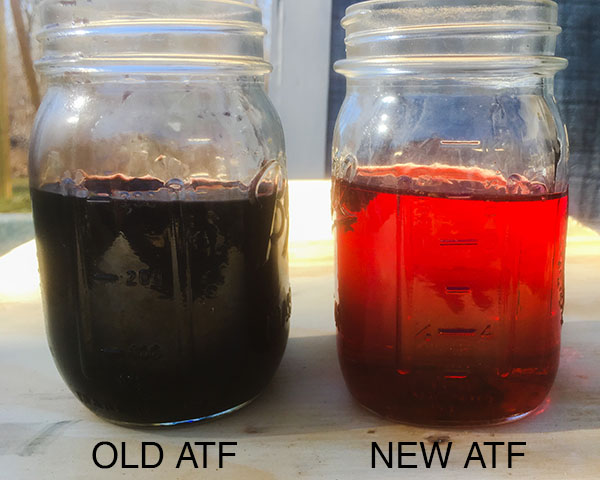
Used transmission fluid that is dark brown and new transmission fluid that is reddish and opaque.
Transmission fluid should appear reddish and opaque like the fluid in the jar on the right. If your ATF appears brown like the fluid on the left, it is past time to change it.

How often should I change my transmission fluid?

The answer varies depending on the type of transmission your vehicle has and the mechanical stresses it’s put through. It is often recommended that you change transmission fluid every 30,000-150,000 miles (48,000-240,000 km). That’s a broad guideline for a reason. Check out this blog post for more insight.

How Often Should I Change Transmission Fluid?

“I’m good; I have a filled-for-life transmission!”

Not so fast. So-called “filled-for-life” transmissions have a misleading name.

No lubricant will last forever and provide the protection your vehicle and your pocketbook deserve. Over time, lubricants deteriorate, especially if used under heavy loads, frequent starts and stops or daily short trips. Read this blog post for a deeper dive into the topic.

Should I Change Fluid in a Filled-for-Life Transmission?

How often should I check my transmission fluid?

It’s a good idea to check your vehicle’s transmission fluid about once a month to monitor fluid level and condition. However, this task has become more difficult in modern vehicles that often lack transmission dipsticks or have them in hard-to-reach locations under the vehicle. If performance suffers, check your fluid immediately. See this blog for more details on how to check and select transmission fluid for your car or truck.

What Kind of Transmission Fluid Do I Need?

Easy-packs of AMSOIL Signature Series Automatic Transmission Fluid.
AMSOIL Signature Series is recommended for transmissions that work in extreme conditions.

Choosing the right transmission fluid

Finding out what kind of transmission fluid you need can be a challenge. It’s best to start with your owner’s manual, or use the AMSOIL product guide to find the right transmission fluid.

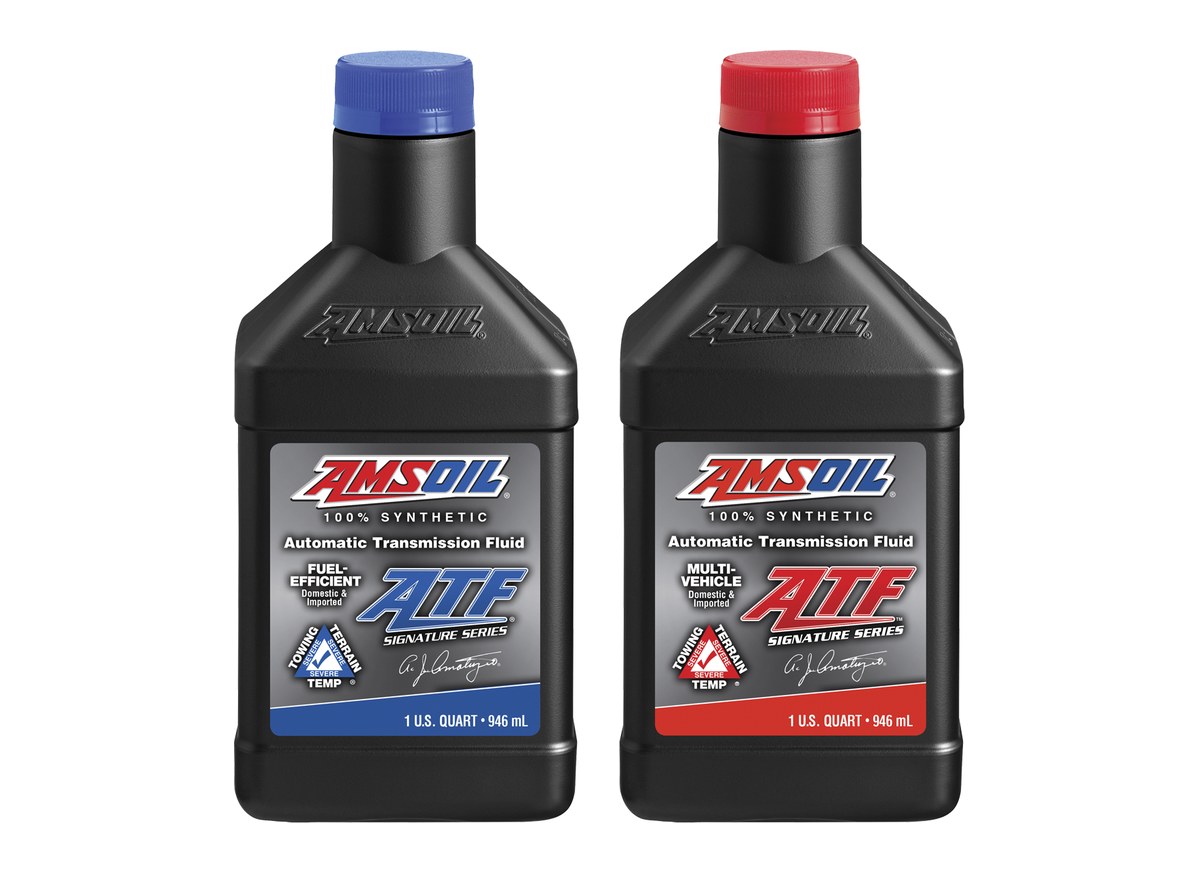
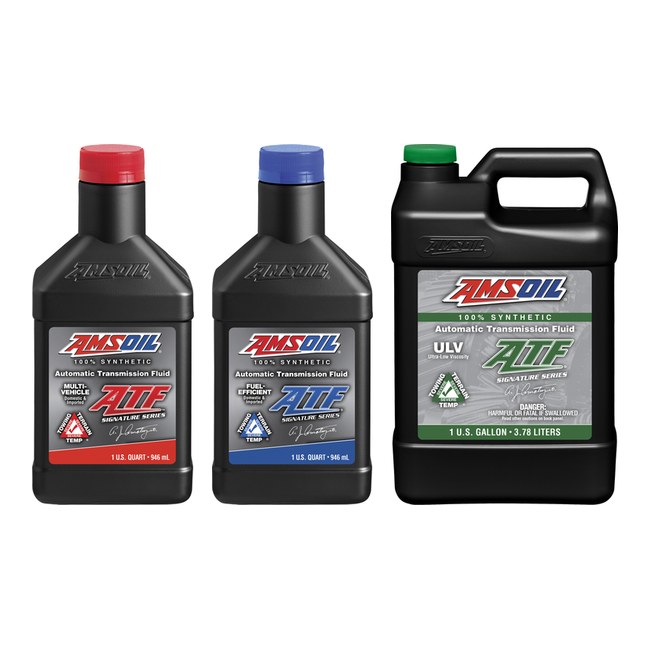
AMSOIL Signature Series Synthetic Automatic Transmission Fluid and OE Synthetic Automatic Transmission Fluid are both recommended for most of the common ATF specs on the market. Signature Series is recommended for transmissions that work in extreme conditions, such as towing and hauling. OE is perfect for your daily commuter.

So, what is transmission fluid?

Transmission fluid is a vital part of vehicle performance. Although maintenance is easy to overlook, make it a part of your maintenance routine to avoid reduced performance and expensive repair bills.

For more assistance selecting a transmission fluid for your vehicle, use our product guide or reach out to us at [email protected] or 715-399-8324 (TECH).

This article is part of our Transmission and Gear Oil guide. See every article in the guide.

by Brad Nelson

Brad Nelson is an AMSOIL Technical Writer II who develops content about lubricant technology, product performance and vehicle maintenance. He works with engineers and product specialists to translate testing, application requirements and approved performance claims into clear customer guidance. Nelson’s work includes AMSOIL Blog articles, AMSOIL Magazine features and technical explanations concerning motor oils, gear lubricants, vehicle systems and maintenance practices.

Shop the article

AMSOIL Synthetic Automatic Transmission FluidAMSOIL Synthetic Automatic Transmission FluidAMSOIL OE Multi-Vehicle 100% Synthetic Automatic Transmission FluidAMSOIL OE Multi-Vehicle 100% Synthetic Automatic Transmission FluidAMSOIL Signature Series 100% Synthetic Motor OilAMSOIL Signature Series 100% Synthetic Motor Oil

More like this