

The short answer: To change Harley-Davidson* oil, run the engine briefly to warm the oil, drain it at the drain plug, remove the old filter and install a new one, then reinstall the plug with a new O-ring torqued to spec. Refill with 20W-50 V-twin motorcycle oil to the capacity in your owner’s manual and check the dipstick. Transmission and primary fluids are changed separately.
Using a good motorcycle oil and changing it according to recommendations is the best way to ensure optimum protection against wear and deposits, particularly when riding in extreme summer heat that can breakdown some oils. Here’s how to perform a Harley-Davidson* oil change.
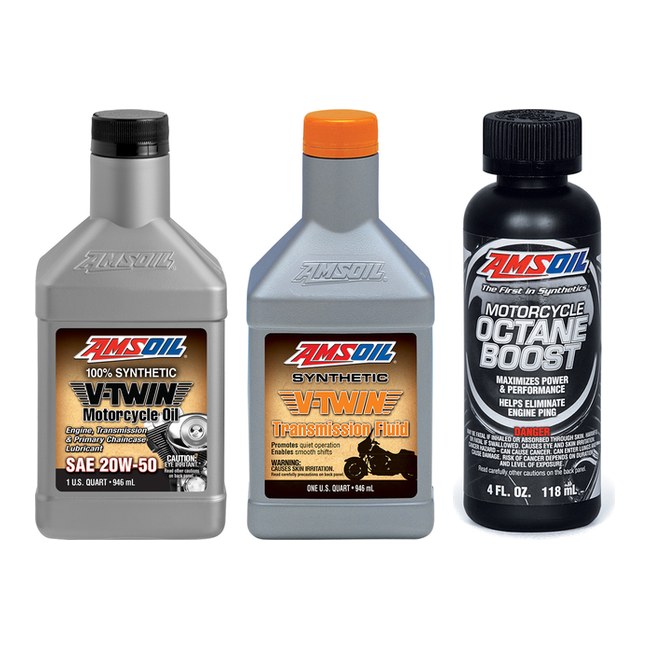
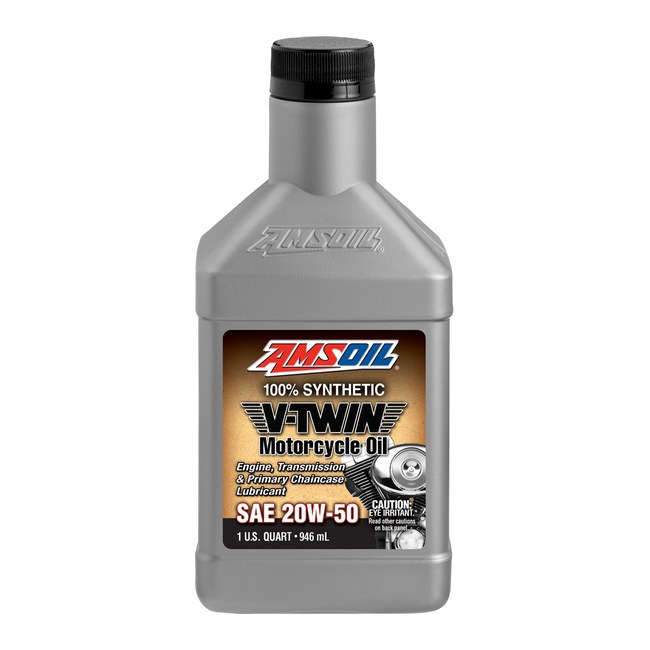
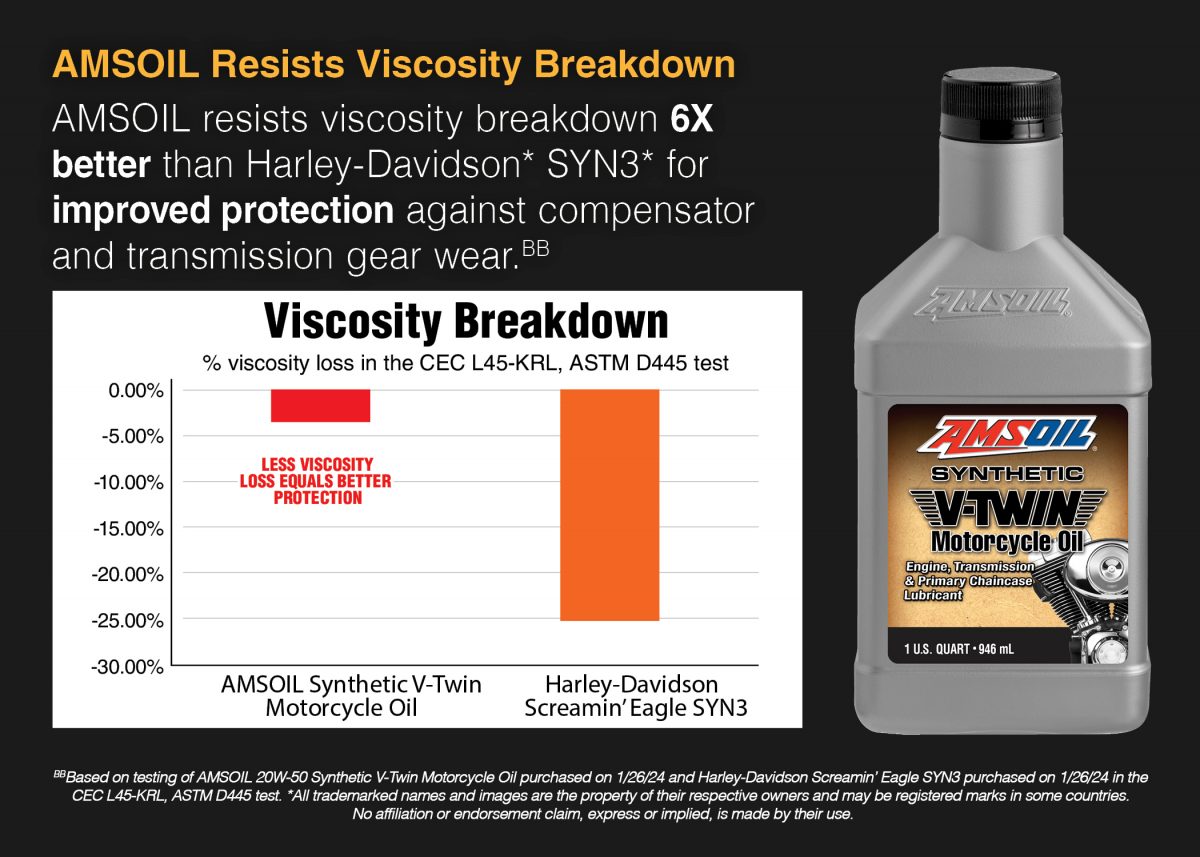
For the record, AMSOIL recommends AMSOIL 20W-50 Synthetic V-Twin Motorcycle Oil in the engine, transmission and primary chaincase on most Harley-Davidson motorcycles (consult our Motorcycle Product Guide for specific recommendations). It offers…
- Convenience. Riders buy and install one lubricant. This reduces cost and results in fewer half-used bottles of oil lying around the garage.
- Simplicity. Remembering to buy one lubricant is far easier than remembering three.
- Great all-around performance in all three areas of the bike.
We formulate 20W-50 Synthetic V-Twin Motorcycle Oil to be an excellent all-around lubricant. It delivers outstanding engine protection due to its proven ability to fight wear, reduce heat, maintain cleanliness and prevent corrosion during storage.
Can I Trust One Motorcycle Oil in all Three Areas of My Bike?
Despite these benefits, some riders question the practice of using one lubricant in all three areas of their bike. They have a difficult time accepting that a motor oil can also protect the transmission and primary chaincase.
For these riders, we offer Synthetic V-Twin Transmission Fluid and Synthetic V-Twin Primary Fluid.
Video transcript: V-Twin Motorcycle Oil Change
Featuring John Gardner, ASE Master Certified technician, automotive technology instructor and host of Motorhead Garage, with AMSOIL Director of Product Marketing Len Groom (author profile).
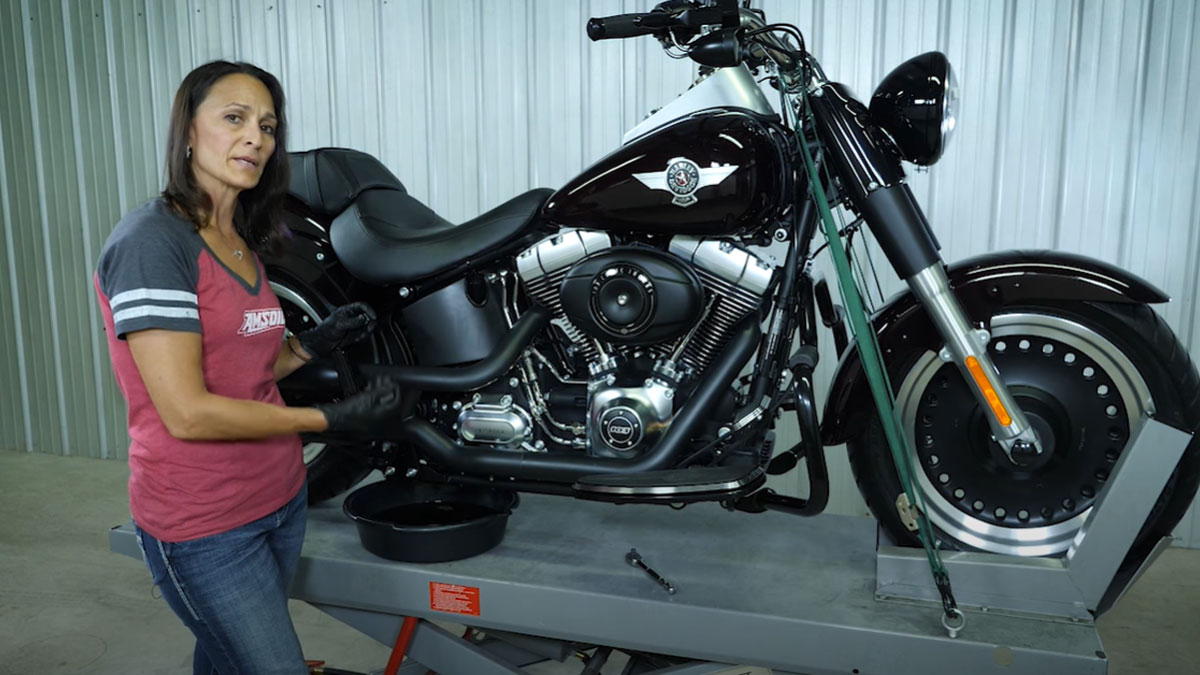
John Gardner: Nothing like the bass distinctive sound of a Harley-Davidson*. Welcome to this AMSOIL tech tip. That’s right. We’re talking about the big twin models, the service, the maintenance, and everything that goes in between.
And I wanna draw your attention down here to the engine filter. This thing’s riddled with x marks, but you see across there? Every one of the intervals. Now another thing to look at, you got the primary and you got the transmission.
Different entities on that bike, different systems that need lubrication. Now you can see right here, you actually have the crankcase. Now the crankcase, you got your pistons, your rods, everything in here needs lubrication. You need an oil for that.
Over here, you got your primary and you got your crankcase. Everything going on in there. The gears, the bearings, you need a lubrication for that. Well, at AMSOIL, you guys made it easy, Len.
You guys got the answer for all the Harley.
Len Groom: You know, we did. You start to recognize people don’t wanna have to think when they’re gonna change the oil on these things. It’s already taking up enough time. So we thought, alright, let’s put together a kit that has everything in it that you need to change the oil on your bike.
John Gardner: Bam. There you go. So we’re dealing with the first product right here. We got the oil.
Len Groom: Right. This is an engine oil change kit. We’ve got our twenty w fifty v twin synthetic oil in there.
John Gardner: And not just the oil. I hate going back and forth to the parts store. So, man, you got all the oil you need to do your engine oil.
Len Groom: Everything in there for this particular bike’s oil change, there’s an o ring in there. Make sure you change that o ring.
John Gardner: Gotta love that. Mean, how many times you watch it drip without the o ring and then, man, one of my favorites. Bam. There you go. Not only an oil filter, but ta da.
Len Groom: Woah. The chrome one. And we also have that available in the black filters as well. So whatever you like, it’s up to you.
John Gardner: And, you know, time’s money. You’re going back to the parts store, you know, this, that. I don’t have enough quarts. I don’t have the right filter.
That’s not the case. That kit is gonna save you time and save you money. Now, there’s old school guys like me. Maybe I don’t wanna put that in the gearbox.
I don’t wanna put it in the primary. I don’t wanna put it in the oil. But you can. You can run this in everything, can’t you?
Len Groom: That’s correct. Our primary recommendation is our twenty w fifty motor oil in all three of the sumps. However, somebody like yourself wants to use a dedicated primary fluid or a transmission fluid, we have that as well.
John Gardner: You do. You got all the products. So if you want the old school oil, you want the new technology, just go to their website, AMSOIL.com
For this demonstration, we’re using a 2014 Harley-Davidson Softail Fat Boy Lo with a 103-ci engine.
Tools you need for a Harley-Davidson oil change
- Oil-drain pan
- Ratchet
- 5/8-inch socket
- 5-inch extension
- Torque wrench
- Filter wrench
- Oil filter
- Motorcycle oil (20W-50 in this case)
Before you begin, it’s a good idea to start your engine and let it run for a bit. This will warm up the oil so it flows easily when you’re ready to drain it.
- On Softail models, the oil reservoir is located under the seat. Look directly below and slightly behind the seat underneath the frame to find the oil drain plug.
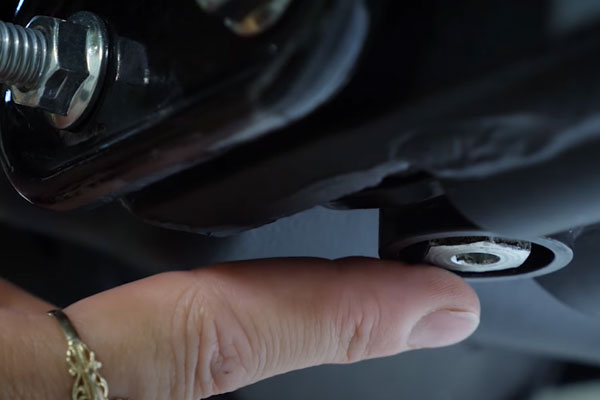
- Use a ratchet and 5/8-inch socket to remove the drain plug. Once loose, finish removing the plug by hand to avoid dropping it into the oil pan. Remove the oil reservoir cap to increase oil flow.
Ensure the motorcycle is vertical
- Place the bike in a vertical position to drain all the oil. If you’re working on a lift, you’re okay. But if you are working with the bike on its kickstand, straighten the bike to an upright position to ensure removal of all the oil.
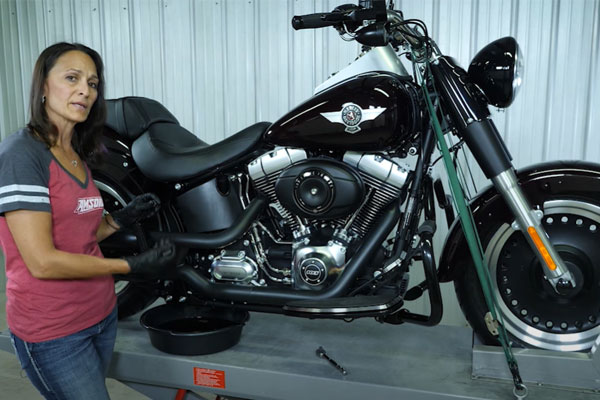
- Next, remove the oil filter. Place a few rags underneath the filter to catch any drips. You can also slide the oil pan underneath to catch oil that drains from the filter.
- Loosen the filter using a ratchet, 5/8-inch extension and filter wrench. Finish removing it by hand and quickly move it into your oil pan. Take some shop towels and clean up any residual oil that may have spilled when you removed the filter.
- Next, apply a thin film of oil to the gasket on the new filter. Don’t overdo it. You want a light film to ensure a proper seal when you put the new filter back on.
- Thread the filter onto the engine until you feel the gasket draw snug. Turn it another half to three-quarters of a turn to complete the install.
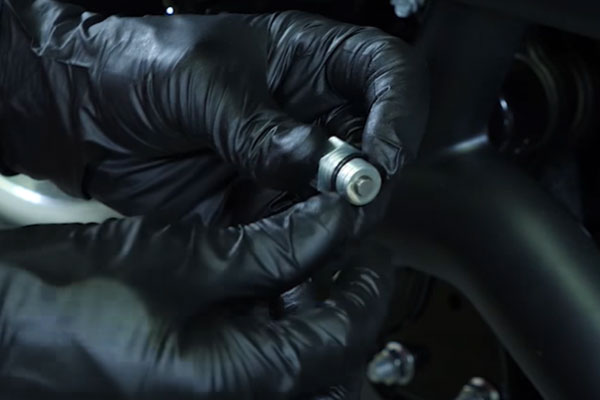
- Clean the residual debris from the drain plug, install a new O-ring and thread it back into the engine. Snug it up, then use a torque wrench to finish the install. The torque wrench should be set at 14 to 21 foot-pounds of torque.
Add the motorcycle oil
- Now it’s time to add oil. The Softail calls for three quarts of oil. Start with 2 1/2 quarts. It’s important not to overfill the reservoir.
- Next, take the bike for a short ride to bring the engine to operating temperature. Check the oil level and top-off as necessary. Remember to check the oil while it’s hot and the bike is on the kickstand.
- Once it’s topped-off, insert the dipstick and check the fluid level one more time.
Check out our posts on how to change transmission oil on a Harley-Davidson and how to change primary fluid on a Harley-Davidson.
That’s all there is to performing a Harley-Davidson oil change. Make sure you dispose of the used oil and filter properly. For your specific bike, consult the owner’s manual for oil capacity and viscosity, or check out the AMSOIL Product Guide.
This article is part of our Motorcycle Oil and Maintenance guide. See every article in the guide.

Comments
David Hilgendorf is an AMSOIL Technical Writer who develops content for automotive, powersports and industrial audiences. His work includes technical data sheets, magazine articles, blog posts, white papers, product literature and application guidance. Hilgendorf works with engineers, laboratory personnel and technical specialists to communicate lubricant testing, product performance, maintenance practices, metalworking fluids, grease, motorcycles, marine equipment and industrial reliability.
Share: