


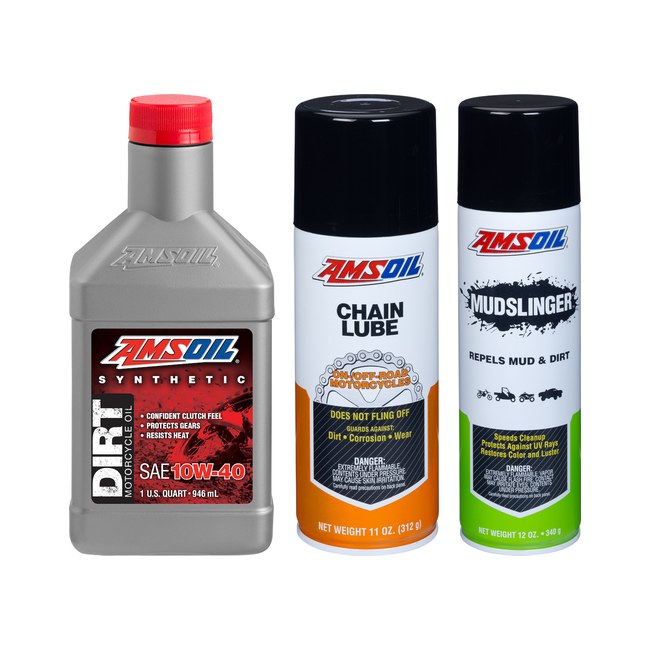

The answers to when and how often to use dirt bike chain lube depend on several factors, including riding frequency, operating conditions and chain type. Wherever you fall on the spectrum, follow these guidelines when maintaining your dirt bike chain.
- Lube the chain prior to each ride/race
- Lube the chain after every wash
- Clean the chain periodically to prolong life
Video transcript: Dirt Bike Chain Lube & Maintenance
Featuring John Gardner, host of Motorhead Garage, and Leonard “Len” Groom, AMSOIL Director of Product Marketing (author profile).
John Gardner: So much power and so much fun. Welcome to this AMSOIL tech tip. You know that power doesn’t do you any good if you can’t get it to the rear wheels. That’s why we’re talking about chain lube and maintenance.
And if you ever replaced a chain on one of these bikes, you know it can be as easy as just replacing a master link and or you may have to go get a chain breaker, bust it all apart. It’s a tedious process. So, you don’t want to mess with it. Now, goes on when a chain starts to wear?
You can see it right here. The rollers, the pins, it starts to wear. And what happens? It starts jumping teeth.
You’re not getting power back there. Then the chain starts to stretch. You’re getting a lot of slack. You’re not getting the clutch feel.
You’re not taking off. It’s a big problem. And Len, you ran this test. Tell me about it.
Len Groom: That was a two-hundred-mile test, five hours, and we compared many different chain lubes. And we were looking at different things about wear on the pins, wear on the sprockets, just basic general wear protection of the product.
John Gardner: And you can see that. You can actually see the AMSOIL versus the competitor on the lube, on the actual chain link and the sprocket itself. Now, what characteristics, what makes a good chain lube?
Len Groom: Right. There’s a few things in there that that you look to do. Because this chain lives in such a bad environment, it’s dirty, you know, it can be hot.
The lube, it needs to be properly formulated, right, as any product would be. You’ve got anti-wear additive in there to keep the chain looking really nice. You’ve got some rust and corrosion protection in there because if you’ve ridden a dirt bike like I have, you’re in the water with it sometimes. And then you want it to be sticky, but not too sticky that it attracts dirt. So it’s a very fine balance. And those are the three things that we really were testing when we were running that test.
John Gardner: Now AMSOIL did just that. Now to put it on, it was super easy. We just jacked up the bike, cleaned the chain, made sure it was clean, sprayed it on there. And like you said, that was the neat part. As we were spraying it on there, you can kinda see it stick to it. Let it dry for fifteen minutes, then it wasn’t tacky anymore, so we wasn’t picking up any dirt. Awesome product.
Len Groom: Exactly. Works as it’s designed, proven by the testing. Go get yourself a can.
John Gardner: And you can do just that. Get yourself a can at AMSOIL.com. Those and so many other great products.
O-ring and X-ring dirt bike chain maintenance
O-ring and X-ring chains are great when trail riding through mud and water.
On the former, tiny rubber O-rings between the inner and outer side plates help prevent dirt and other abrasives from infiltrating the chain pivot points and scouring away the metal. The rings are literally in the shape of an “O” and distort to flatten on two sides when compressed, creating a seal that keeps the lubricant in and contaminants out.
An X-ring chain is designed similarly, except the tiny rubber rings are in the shape of an “X”. When compressed between the plates, two smaller faces seal against the plate. This configuration provides the same great sealing action, except with reduced friction for more power to the ground. As such, X-ring chains are more expensive.
Despite lubricant being sealed inside the pins, the rollers on an O-ring and X-ring chain still require lubrication, as do the side plates and other components to prevent corrosion.
Non O-ring chains need dirt bike chain lube more often
Motocross riders lean toward non O-ring and X-ring chains since they’re lighter, which maximizes power to the ground.
The added power comes at the expense of chain protection, however, since dirt and abrasives are free to migrate into every nook and cranny in the chain. This translates into a need to clean and lubricate the chain more often.
Use dirt bike chain lube before each ride and after every wash
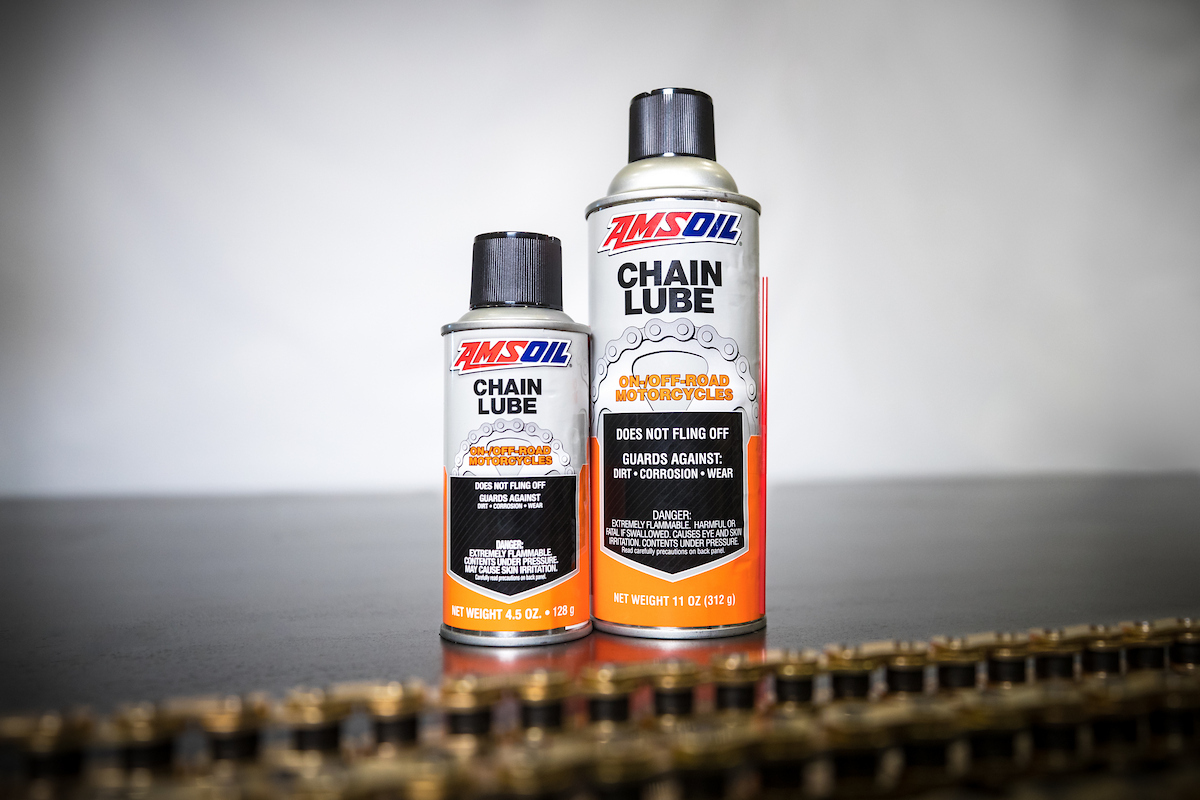
Apply a dedicated chain lube that’s designed to avoid attracting dirt to the chain before each ride or race.
Follow the manufacturer’s application instructions. For trail riders using an O-ring or X-ring chain, lubing the chain at the start of the day is sufficient. If you’re riding motocross, you probably want to lube the chain prior to each race.
Periodically clean the chain
You’re not riding right if you’re not getting dirty. That means your chain is going to get dirty, too.
Cleaning your chain periodically to restore it to like-new condition can significantly increase its life, which is great considering they don’t give these things away.

If there is heavy buildup on the chain, use a soft-bristled brush to work it loose. Then, using a non-caustic, non-abrasive soap, such as Dawn dish detergent, carefully wash the dirt and debris from your chain on an as-needed basis.
If you use a pressure washer, take care not to direct high-pressure water on the chain for long periods, especially on O-ring or X-ring chains since the water can ruin the seals.
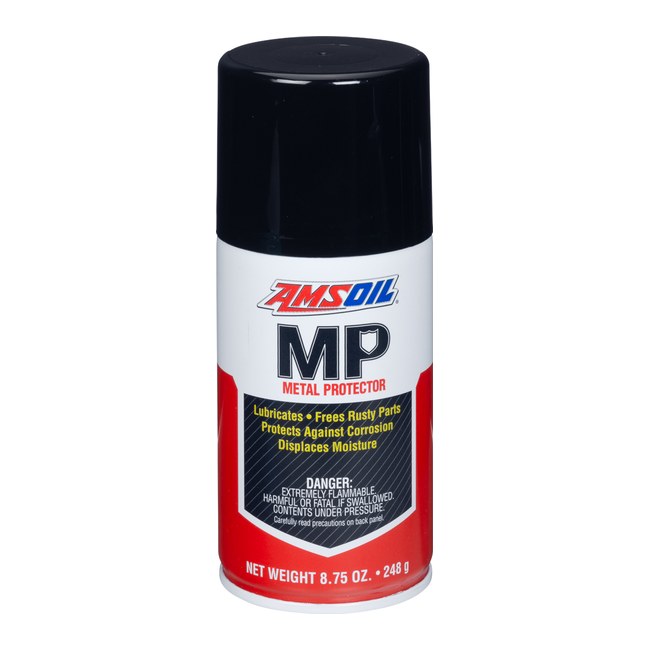
Dry the chain using compressed air or a clean rag. Give the chain a shot of AMSOIL MP to displace water after cleaning. Then lube the chain with AMSOIL Chain Lube to prevent corrosion.
Preventive maintenance
AMSOIL Chain Lube is designed to repel dirt and should be applied before each day of trail riding and prior to every race following the chain manufacturer’s recommendations. For additional preventive maintenance, use AMSOIL Mudslinger before riding to create a protective non-stick layer of armor that inhibits the accumulation of mud and dirt and makes it easy to clean your bike with a standard garden hose.
Check out the proper way to wash your dirt bike here.
This article is part of our Motorcycle Oil and Maintenance guide. See every article in the guide.

Comments
David Hilgendorf is an AMSOIL Technical Writer who develops content for automotive, powersports and industrial audiences. His work includes technical data sheets, magazine articles, blog posts, white papers, product literature and application guidance. Hilgendorf works with engineers, laboratory personnel and technical specialists to communicate lubricant testing, product performance, maintenance practices, metalworking fluids, grease, motorcycles, marine equipment and industrial reliability.
Share: