You should already know that a microscopic film of oil prevents metal surfaces in engines from grinding together and causing wear, and that synthetic lubricants deliver better wear protection, engine cleanliness and fuel efficiency than conventional oils.
It’s been repeatedly proven that AMSOIL synthetic motor oils form a more durable fluid film than conventional oils due to their resilient base oils and engineered additive packages, helping vehicles run better and last longer.
The First in Synthetics®
We brag that AMSOIL was the first synthetic motor oil to pass API standards testing, but what does that mean, and why should anyone care?
There are several organizations in different regions that are responsible for ensuring that the quality of lubricant products meets the rigorous demands of countless different vehicles, machinery and equipment.
Testing standards
The American Petroleum Institute (API) is a standards-setting trade organization founded in 1919 that leads the development of petroleum, natural gas and petrochemical equipment to enhance operational and environmental safety, efficiency and sustainability. Similarly, The International Lubricant Specification Advisory Committee (ILSAC) is a committee of automobile manufacturers that develops performance standards for engine oils used in gasoline passenger car engines. And the European Automobile Manufacturers’ Association (ACEA) is a group of 16 vehicle manufacturers that defines specifications for engine oils in Europe.
Since 1905, the Society of Automotive Engineers (SAE) has been developing and publishing standards for every aspect of motor vehicles, while also educating engineers to create safer, cleaner and more accessible mobility solutions. The American Society for Testing and Materials (ASTM) is an international standards organization that develops and publishes technical standards for a wide range of materials, products, systems and services. The SAE specifies certain ASTM tests to verify that a particular lubricant is compatible with a specific vehicle under certain operating conditions.
As mechanical technology advances so do lubrication requirements. Meeting the specifications of these organizations also means that a particular lubricant meets the original equipment manufacturer (OEM) requirements and will not damage the engine. Without standardized specifications and rigorous testing, the quality of aftermarket lubricant products would likely be inferior, possibly even dangerous to use.

Motor oil tests
Here are some additional details on common tests required for motor oil certification.
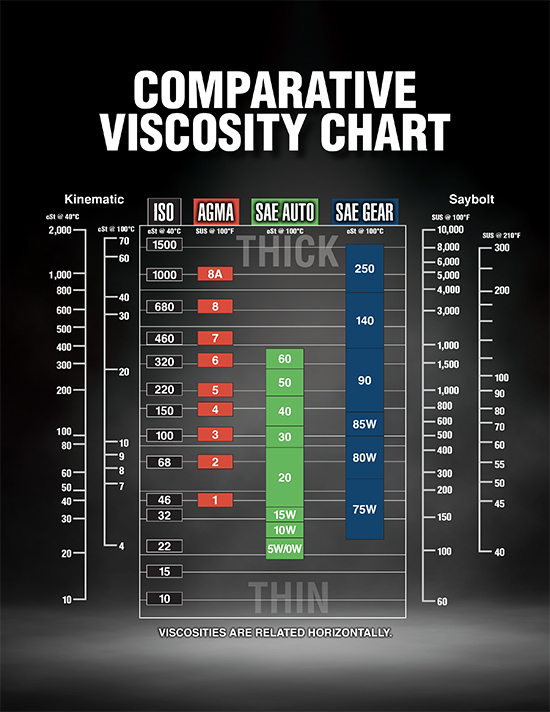
ASTM D2270 measures viscosity index or the variation in motor oil’s kinematic viscosity between ambient and operating temperatures (40˚C and 100˚C). A higher viscosity index indicates a smaller decrease in viscosity as temperature increases, meaning the oil maintains its structure better as temperatures increase. Additionally, ASTM D445 tests the actual viscosity at both 40˚C ambient and 100˚C operating temperatures.
Heated oil has an additional risk of shearing, or losing viscosity, under pressure. ASTM D5481 (HTHS) measures viscosity under temperatures and pressures representative of engine operating conditions. Applying stress to the oil via pressure provides insight into viscometric properties that other viscosity testing cannot, because engine oil additives introduce characteristics that can alter flow.
As much as we want oil to maintain viscosity in extreme heat, we also want it to remain fluid in extreme cold. ASTM D97 tests the pour point, which identifies the lowest temperature at which the lubricant will continue to flow. Additionally, ASTM D5293 (CCS) simulates the viscosity of engine oil in relation to cold engine cranking, which ensures the oil remains fluid enough to start an engine at a prescribed temperature.
Because the primary purpose of oil is to reduce wear from metal-on-metal contact, ASTM D4172, aka the four-ball wear test, determines the relative wear-preventing properties of lubricating oils in sliding contact under prescribed test conditions. We also measure the oil’s ability to neutralize acids using ASTM D2896, which provides the Total Base Number (TBN). Lubricants with a higher TBN are more effective at suspending wear-causing contaminants and reducing the corrosive effects of acids over time.
Hopefully, this provides more insight into why testing is important and why AMSOIL has always published data sheets with comprehensive testing results. Not only do AMSOIL products meet industry standards, in most cases they exceed them. That means using AMSOIL products is not only a terrific way to protect your investment, but it also eliminates the worry of unseen damage occurring inside your engine.

Video transcript: Take a Look Inside the AMSOIL Mechanical Lab
Welcome to Tech Tips. I’m Len Groom. Today we’re looking inside the AMSOIL Mechanical Lab. Chris Orr, the lab manager, is going to show us around.
We opened the AMSOIL Mechanical Lab, otherwise known as the AML or Dyno, back in April 2013. It consists of three Dyno cells, 24 x 20 each with water systems, air systems and fuel systems to support whatever type of testing that we want to do in the Dyno cells. We test everything from passenger car engines to powersports equipment to lawn and garden equipment here. The main purpose of the AML is to validate technologies for product development and for comparative analysis in the market of AMSOIL products and make sure that AMSOIL’s producing the best products possible.
In Cell 1 we have a SuperFlow 902S Water Brake, the Land & Sea 7-inch Dyno set up to a custom chainsaw installation and we have three air compressors. In Cell 2 we have a Midwest 1014 Eddy Current Dyno. It controls from 2 to 6000 RPM, up to 175 hp. We use that for passenger car motor oil development.
We also have small engine testing. In Cell 3 we have a SuperFlow CycleDyn Eddy Current Dyno, and we’re gearing up at this point to expand that Dyno to a double-roll installation. Engines are very sensitive to the combustion air that they get in terms of repeatable power production, so we have a Munters Combustion Air Unit that provides 3000 CFM of humidity- and temperature-controlled air directly to the engines. We do a lot of steady-state dyno testing versus performance facilities that might do a very short-term test; so, therefore, we need a lot of cooling capacity.
We need a lot of water capacity. So we do have a 4000-gallon water system that supplies cooling water and brake water to our test cells as well as a 60-ton evaporative chiller that is roof mounted so that, regardless of the amount of horsepower, whatever degree of steady-state testing we’re doing we can maintain the temperature of our supply water at all times. All of our fuel, air and water systems are PLC controlled. It’s basically a computer interface.
It can monitor certain conditions, whether it be a temperature, whether it be a pressure. And it can respond automatically in the absence of human intervention. In our test design, if it’s desired, we can ramp up the severity of our test, heat, load, the length of time that that test is conducted for to separate high-quality oils. One oil might sputter, cough and choke and just fall its way across 100 hours where another oil might breeze past 100 hours without breaking a sweat.
Most high-quality oils are going to do okay in normal operating conditions. So, if you want to differentiate that, you want to see what oil is going to be better in severe conditions, you have to design things like that yourself. How do you determine what’s great? That’s what we want to do here.
In addition to the test facilities, we have a very large work area. Everything off-test moves to the shop area. It’s disassembled. It’s laid out prior to photography for inspection.
Build in our own facility allows AMSOIL to make decisions quickly and design testing to help differentiate high-quality oils, which is something that really isn’t available outside of developing your own testing. Well, as you can see, the mechanical lab is a very unique facility. This is the facility that allows us to do the testing that gets our products to that next level. Other companies just can’t do this.
Thanks for watching. We’ll see you next time.