


For maximum performance and service life, make sure to winterize your boat and outboard motor at the end of the season each year. If you take these steps, you’ll help ensure your boat and motor will be ready to hit the water again the following spring.
Video transcript: How to Get your Boat Ready for Storage
Welcome to Tech Tips. I’m Len Groom, Technical Product Manager for Powersports. One of the common questions I get asked is, How do I get my boat ready for storage? Well, there are several things you can do.
All of them are fairly simple but very important. The first thing you should do is change your lower unit oil. Here’s how. First, make sure the motor is in the down position.
Next you need to locate the drain plug. In some applications, the plug is located behind the prop. So remove the prop and then remove the drain plug. Next, you need to open the upper plug.
As the oil drains, now is a good time to look for contaminants. Contaminants could include water or metal or anything that looks out of the ordinary. It should also be noted that some applications the drain plug is located on the side. The procedure is the same.
You just don’t need to remove the prop. Once the oil is drained, you need to refill the lower unit. There’s two ways to do that. The first would be to use a pump.
You need to fill the lower unit until the oil comes out the top plug. Once that happens, you replace the top plug. Then you move down and you replace the lower plug. Another method to refill the lower unit would be to use the tube.
The procedure is the same. You’re going to squeeze the tube until the fluid comes out of the top plug. You replace the top plug, you replace the lower plug and you’re done. Next, we’re talking about oil.
AMSOIL has two options. We’ve got a two-stroke oil which obviously doesn’t have to be changed. You just need to make sure that it’s full. We also offer a four-stroke oil.
That needs to be changed. Here’s how. The first thing you need to do is drain the oil. You should check your owner’s manual for motor position and drain plug location.
In this case, you can see we’ve got a piece of plastic tape just below the drain plug. This helps to keep the engine clean. Once the oil is out of the motor, you can go ahead and replace the drain plug. Next, replace the oil filter.
Locate the fill plug on the engine and add the oil. Your owner’s manual should have the capacity. Once you’ve replaced the oil, pull the dipstick to confirm that the oil is at the proper level. Next, we’re going to fog the engine.
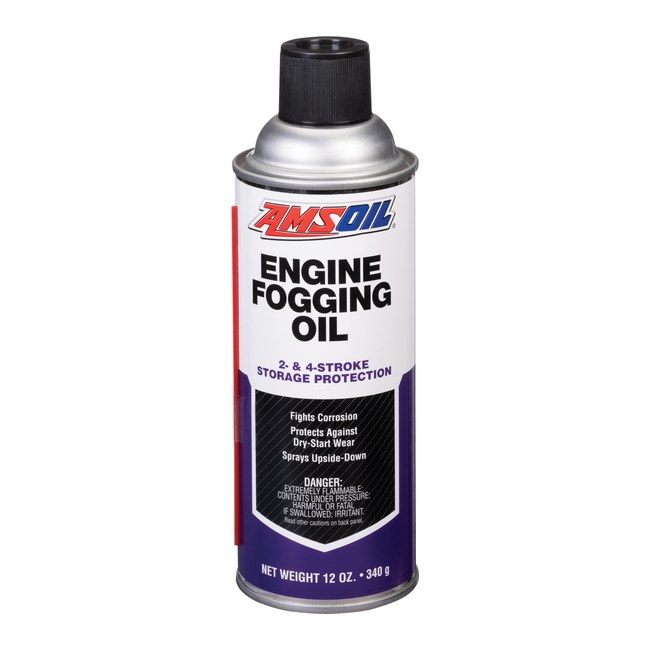
This is a two-stroke and it needs to be running. So make sure that you have an adequate water source connected. Start it up. Use the service port to the intake system to apply the fogging oil and allow it to circulate.
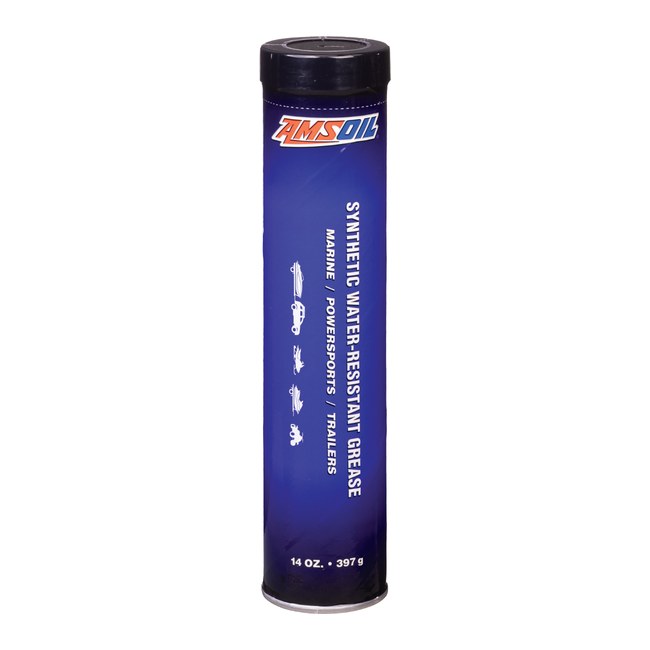
It’s also a good idea to locate any grease zerks that are available maybe on the tilt tube or on the steering system and add some grease to them. Depending on the type of boat you have, you might want to take the time now to blow out any excess water that may be sitting in live wells. You may also want to blow out any bilge or bilge pump area. And it’s always a good idea to leave the drain plug out for storage.
Finally, don’t forget about the fuel. It’s a must that you treat it, especially with today’s fuel. I like to use AMSOIL’s Quickshot year-round. That way, when I put my boat in storage, I know that the fuel’s been treated.
Another option is to use the Stabilizer. Run the engine long enough to circulate the fuel through the system and you’re good to go. That’s it. Your boat’s ready for storage.
Thanks for watching. We’ll see you next time.
How to Winterize a Boat and Outboard Motor
Total Time: 1 hour and 30 minutes
Change lower-unit gear lube
It’s critical to change gear lube prior to storage to remove any water so it doesn’t freeze, causing damage, or hasten rust on gears and bearings, shortening component life.
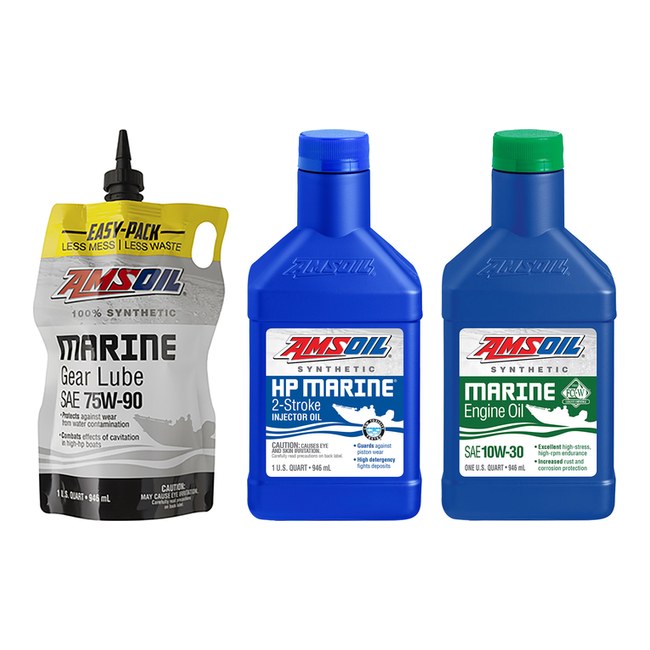
With the motor level, remove the oil drain plug and open the upper-level plug, which is usually on the side of the motor. While the oil is draining, look for any contaminants such as water or metal particles. For reduced mess and hassle, use the AMSOIL Synthetic Marine Gear Lube easy pack, which eliminates the need for a gear-lube pump. Refill the unit with fresh oil until it starts to come out of the top plug. Then, reinsert the top plug and then the lower plug.

Change motor oil
You can obviously skip this step for a two-stroke motor. Just ensure the reservoir is full.
In a four-stroke, change the oil and filter prior to storage so contaminants that have accumulated in the oil aren’t sitting in the engine all winter. Simply remove the drain plug and drain out the old oil. Remove the filter, too. Make sure to dispose of them properly. Wipe the filter mount clean and install a new filter, making sure to apply a thin coat of clean oil to the gasket. Reinstall the drain plug and top-off the engine.

Stabilize the gas
Gasoline can degrade in as few as 30 days. When fuel degrades, it can lead to corrosion and deposits in your tank. Add gasoline stabilizer to the gas tank and run the engine for a couple minutes to distribute stabilized fuel throughout the system. This eliminates the need to drain the fuel system prior to storage.

Fog the engine
Fogging the engine applies a coating of oil to the cylinders, pistons, rings and other components in the upper end. This helps prevent rust formation during storage. In most cases, you need to run the motor while fogging it. But, some newer motors are equipped with automated systems that fog the motor for you. Check your owner’s manual for details about your specific motor.
Grease tilt tube and other areas
Rust can form on the tilt tube and restrict movement when raising or lowering the motor. Apply a water-resistant grease to the tilt tube, trailer bearings and other grease fittings to help displace moisture and guard against rust formation.
Blow out water
Water in the live wells, bilge or bilge pump should be blown out with compressed air so it doesn’t freeze. It’s a good idea to leave the drain plug out during storage.

Store the battery
Be sure to charge and disconnect the battery. If your boat won’t be in a climate-controlled environment, it’s best practice to remove the battery and store it in your basement or other climate-controlled environment.
Clean and cover your boat
Finally, give your boat a good cleaning. While you’re at it, inspect the hull, floor, seats and other areas for wear and tear that require attention. Now’s the time to get it done before marinas are inundated with work in the spring.
Cover your boat with a high-quality cover or shrink wrap and store it in a safe place for the winter.



thanks for this informative post.
i was so glad to hear that information i love boats and kayak and very keen that which trolling motor battery is good for my boat.