Our Muscle Car Mania series highlights some of the most iconic muscle cars in history. In this post, we look at Mopar*.
Check out: Ford* Mustang* – America’s Pony Car
Mopar muscle has been respected for decades in classic auto-enthusiast circles. The iconic cars have been reverently dubbed as “go before show” kind of vehicles – letting their engines do most of the talking and adding trim pieces, nose cones, wings and decals for style.
While technically the parts division of Chrysler*, Mopar has shared powertrains across brands like Dodge* and Plymouth* to create numerous specialty classics like the Charger* Daytona, Coronet Super Bee, Roadrunner Superbird, AAR ‘Cuda, Scat Pack and Rapid Transit System editions.

The small blocks
Many early Mopar models came equipped with a modest 318 ci V8, referred to as an LA engine in 1967. These lightweight engines were based upon Chrysler’s low-cost A-series engines.
Although not considered the most powerful on the roster, the 318’s cast-iron crank and hydraulic lifters were robust and put out a reliable 230 hp.
Like many V8s in the 1970s, the 318 underwent significant changes and was detuned to run on lower-octane fuel and become more fuel efficient due to the shortages and regulations of the time. These changes continued into the next decade and, in 1985, the 318 received its first roller cam, making it no longer reliant on high-ZDDP motor oil. The Mopar 318 model enjoyed a long life until it was eventually discontinued in the early 2000s.
In 1968, Chrysler introduced a small-block engine built for performance: the Mopar 340. The 340-cubic-inch V8’s larger intake, valves and exhaust manifold, high-flow carburetor, forged-steel crank and high-performance heads together put out 275 hp in a four-barrel configuration, making it a dominating presence from the start.
A few years later, the famous 340 “Six-Pack” was born, which featured three two-barrel carburetors and put out an even higher 290 hp. One of the most famous vehicles with this combination was the AAR ‘Cuda.

Video transcript: Scraptona Walkaround
[ Music ] What we’re looking at here we call affectionately the Scraptona. Every good build to us should start with a story. It should try to accomplish something or tell a tale. And the tale here is, is what if the good old boys had run Le Mans back in 1972, what would they have brought?
And so the Scraptona is the answer. And so what we did was we took an old-school round track chassis and skinned it with the awesomest muscle car ever made, which is the wing cars. What we did do is we started with an old Charger 500 body. We found it literally out in the woods in northern Alabama.
It had been cut up 28 years ago for another project, and so it was nothing that ever could be restored. But it was perfect for us because that’s all we needed was the shell. As we started with this thing, we started putting it together. We started to really dig the different colors of all the different parts that we had brought together to make this creation happen.
And so we were like let’s just leave it as natural as possible, and so that’s what we did. When you look at the car, most of what you see here is the way the parts looked when we got them. So what we’ve got here is a Charger body which is the Daytona as it was made into a wing car, but we’ve got a Superbird front end. So these are Coronet fenders.
We got these fenders off eBay. And this is pretty much the way they looked. These are nonstandard Daytona hood pods I had a couple of old Kawasaki* motorcycle tanks hanging in the shop, and so I thought there’s a chance just maybe we can cut up these old Kawasaki tanks and make it work. And we spent about half a day cutting and piecing and cutting and trimming and bending, and it just it worked.
It looked great. We love the idea of how race cars just come apart. With just a twist and a turn and a bolt here and the thing just blows apart. So we wanted the quarters to just come right off.
And so we bought another set of quarters, and we trimmed them just perfectly to match up with the original crease here in the body and then welded the Zeus fasteners on. So literally, with a flat-blade screwdriver, in just a few minutes, the whole side pops right off and you got access to all this structure and all the things underneath here. Of course, it’s a Mopar. It had to have a Mopar engine.
But it had to be something kind of special because this is a wing car. So we were looking to see what can we find? What can we repurpose that’s something that you don’t always see? What we did was we found a Petty Racing R5P7, dry-sump slightly detuned 740 horsepower, but it makes the car just an animal.
The nice thing about it, though, is it’s very true. It’s race car parts, right? And that was the idea. So we repurposed something, but also we’re able to use true race car parts.
But one of the things that makes all this work right is the AMSOIL. It’s especially nice to have the peace of mind for a race engine that’s as high-strung as this one is to have something that’s going to do the job to lubricate everything and keep everything the way it ought to be. Again, with these type of builds, it’s all about problem-solving. And so we had all kinds of problems and all kinds of solutions, but we knew that we needed to make windows for the car because we didn’t want to put glass in.
It would be too heavy. And it also wouldn’t fit that race car theme. So we figured out how to make a louvered polycarbonate, and so it was the perfect sort of finishing touch to the back of the car here. And we were thinking kind of, you know, a la Ferrari F40, has that European feel but also very lightweight.
So that turned out really good. So even on the side panels, on the quarter windows and on the back, we made all the windows on the car. But the other thing that was another problem-solving thing is we wanted to use the cool Wilwood Wide 5 stuff. With the Wilwood Wide 5, we get a lot of questions.
People haven’t seen it before. For those of you who have ever seen round track, you know what it is. It’s a round track hub. And what you’ve got to think about with the Wide 5 is imagine a one-ton truck hub but made out of magnesium.
So it’s tough as a one-ton truck but lightweight. So we actually created a 20 by 12 1/2 three-piece aluminum wheel to bolt onto the Wide 5. So, again, that was another thing that kind of gave us a solution, but it actually made it unique and made the car sort of special. So the Scraptona road racing muscle car mishmash, the whole bit, and it’s one of those things where we’re in the middle of it we were like, we know we’re crazy, but maybe will this work?
And we were just really, really excited how it did turn out and it did work, and a lot of people seem to dig it. So we’re just excited to show it to you.
The big blocks
For those who wanted big-block engine power, the 383 V8 B-series engine was the standard offering on the B platform of Mopar vehicles.
The 383 came equipped with either a standard two-barrel carburetor with 305-hp or a Power Pack version with a high-performance cam, dual exhaust and a four-barrel carburetor that produced 330 hp. If you’re lucky, you might even come across a 383 with a cross ram intake – one of the unique engineering designs from Mopar. Although only offered for five years, the Mopar 383 saw an almost 20% drop in compression ratios and subsequent horsepower declines due to changing regulations before it was discontinued in 1971.
Mopar’s holy grail engine might be the 426 Hemi*. Introduced as a race-only engine, Mopar accomplished the unimaginable in 1964 at the Daytona 500 by sweeping the top four spots with four 426 Hemi-powered vehicles. Such a feat even led NASCAR to modify some of its rules in order to level future playing fields. It’s no surprise with that sort of record that the 426 became one of the most sought-after classic cars under the Mopar brand.
After dominating performances on the track, the Hemi 426 was released to the public in 1965 as a “street Hemi” and was reserved for Dodge and Plymouth models. It still maintained its impressive 425 hp and 490 lb.-ft. of torque even after its race modifications were removed.

Mopar today
In 2006, the Mopar name started to make a comeback. Dodge relaunched its Charger and Challenger* models with 5.7L Hemi V8 engines, and since then the two have seen countless special editions and power additions like the 6.4L 392 Apache, the 6.2L SRT Hellcat and the 6.2L Demon.
More recently, Mopar has been working on development of the 426 Hemi Hellephant, which pays homage to the classic 426 Hemi, but with an added supercharger to boost out a whopping 1,000 hp and 950 lb.-ft. of torque.
While right now it’s only a crate engine, we’ll have to wait and see what Mopar has planned for its future.
AMSOIL products for your Mopar
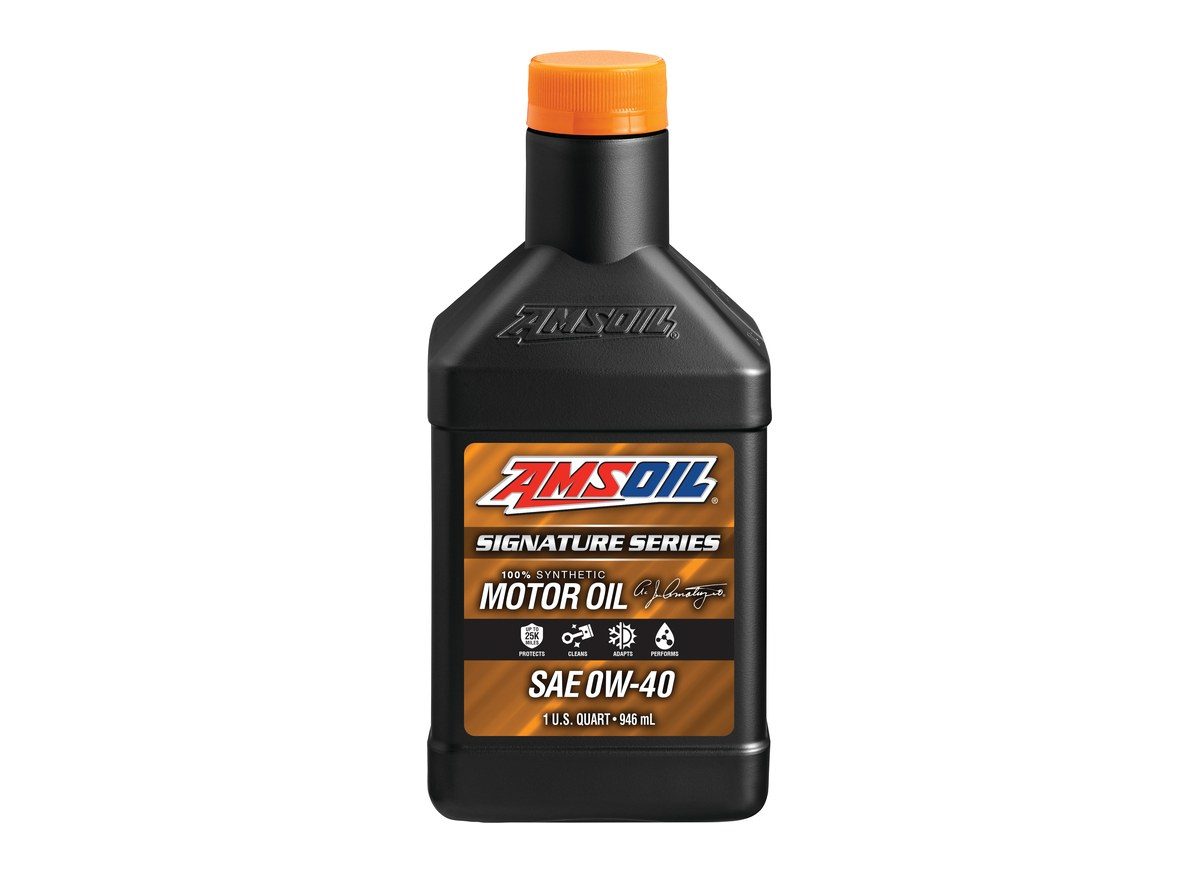
Both 6.2L and 6.4L Mopar models require specialized 0W-40 motor oil. AMSOIL Signature Series 0W-40 is the perfect match for these high-horsepower engines.

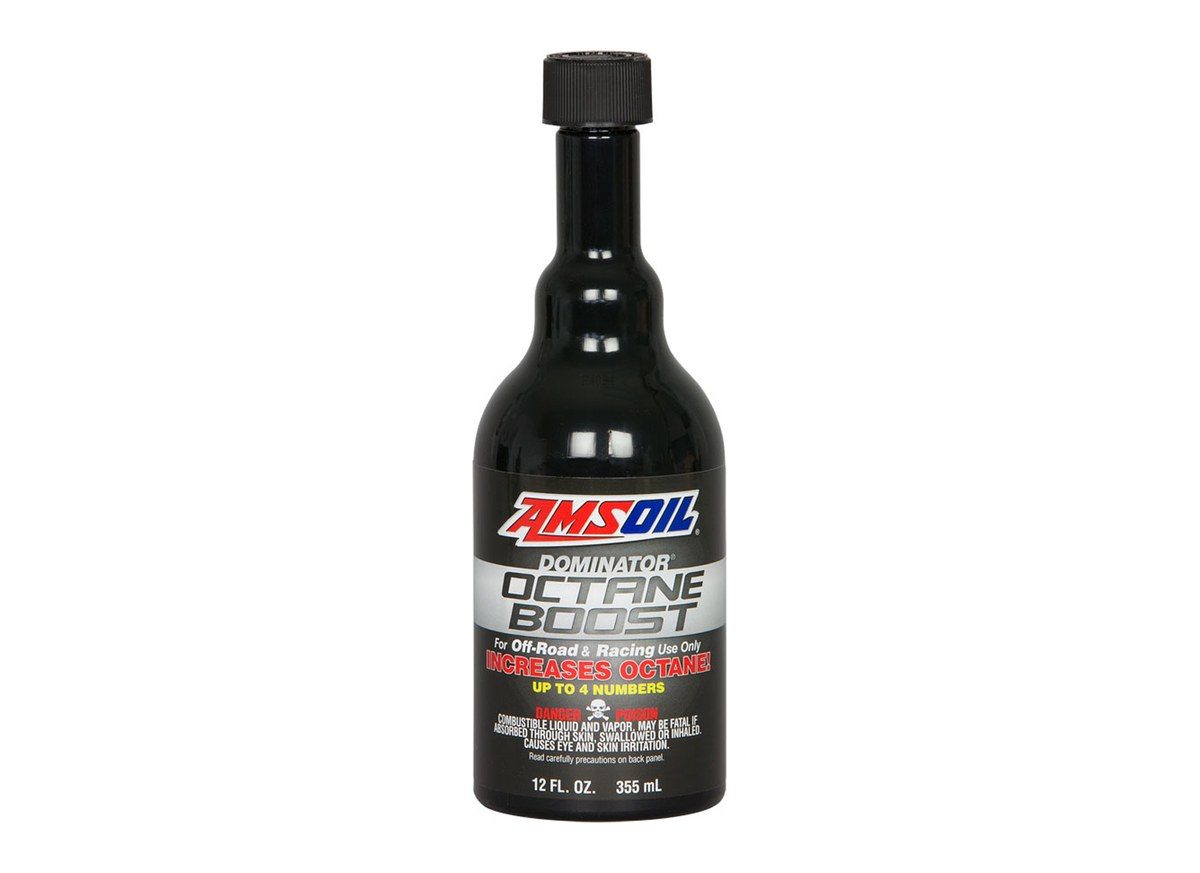
DOMINATOR® Octane Boost is an excellent lead substitute at the same treat rates in collector automobiles designed for leaded gasoline.
- Reduces engine knock
- Improves ignition and engine response
- Helps fuel burn cleaner
- Inhibits corrosion
- Recommended for racing use