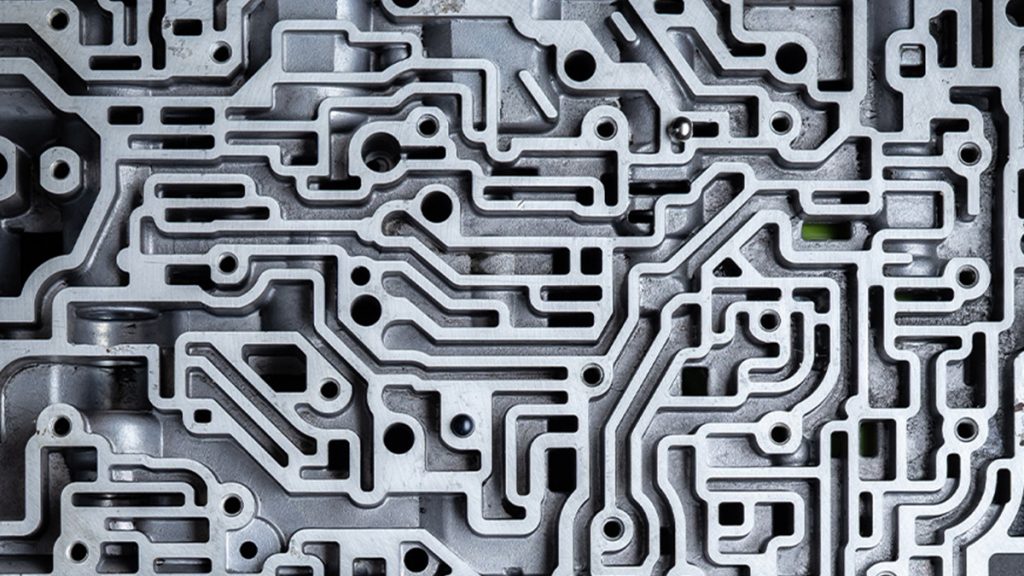
The automatic transmission remains one of the most complex components in a modern vehicle. For years, its intricate inner workings have intimidated even seasoned do-it-yourself mechanics. Central to its operation is the valve body, often called the brain of the transmission.
Automatic transmission technology has been around for decades and continues to evolve with remarkable refinements to improve efficiency and performance. But as manufacturers increase performance, some transmission experts question if cost-cutting measures are decreasing durability in some models. If true, using a premium automatic transmission fluid (ATF) is more important than ever.
Let’s explore the critical role of the valve body, how it functions and the steps you can take to maximize its durability and efficiency.
The Brains of the Operation
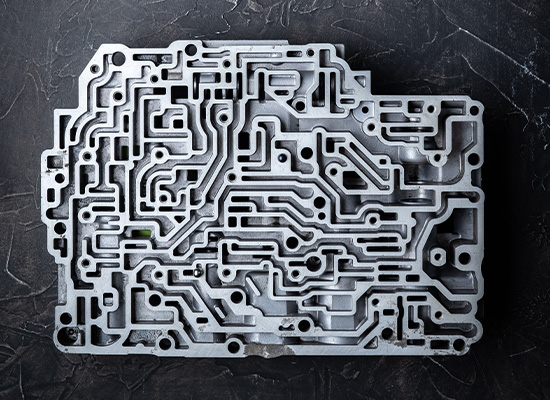
Think of the valve body as the hydraulic control center of an automatic transmission. It’s a complex maze of channels and passages that direct ATF to various parts of the transmission. This controlled flow of pressurized fluid is what allows your vehicle to shift gears smoothly.
Inside the valve body, you’ll find a network of solenoid valves, check balls and springs. The vehicle’s computer, or transmission control module (TCM), sends electrical signals to these solenoids. In response, the solenoids open and close specific passages, directing the hydraulic pressure of the ATF. This pressure engages and disengages different clutch packs and bands, which in turn activate the planetary gear sets to change gear ratios.

How the Valve Body Works
When you press the vehicle’s accelerator, the engine’s rotational force is transferred to the transmission through the torque converter. As engine rpm and load change, the TCM determines the ideal moment to shift gears. It then commands the solenoids in the valve body to act.
For example, to shift from first to second gear, the TCM energizes specific solenoids. These solenoids move valves that redirect the flow of ATF. This pressurized fluid then engages the clutch pack responsible for second gear while disengaging the first-gear clutch. The entire process happens in milliseconds, providing the seamless gear changes we expect from modern automatic transmissions.
The transmission fluid does more than just lubricate. It functions as a hydraulic fluid, actuating clutches and cooling the transmission. Its frictional properties are also finely tuned to ensure clutches engage without slipping or grabbing harshly.