


Let’s get this third-party started
My mom’s attitude is something we’ve run into at AMSOIL a time or two. We’ve published test results showing the superiority of synthetic lubricants compared to conventional lubricants for years. Not just AMSOIL synthetic motor oil, but other synthetic oils as well. I told you about some of those tests in this blog post. In a nutshell, synthetics offer improved wear protection, engine cleanliness, cold-flow and resistance to viscosity loss than conventional oils. That translates into a longer-lasting, higher-performing engine. But our test results don’t convince some people. Skeptics demand proof from an objective third party. Anything else is thinly disguised marketing meant to sell you something. Kind of like my mother with the water-quality test. The American Automobile Association (AAA), a reputable, third-party organization, recently published an in-depth report that affirms what we’ve been saying for more than 45 years: synthetics outperform conventional oil. In conducting its test, AAA sought to determine if it’s worth paying more for synthetic oil over conventional oil. The answer is a resounding “yes.” Here’s what John Nielsen, AAA’s managing director of Automotive Engineering and Repair, said:Oil protects critical engine components from damage and AAA found that synthetic engine oils performed an average of 47% better than conventional oils in a variety of industry-standard tests. With its superior resistance to deterioration, AAA’s findings indicate that synthetic oil is particularly beneficial to newer vehicles with turbo-charged engines and for vehicles that frequently drive in stop-and-go traffic, tow heavy loads or operate in extreme hot or cold conditions.
AAA Testing
AAA’s research included eight industry-standard ASTM tests focusing on the following:- Shear stability
- Deposit formation
- Volatility
- Cold-temperature pumpability
- Oxidation resistance
- Oxidation-induced rheological changes
Extreme-heat resistance
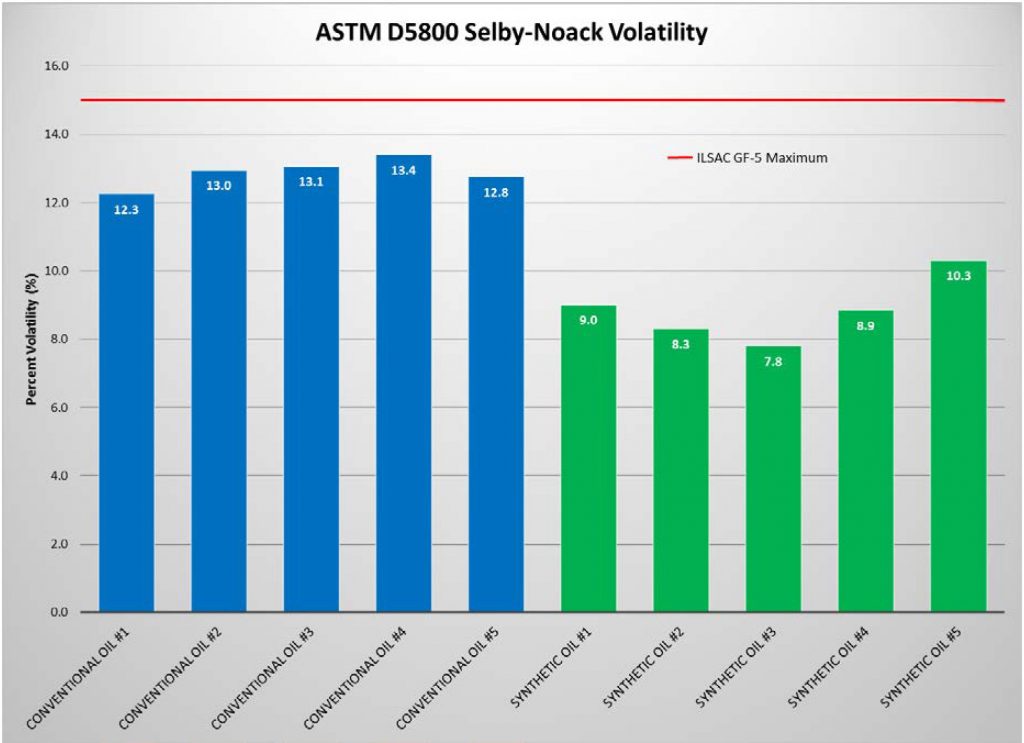
The NOACK Volatility Test determines the evaporation loss of lubricants in high-temperature service. The more motor oils vaporize, the thicker and heavier they become, contributing to poor circulation, reduced fuel economy, increased oil consumption and wear. The lower the number, the better the resistance to vaporization. As you can see, the synthetic oils (the green bars) demonstrated lower volatility than the conventional oils (the blue bars). That translates into a cleaner, better-running engine for you.
Deposit resistance
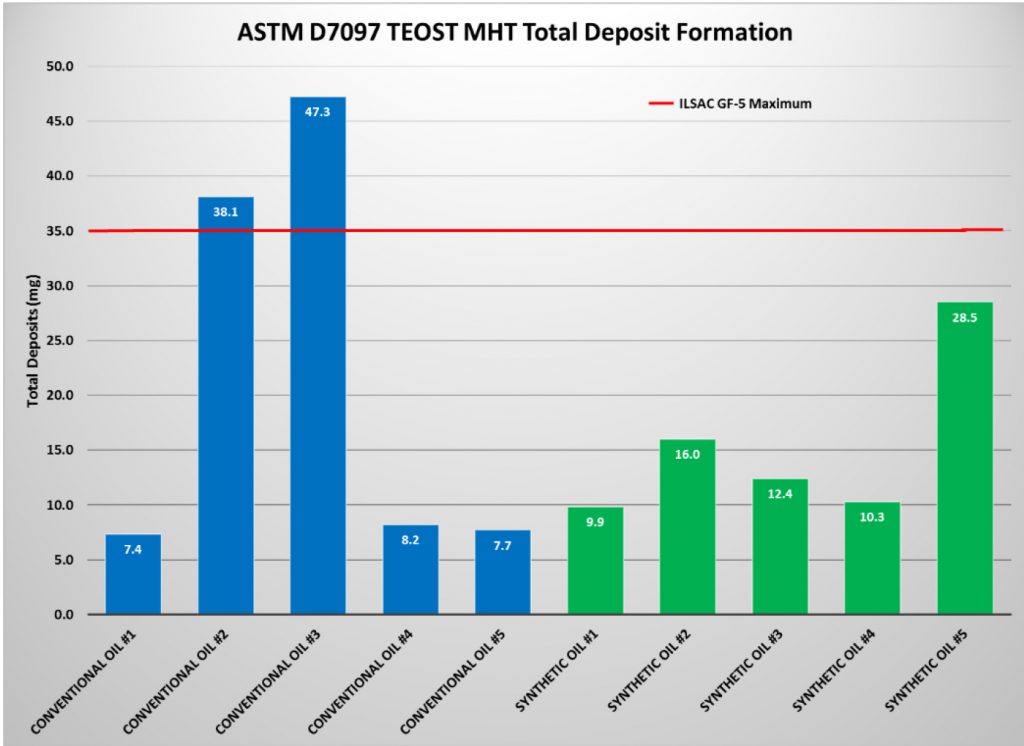
The Thermo-Oxidation Engine Oil Simulation Test (ASTM D6335) determines the deposit-resisting properties of lubricants in high-temperature service. Motor oils can form deposits when exposed to increased heat, reducing efficiency and contributing to poor overall performance. The lower the number, the better the resistance to deposit formation. Here, two of the conventional oils failed to limit deposits below the minimum standard to meet the ILSAC GF-5 specification, while all the synthetic oils remained under the threshold.
Recommended AMSOIL products
Start with AMSOIL synthetic motor oil and find the exact AMSOIL products for all your vehicles with the AMSOIL Product Guide.