


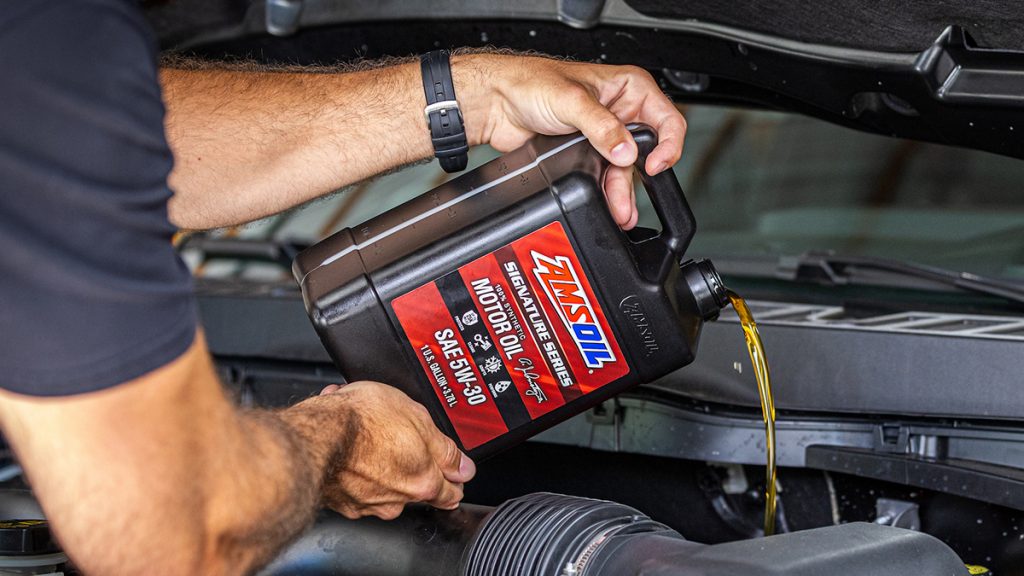
As you might expect, oxygen causes engine oil oxidation.
Oxygen comprises about 20% of our atmosphere. It’s the third most common element in the universe. Without it we’d all be doomed.
And yet too much of it can cause problems inside your engine.
What is oil oxidation?
Oxidation occurs when the addition of oxygen changes a chemical substance.
Take an apple, for example. Everyone knows that oxygen will quickly cause a cut apple to turn brown.
Or metal. Oxygen can cause rust to form on some metals in a matter of days. Have you ever noticed your brakes grinding after having left your car sit for a couple days in wet weather? That sound is your brake pads scouring rust from the rotors.

Motor oil isn’t immune to oxidation. As oil reacts with oxygen, a permanent chemical change occurs that causes oil molecules to lose one or more electrons. This can result in several problems, including…
- Formation of sludge and deposits that reduce engine efficiency and increase the risk of engine failure
- Increased oil viscosity, which reduces fuel efficiency
- Additive depletion, reducing the oil’s effectiveness
- Accelerated degradation, causing you to change oil more often
Heat accelerates oil oxidation
Every 18ºF (10ºC) increase in temperature doubles the rate of oxidation. That doesn’t bode well for motorists driving modern turbocharged vehicles that create increased heat compared to older vehicles.
Heat isn’t the only oxidation accelerant – certain metals, acids and water can also hasten oxidation. So can large volumes of entrained air, known as foaming.
Can we prevent motor oil oxidation?
Unfortunately, no. Nature is relentless, and all motor oil will eventually oxidize to some degree.
But we can dramatically slow oxidation through use of synthetic base oils and quality oxidation-inhibitor additives.
AMSOIL synthetic lubricants are formulated using base oils with a saturated molecular structure, meaning oxygen is prevented from attaching. This provides inherent heat and oxidation stability compared to unsaturated conventional oils.
And, because AMSOIL synthetic lubricants don’t contain contaminants like conventional oils, their base composition doesn’t accelerate oxidation.
AMSOIL synthetic lubricants also contain high-quality oxidation inhibitors. These additives are sacrificial in nature, meaning they’re designed to deplete over time. Because AMSOIL synthetic lubricants have inherently better oxidation resistance, their oxidation inhibitors last longer since they don’t deplete as rapidly.
What’s that to me?
That all adds up to a motor oil that…
- Lasts longer despite intense heat and stress
- Helps keep your engine cleaner and more efficient
- Saves money in the long run through reduced maintenance
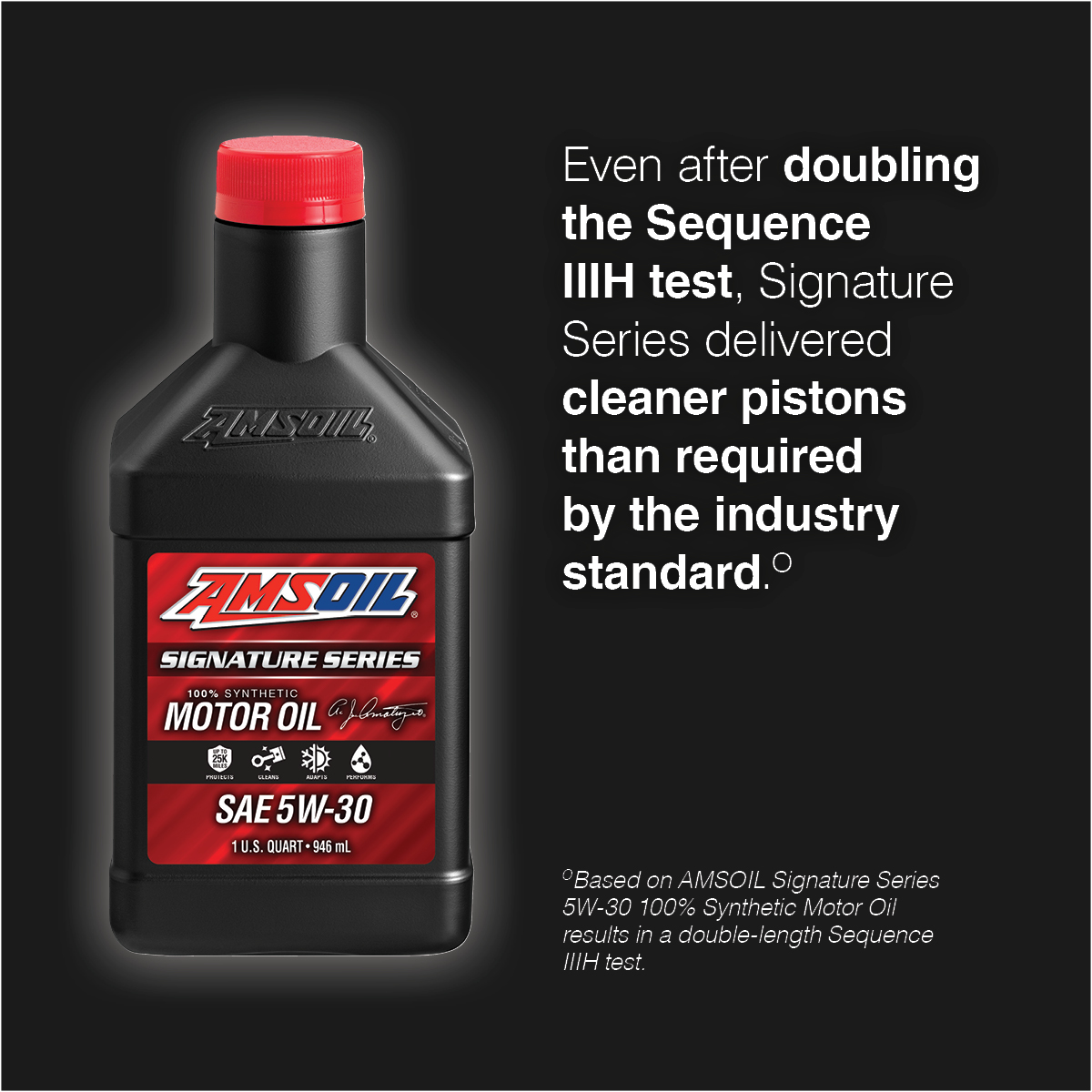
In fact, AMSOIL Signature Series Synthetic Motor Oil delivers 72% more protection against piston deposits than required by industry standards, helping engines stay cleaner, longer.¹ Even when the Sequence IIIH test was doubled in length, Signature Series delivered cleaner pistons than required.²

So, while oxygen lets you breathe, AMSOIL synthetic motor oil lets you breathe easy since your engine is protected against oxidation.
¹Based on AMSOIL Signature Series 5W-30 100% Synthetic Motor Oil results in the Sequence IIIH test.
²Based on AMSOIL Signature Series 5W-30 100% Synthetic Motor Oil results in a double-length Sequence IIIH test.