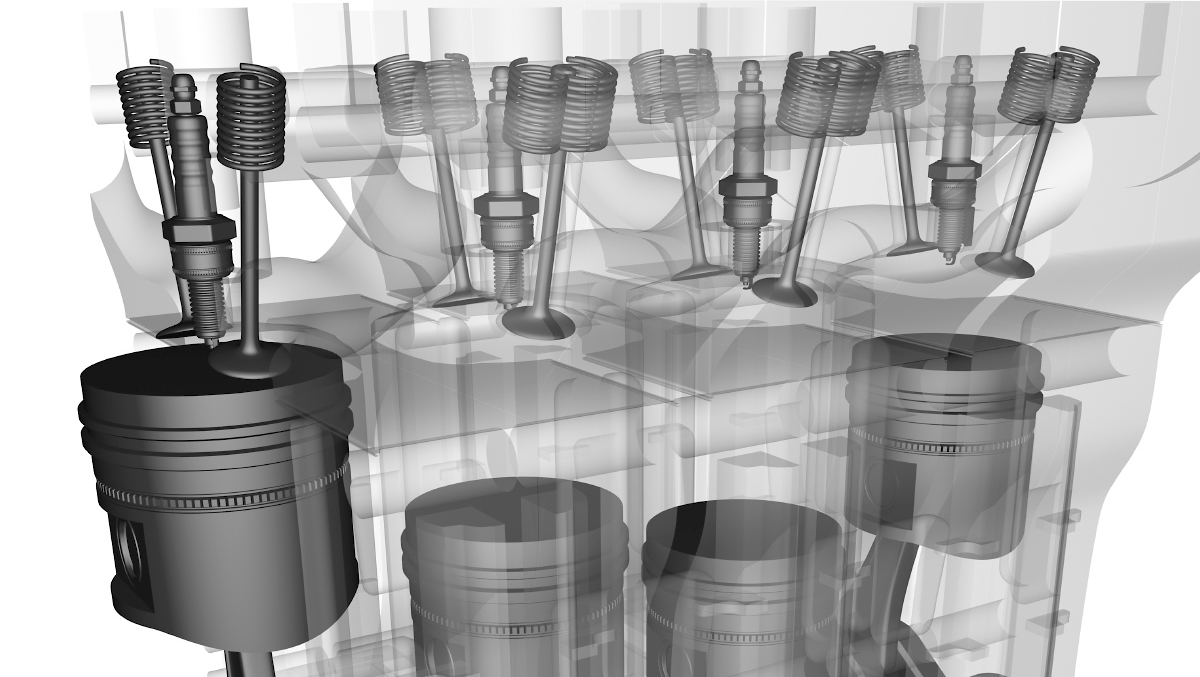


Spark plugs are responsible for igniting the air/fuel mixture inside an engine. They do their job by creating a miniature bolt of lightning, or spark, within the combustion chamber as the piston reaches the top of the compression stroke. As such, spark plugs are a critical component of gasoline engines.
Video transcript: Let’s Talk Spark Plugs
Featuring John Gardner, ASE Master Certified technician, automotive technology instructor and host of Motorhead Garage, with AMSOIL Director of Product Marketing Len Groom (author profile).
John Gardner: Spark plugs can tell you a lot about what’s going on inside of your engine. Welcome to this AMSOIL tech tip. We’re gonna talk about spark plug gapping and reading spark plugs. Let’s start out with gapping.
Well, it’s important to gap a spark plug because a spark plug has to deliver the spark inside your cylinder under harsh conditions, and this gap has to be proper. Now there’s two ways. You can use a wire feeler gauge like this. Go in there and gap it.
And also, you wanna gap it, first, when you install it, and or if it’s wear for a while, go ahead and set that gap. And then you can use one like this. You go through there.
Follow your manufacturer’s specification for gapping a spark plug. Now important part is reading that spark plug. When you pull it out, you can see right here. There’s a normal, there’s one with pre ignition right there.
Now, that’s advanced timing. It’s way hot. That’s gonna be a hot condition. Mechanical damage, something hit the spark plug, and then you have carbon fouling.
Carbon fouling is usually a rich condition. Oil fouling, you’re getting oil into that cylinder. Now check out the two there, overheating and torch seat. Think about that.
Overheating, torch seat, and pre ignition is all because of heat and heat related things going on inside of that cylinder. Now whether it’s a car or a two stroke cycle, heat’s gonna happen in that cylinder. Isn’t that right, Len?
Len Groom: That’s correct. And, you know, we’re looking at a a, you know, a string trimmer here, and you’d be surprised at how hot these things actually get. You wouldn’t think about it as just a small piece of lawn and garden equipment, but the spark plug temperatures on these things can exceed five hundred degrees f. And when we get to those temperatures, deposits become, you know, likely. So you wanna make sure that you’re getting an additive in your fuel, and for that one, it would be the AMSOIL QuickShot. Mix it in, per the directions on the back depending on the fuel tank size, and it’ll help minimize any deposits on piston crowns, combustion chambers, your spark plugs, and the ring lands.
John Gardner: If you ever been in the hot Florida sun trying to start one of these things, that’s an awesome tech tip. So get you a little Quickshot. Put it in your two strokes for cars as well. Make sure you check them out on the website at AMSOIL.com
Spark plugs ignite a mixture of air and fuel, creating an explosion that is converted to mechanical power.
How Spark Plugs Work
Two metal electrodes on the tip of the spark plug create a gap that electric current must cross. And it’s no small act. In fact, it takes a lot of voltage to make it happen. Spark plugs usually require 12,000–25,000 volts or more to fire – and can be as high as 45,000 volts.
Spark plugs draw their power from the high-voltage current generated by an ignition coil or magneto. As electricity flows from the coil, a voltage difference develops between the center electrode and ground electrode on the spark plug. At first, nothing happens. That’s because the distance between the electrodes and the insulating properties of the air/fuel mixture creates a lot of resistance for the electric current.
But as the voltage continues to rise it begins to alter the molecular structure of the gases between the electrodes, causing them to become ionized. The ionized gas allows current to flow across the gap and the spark plug fires.
The intense heat created by the spark creates a small fireball within the gap. That combustion kernel rapidly expands until the entire air/fuel mixture within the cylinder chamber combusts. The resulting explosion creates power that the engine can harness.
Heat Range
Spark plugs work properly within a certain heat range. Temperature on the firing end of a spark plug must be kept high enough to prevent fouling but low enough to prevent pre-ignition of the air/fuel mixture. The exact operating temperature range for spark plugs varies depending on the application and spark plug design, but they generally operate with an electrode temperature normally between 930°F (500°C) and 1,470°F (800°C).
To avoid overheating and causing pre-ignition, spark plugs disperse excess heat through the plug into the water jacket of the cylinder head. How much heat the spark plug can disperse is known as its heat range or thermal performance.
Cold vs. Hot Spark Plugs
Cold spark plugs have a short heat flow path for a rapid rate of heat transfer. They also use a short insulator nose to limit heat absorption.
Hot spark plugs are just the opposite. They feature a longer insulator nose and longer heat flow path. The design slows the rate of heat transfer to the water jacket.



Comments
Brad Nelson is an AMSOIL Technical Writer II who develops content about lubricant technology, product performance and vehicle maintenance. He works with engineers and product specialists to translate testing, application requirements and approved performance claims into clear customer guidance. Nelson’s work includes AMSOIL Blog articles, AMSOIL Magazine features and technical explanations concerning motor oils, gear lubricants, vehicle systems and maintenance practices.
Share: