

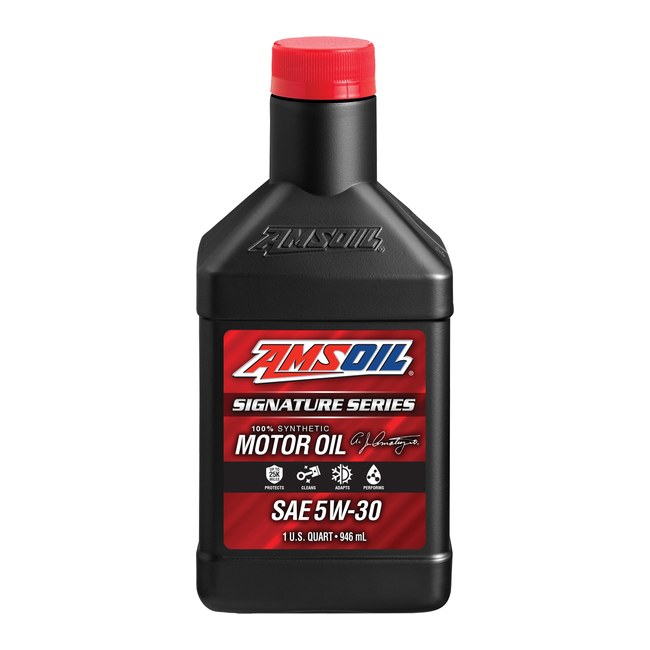

Every season puts different demands on your vehicles and equipment, from cold starts and gelled diesel fuel in winter to heat, towing and road trips in summer. Use this guide to get ahead of each season, for your car or truck, your bike and your outdoor equipment.
Winter checklist
- Confirm your motor oil’s winter grade, the number before the “W,” matches your owner’s manual. A lower number means the oil flows faster at a cold start. See Why Your Engine’s Winter Oil Grade Matters.
- Test the battery before the first cold snap, because cold temperatures reduce a battery’s cranking power while thickened oil makes the engine harder to turn over. See the Car Battery Guide.
- Check the coolant’s freeze protection.
- Treat diesel fuel before temperatures drop. AMSOIL Diesel Cold Flow Fuel Additive lowers cold filter-plugging point (CFPP) by up to 40°F (22°C) and fights gelling in cold weather.
- Replace streaking or chattering wiper blades and switch to winter washer fluid. See How to Stop Windshield Wiper Chatter.
- Wash road salt from the body and undercarriage regularly to help prevent rust. See How to Prevent Rust on a Car or Truck.
- Pack an emergency kit. See How to Build a Winter Survival Kit for Your Car.
Summer checklist
- Heat, towing and long trips put motor oil under the most stress it sees all year, so make sure your oil is up to the job. See What’s the Best Motor Oil for High Heat?
- Check coolant level and condition, inspect hoses for cracks and soft spots and confirm the radiator cap seals properly.
- Check tire pressure when the tires are cold, since heat raises the reading.
- Prepare for long drives with Prep Your Vehicle for Your Summer Road Trip.
How fluids behave in extreme cold
Motor oil, transmission fluid and gear oil all thicken as temperatures drop, so they take longer to reach critical components at startup. Synthetic lubricants flow better at low temperatures than conventional lubricants, which helps protect the engine during the first moments after a cold start. Diesel fuel can gel as the paraffin wax in it crystallizes, and water in fuel or washer fluid can freeze. Read Best Motor Oil for Winter and Other Cold-Weather Questions and Combat the Effects of Cold Temperatures.
Storing vehicles and equipment
Before storing a vehicle, change the oil, fill and stabilize the fuel, connect a battery maintainer and protect it against rodents and moisture. See Long-Term Vehicle Storage Tips. AMSOIL products have their own storage guidelines too. See AMSOIL Cold Storage Recommendations.
Seasonal FAQ
Should I warm up my car in winter?
Most modern engines need only a short idle, because gentle driving brings the engine to operating temperature faster than idling. See Should I Warm Up My Car in Winter?
Do I need a different motor oil in winter?
Not if your oil’s winter grade meets the specification in your owner’s manual. A synthetic motor oil flows faster at a cold start than a conventional oil of the same grade.
Spring
Summer
Fall
Winter
- How to Protect Your Diesel in Cold Weather: Oil, Fuel and Coolant
- Be Prepared for Winter Driving
- How to Build a Winter Survival Kit for Your Car
- Should I Warm Up My Car in Winter?
- All You Need to Know About Oil Cold Flow
- What Motor Oil is Best for Winter? (And Other Cold-Weather Questions)
- The Cold War: Why Your Engine’s Winter Oil Grade Matters More Than You Think
- How to Get the Best Gas Mileage in Winter
- How to Prevent Diesel Fuel Gelling in Cold Weather
- What’s the Best Oil for My Snowblower?
- What To Do When Your Snowblower Won’t Start?
- How to Store a Snowblower
- Cold Storage Recommendations for AMSOIL Products
- What is Silicone Spray?
- Combat the Effects of Cold Temperatures
- Fix Windshield Wiper Chatter
- How to Prevent Rust on a Car or Truck

Comments
Brad Nelson is an AMSOIL Technical Writer II who develops content about lubricant technology, product performance and vehicle maintenance. He works with engineers and product specialists to translate testing, application requirements and approved performance claims into clear customer guidance. Nelson’s work includes AMSOIL Blog articles, AMSOIL Magazine features and technical explanations concerning motor oils, gear lubricants, vehicle systems and maintenance practices.
Share: