


 A richer air/fuel mixture at startup washes oil from the cylinder walls
- Condensation forms inside the engine that causes rust and corrosion
- Cold piston rings and cylinders don’t seal as well, causing combustion gases to “blow by” the rings and contaminate the oil
- Gravity causes much of the oil to fall back into the oil sump, leaving components unprotected
- Cold oil doesn’t flow immediately at startup, temporarily starving the engine of oil
“Cold” isn’t just for winter
First, it’s important to define a “cold” start. While true that oil thickens more in sub-zero winter weather and causes increased starting difficulty, an engine is considered “cold” after it’s sat long enough to cool to ambient temperature, typically overnight. Even in warm climates, cold-start wear is a problem. The oil inside your engine cools as it sits overnight. As it cools, its viscosity increases (it thickens). When it’s time to start your vehicle in the morning, the thicker oil doesn’t flow through the engine as readily as it does when it’s at operating temperature. It’s during this time that vital engine parts can operate without lubrication, increasing wear. The problem is more pronounced the colder it gets, particularly if you’re using conventional motor oil.Waxes solidify in the cold
Conventional lubricants contain paraffins, or waxes, that solidify when the temperature drops. These waxes cause the oil to thicken. In the comparison shown in the video, we cooled a conventional oil and AMSOIL Signature Series 5W-30 Synthetic Motor Oil to -40ºC. The conventional oil thickened so much it barely flowed from the beaker. If that oil were inside your engine on a cold morning, it could prevent the crankshaft from spinning fast enough to start the engine, leaving you stranded. Even if the engine started, you wouldn’t be out of the woods. Thick, cold oil can fail to flow through the tiny screen openings on the oil pickup tube, starving the engine of oil for several vital moments before the oil begins to heat up and flow throughout the engine.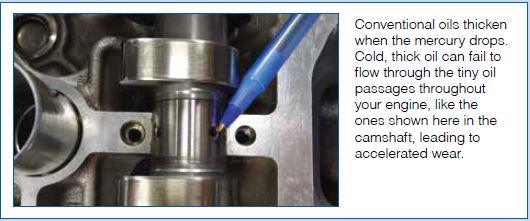
Here’s how to protect your engine
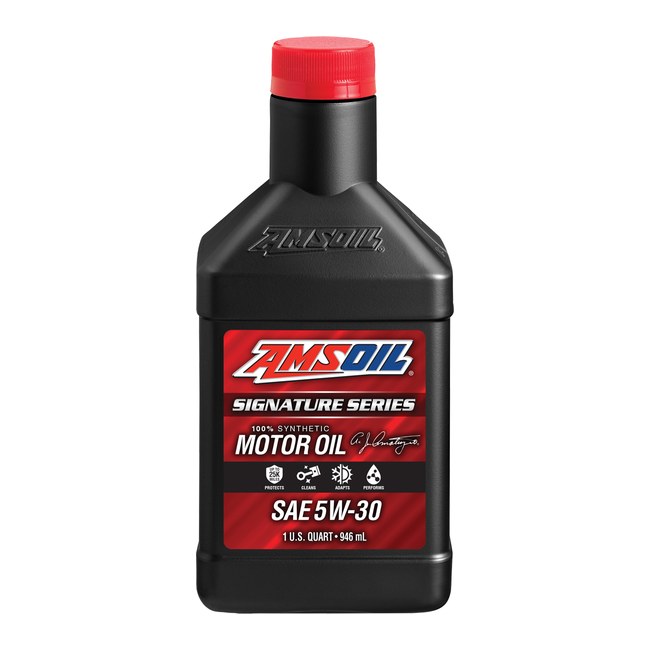
AMSOIL synthetic motor oils provide better cold-flow properties than conventional oils. Their synthetic base oils don’t contain the waxes inherent to conventional oils. As a result, they demonstrate reduced pour points and provide increased fluidity during cold starts. This translates into oil that flows almost immediately through the oil pickup screen and other tiny oil passages when you start your engine, protecting it against wear. Look at the oil’s pour point to gauge its ability to flow quickly at startup, typically reported on the oil’s data bulletin. Pour point is the coldest point at which an oil will flow. Lower values equal improved cold-flow and maximum wear protection. AMSOIL Signature Series 5W-30 Synthetic Motor Oil, for example, provides a pour point of -58ºF (-50ºC).Causes of startup engine wear
The exact percentage of engine wear that occurs at startup depends on a mix of several factors. The factors below accelerate wear:
- Motor oil doesn’t flow, temporarily starving the engine of oil.
- Gravity causes much of the oil to flow into the oil sump, leaving components unprotected.
- Condensation forms inside the engine that causes rust and corrosion.
- Richer air/fuel mixture at startup washes oil from the cylinder walls.
- Cold piston rings and cylinders don’t seal as well, allowing combustion gases to “blow by” the rings and contaminate the oil.
While all these factors are important, lack of oil due to poor cold-flow properties is the biggest culprit.
Impacts of poor cold flow
Thick oil can prevent the crankshaft from spinning fast enough to start the engine, leaving you stranded.
In addition, thick oil can fail to flow through the screen openings on the oil pickup tube, starving the engine of oil for several vital moments.
Oil may also fail to flow through the tiny passages in the crankshaft to lubricate the main bearings. Similar passages in the camshaft ensure the engine’s upper end is lubricated. The further away from the oil pump these passages are, the longer it takes oil to reach components at startup.
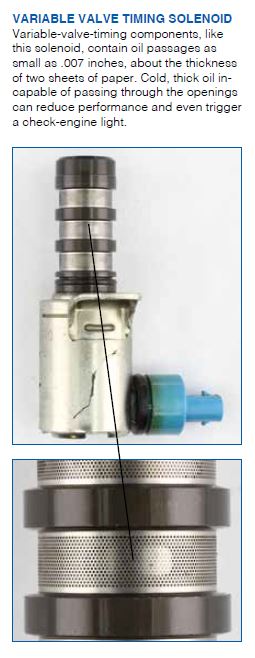
Poor cold-flow properties can also affect variable valve timing (VVT) systems. Engines equipped with VVT have solenoids with tiny openings (about the thickness of two sheets of paper) through which the oil flows and acts as a hydraulic fluid to actuate VVT components. Oil that fails to flow through these tiny passages reduces VVT performance and can trigger a check-engine light.

This article is part of our Battery and Cooling System Care guide. See every article in the guide.
Recommended AMSOIL products
Start with AMSOIL synthetic motor oil and find the exact AMSOIL products for all your vehicles with the AMSOIL Product Guide.

Comments
Alex Thompson is Director of Product Marketing at AMSOIL. He guides product strategy, technical positioning and market development for automotive and commercial lubricants. Thompson works with product-development and communications teams to connect product capabilities with customer and equipment requirements. His AMSOIL Magazine Tech Talk contributions address oil consumption, hydraulic-system operation and the role lubricants play in component protection and system performance.
Share: