

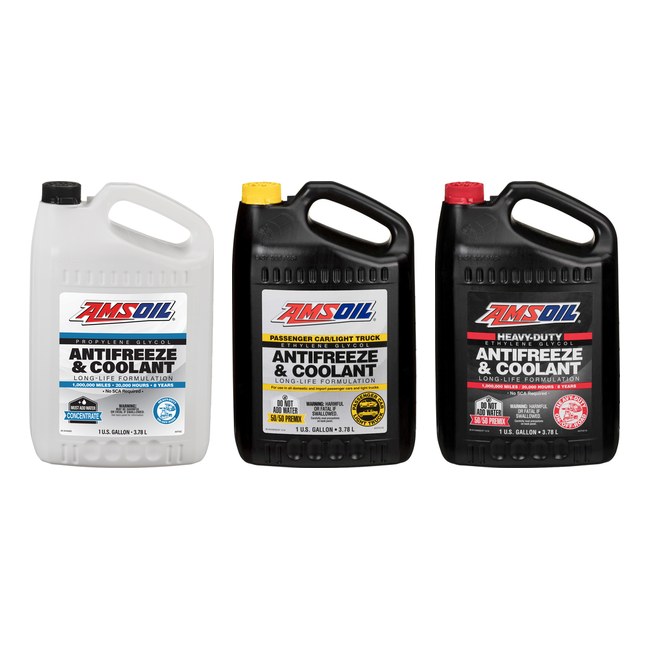
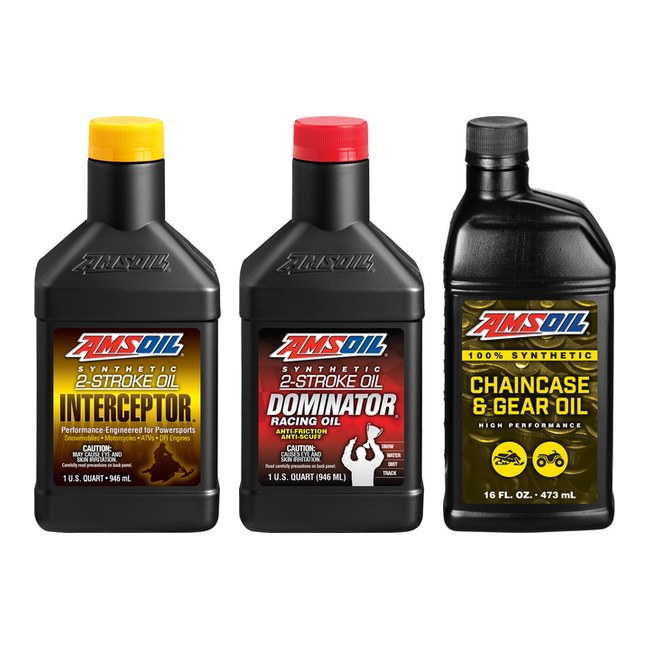

Because cold-temperature storage can be detrimental to the performance of some AMSOIL products, AMSOIL provides the following cold storage recommendations:
Freeze-Tolerant Lubricants
Store all AMSOIL lubrication products at temperatures at least 10°F above the lubricant’s pour point (-20°F to be safe). Some lubricants are designed for use in extreme cold temperatures, which also effectively lowers their cold storage limit. However, ideal storage temperature is 32°F (0°C) to 85°F (29°C). Long-term storage in temperatures out of this range can cause additive separation over time, reducing overall lubrication effectiveness and lifespan.
Gear Oil: SEVERE GEAR® SAE 250 above 0°F
Freeze-Tolerant Fluids
These AMSOIL products either do not freeze or suffer no adverse effects from a freeze-thaw cycle:
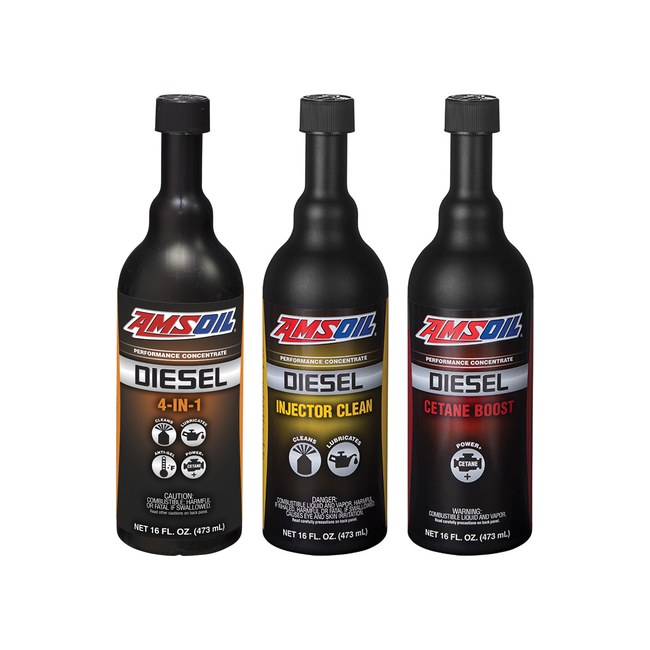
Fuel Additives
Diesel Injector Clean + Cetane Boost
Other Fluids
Slip Lock®: If product separates, warm to room temperature and shake well before use.
Heavy-Duty Degreaser: warm to room temperature before use.
Brake Fluid: Do not store below -40°F longer than two weeks.
Do Not Freeze
These AMSOIL products should be stored in a dry place above freezing (32°F). Most aerosols will tolerate freezing, but should be warmed to room temperature before use:
Diesel 4-in-1: above 0°F
Diesel Cold Flow: above 0°F
Aerosols
Miracle Wash®: above 32°F
Firearm Cleaner and Protectant
100% Synthetic Firearm Lubricant and Protectant

When in doubt about correct AMSOIL product storage or usage, please read the product label or contact our Customer Service Department.
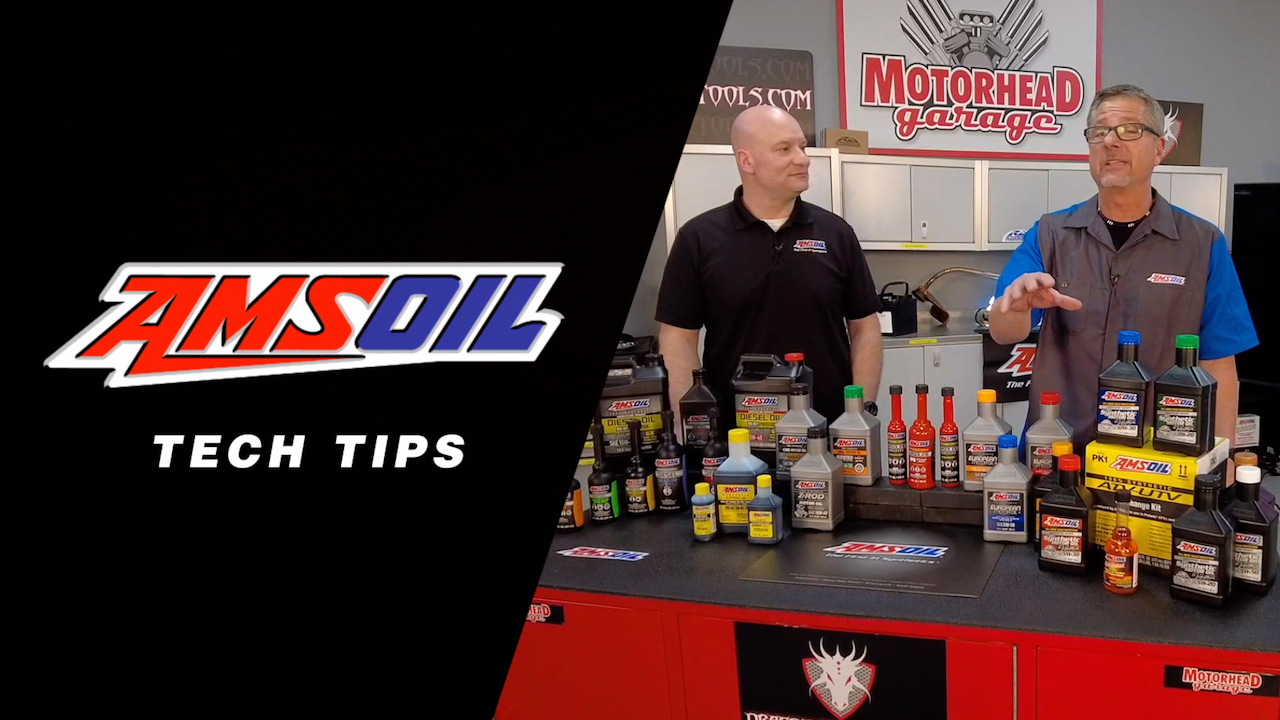
Video transcript: Take a Look Inside the AMSOIL Mechanical Lab
Welcome to Tech Tips. I’m Len Groom. Today we’re looking inside the AMSOIL Mechanical Lab. Chris Orr, the lab manager, is going to show us around.
We opened the AMSOIL Mechanical Lab, otherwise known as the AML or Dyno, back in April 2013. It consists of three Dyno cells, 24 x 20 each with water systems, air systems and fuel systems to support whatever type of testing that we want to do in the Dyno cells. We test everything from passenger car engines to powersports equipment to lawn and garden equipment here. The main purpose of the AML is to validate technologies for product development and for comparative analysis in the market of AMSOIL products and make sure that AMSOIL’s producing the best products possible.
In Cell 1 we have a SuperFlow 902S Water Brake, the Land & Sea 7-inch Dyno set up to a custom chainsaw installation and we have three air compressors. In Cell 2 we have a Midwest 1014 Eddy Current Dyno. It controls from 2 to 6000 RPM, up to 175 hp. We use that for passenger car motor oil development.
We also have small engine testing. In Cell 3 we have a SuperFlow CycleDyn Eddy Current Dyno, and we’re gearing up at this point to expand that Dyno to a double-roll installation. Engines are very sensitive to the combustion air that they get in terms of repeatable power production, so we have a Munters Combustion Air Unit that provides 3000 CFM of humidity- and temperature-controlled air directly to the engines. We do a lot of steady-state dyno testing versus performance facilities that might do a very short-term test; so, therefore, we need a lot of cooling capacity.
We need a lot of water capacity. So we do have a 4000-gallon water system that supplies cooling water and brake water to our test cells as well as a 60-ton evaporative chiller that is roof mounted so that, regardless of the amount of horsepower, whatever degree of steady-state testing we’re doing we can maintain the temperature of our supply water at all times. All of our fuel, air and water systems are PLC controlled. It’s basically a computer interface.
It can monitor certain conditions, whether it be a temperature, whether it be a pressure. And it can respond automatically in the absence of human intervention. In our test design, if it’s desired, we can ramp up the severity of our test, heat, load, the length of time that that test is conducted for to separate high-quality oils. One oil might sputter, cough and choke and just fall its way across 100 hours where another oil might breeze past 100 hours without breaking a sweat.
Most high-quality oils are going to do okay in normal operating conditions. So, if you want to differentiate that, you want to see what oil is going to be better in severe conditions, you have to design things like that yourself. How do you determine what’s great? That’s what we want to do here.
In addition to the test facilities, we have a very large work area. Everything off-test moves to the shop area. It’s disassembled. It’s laid out prior to photography for inspection.
Build in our own facility allows AMSOIL to make decisions quickly and design testing to help differentiate high-quality oils, which is something that really isn’t available outside of developing your own testing. Well, as you can see, the mechanical lab is a very unique facility. This is the facility that allows us to do the testing that gets our products to that next level. Other companies just can’t do this.
Thanks for watching. We’ll see you next time.



Comments
David Hilgendorf is an AMSOIL Technical Writer who develops content for automotive, powersports and industrial audiences. His work includes technical data sheets, magazine articles, blog posts, white papers, product literature and application guidance. Hilgendorf works with engineers, laboratory personnel and technical specialists to communicate lubricant testing, product performance, maintenance practices, metalworking fluids, grease, motorcycles, marine equipment and industrial reliability.
Share: