

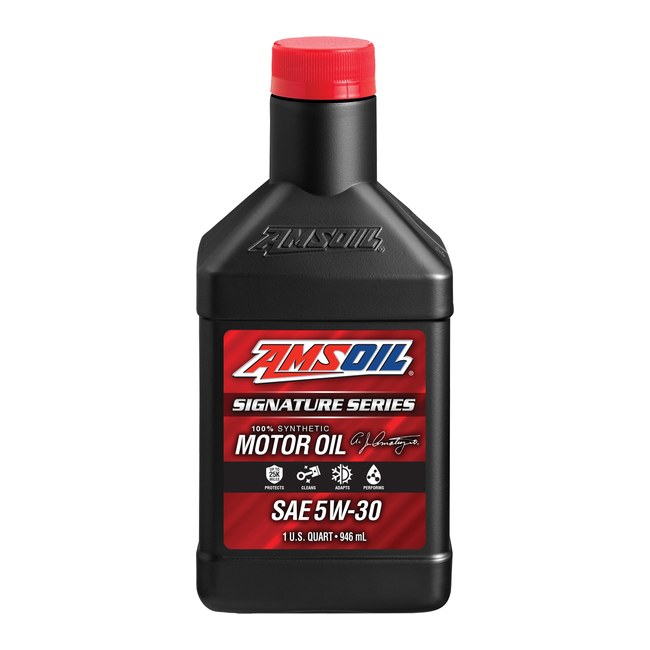

The short answer: the best motor oil for high heat is a premium synthetic that resists oxidation, volatility and deposits. Heat breaks oil down into sludge and valve deposits, boils off light molecules so the engine “uses” oil, and cokes turbocharger bearings. We recommend AMSOIL Signature Series 100% Synthetic Motor Oil.
Modern engines run hotter than ever. A typical passenger car or light-truck engine can operate at temperatures exceeding 235°F (113°C), and temperatures climb even higher when towing, hauling heavy loads or driving in extreme summer conditions. The widespread use of turbochargers and other power-dense technologies allows automakers to improve fuel economy without sacrificing performance, but it also increases engine heat.
While heat is a natural byproduct of engine operation, excessive heat can create conditions that shorten engine life and reduce performance if your motor oil cannot handle the stress. Understanding how heat affects motor oil can help you choose the right lubricant to keep your engine protected.
Video transcript: How to Beat Engine Heat
Featuring John Gardner, host of Motorhead Garage, and Leonard “Len” Groom, AMSOIL Director of Product Marketing (author profile).
John Gardner: Now, this V-twin has only been running for about a minute, and I can tell you it’s red hot. If I were to go down here and feel the fins on this head, I would burn my hand. As a matter of fact, we actually added these cooling fans right here to blow across the cylinder heads to keep it cool, because heat is a huge issue. Welcome to this AMSOIL Tech Tip. That’s right, we’re talking about cooling fans and cooling systems.
Now, on a car, you may have a couple of coolant fans like this located right in front of your radiator, pulling air through the radiator and also your A/C condenser. But what a lot of people don’t realize is that sometimes they might not come on. You may just start your car, and it’ll be fine. The fans need what’s called enable criteria to run. You can turn your air conditioner on. Once you do that, your coolant fans are going to start to run. As you build up pressure in the A/C system, they go a little bit higher. Temperature is also a big factor. When your car starts to get hot, the coolant fans are going to come on. So when you’re checking them at the front, make sure your car meets the criteria for them to run.
Now, Len, inside that cylinder, we’re talking about 4,500 degrees. That’s a liquid-cooled engine. But on that V-twin, we’ve got nothing but those fins. That’s wreaking havoc on that oil.
Len Groom: It is. It’s extremely hot. With a cooling system that uses water as the medium, you kind of have an advantage. It’s easier on the oil. Liquid-cooled bikes and cars are easier on the oil because we have that water carrying the heat away. In the case of an air-cooled engine, such as the one on that Harley-Davidson*, all of that heat is either carried out directly through the cylinder to the atmosphere, or it’s carried away by the oil.
John Gardner: You’ve got a demo for that, which is unbelievable. Check this out. You guys shot this right here.
Len Groom: Yeah. We ran a test. The oil temps are somewhere in the neighborhood of 300 degrees as we’re draining the oil out of this motorcycle. We took away all the cooling air and ran the bike with no air across those cylinders, so all the heat went into the oil. It’s a good test to show that the oil is holding up and providing protection for that engine.
John Gardner: How am I going to keep that big beast cool?
Len Groom: Well, you’re going to run a high-quality synthetic, such as our AMSOIL V-Twin Motorcycle Oil. That’s going to be your first line of defense. After that, just make sure you’re maintaining all of your service intervals. Keep the bike up to date, and that’ll take care of you.
John Gardner: You just saw the oil temperatures your engine has to endure. It all starts with a great base oil like AMSOIL. For V-twins or any other engines, find the best at amsoil.com.
High Heat Creates Deposits and Sludge
Extreme heat is one of motor oil’s greatest enemies. As temperatures rise, oil can begin to oxidize and break down, forming deposits on critical engine components. Deposits on intake valves can restrict airflow and contribute to poor combustion-chamber sealing. The result may include:
- Rough idle
- Engine misfire
- Reduced power
- Lower fuel economy
Heat also accelerates additive depletion. As an oil’s additive package becomes exhausted, the oil can no longer lubricate, cool and protect as effectively. Over time, sludge may form and accumulate in narrow oil passages, restricting oil flow to critical components and increasing wear.
Preventing sludge is especially important in engines equipped with variable valve timing (VVT). These systems contain intricate components that can be sensitive to contamination. Even small amounts of sludge can affect performance and drivability.
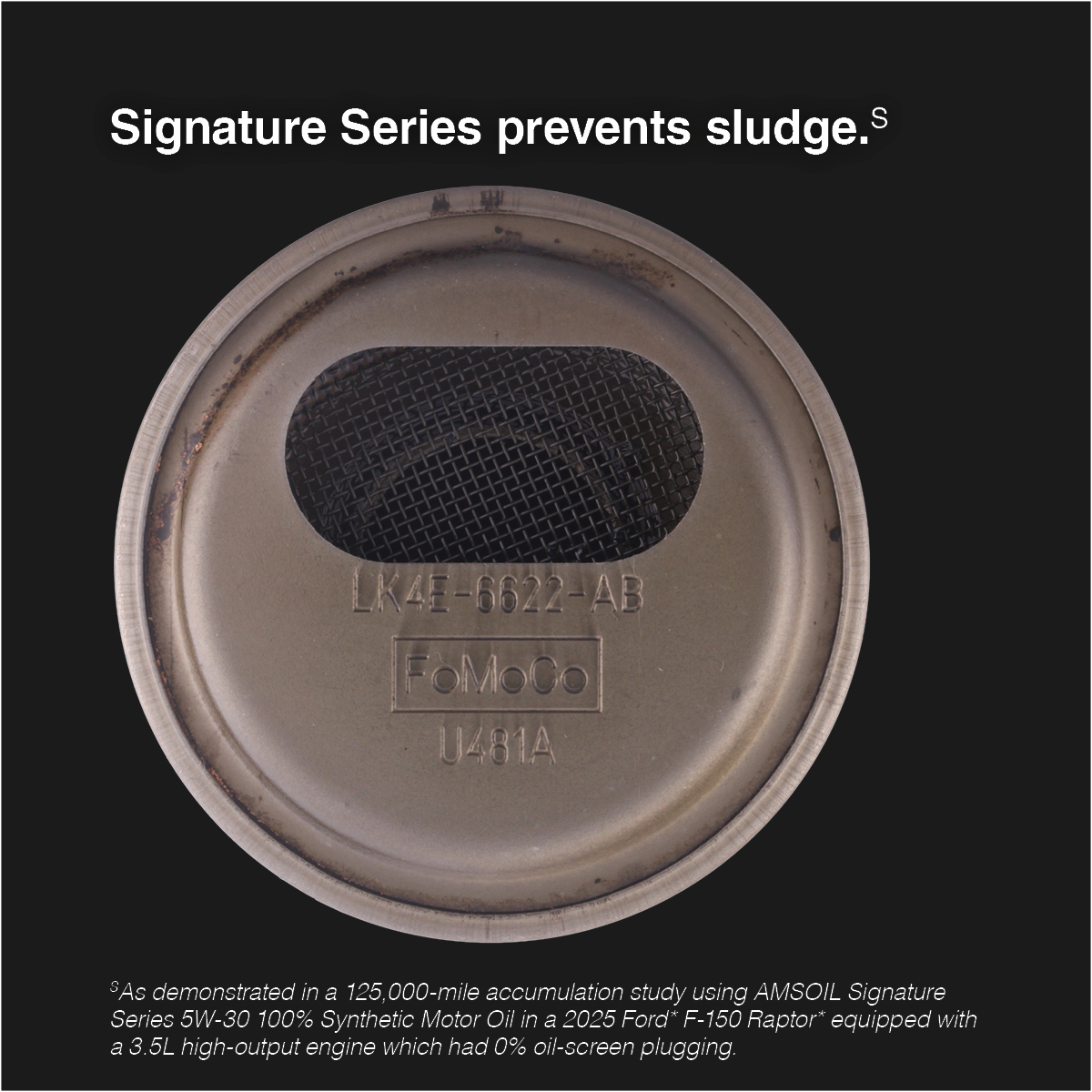
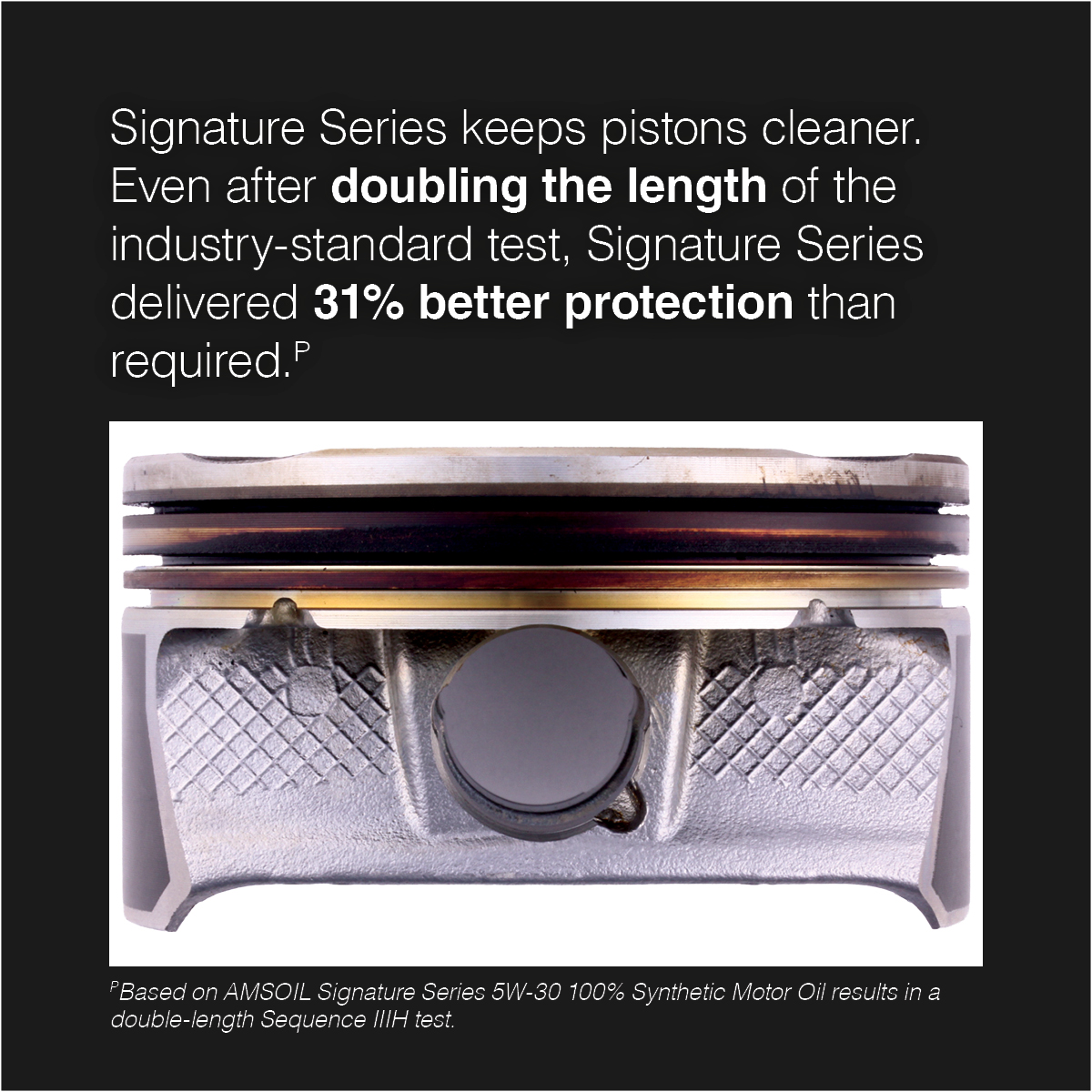
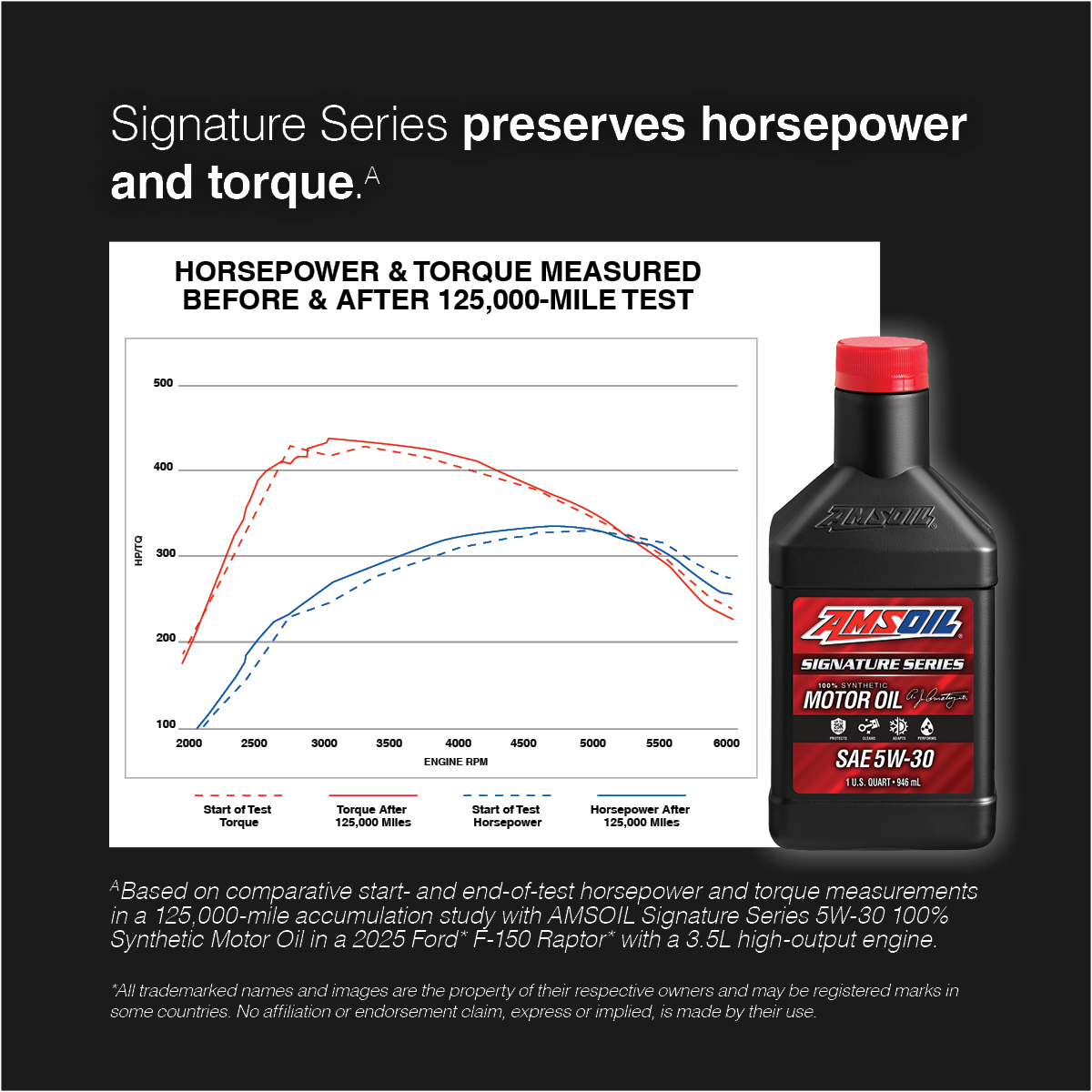
AMSOIL Signature Series 100% Synthetic Motor Oil resists breakdown to help keep oil passages clean and maintain oil circulation. In a 125,000-mile study on a 2025 Ford F-150 Raptor, the engine experienced 0% oil screen plugging. In Sequence IIIH testing, Signature Series also delivered 72% more protection against piston deposits than required by industry standards.
High Heat Can Increase Oil Consumption
Heat can also increase motor-oil consumption through a process called volatilization. When the lightest oil molecules evaporate under high temperatures, the oil becomes thicker as heavier molecules remain behind.
As viscosity increases, oil may circulate less efficiently, reducing fuel economy and performance. Drivers often notice this as an engine that seems to “use” oil between oil changes and requires more frequent top-offs.
In addition to increasing oil consumption, volatilization contributes to emissions and can eventually leave insufficient oil available to protect all engine components. If oil levels drop too low, wear rates can increase dramatically.
Choosing a high-quality synthetic motor oil helps minimize volatility and maintain viscosity stability under severe operating conditions.
Deposits Can Reduce Turbocharger Performance
Turbochargers bring another heat-related challenge. Turbo shafts can rotate at speeds approaching 300,000 rpm while being exposed to exhaust temperatures that may exceed 1,000°F (538°C).
Under these extreme conditions, motor oil plays a critical role in cooling and lubricating turbocharger components. If the oil breaks down, deposits can form on the turbo shaft and bearings, a condition commonly known as turbo coking.
Turbocharger deposits can:
- Reduce turbo efficiency
- Restrict shaft movement
- Decrease engine performance
- Lead to premature turbocharger failure
Because turbochargers rely on motor oil for both lubrication and heat control, using a premium synthetic motor oil is one of the best ways to protect a modern turbocharged engine.
The Best Motor Oil for High Heat
High temperatures can create deposits, form sludge, increase oil consumption and threaten turbocharger performance. As engines continue to become more compact, powerful and thermally stressed, motor oil must do more than simply lubricate. It must resist oxidation, maintain viscosity, control deposits and protect critical components under severe operating conditions.
AMSOIL Signature Series is formulated with premium synthetic base oils and high-performance additives that provide exceptional resistance to heat and oxidation while helping keep internal engine and turbocharger components clean. Even in a double-length Sequence IIIH test, it delivered 31% better protection than required. The result is cleaner operation, stronger protection and enhanced engine performance, even in the demanding conditions created by high-performance engines.
This article is part of our Seasonal Maintenance guide. See every article in the guide.
Recommended AMSOIL products
Start with AMSOIL synthetic motor oil and find the exact AMSOIL products for all your vehicles with the AMSOIL Product Guide.



Comments
Brad Nelson is an AMSOIL Technical Writer II who develops content about lubricant technology, product performance and vehicle maintenance. He works with engineers and product specialists to translate testing, application requirements and approved performance claims into clear customer guidance. Nelson’s work includes AMSOIL Blog articles, AMSOIL Magazine features and technical explanations concerning motor oils, gear lubricants, vehicle systems and maintenance practices.
Share: