
Why does motor oil turn black?
The short answer: Motor oil turns black from repeated heat cycles and normal oxidation, and from soot, a byproduct of combustion, that the oil’s dispersants hold in suspension so it can’t settle as sludge. Dark oil alone doesn’t mean it’s time for a change. Follow your drain interval, or use oil analysis to know the oil’s real condition.
What causes black motor oil? And when your oil darkens does it mean it’s time to change it? Well, there are a couple of factors that can cause the former. Let’s dig in.
Factors That Cause Black Motor Oil
Heat cycles naturally darken motor oil.
During your drive to work in the morning, your engine reaches normal operating temperature (typically 195°F–220°F [90°C–104°C]), heating the motor oil. Then the oil cools while your car sits in the parking lot.
During lunch, the oil again is exposed to heat during your drive to the bank or home center. The process repeats on the way home. And the next day. And the next.
Video transcript: Your Oil Questions Answered: Black Oil and 3,000-Mile Changes
Featuring John Gardner, host of Motorhead Garage, and Leonard “Len” Groom, AMSOIL Director of Product Marketing (author profile).
John Gardner: Well you guys been blowing up the internet with phenomenal questions. The AMSOIL tech tips seems to be a huge huge success. We love the comments and feedbacks. We hear you.
But you also sent some questions so we got our expert here Len. Len, let’s talk about a few of these questions that got sent in and see if we can explain a little bit about what’s going on. Phil from Santa Fe, New Mexico says, should I change my oil when it turns black? Great question.
What do you say to that?
Len Groom: I would say no, you do not need to do that.
The oil turning color is the natural progression of the oil going through its lifespan. Things get in the oil, anything that the car consumes such as gasoline ends up in the oil through many different ways. Blow by being one of them.
John Gardner: Yeah. Now blow by, that’s pretty cool. We actually have a graphic right here. So, what’s happening is when it fires, it’s actually blowing some of that by the rings and it’s by design. It’s going get by there no matter what. You’ve got a massive amount of compression. Whether it’s oil, like you said, gasoline, whatever’s up in there, carbon soot, it’s gonna go down in the oil and it’s gonna turn black pretty quickly.
Len Groom: Right. And as long as the oil is designed to handle that, to handle those byproducts of combustion, if you will, there’s no issues.
John Gardner: Now our next email, do I really need to change my oil every three thousand miles? Dennis from Orlando. Dennis, great question. I do, but I don’t know if you have to anymore. What do you think, Len?
Len Groom: Well, buy a new car and look at the owner’s manual.
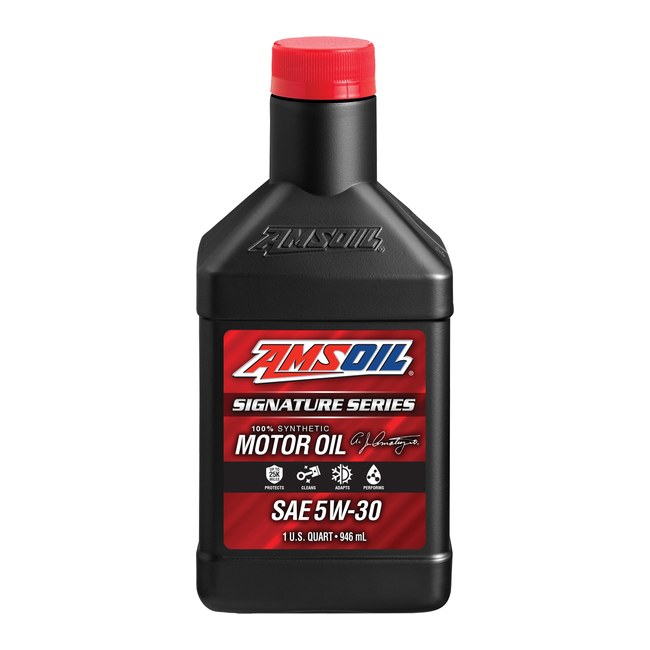
Most of them have moved to five thousand miles. I would say that’s pretty much table stakes now. Some are at seventy five hundred. In fact, John, we’ve got an oil at AMSOIL, our Signature Series, it’ll go out to twenty five thousand miles. So as long as the oil is formulated to deal with the byproducts of combustion, it can handle that.
The dispersant package, the detergency package, all those weird technical things, as long as we’ve covered our bases, there’s no problem leaving that oil in there longer.
John Gardner: Yeah, it’s a great idea. Len, thank you for sharing a light on some of these questions. You guys keep the feedback coming. Man, these tech tips are phenomenal. Go to the AMSOIL website. Check out all their products.
These “heat cycles” continually expose the oil to high heat, which naturally darkens motor oil.
Some additives in motor oil are more susceptible to darkening in the presence of heat than others. In addition, normal oxidation can darken oil, too. Oxidation occurs when oxygen molecules interact with oil molecules and cause chemical breakdown, just like how oxygen causes a cut apple to brown or iron to rust. High heat accelerates oxidation.
Deposits Can Lead to Black Motor Oil
The motor oil contacts nearly everything inside the engine during operation, including deposits that may have formed on engine parts. Since carbon deposits are usually black in color, it won’t take long for the oil to turn black if there are deposits inside the engine.
Soot Causes Oil to Turn Black
While heat cycles cause oil to darken, soot causes oil to turn black. Most people associate soot with diesel engines, but gasoline engines can produce soot as well, particularly modern gasoline-direct-injection engines.
Soot is a byproduct of incomplete combustion. Since soot particles are less than one micron in size, they typically don’t cause engine wear. For comparison, a human hair is roughly 70 microns in diameter.
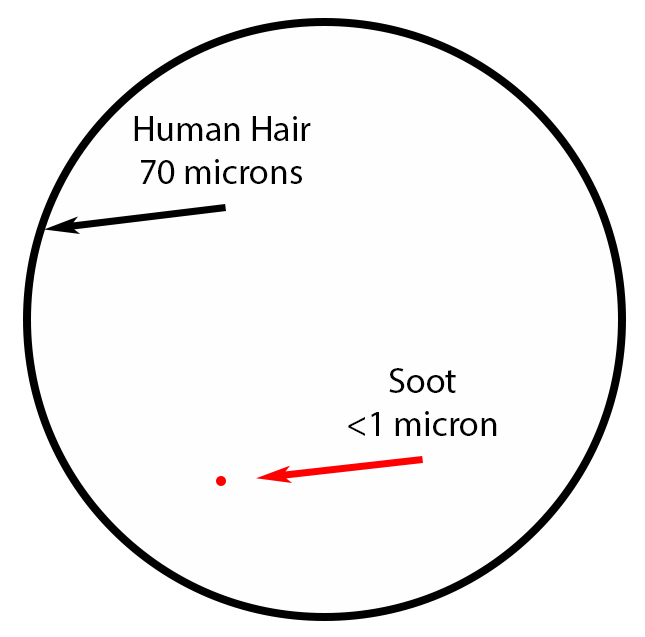
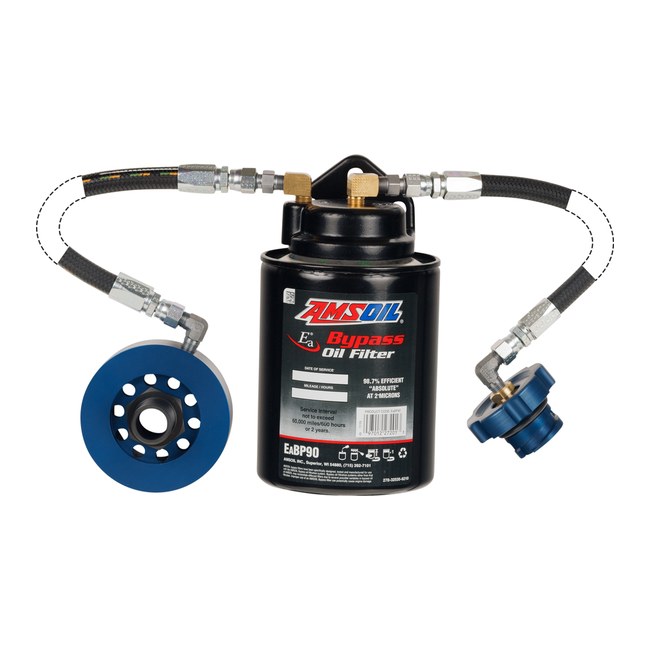
If soot particles agglomerate into larger wear-causing contaminants, the oil filter will catch them. Sometimes people who use bypass filtration systems, which deliver fine-particle filtration down to 2 microns, express surprise that the motor oil is still black.
Soot, however, can still elude filtration down to 2 microns. Any finer filtration and the filter could catch dissolved additives in the motor oil.
Oil Myth: Oil Color Indicates When it’s Time for an Oil Change
It’s common to assume that black motor oil has worn out or become too saturated with contaminants to protect your engine and requires changing. Not necessarily. As we saw, discoloration is a natural byproduct of heat and soot particles, which are too small to wear out your engine.
Oil darkness is not an indication of the condition of the oil itself. The detergents and dispersants in the oil are what causes it to darken as it is doing its job in cleaning the engine and carrying particulates to the oil filter.
The only surefire way to determine if the oil has reached the end of its service life is to perform oil analysis. Chemically analyzing an oil sample reveals the condition of the oil, the presence of contaminants, fuel dilution and so on. Several companies offer oil analysis services, including Oil Analyzers INC.
Absent oil analysis, it’s best to follow the oil-change recommendation given in your vehicle owner’s manual or by the motor oil manufacturer. The recommended service intervals for AMSOIL products, for example, are based on thousands of data points spanning years of use.
It’s best to trust the data, not your eye, in this case. Otherwise, changing the oil could amount to throwing away good oil.
Why is My Oil Still Dark in Color After Installing an AMSOIL Bypass Filter?
If your diesel engine is equipped with exhaust gas recirculation (EGR), the soot in your exhaust is reintroduced into the engine’s intake and soot particles are constantly being put back into your combustion chamber and making their way into your oil. The average full-flow oil filter can efficiently remove wear particles 20 microns in size and larger, and while an AMSOIL Bypass Filter delivers fine-particle filtration down to 2 microns, it cannot capture all the soot particles smaller than 2 microns.
These small soot particles have a coloring effect that can turn your oil dark. The good news is AMSOIL synthetic diesel oils have high dispersant additives that effectively keep these small soot contaminants in suspension, preventing them from agglomerating and forming larger, wear-causing contaminants.
Additives Influence Color
Let’s take the second question first. The oil’s additives influence the final formulation’s color. Some oils are naturally lighter and some are naturally darker depending on chemistry. Signature Series Synthetic Motor Oil, for example, has a slight reddish tint due to its additives.
AMSOIL 0W-20 LS-VW Synthetic European Motor Oil (EZT) has a greenish/blue color due to its unique additives that are required by Volkswagen.* Formulators can also add dye to the lubricant to change its color. Transmission fluid offers the perfect example. Red dye is added to prevent confusion with motor oil.
What about motor oil that looks like chocolate milk?
In this case, motor oil color does reflect performance…and oil that looks like chocolate milk is bad. Very bad.
Water or engine coolant have contaminated the oil, typically due to a head gasket leak.
We all know that water and oil don’t mix. When they combine in your engine, water droplets suspend in the oil and alter its appearance until it looks frothy or like chocolate milk.
The presence of water leads to foam bubbles, which rupture when pulled between engine parts during operation, leaving metal components unprotected against wear.
It also forms sludge, which can clog oil passages and ruin the engine. In this case, see a mechanic as soon as possible.
What if my oil looks or feels thin?
While not related to motor oil color, this is another frequent question we field from motorists.
Don’t take this the wrong way, but in this case go out to the garage and smell your dipstick.
Oil that has lost viscosity is often due to fuel dilution. You can usually smell gasoline or diesel fuel on the dipstick in such cases.
Fuel dilution occurs when gas or diesel wash past the piston rings and contaminate the oil in the sump. It reduces oil viscosity, which reduces the oil’s ability to prevent wear. It also leads to formation of harmful varnish and sludge.
Fuel dilution can occur if you idle your engine excessively or due to a mechanical defect. It’s also common in some modern direct-injected engines.
It’s important to note that no one can precisely measure an oil’s viscosity simply by looking at it or rubbing a little between their fingers.
As Oil ANALYZERS INC. manager Allen Bender likes to ask, “When’s the last time you had your eyes calibrated?”
Oil analysis in the only definitive way to determine the oil’s viscosity and whether it’s lost viscosity due to fuel dilution.
My oil feels gritty? Should I change it?
When checking oil level, some motorists like to rub oil between their fingers to check for particles.
Grit or other contaminants can mean the oil has chemically broken down, but this is unlikely, especially with a top-shelf synthetic oil.
More likely, the oil filter has filled with contaminants and unfiltered oil is bypassing the filter and circulating through the engine.
The filter is designed with a bypass valve to ensure the engine receives oil even if the filter is full.
While dirty oil is preferable to no oil, it’s not a long-term plan for success. In this case, change the oil and filter.
How to Know When to Change Motor Oil
Oil analysis is the only surefire way to determine if the oil has reached the end of its service life. Chemically analyzing an oil sample reveals the condition of the oil, the presence of contaminants, fuel dilution and so on. Oil Analyzers INC. offers testing; get more info at oaitesting.com.
Absent oil analysis, it’s best to follow the oil-change recommendations in your vehicle owner’s manual or on the motor oil label.
The recommended service intervals for AMSOIL products are based on extensive testing and backed by thousands of data points spanning decades of real-world use.
When it comes to judging oil condition, trust the data, not your eyes. Otherwise, changing what appears to be worn-out oil could end up wasting time and money.
Recommended AMSOIL products
Start with AMSOIL synthetic motor oil and find the exact AMSOIL products for all your vehicles with the AMSOIL Product Guide.