Site icon AMSOIL Blog

Why Fuel Deteriorates – and How Gasoline Stabilizer Has Your Back

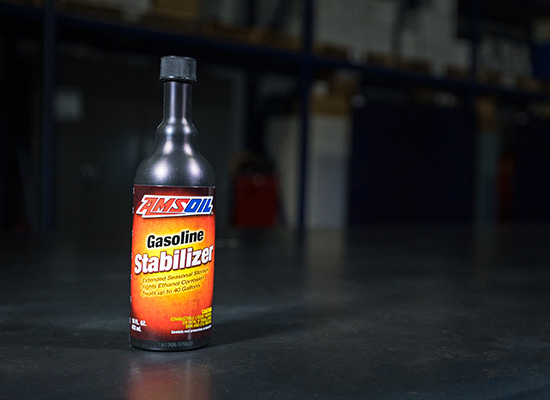
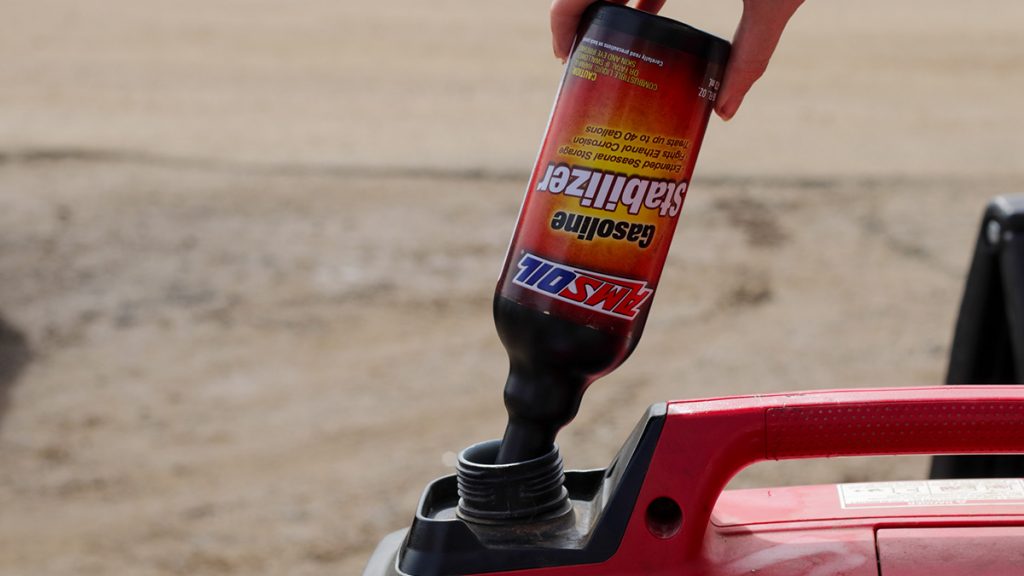
AMSOIL Gasoline Stabilizer is poured into a gas can to protect the fuel from oxidation during storage.

If you’ve ever pulled a lawn mower, snowblower, motorcycle or classic car out of storage only to discover it won’t start, there’s a good chance deteriorated fuel was to blame. Many of us have learned the importance of fuel stabilization the hard way after spending hours pulling on a rope or troubleshooting an engine that ran perfectly when we put it away for the season. Even those who know they should add a fuel stabilizer before seasonal storage often fail to follow through with the act. That might be because they do not understand why gasoline degrades in the first place, how fuel stabilizer helps prevent it or how easy and effective it can be.

Time Is the Enemy

Gasoline is a complex blend of hydrocarbons, energy-rich compounds made primarily of carbon and hydrogen atoms. It’s refined from crude oil through a distillation process that separates various petroleum fractions. Compared to diesel fuel and lubricating oils, gasoline contains lighter, more volatile hydrocarbons. Modern gasoline also typically contains ethanol, usually at concentrations of around 10%, though some fuels contain significantly more.


Just about everything degrades over time; gasoline does so rapidly. In fact, gas can begin to degrade in as little as 30 days under the right conditions. Exposure to heat, oxygen, humidity and atmospheric conditions gradually alters gasoline’s composition. As it ages, it forms gums, varnish and other deposits that can accumulate throughout the fuel system. These deposits restrict fuel flow, foul carburetors and injectors and make starting more difficult or even impossible. Old gasoline can change so significantly that it loses its ability to ignite properly. The result is a fuel that becomes less stable and effective over time.

AMSOIL Performance Testing

Laboratory tested and proven on the road.

See how AMSOIL products perform in the lab and in the field.

Check out the tests

Why Fuel Breaks Down

Oxidation is one reason gasoline deteriorates so quickly. As it sits, oxygen reacts with gasoline molecules, creating varnish, gum deposits and other unwanted byproducts. At the same time, lighter hydrocarbons evaporate, concentrating the heavier compounds that contribute to deposit formation.

Ethanol introduces another challenge. Ethanol is hygroscopic, meaning it naturally attracts and absorbs moisture from the atmosphere. If enough water accumulates, phase separation can occur, a condition in which the ethanol and water settle apart from the gasoline. Once phase separation takes place, fuel quality drops dramatically, increasing the likelihood of fuel-system problems and hard starting. In addition, the presence of water in the fuel system can accelerate corrosion inside the engine, drastically reducing engine performance and longevity.

Proper storage can slow the process. Using high-quality gasoline and storing it in approved, airtight containers helps minimize exposure to air and moisture. Storing fuel inside a ventilated garage or shed is generally preferable to leaving containers exposed to the elements. But often that is not enough.

Stabilizer chemistry helps interrupt the oxidation process that causes gasoline to form gums and varnish, slowing the degradation that occurs during storage. By reducing these harmful reactions, a fuel stabilizer helps preserve fuel quality and maintain engine cleanliness.

8X Longer Fuel Stability

According to independent testing, AMSOIL Gasoline Stabilizer (AST) delivers strong protection against the oxidation processes responsible for gum and varnish formation. It also helps guard against corrosion during storage, an important benefit for maintaining fuel-system cleanliness and reliability. When added before storage, AMSOIL Gasoline Stabilizer helps preserve fuel quality for up to 12 months, reducing the likelihood of stale fuel, difficult starts and deposit-related issues when equipment is returned to service.

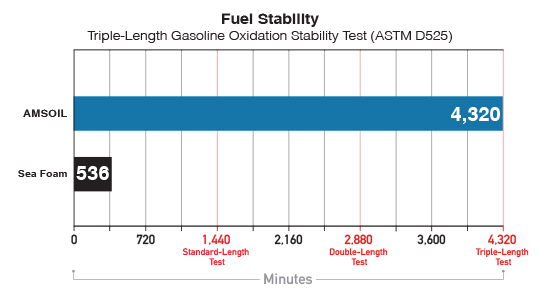
How good is it? As the graph below shows, AMSOIL Gasoline Stabilizer delivers eight-times longer fuel stability than Sea Foam* Motor Treatment in the triple-length gasoline oxidation stability test (ASTM D525), helping maintain startability and protect against the formation of varnish and gum.1

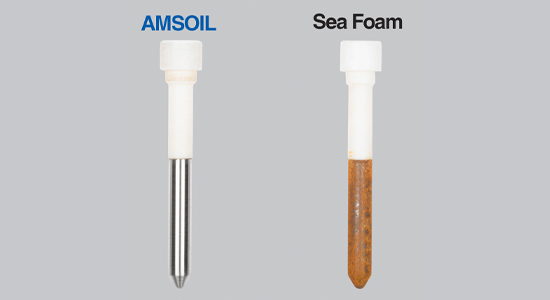
AMSOIL Gasoline Stabilizer also helps guard against corrosion during storage, an important benefit for maintaining fuel-system cleanliness and reliability. In fact, AMSOIL Gasoline Stabilizer provides corrosion protection Sea Foam Motor Treatment can’t match, helping maintain power and performance and keeping metal corrosion free, even when subjected to salt water.2

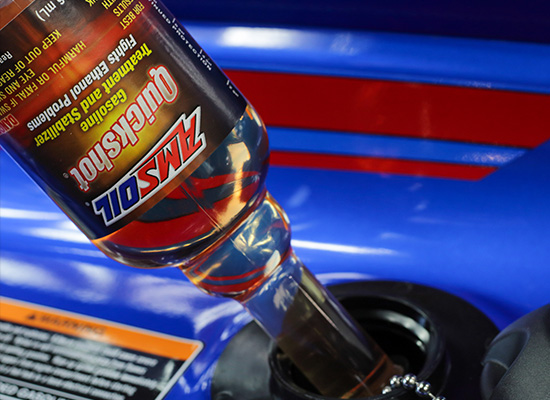
For shorter storage intervals of up to six months, AMSOIL Quickshot® (AQS) provides another solution. In addition to stabilizing fuel, it contains detergent and solvency-enhancing chemistry designed to help break down existing varnish and improve fuel-system cleanliness, making it a useful option for maintaining equipment that may already have some fuel-related deposits.

Dependable Power

Fuel deterioration is a natural consequence of time, oxygen exposure and ethanol-related moisture absorption. Left untreated, aging gasoline can form deposits, cause corrosion and create starting problems that turn seasonal equipment maintenance into a frustrating and potentially expensive chore. Adding AMSOIL Gasoline Stabilizer before storage helps slow oxidation, preserve gasoline quality and protect critical fuel-system components. Whether you’re storing a lawn mower for the winter, parking a motorcycle for the season or keeping fuel on hand for outdoor power equipment, fuel stabilization remains one of the simplest and most effective ways to ensure dependable starts when it’s time to get back to work or play.

1Based on independent third-party testing of AMSOIL Gasoline Stabilizer obtained July 1, 2022 and Sea Foam Motor Treatment purchased June 30, 2022 in a triple-length gasoline oxidation stability test (ASTM D525) using test fuel containing no oxidation-stability-improving additives. 2Based on independent third-party testing of AMSOIL Gasoline Stabilizer obtained July 1, 2022, and Sea Foam Motor Treatment purchased June 30, 2022, in a modified NACE TM0172 using synthetic sea water per ASTM D665B.