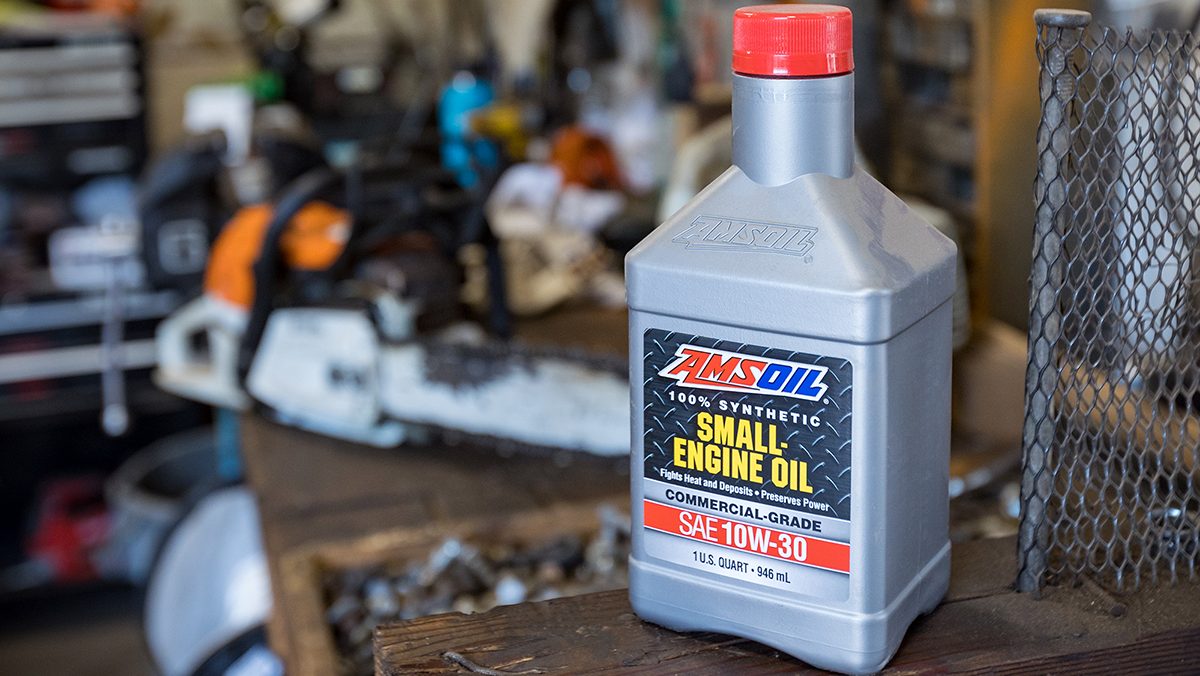


Mowers, trimmers, chainsaws, snowblowers and generators work hard, often sit for months and usually get the least maintenance of anything in the garage. Start here for oil advice, two-stroke mixing, troubleshooting and storage, whether you are keeping up a yard or running a professional crew.
Two-stroke or four-stroke
A two-stroke engine burns its lubricating oil along with the fuel, so the oil is mixed into the gas. Most string trimmers, chainsaws, leaf blowers and older outboards are two-strokes. A four-stroke engine keeps its oil in a separate sump that requires regular oil changes, just like a car engine. Most mowers, generators and newer snowblowers are four-strokes. If the fuel cap lists a mix ratio, the engine is a two-stroke. Learn more in Two-Stroke vs. Four-Stroke.
Two-stroke mix ratios
A mix ratio describes the parts of gasoline to one part oil, so a 50:1 mix contains 50 parts gas to one part oil. AMSOIL two-stroke oils are formulated to protect at the ratios listed on their labels, which can be leaner than the ratio in an owner’s manual. AMSOIL SABER® Professional 100% Synthetic 2-Stroke Oil and AMSOIL 100:1 Pre-Mix 100% Synthetic 2-Stroke Outboard Oil protect at 100:1, while AMSOIL DOMINATOR®, INTERCEPTOR® and HP Marine® two-stroke oils are formulated for 50:1, depending on the application.
| Mix ratio | Oil per gallon of gas |
|---|---|
| 100:1 | 1.3 oz. |
| 50:1 | 2.6 oz. |
| 40:1 | 3.2 oz. |
| 32:1 | 4 oz. |
If you run equipment that calls for different ratios, read One Solution for Different Two-Stroke Mix Ratios. SABER Professional delivers outstanding protection and performance at lean mix ratios. It helps prevent wear, plug fouling, ring sticking and exhaust-port blocking, and it stabilizes fuel during storage.
Why your small engine won’t start
An engine needs fuel, spark and air to run, and most no-start problems trace back to one of the three. Stale or ethanol-damaged fuel is the most common cause, especially after storage, because gum and varnish deposits clog the small passages and jets in a carburetor. Check the fuel first, then the spark plug, air filter and fuel lines. Then work through the guide for your equipment.
- Lawnmower Won’t Start? Do This
- Gas Weed Eater Won’t Start? Try This
- What to Do When Your Snowblower Won’t Start
- Chainsaw Starting Problems and How to Fix Them
- Fix Hard-Starting Two-Stroke Engines
AMSOIL Power Foam® Carburetor and Induction-System Cleaner cleans deposits from ethanol and degraded fuel, removes gum and varnish and helps restore startability. See How to Use AMSOIL Power Foam.
Ethanol and fuel storage
Ethanol-blended gasoline attracts moisture and breaks down during storage, leading to varnish, corrosion and hard starting. Use fresh fuel, and treat any fuel that will sit for more than a few weeks. AMSOIL Gasoline Stabilizer helps keep fuel fresh up to 12 months, protects against varnish and gum buildup and fights ethanol corrosion. Read How to Fight Ethanol Problems in Small Engines.
Off-season storage
- Add fuel stabilizer, then run the engine for a few minutes so treated fuel reaches the carburetor.
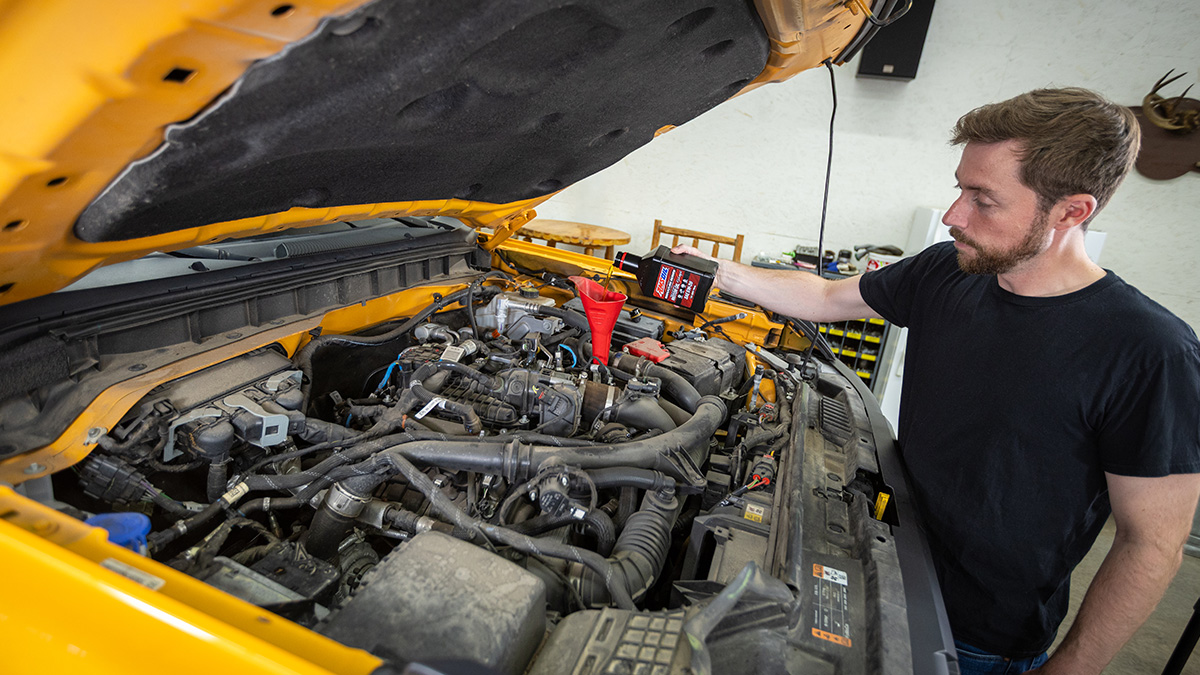
- Change the oil in four-stroke engines so combustion acids and moisture don’t sit in the crankcase all season.
- Fog the cylinders of engines that will sit for months to help protect against rust. See What Is Fogging Oil?
- Clean grass and debris from the deck, cooling fins and air filter.
- Store the equipment in a clean, dry place.
For equipment-specific steps, see How to Store a Snowblower and Zero-Turn Mower Maintenance.
Choosing small-engine oil
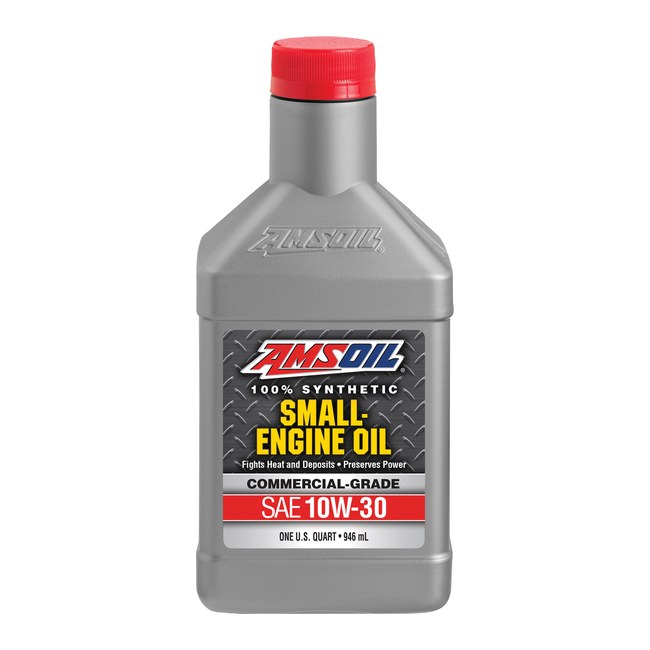
Small engines are often air-cooled and run at high temperatures, and many rely on splash lubrication rather than a pressurized oil system, so oil quality matters even more. AMSOIL 100% Synthetic Small-Engine Oil protects up to 200 hours, helps extend engine life and is rust-inhibited. See Maximizing Performance in Splash-Lubricated Engines and What’s the Best Oil for My Snowblower?
Small-engine FAQ
What happens if I use the wrong mix ratio?
Too little oil leaves the piston and cylinder without enough lubrication, risking scuffing and seizure. Too much oil can foul spark plugs and build carbon deposits. Mix to the ratio on the AMSOIL label for your application.
Can I use car oil in my lawnmower?
Many mowers specify an SAE 30 or 10W-30 oil, but small engines run hotter than car engines and are usually air-cooled. An oil formulated specifically for small engines is the better choice.
How long can gas sit in a small engine?
Untreated gasoline can begin to degrade within weeks. Treat the fuel with a stabilizer whenever equipment will sit longer than a month.
Oil and two-stroke mixing
- Which Small-Engine Oil Would You Choose?
- New 15W-50 Small-Engine Oil
- Two-Stroke Mix Ratios: 50:1 vs. 40:1 Explained
- Two-Stroke vs. Four-Stroke Engines: Key Differences
- SABER Professional Cuts Costs
- SABER PROVES ITSELF IN STIHL TRIMMERS
- How to Fight Ethanol Problems in Small Engines
- Maximizing Performance in Splash-Lubricated Engines
Troubleshooting
- Lawnmower Won’t Start? Do this.
- How to Fix a Lawnmower Pull Cord
- Chainsaw Starting Problems & How to Fix Them
- What To Do When Your Snowblower Won’t Start?
- Fix Hard-Starting Two-Stroke Engines
- Fixes for Common Small-Engine Problems
- Watch: How to Use AMSOIL Power Foam
- Gas Weed Eater Won’t Start? Try This
Maintenance and storage
- Zero-Turn Mower Maintenance Best Practices
- 5 Expert Chainsaw Maintenance Tips
- Generator Maintenance Tips
- Professional Lawn Care Tips for Homeowners
- How to Store Your Lawnmower in Winter
- What’s the Best Oil for My Snowblower?
- How to Store a Snowblower
- AMSOIL vs. Sea Foam
- Why Fuel Deteriorates – and How Gasoline Stabilizer Has Your Back
- What is Fogging Oil?
Shop equipment
Customer stories
Running a lawn-care, landscaping or snow-removal business? See AMSOIL for Business for commercial articles and AMSOIL commercial, installer and retail accounts.


Comments
David Hilgendorf is an AMSOIL Technical Writer who develops content for automotive, powersports and industrial audiences. His work includes technical data sheets, magazine articles, blog posts, white papers, product literature and application guidance. Hilgendorf works with engineers, laboratory personnel and technical specialists to communicate lubricant testing, product performance, maintenance practices, metalworking fluids, grease, motorcycles, marine equipment and industrial reliability.
Share: