ATVs and UTVs aren’t cheap. And neither should be your approach to ATV/UTV maintenance if you want your machine to deliver peak performance and last for years.

Video transcript: ATV/UTV Maintenance Tips to Maximize Machine Life
Featuring John Gardner, ASE Master Certified technician, automotive technology instructor and host of Motorhead Garage, with AMSOIL Director of Product Marketing Len Groom.
John Gardner: Where we’re going, we don’t need roads. Welcome to this AMSOIL tech tip. We’re talking about ATV and UTV service. And, man, they live in a harsh environment.
So let’s start out with a little checklist here. You know, if you’re gonna ride one of these things, this is kind of a basic list. Check your oil, your air filter chain, all the levers. Make sure you’re safe before you go out there and ride it.
Now, a little more detailed list over here. You can see I get down here to engine oil, and then I get down here to the final gear and differential. Couple different components on this bike. We’re gonna stick with oil on this one.
And you can see right here, we shot this thing with an infrared camera. It’s about two hundred eighty degrees. They get hot, there’s not a lot of oil in there. Len, you guys actually shot some footage as well.
Walk us through this.
Len Groom: We did. We had this on the dyno, we were doing a bunch of test work with it. And you can see here the, you the case is about a hundred plus degrees. But as we slide over and we jump on that oil, you see it get up to a hundred and eighty, which is normal to slightly elevated for this type of a machine since it’s liquid cooled.
John Gardner: Yeah. It’s not the worst thing in the world, but they live in a harsh environment. How’s AMSOIL gonna help us out there?
Len Groom: Well, the thing that we’ve seen is common now with the OEMs is you’re building these wide spreads on the viscosities. You’re seeing five fifties. You’re seeing zero fifties, which we’ve just launched, zero fifty. And what you have to do there is you got to be very careful when you’re building that oil that you’re using very high quality parts, if you will, because it has to move in very cold temperatures, but then it still has to protect in very hot temperatures. So it’s the best of both worlds. Have to make sure that you’re doing what you need to do to get a good quality piece, which we’ve done.
John Gardner: And I just kinda, you know, I’ve never seen zero w fifty. That’s absolutely a widespread of oil. I live down in Florida. I mean, there’s different requirements for it than you up there in Minnesota. Freezing up there, and and they ride them all year long.
Len Groom: Yeah. That’s correct. That product in in particular, that would hold up very well in the Florida heat. No issues at all because we put it together right based on all the testing that we’ve done and all the research.
John Gardner: You wanna learn more? Go to AMSOIL.com. You can get a package deal for these ATVs and UTVs. You don’t have to make multiple trips to the parts store, or you can buy the individual oil and so many other products.
Fortunately, ATV and UTV maintenance boils down to a handful of relatively simple practices any do-it-yourselfer with basic tools can accomplish.
Here are our top ATV/UTV maintenance tips.
Check/change the oil
Let’s dispense with the obvious: Check your motor oil frequently and change it according to the recommendations in the owner’s manual. It’s step one in any ATV/UTV maintenance program.
Changing the oil and filter is especially important in ATVs and UTVs used for hard work or aggressive riding.
The added stress we heap on our machines increases heat. And heat causes oils formulated for standard service to lose viscosity (become thinner). Thinner oil than what your engine is designed to use can fail to develop an oil film of adequate thickness or strength to protect against wear.
Extreme heat also invites sludge and performance-robbing deposits. Sludge can clog oil passages and starve the engine of oil, while deposits can cause power loss due to sticking piston rings.
Changing oil is the best defense against engine wear and power loss. Be sure to upgrade to a good synthetic oil, too.

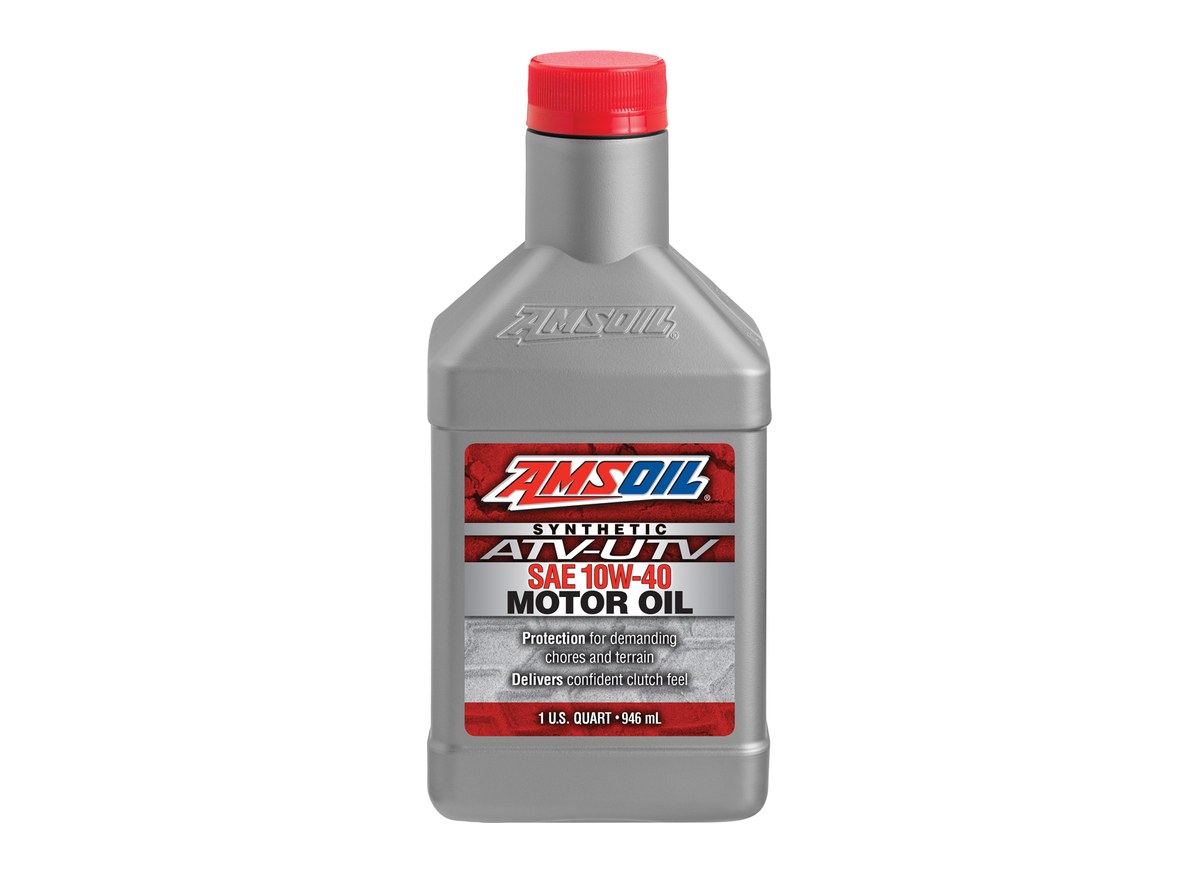
Synthetics don’t contain the impurities inherent to conventional lubricants, meaning they deliver better performance and last longer. Their naturally tough base oils resist extreme heat and maintain a strong protective film better than conventional products.
And don’t balk at the higher price, either.
Think of synthetic oil as just another performance upgrade for your machine. You don’t think twice about spending a few hundred dollars on a snowplow or beefier winch. The few extra dollars spent on better oil is nothing by comparison – and it’ll help your machine perform better and last longer.
For maximum convenience when you’re performing ATV/UTV maintenance, pick up an AMSOIL ATV/UTV Oil Change Kit for your Polaris* or Can-Am machine.
Change the differential fluid
It’s the same story inside the front and rear differentials.
The extra weight and stress of hard work and performance riding concentrate intense pressure on gears.
The lubricant coats the gear teeth during operation, guarding against metal-to-metal contact and wear. The added stress, combined with high heat, can break the fluid film and literally squeeze the lubricant from between the gears, leading to wear.
Change differential fluid according to the recommendations in the owner’s manual. And, like motor oil, upgrade to a good synthetic. It’ll provide improved film strength despite intense pressures to protect gears and bearings in the toughest conditions, helping your machine last for years.
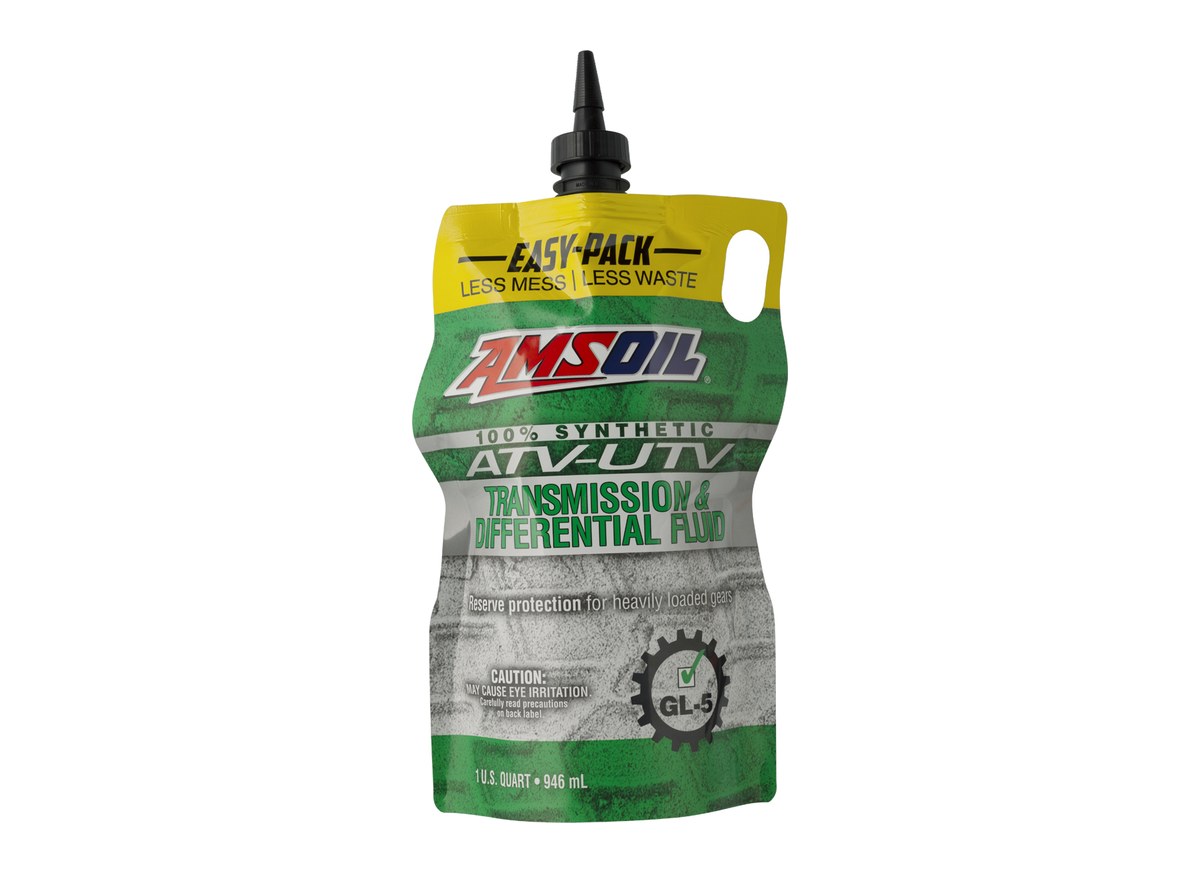
Anyone who’s changed differential fluid knows it can be a hassle: tough-to-reach fill holes, bloody knuckles and gear lube spilled everywhere.
The AMSOIL easy-pack reduces mess, hassle and frustration when changing gear lube. It makes ATV/UTV maintenance much easier, as the video shows.