

The shelves at your local parts store are full of aftermarket engine oil additives, such as stop-leak products and oil treatments, that promise several benefits, including better wear protection, longer oil life, reduced oil consumption, increased oil pressure and increased fuel economy. Do these engine oil additives work? Are aftermarket top-treat engine oil additives good or bad?
Video transcript: What are Additives in Motor Oil?
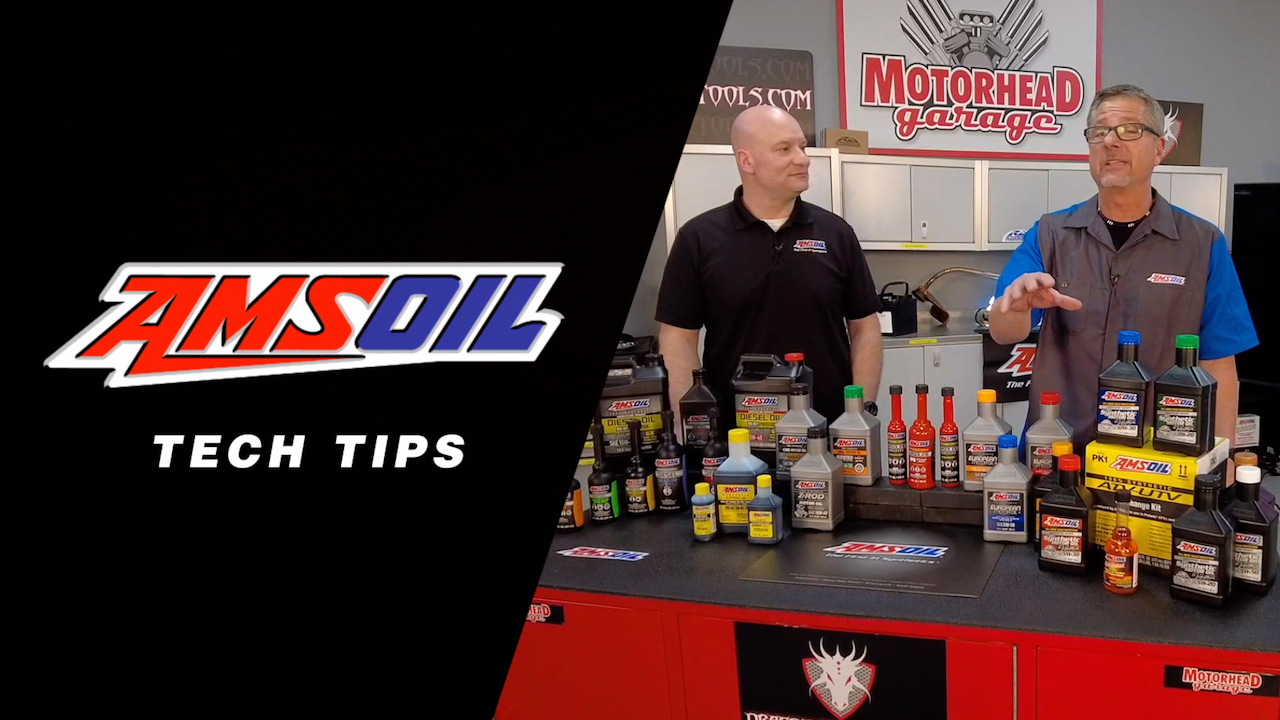
Featuring John Gardner, ASE Master Certified technician, automotive technology instructor and host of Motorhead Garage, with AMSOIL Director of Product Marketing Len Groom.
John Gardner: Well, one of the coolest cutaways on the planet right here lets you see everything that’s going on. Think about it for a minute. We got a crankshaft down there turning to a connecting rod that’s actually running up here to these pistons. Now these pistons have to be lubricated.
That connecting rods have to be lubricated. The crankshaft has to be lubricated all the way up to the valve. You got these lifters. You got camshaft.
You got cam bearings. There is a ton going on inside of that engine.
Welcome to this AMSOIL tech tip. Now you heard that one squeaking a little bit, and it’s spinning at electric speed, is nothing. These things go five thousand rpms. Just imagine that and what the oil has to do.
Also, there’s some frictional loss in all those bearings. Now, that hundred percent loss actually equates to all this here. You see the piston rings thirty eight percent, valve train twenty, nineteen for the crankshaft, twelve for the oil pump, so forth and so on. More frictional loss, the less horsepower you’re gonna get. Oil plays a big role in that. Right, Len?
Len Groom: Right. You can influence this with oil, specifically the construction of the oil.
You can change those numbers for the better or for the worse.
John Gardner: Now, there’s additives in these oil, and I know you’re a smart guy, so I’m gonna give you a quiz. I got the cheat sheet right here. Alright? First one is anti foamants.
Len Groom: Oh, it is what it says. It keeps the foam from happening. The reason we don’t want foam in the oil is because foam is air. Air is compressible and it doesn’t provide protection.
John Gardner: Yeah. It can’t have oil pressure with that. What about viscosity modifiers?
Len Groom: Viscosity modifiers are interesting. They help us to bridge the gap. When you see these engine oils that are zero w something, fifties, forties, thirties, viscosity modifiers help us bridge the gap. Now, the key there is the better the base oil, the less viscosity modifiers you have to use, and that’s the way we tend to build products.
John Gardner: Absolutely. Pour point depressants.
Len Groom: Well, those are once again what they say they are.
They help us get the pour point of the oil down to a lower temperature so the car will start better. What about dispersants? Dispersants keep particles from collecting to forming a larger particle. Large particles can scratch things and create problems in bearings so a dispersant keeps things broken up so that it can be caught in the filter.
John Gardner: Man, you’re nailing this one, Len. Two more for you. Detergents.
Len Groom: Detergents help to keep things clean.
Just like you use detergent to wash your clothes, it’s very similar. Keeps the oils from oxidizing, keeps the surfaces clean.
John Gardner: And last one, it’s kind of self explanatory, corrosion and rust inhibitors.
Len Groom: Yes. People don’t understand that oil inherently does not have rust and corrosion inhibitors built in. Just because it’s oil doesn’t mean that we put it on something it won’t rust. We formulate that in.
John Gardner: Well, if I were a student I’d give you an A, but guess what? I’m the student, you’re the instructor. Great job, Len. Oil does so much more than just lubricate. For the best lubrication along with all the other additives that are needed, go to AMSOIL.com. Quality products are just a click away.
To find out, we bought a couple of the most popular engine oil additives on the market and used them to treat a brand-name conventional 5W-30 motor oil. Using industry-standard testing, we wanted to see if the additives, indeed, provided the promised benefits. Scroll down to see the results.
What are aftermarket top-treat engine oil additives?
First, however, let’s define our terms. What is a top-treat engine oil additive? And why do some motorists use them?
Engine oil additives are often high-viscosity base oils or additives designed to augment the motor oil formula. They’re supposed to improve the formulation in a particular area and provide additional benefits to you, such as better wear protection, reduced oil consumption and so on. They’re often designed and marketed to help solve a problem you might be having with your engine, such as excessive oil consumption.
While additive manufacturers maintain their formulations as proprietary, making it difficult to know exactly what you’re buying, some additives have advertised materials like Teflon, molybdenum or graphite. Some have used chlorine, which can be highly corrosive when mixed with water, a common oil contaminant due to condensation or the effects of ethanol in fuel.

Why use a top-treat engine oil additive?
Some motorists have noble reasons for using oil additives.
Say your truck is burning oil. It’s likely the piston rings or valve guides have worn out, which allows excessive oil to enter the combustion chamber and burn. Overhauling the engine is expensive and may not be worthwhile in a high-mileage vehicle that’s seen its best days.
Wouldn’t you rather buy a relatively cheap additive and cross your fingers that it works than visit a mechanic to have the problem fixed?
Or, maybe you have a newer vehicle and you want to maintain it for the long haul. An engine oil additive that promises improved wear protection sounds like a great way to ensure your engine lasts for years and continues to make the power you want. You’re doing a little something extra for your engine, which is a noble endeavor.
Do engine oil additives work?
Your intentions may be good, but is the additive’s performance?
It’s unlikely that motorists who use a top-shelf synthetic oil are going to augment it with an aftermarket additive, so we opted to use a name brand conventional 5W-30 motor oil that’s readily available at any auto parts store.
We subjected the conventional motor oil to a few different industry-standard bench tests to gauge wear protection, cold-flow ability and viscosity stability. Having established the oil’s baseline performance, we then treated samples of the same conventional oil with two popular additives according to the treat rates on their labels. Then we tested the oil again.
What did we find?
For starters, our findings show that conventional oil treated with the two additives we tested did provide better wear protection in bench testing compared to untreated oil.
But it came with a big tradeoff.
We also found that the additives impaired the oil’s cold-flow ability and increased its viscosity so much that it no longer met the viscosity requirements of a 5W or a 30-weight oil.
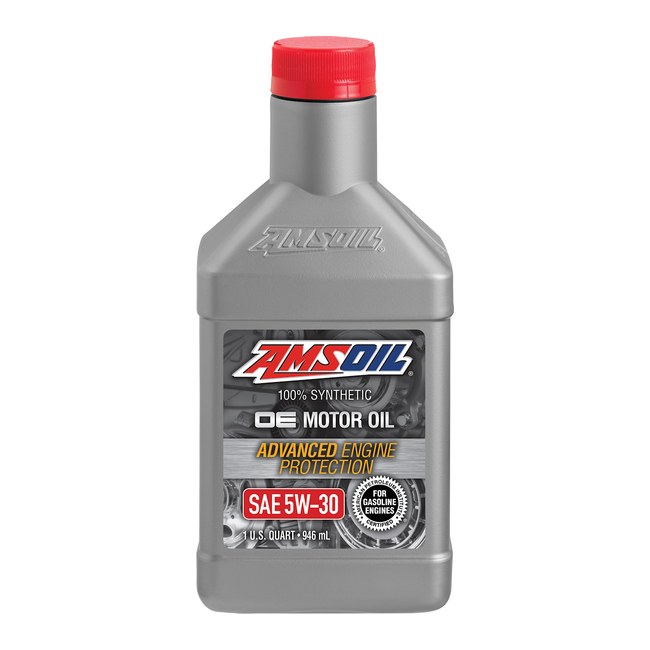
In the graph below, notice the orange bar, which shows the untreated oil’s performance in the Cold-Crank Simulator (CCS) Test (ASTM D5293). This test is used to determine an oil’s ability to flow well during cold starts, which helps prevent dry starts and protect against wear. The untreated oil falls within the acceptable range for a 5W oil (6,600 cP max. @-30°C). The performance of AMSOIL OE 5W-30 Synthetic Motor Oil is also included for a comparison (the dark blue bar on the left), which demonstrates the improved cold-flow characteristics of quality synthetic motor oil.

Now look at the conventional oil’s performance in the CCS Test after having been treated with the engine oil additives. Both the stop-leak additive and the oil stabilizer increased the oil’s viscosity so much that both samples no longer meet the requirements of a 5W oil, failing the test. This means the oil won’t flow as readily at startup, impairing wear protection at the time when most wear occurs.
It’s important to note that cold-flow isn’t just for us northern folks. Cold to your engine is any temperature below normal operating temperature, which is about 212°F (100°C). The better the oil flows after the engine has sat for an extended period, like overnight in your garage, the better it will protect against wear. While especially true at -22°F (-30°C), the temperature at which the CCS Test is performed for 5W oils, it’s also true at 80°F (17°C) or warmer.
The cold-pour test shown in this video offers confirmation. We cooled samples of the conventional oil alone and treated with the two leading additives to -40°F. Take a look.
You can clearly see that the oil treated with the engine oil additives flows more slowly. The oil treated with the leading oil stabilizer turned into a gelatinous blob and took about two minutes to flow. Imagine if that oil were in your engine, especially if you live in a cold climate. It wouldn’t flow at startup, particularly through the tiny oil passages in the crank journals and camshaft. It also would fail to flow through the tiny opening in your variable-valve-timing solenoids, if your engine is so equipped, reducing performance and maybe triggering a check-engine light.
Over time, wear protection will suffer if you use these additives, and so will your engine.
What about the oil’s viscosity at operating temperature?
Here, too, the engine oil additives raise red flags. In this graph, the orange bar shows the viscosity of the untreated conventional oil at 100°C (212°F). It falls within range for a 5W-30 oil, shown by the green transparent area.

Now, look at the viscosity at 100°C of the oil treated with the two additives. That’s right…they’re both out of viscosity range. In effect, you’re now using a 40- or 50-weight oil instead of the 30-weight the engine manufacturer recommends.
So, what’s so bad about that?
Your engine is designed to use a specific viscosity of oil. Oil that’s too thick for the engine can fail to flow fast enough to fill the area between the crank journals and main bearings, leading to bearing wear. Thick oil also impairs circulation, reducing the oil’s ability to transfer heat from critical engine components. It also generates more heat due to increased internal friction while decreasing fuel economy.
Are engine oil additives good or bad?
Given what you’ve just seen, you can answer that question yourself.
While they appear to help improve wear protection in bench testing, the oil additives we tested come with severe tradeoffs that reduce long-term protection and performance.
You’re better off using a good synthetic oil to get the benefits of improved wear protection, reduced oil consumption, maximum fuel economy and more. Not only will it protect better, it’ll end up costing about the same once you factor in the cost of the additive. And it won’t come with the negative side effects we’ve seen here.
Shameless plug time: If you’re using or thinking about using an engine oil additive, consider AMSOIL OE Synthetic Motor Oil instead.
This article is part of our Motor Oil Basics guide. See every article in the guide.
Recommended AMSOIL products
Start with AMSOIL synthetic motor oil and find the exact AMSOIL products for all your vehicles with the AMSOIL Product Guide.



First: I use and recommend AMSOIL in all my vehicles; if there’s ever any question – I have two ’60’s English cars – use their call-in tech support. Secondly, I did have good luck with an additive in a specific application years ago; I bought a car with about 50,000 miles on the odo, The seller said, “Yeah, I could’ve changed the oil a little more often.” I got the car home and, prior to oil change, added Shaler’s Risolone, an oil flush,(haven’t seen it in decades, modern replacements exist,) I watched the Tach’ as the engine idled and it steadily gained about 500 RPM, I reset the idle. As to the hyped additives, we’ve watched them come and go over the years.
I liked what you said about how additives can safely dissipate heat and act as a seal and hold things in place so that they cause less damage. My cousin has been thinking about getting some better lubricants for his truck because his buddy suggested it and he hopes that it will help the truck run better. He would really like to get some from a professional so that it will work a lot better and it will be safer for him to drive.
Been using Signature in my 7.3 since it was available, been using AMSOIL for years.
Still not using much oil 240K miles now, will keep using Signature for the rest of its life!
By the way, I think the heat is from the combustion of the fuel, not the turbo!
Why didn’t you just come out and say the so called mechanic in a can is just snake oil. If your motor needs one of these products you more than likely need .real mechanical work done. If your motor is healthy, a good quality oil and regular filter and oil changes are all it needs.
A little bit misleading. The industry has been moving toward lower levels of proven anti-wear additive packages, moly, zinc, etc. The tests here choose only to test supplements that were specifically designed to increase viscosity (anti-leak additive, etc). I’m sure AMSOIL has one of the very best anti-wear additive packages in the business, but not every motor oil on the shelf does. On top of that the engine manufacturer is not giving you the ideal oil for your engine, they are giving you the ideal oil to meet their warranty duration and CAFE standard goals. Your goals are slightly different and your winter climate is not the same as your cousin in El Paso, Texas!!!
Hi Paul,
That’s the point we’re trying to make: it’s better to use a high-quality synthetic oil (whether it’s AMSOIL or not is up to you) with proven wear protection than to augment a less-than-ideal oil with an aftermarket additive. That way you get increased wear protection without increasing viscosity beyond manufacturer recommendations.
It’s important to note that good cold flow isn’t just important for us northern drivers. The oil’s ability to flow quickly at startup, even in El Paso, influences wear protection. Also, the second test result shows viscosity at 100°C, which is operating temperature. The additives increased viscosity beyond limits once the oil was hot, which affects drivers everywhere.
Thanks for reading,
John
what can I use for my tractor hydraulic system. It is a mid size tractor that uses 2 gallon of hydraulic fluid.
Hi Jim,
We have several hydraulic fluids from which to choose. If you need help with a recommendation, call AMSOIL Technical Services at 715-399-TECH and they’ll be glad to help.
Thanks,
John
Has Amsoil completed any testing on adverse side affects of residual motor oil interaction with new oil. Example would be oil that has started to breakdown, fall out of viscosity, become contaminated with wear metals, fuel or other harmful by-products, and may contain binding agents, additives of varying quantities and quality that may not be compatible with Amsoil and cause inbalances in Amsoil’s formulation. In modern engines up to 20% of the residual old oil will remain in the engine. I agree that mixing oils and using aftermarket is not recommended. When starting out with Amsoil, would you recommend a Full Volume Oil Change. https://www.machinerylubrication.com/Read/31012/short-volume-oil-changes
Hi Brian,
We perform extensive testing to ensure compatibility with aged/depleted oil as well as with other oil brands (conventional and synthetic). While some residual oil remains after a drain, additive levels are restored with each oil change. Also, using a high-quality synthetic reduces breakdown from shear, fuel dilution or heat/oxidation. Using a high-efficiency oil filter also traps metal particles/soot agglomeration large enough to cause wear. We recommend a standard drain-and-fill process (with filter change) when switching. No special procedure is needed.
Thanks,
John
Can I use Motor- kote with Amsoil ? Will it cause any issues?
Hi Scott,
We don’t recommend using any aftermarket additives with AMSOIL synthetic motor oils. Oil additives can disrupt the chemistry of the oil and reduce performance or service life.
Thanks,
John
Thank your for sharing such a nice article regarding the important role of motor oil. It reduces the friction among the different components of the engine and hence ensures smoother performance and increases the fuel economy of the vehicle. Apart from this, it also absorbs certain amount of heat generated by the engine and provides optimum temperature to the engine. However, it degrades with the flow of time due to the extreme heat generated by the engine and needs to be replaced with suitable alternatives according to the manufacturer’s recommendation. However, some people underestimates the importance of oil change after certain interval in order to ensure smoother performance for a relatively longer periods.