

-
What goes on inside this modern marvel?
-
How can you idle without the vehicle moving?
-
How does it shift gears?

Cutaway of an automatic transmission torque converter.
Let’s shift gears
So, you’ve jammed the accelerator to the floor. The half of the torque converter connected to the engine now spins with enough force to turn the half connected to the transmission. Away you go. Engine rpm climbs, and it’s time to shift gears. The vehicle’s computer tells the transmission when to shift based on vehicle rpm, engine load and other factors. When this happens, solenoid valves inside the transmission activate different clutches to select different gears.
Planetary gear set illustration.
Clean, quality fluid
As you can see, the transmission fluid does more than just protect against wear. It also acts as a hydraulic fluid to activate clutches. Plus, it manages friction within the clutches to enable crisp, confident shifts. If the fluid breaks down due to extreme heat, harmful sludge and deposits can form. This can cause the clutch plates to glaze over or the narrow fluid passages inside the transmission to become blocked. Degraded fluid can also lead to stuck valves and reduced frictional properties. Eventually, your transmission shifts hard, slips or hesitates. Servicing your transmission with high-quality synthetic transmission fluid that resists heat is one of the best – and most cost-effective – ways to ensure it delivers years of reliable service.This article is part of our Transmission and Gear Oil guide. See every article in the guide.
Video transcript: Shifting Transmissions
Featuring John Gardner, host of Motorhead Garage, and Leonard “Len” Groom, AMSOIL Director of Product Marketing (author profile).
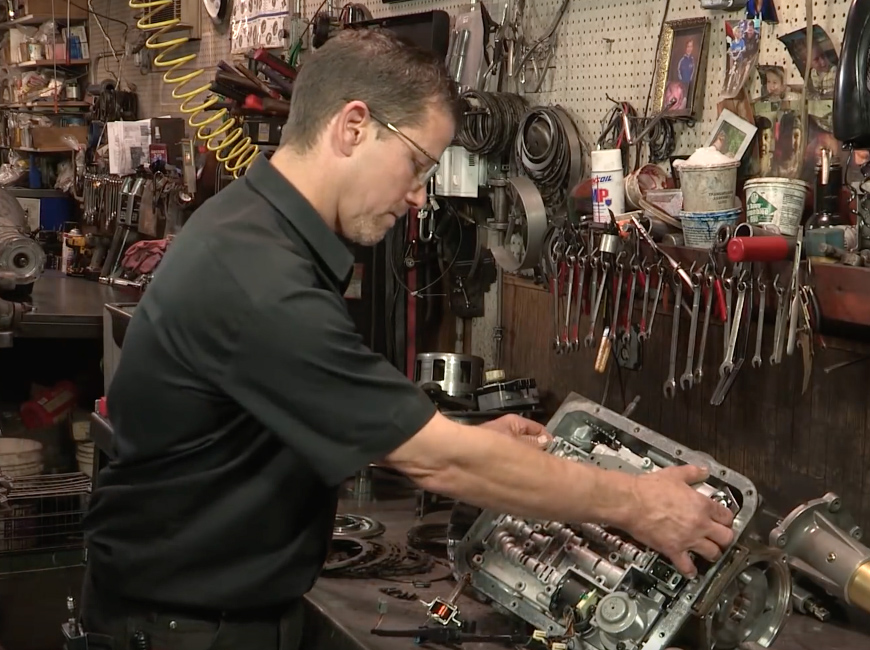
John Gardner: Transmissions have evolved from the two speed power glide to the eight speed to ten speedautomatic transmissions today. Welcome to this AMSOIL tech tip. Well, how did that all happen? It’s all about the valve bodies, my friends.
It causes the shifts. What is it and how does it work? Well, can see it right here. It actually has a bunch of valves located in there, shift valves, modulator valves, reverse valves, manualvalves, everything that’s directing that fluid to different chambers to make it happen.
Here’s one right here and you can see all these passages right here, all these nooks and crannies cause that fluid to run around and go into the transmission at different points to achieve the different shifts. We’re talking about shift solenoids right here. Those cause different shifts one, two, three, four. This is a pressure control solenoid.
Now all these solenoids and valves, they make the shift happen. Now, Len, could you tell us explain how this chart works? This is how it actually happens.
Len Groom: I think if you can understand that, can land on the moon.
John Gardner: Absolutely. It’s a complex machine, but it all starts here at the pump, and then it goes through all those passages to make the shift happen. That’s good enough, Len. But a little bit earlier, I actually measured this.
This is a manual valve, and your shift’s connected to it. You move it back and forth. I measured it with this veneer caliper here from the inside and the out, Len, and I have a little bit of thousands, not too much play in there, and fluid has to make those valves move. How does that happen?
Len Groom: That space that you’re talking about, I mean, that’s less than a sheet of paper. So there’s
not a lot of room for anything but the fluid. So the fluid has to remain fluid.
So, we’re talking about detergency. We don’t wanna have buildup. We don’t wanna have varnish or any type of depositing in there or it can create sticking.
John Gardner: Now I see that a lot. These things get varnished up. The fluid’s in there too long. You might have shift problems. It may be just as simple as changing your fluid or maintaining your fluid.Check them out on the website at AMSOIL.com.
Recommended AMSOIL products
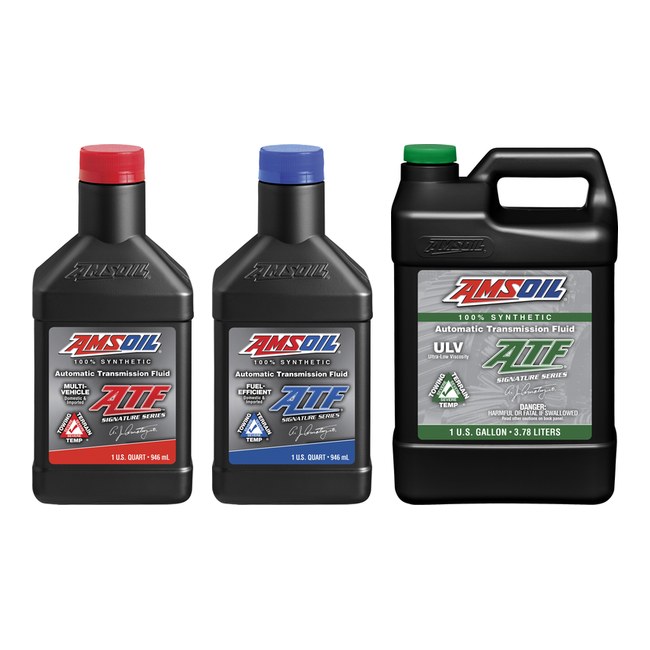
Start with AMSOIL synthetic motor oil and find the exact AMSOIL products for all your vehicles with the AMSOIL Product Guide.


Comments
AMSOIL Staff articles draw on the combined expertise of AMSOIL engineers, chemists, Technical Services specialists, technical writers and product marketers. Content is developed from AMSOIL data sheets, laboratory and field testing, oil-analysis results and more than 50 years of synthetic-lubricant development. Topics span automotive, diesel, powersports, marine, small-engine, agricultural and industrial equipment, covering lubrication fundamentals, maintenance practices, product selection and real-world customer experience.
Share: