


The roads are home to all kinds of vehicles. Daily drivers that clock thousands of miles each year. Seasonal vehicles that only clock hundreds. And some whose odometers move only when being loaded or unloaded from a trailer. In many regions winter vehicle storage is required to protect your investment.
There are several things to consider before storing your vehicle. Here are some long-term vehicle storage tips to ensure your vehicle will awaken gracefully from its storage-time slumber.
Seek shelter
There are plenty of good locations for storing your vehicle. Here are a few:
- Garage – If you own a garage, it’s the obvious first choice to protect your vehicle from the elements, pests or thieves during storage. Ensure that all entries are secure, including windows or side doors.
- Storage facility – If you live in an urban area or don’t have access to an enclosed space, consider renting space at an indoor storage facility. Many businesses that specialize in storing vehicles offer both indoor and outdoor options.
- Phone a friend – You can also ask a family member or good friend who has space in their garage, shed, barn or other secure building. Buy them a case of AMSOIL if you need to butter them up.
- Cover it – Outdoor storage isn’t ideal, but if it’s your only option, buy a quality weatherproof cover to protect your vehicle from the elements. There are many options available, ranging from single use to virtually impenetrable. Do your research to find the best cover for your ride.
Parking on concrete helps avoid moisture from the ground causing rust damage from the bottom up


Cleanliness is king
Before letting your car sit for extended periods of time, make sure it’s thoroughly clean. Even small amounts of the following can damage the paint.
- Water droplets
- Salt from the road or the air
- Sand and dirt
- Bird droppings
Show your vehicle some love by washing it well, completely drying it with a shammy and giving it a proper coating of wax. If you’re really feeling fancy, use a clay bar to remove dirt trapped inside the paint. AMSOIL offers many easy-to-use aerosol products to clean and protect metal, paint, plastic and other parts of your precious ride.
Inside the vehicle, vacuum all dirt, debris and crumbs. Even small crumbs will attract insects and rodents. If you don’t have the time, take it to a professional detailer.


Discourage undesirables
Mice and other rodents love finding a good stationary vehicle to hole up inside for the winter. They build nests in inconvenient places, chew through wires and wreak general havoc during their uninvited stay.
Keep them out by closing off any entry points, including the exhaust and air intakes. Steel wool and dryer sheets are inexpensive and effective deterrents. Placing them in entry points and around the vehicle will deter pests from considering your vehicle for their winter home.
Deteriorated fuel creates most of the problems associated with vehicle storage.
Fluid refreshment
Perform an oil change prior to storing a vehicle. This will keep the engine from being subjected to any harmful contaminants for a lengthy period of time.
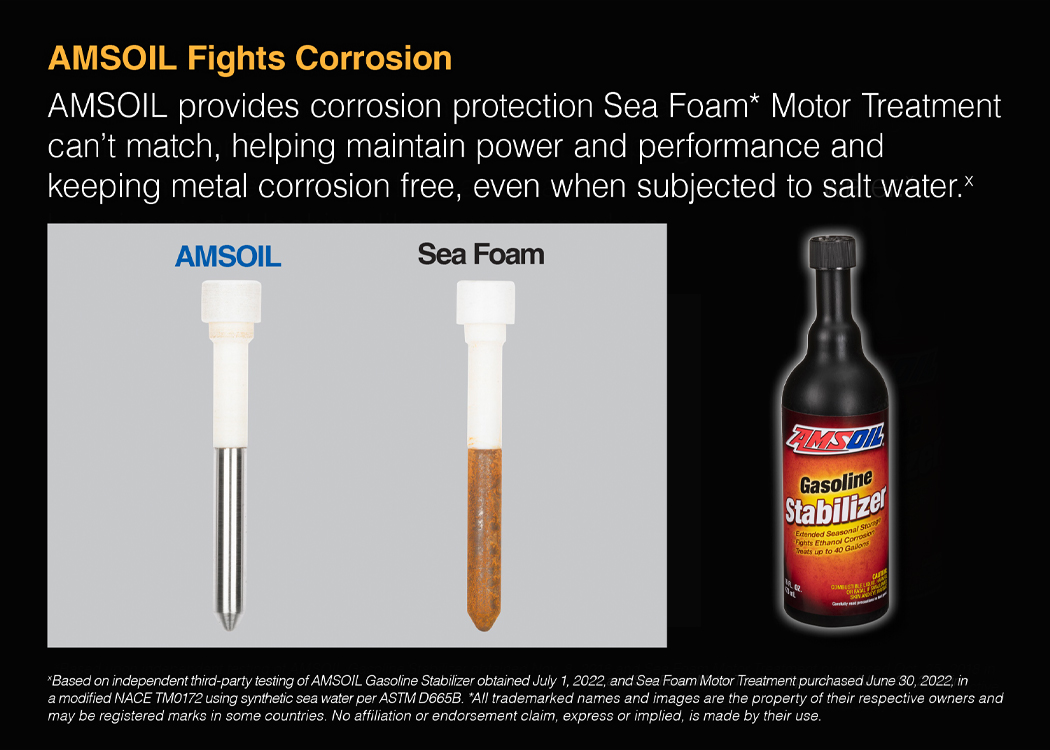
Fill the gas tank with premium non-ethanol fuel to prevent moisture from accumulating inside the tank and add a fuel stabilizer to prevent the gas from deteriorating over time. AMSOIL Gasoline Stabilizer is an excellent choice for inhibiting the oxidation process in stored fuel and preventing sludge and varnish from clogging injectors, fuel lines, carburetors and other components.
To prevent surface rust from accumulating on engine components, spray a good coat of AMSOIL Engine Fogging Oil into the cylinders.

Battery tender
It’s not ideal or convenient to operate vehicles prepped for long-term storage. However, a battery that is not used will quickly lose its charge and become a headache later.
It is best to disconnect and remove the battery entirely for long-term vehicle storage. At the very least, purchase a battery tender and keep the battery on a trickle charge. Delivering a regular charge will keep the battery from losing the ability to take a charge at all. Look for a trickle charger with an automatic shut-off feature so it doesn’t overcharge.


To protect tires, roll the vehicle a few inches occasionally.
Mind your tires
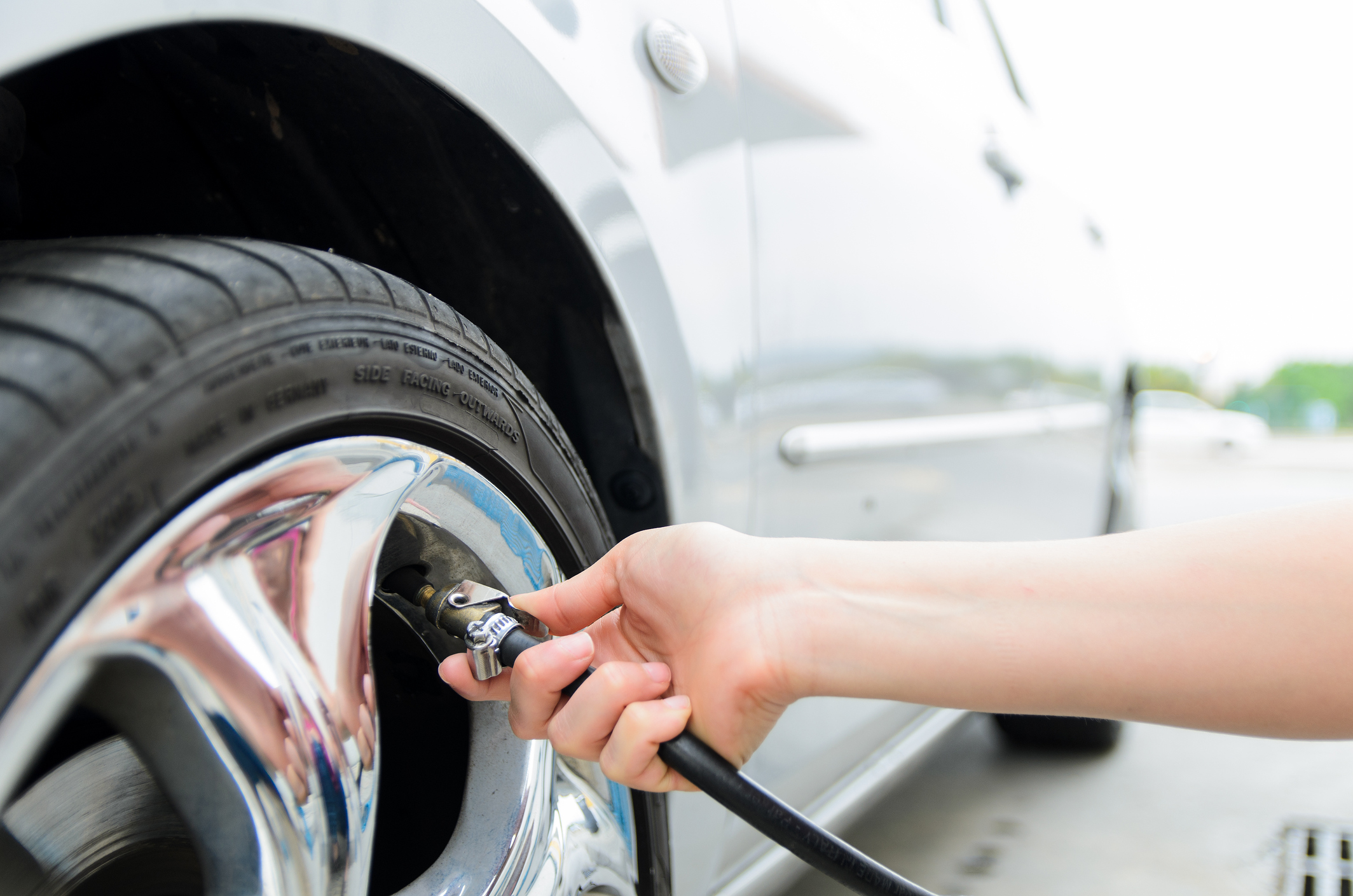
Another important consideration is making sure the tires are properly inflated to the correct psi through the entire duration of storage.
If possible, lift the vehicle off the ground while in storage or roll it a few inches occasionally to prevent permanent flat spots that will require replacing the tires. For those who don’t mind a bit of extra work to protect the tires, you can also remove them and replace them with jack stands.

Pick a protocol
Vehicles don’t like to sit for extended periods. Regularly operating a vehicle keeps fluids from deteriorating, seals from drying out and internals from rusting and corroding.
Placing a vehicle into extended storage requires consideration of what maintenance should be completed before, during and after its “pickling.” Following proper vehicle storage protocols ensures your ride will be road ready when you are.
Pick a storage protocol based on your environment and expectations and stick to it!

Video transcript: Long-Term Vehicle Storage Tips
Featuring John Gardner, ASE Master Certified technician, automotive technology instructor and host of Motorhead Garage, with AMSOIL Director of Product Marketing Len Groom (author profile).
John Gardner: Transmission fluid, oil filters, all types of oil, brake fluids, fuel system products, octane boosters, differential products, cleaning products, UTV, ATV, V-twin oil; you name it, AMSOIL has you covered. Welcome to this AMSOIL Tech Tip. Now, those are some awesome AMSOIL products, but even more awesome, we love our fans. Thank you for the comments, the concerns, everything that’s going on. And Craig actually asked one of the questions. He says, “Hey, how can we store a vehicle?” Great question, Craig, and we have the answer for you. Whether it’s a carbureted car, throttle-body injection, multi-port injection or direct injection, Len, when we store a car, what happens to the fuel?
Len Groom: Well, ultimately, if you leave it long enough, it’s going to go bad. Why? It actually oxidizes. You’ve heard us talk about oil oxidizing; fuel can do the same thing, and that’s when the light ends kind of fly away. Bad things start to happen is really the simplest way of saying it.
John Gardner: Yeah. And that’s what happened here. This is a fuel pump that we actually had in a tank. We stored the car really not too long, but we didn’t use any AMSOIL products. Big mistake. Here’s the deal. I’ve got the hose here, all deteriorated, and the pressure sensor here. And then look under here. I mean, it is flaking away. This is actually fuel damage. Len, how can I avoid this problem?
Len Groom: Well, you can treat the fuel. That’s going to be the key piece.
John Gardner: Now, what do we treat it with? And what about different equipment? Can I use it in everything?
Len Groom: Sure. We’ve got an answer that’s simple, for once. It’s not complex. At AMSOIL, we’ve got a couple of fuel additives that are designed specifically for storage. One is AMSOIL Quickshot. That’s our primary recommendation for your classic cars and for your powersports equipment. We also have a stabilizer. Again, it’s recommended across the board for everything.
John Gardner: Now, I was always told that if I store my car, it’s a good idea to change the fluids. Is that true?
Len Groom: Yes, and the way that works is this. We generally recommend that you change the oil on something, whether it’s powersports or a car, when it goes into storage because, as we’ve discussed before, blowby can get into that oil, and it turns the oil acidic. You wouldn’t want to put it in storage when the oil is acidic, because that can be bad for bearings. So we recommend you change it before it goes in. Or if you’re already using our Z-ROD product: we understand those customers aren’t going to put a pile of miles on those vehicles, so we actually have a two-year, 5,000-mile drain on that oil.
John Gardner: Nice. Craig, I hope that answers your question. To all our viewers, please keep those questions, comments and even concerns coming. We love to hear from you. And if you want to see any of the great products you saw at the opening of the segment, just go to amsoil.com.
This article is part of our Seasonal Maintenance guide. See every article in the guide.