

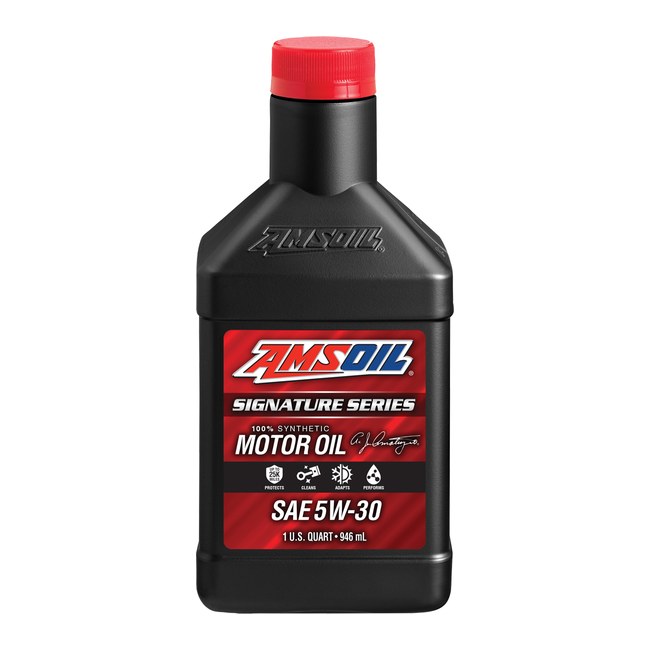

Most engine wear occurs at startup. That’s primarily because oils thicken as the temperature drops. Cold oil doesn’t flow as fast and, in some cases, may not be able to flow through tiny oil passages at all. When that happens, engine components are forced to operate without lubrication until the engine warms up the oil enough for it to flow, greatly accelerating wear. For those reasons, cold-flow capability is a critical measure of motor oil performance.
How well does AMSOIL Signature Series 100% Synthetic Motor Oil flow in the cold? Its data sheet answers that. Pour point is the lowest temperature at which an oil still flows. Across the Signature Series lineup, typical pour points range from -48°C (-54°F) to -54°C (-65°F).
The 0W-20 has a typical pour point of -54°C (-65°F) and the 5W-30 -48°C (-54°F). Oil that keeps flowing in extreme cold reaches critical engine parts sooner at startup, when most wear occurs.
Causes of startup engine wear
The exact percentage of engine wear that occurs at startup depends on a mix of several factors. The factors below accelerate wear:
- Motor oil doesn’t flow, temporarily starving the engine of oil.
- Gravity causes much of the oil to flow into the oil sump, leaving components unprotected.
- Condensation forms inside the engine that causes rust and corrosion.
- Richer air/fuel mixture at startup washes oil from the cylinder walls.
- Cold piston rings and cylinders don’t seal as well, allowing combustion gases to “blow by” the rings and contaminate the oil.
While all these factors are important, lack of oil due to poor cold-flow properties is the biggest culprit.




Comments
Brad Nelson is an AMSOIL Technical Writer II who develops content about lubricant technology, product performance and vehicle maintenance. He works with engineers and product specialists to translate testing, application requirements and approved performance claims into clear customer guidance. Nelson’s work includes AMSOIL Blog articles, AMSOIL Magazine features and technical explanations concerning motor oils, gear lubricants, vehicle systems and maintenance practices.
Share: