The fundamental goal is to seat new piston rings against a fresh cylinder wall to create a tight, efficient seal. Every engine, builder and application brings its own nuances, so there’s no universal, one-size-fits-all procedure, but the oil you choose can make all the difference.

Video transcript: How to Break in a New Engine
Featuring John Gardner, host of Motorhead Garage, and Leonard “Len” Groom, AMSOIL Director of Product Marketing (author profile).
John Gardner: Well, you just spent over a hundred hours building your new engine. You put it inside your car, and what’s the tendency? Floor it. You wanna go and spin those tires and burn them up. Probably not the best idea. Welcome to this AMSOIL tech tip. It’s all about the break in procedure.
And why do we even wanna do a break in procedure? Well, I’m gonna show you. It’s a cross hatch pattern. How do you do that and when do you wanna do it?
Well, when you build a new engine, you wanna make it a little rough for the piston springs to seat inside the cylinder. So I can show you how it’s done. We just lubricated the hone, stuck it down in the cylinder, run it up and down for a while, stop it before you remove the hone, pull it out, and voila, you got it. You either have a crosshatch pattern or you got a glazing hone here that’s gonna break it.
But with that done, Len, we have a problem because, you know, all this stuff’s still a rough surface. You got some break in oil and that’s specific.
Len Groom: It is. What you want to do there is you’re creating that surface finish where there’s actually some peaks and some valleys in there and what you want to do is knock those down and make a mated surface between the cylinder liner and the ring. So the way you do that with an oil is you use a little bit less robust base oil and you use quite a bit of anti wear protection additives. So you see that kind of a common thing in break in oils and what that’ll do is it’ll allow those mating surfaces to get closer to touching and actually seat. So you’re knocking off some high edges and you’re seating those things together.
John Gardner: Now AMSOIL is a synthetic oil company. This is a little bit different. Tell us about this actual break in oil. Yeah.
The break
Len Groom: in oil here to to do what I was just describing, we actually are using a conventional base stock for this product.
It just knocks those peaks and valleys down better.
John Gardner: Yeah. And that’s a good idea. You absolutely want to knock them down. You want to break it in. So take it easy and get it out of there. It recommends about a thousand miles or your manufacturer’s specifications.
The break in oil is an amazing product and there’s plenty more at AMSOIL.com.
Why Break-In Matters
Freshly machined cylinders are full of microscopic peaks and valleys. The goal during break-in is to wear down those peaks just enough for the rings to seat tightly, without glazing the cylinder or causing excessive wear. If you don’t apply enough load, the rings won’t seat properly, leading to poor compression and increased oil consumption. Too much load and you risk damaging the rings, pistons or cylinder walls. The “art” of break-in is finding that sweet spot of enough load and rpm variation to promote proper seating, but not so much that you cause harm.


The Role of Break-In Oil
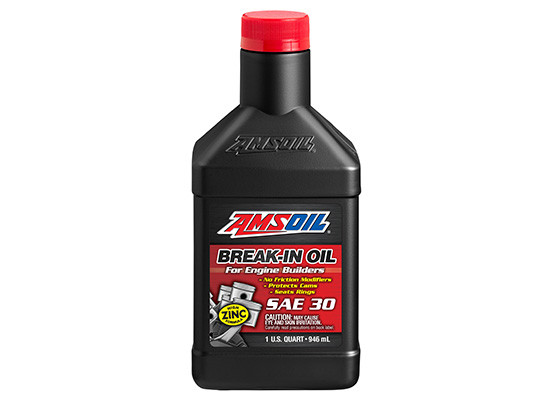
A specifically designed break-in oil helps maintain “controlled wear” at the ring-cylinder interface. However, most modern engine oils are loaded with friction modifiers like molybdenum (moly), which are great for reducing wear in a mature engine, but can actually prevent the rings from seating during break-in. AMSOIL Break-In Oil (BRK) is formulated without friction modifiers, allowing the right amount of wear to occur for optimal ring seating.