



Horsepower and torque are two important measurements used to describe the power of an engine, but they refer to different aspects of an engine’s performance.
What is torque?
Torque is a measure of rotational force and is more specifically defined as the amount of force required to rotate an object around an axis. Torque is often considered the “grunt” of an engine, as it determines the engine’s ability to perform work, and it is measured in pound-feet (lb-ft).
Torque is what you feel when the force of the engine propels a vehicle forward and slams you back in your seat, provided it doesn’t break traction and cause the tires to smoke and scream. The force created by an engine spins the crankshaft and the transmission applies this torque to the wheels, moving the vehicle. The more force applied to the crankshaft, the more work the vehicle can do.
“There’s no replacement for displacement.”

What is horsepower?
Horsepower (hp) is commonly used to describe power output and indicates how much power an engine can produce. It is defined as the amount of work done in a certain amount of time. One horsepower is equal to 33,000 foot-pounds of work per minute, or 550 foot-pounds per second.
Horsepower is the speed you feel as the rpms climb, streetlights zip by and the engine pushes the vehicle ever faster toward redline. While torque measures an engine’s ability to perform work at a given moment, horsepower measures an engine’s ability to perform work over time.
Horsepower was developed as a unit of measurement in the 18th century by Scottish inventor and engineer James Watt to compare the output of steam engines to horses.
Horsepower was developed in the 18th century to compare the output of steam engines to horses.
Horsepower propels beer boom
In a stroke of marketing genius, eighteenth-century Scottish engineer James Watt coined the term “horsepower” to help sell London industrialists on the ability of his new steam engines to more efficiently produce beer.

Londoners had such a hankering for a strong, dark porter made at the Goat Brewhouse, that the draft horses at its mill wheel couldn’t keep up.
So, in 1784, the brewhouse’s owner installed one of Watt’s newfangled steam engines. Thanks to its efficiency, London was soon awash in suds.
And the term “horsepower” is partly to thank.
The birth of “horsepower”
To sell his steam engine, Watt had to convince business owners they could efficiently replace the horses upon which their brewers relied.
What better way than to pitch his machines as offering enough power to replace X number of horses?
Imagine accomplishing the work of, say, 200 horses without cleaning a single stable?

What is horsepower?
Observing the strong draft horses at the heart of the London breweries, Watt reckoned one horse could turn a 12-foot mill wheel 144 times per hour. He also estimated the horse could pull with 180 pounds of force.
Performing some complicated math, Watt reasoned a horse can push 32,572 pounds one foot per minute, which Watt rounded to 33,000 pounds.
Although some have since questioned Watt’s presuppositions (he did have a financial interest in proving his engines could replace horses, after all), the term “horsepower” stuck.
Watt could advertise his steam engines as producing the same amount of power as a specified number of horses.
This allowed the bean counters to calculate how much money running steam engines would save their companies compared to horses.
How much is one horsepower?
Thanks to Watt, we all accept that one horsepower equals 33,000 ft·lbf/min (about 745 watts).
No respectable car website or magazine would review a vehicle without reporting its horsepower figure.
But horsepower figures can be too abstract to get our heads around. Here are some examples to add context.
- A healthy person can produce about 1.2 hp briefly, and 0.1 hp indefinitely
- Jamaican sprinter Usain Bolt produced a maximum of 3.5 hp during his 2009 world-record 100-meter dash
- The average horse is capable of 14.9 hp at its peak
- The Lotus Evija supercar makes 2,000 hp
- The Wärtsilä RT-flex96C, the most powerful diesel engine in the world, makes 109,000 hp

The relationship
The amount of horsepower an engine can deliver is directly proportional to the amount of torque generated by the crankshaft, which is directly proportional to the total displacement (size) of the engine and its peak rpm.
Engine tuners understand that a car with higher horsepower will be able to maintain high speeds longer, while a car with higher torque will be able to accelerate more quickly from a standstill, and they typically try to optimize both.
In general, engines with larger displacement (larger engine size) will tend to have higher torque output at lower rpm, while engines with higher rpm (redline) will tend to have higher horsepower output.
Because there is a limitation on maximum engine displacement based on the size of the vehicle, there is also a limitation on the amount of torque the engine can produce, which in turn sets a limit on the engine’s maximum horsepower.
The equation
Torque and horsepower are easily measured with the formula:
Horsepower = Torque x Engine RPM / 5252
Plugging various rpm values into the equation provides an idea about the range of power an engine can produce. Engine builders measure the values and relationship between torque and horsepower on a dynamometer and output the results on a dyno map. Performance can be measured directly at the crank with minimal power loss, or at the wheel with some power loss from the drivetrain.
Examining the chart below, you’ll notice torque is higher at low rpm and horsepower is higher at high rpm. The two always intersect at 5,252 rpm because horsepower equals torque times engine rpm, divided by 5,252. Therefore, torque and horsepower are always equal when the engine speed is 5,252 rpm.

Which is better?
While torque and horsepower ratings are common vehicle selling points, many consumers don’t fully understand what the ratings mean or the relationship between the two.
The answer to which is more important depends on the application. While torque measures the turning force produced by a vehicle’s engine and the engine’s ability to perform work, horsepower measures how fast the engine can perform the work. Therefore, high torque makes an engine accelerate faster from a stop, and high horsepower makes for higher top speed.
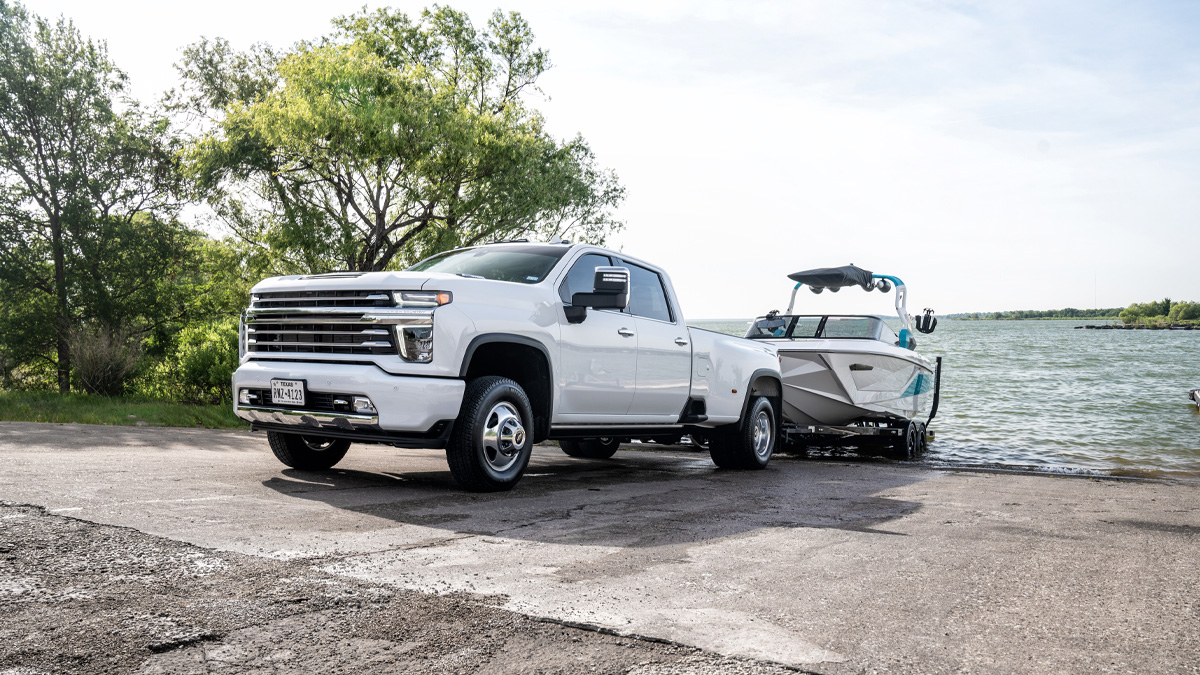
While both are necessary to move a vehicle, if you’re hauling heavy loads or pulling a trailer, you’ll appreciate the added grunt of a high-torque engine. If you’re trying to set the lap record at the local track, you’ll want an engine tuned to maximize horsepower.
It’s important to reiterate that horsepower and torque are related and not independent of each other. To increase horsepower requires an increase in torque, rpm, or both, but the relationship is not always linear, and vehicles can be tuned to favor one or the other with gearing and other modifications like turbos and superchargers.

Comments
David Hilgendorf is an AMSOIL Technical Writer who develops content for automotive, powersports and industrial audiences. His work includes technical data sheets, magazine articles, blog posts, white papers, product literature and application guidance. Hilgendorf works with engineers, laboratory personnel and technical specialists to communicate lubricant testing, product performance, maintenance practices, metalworking fluids, grease, motorcycles, marine equipment and industrial reliability.
Share: