As engine-operating conditions grow more severe, so do the demands placed on your motor oil. Hence the need for updated oil specifications, like API SQ, ILSAC GF-7 and GM* dexos1* Gen 3 and dexos R.*
Engine technology like turbochargers, direct injection and variable valve timing (VVT) place increased stress on your engine oil. This, in turn, has led to the introduction of stricter motor oil specifications.
Here’s what we’re going to cover:
How do fuel-economy standards increase engine stress?
What is low-speed pre-ignition (LSPI)?
How does motor oil help prevent LSPI?
What are API SQ, ILSAC GF-7 and GM dexos?
Do AMSOIL synthetic motor oils meet the latest specs?
To meet these requirements the automotive industry has focused on smaller, more fuel-efficient engines. In fact, most new vehicles now feature gasoline direct-injection (GDI), a turbocharger or both (T-GDI).
Smaller, more-efficient engines that make the power and torque of higher-displacement engines undergo more severe operating conditions that can lead to…
Severe engine knock, also called low-speed pre-ignition (LSPI)
Increased engine temperatures
Compromised fuel injectors
Increased wear and deposits if the oil isn’t adequate
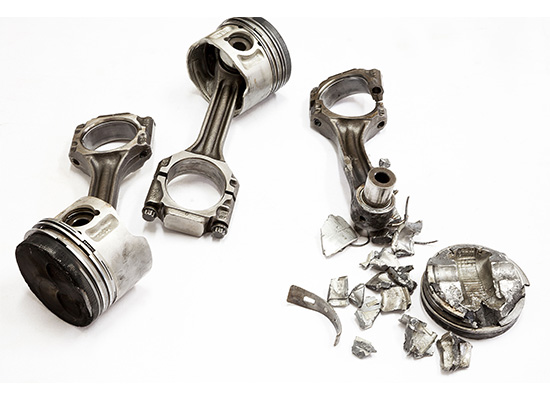
“The biggest motor-oil-related challenge is LSPI, which can destroy pistons and connecting rods.”
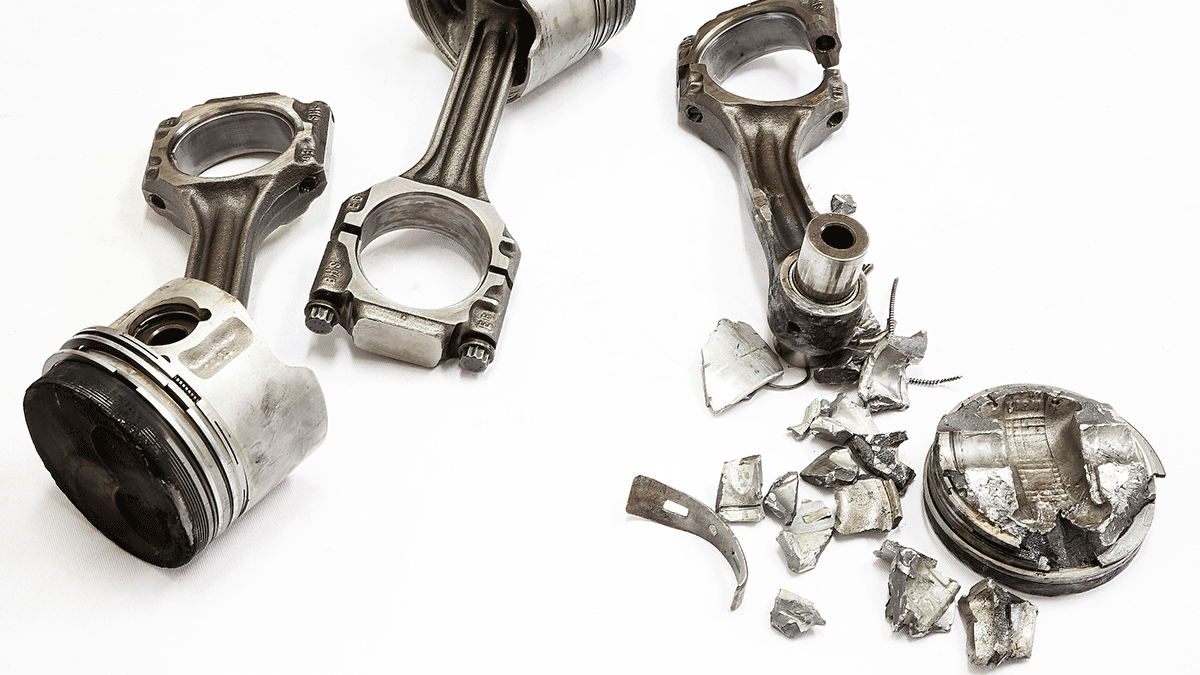
LSPI can cause cracked pistons and rods
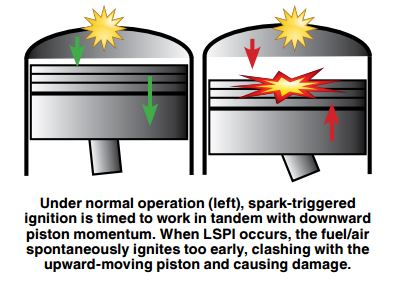
LSPI is the spontaneous ignition of the fuel/air mixture before spark-triggered ignition. It is a modern version of engine knock, which has been around since the first internal combustion engines.
However, LSPI occurs under low-speed, high-torque conditions, such as taking off from a stoplight in T-GDI engines. This scenario can create conditions where the fuel/air ignites too early in the combustion cycle, throwing off the engine’s timing. The expanding combustion charge collides with the piston as it’s moving up the cylinder, potentially destroying the pistons or connecting rods.
Low-speed pre-ignition (LSPI) is an abnormal combustion event that can ruin pistons.
Oil can help prevent LSPI
Experts suggest the cause is due to oil/fuel droplets or deposits in the cylinder chamber that ignite while the piston is still traveling upward. The droplets and deposits contain enough heat to ignite the air/fuel mixture before spark-triggered ignition.
Certain motor oil ingredients can promote LSPI, while others can help reduce it. It’s tempting to consider boosting additives that help reduce LSPI in motor oil formulations, but some of those additives are intentionally reduced or left out of motor oil formulations for other reasons.
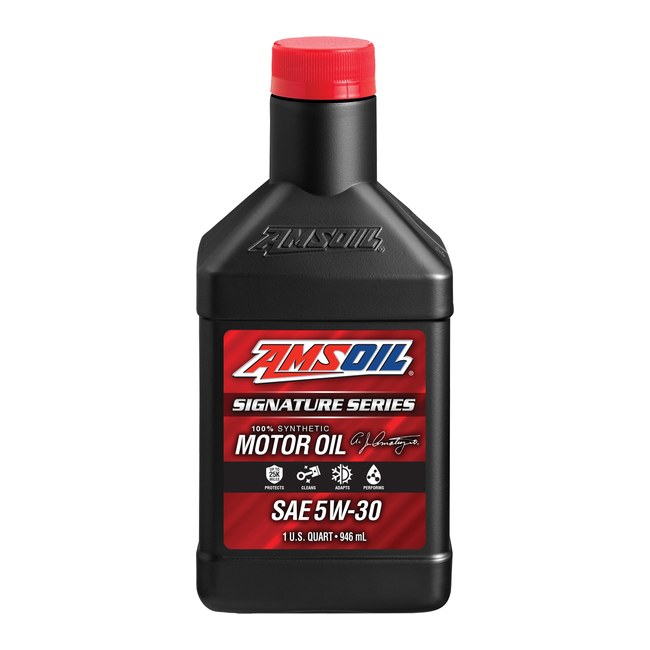
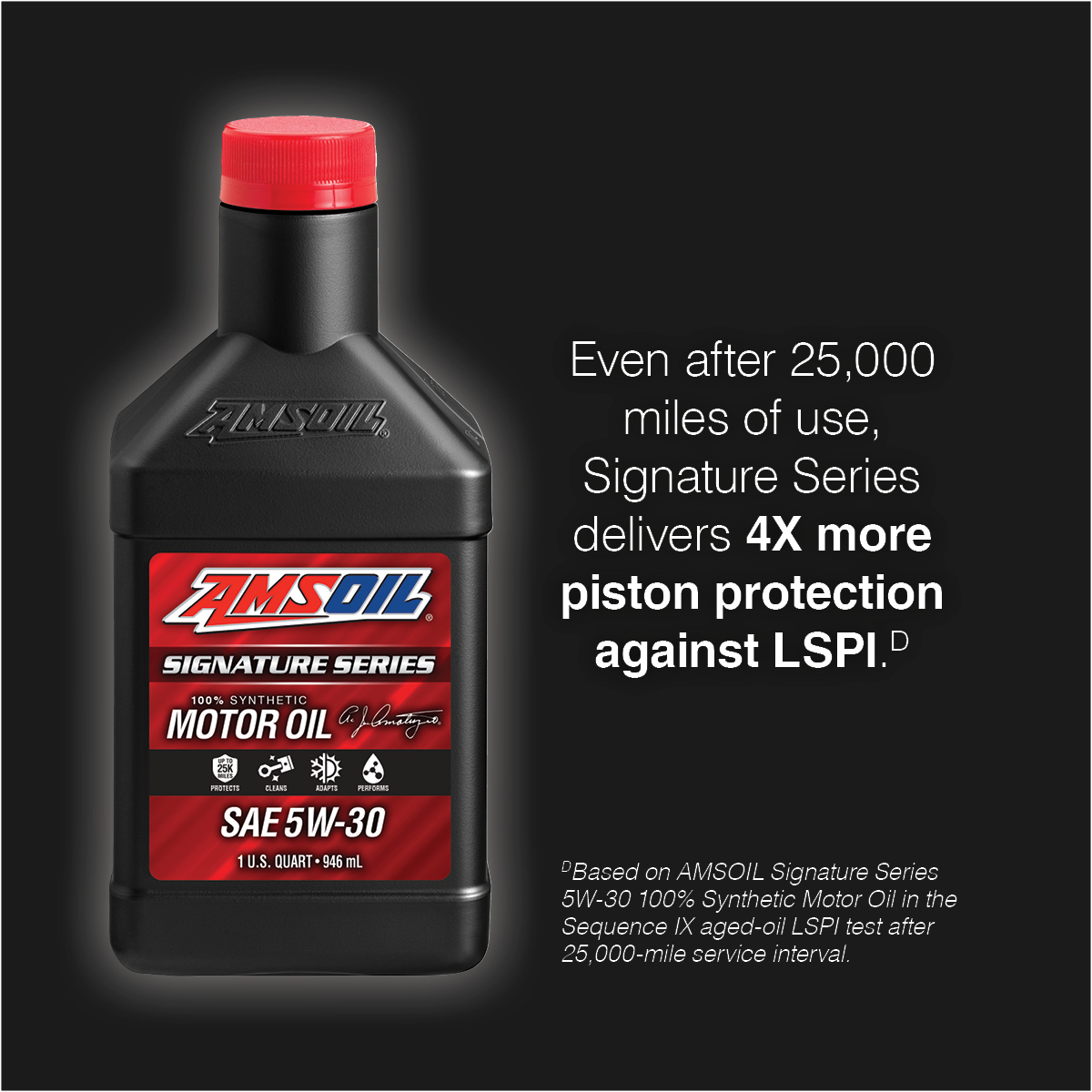
The scientific balancing act confronting oil engineers is not easy. Vehicles need motor oils that deliver excellent wear protection, resist the increased heat of modern turbocharged engines, prevent deposits and combat LSPI. But it’s the performance of the entire oil formulation that matters, not just one or two ingredients. AMSOIL Signature Series 100% Synthetic Motor Oil delivers 4X more piston protection against LSPI than the industry standard requires, even after 25,000 miles of use in the Sequence IX aged-oil LSPI test – see image below.
API SQ, ILSAC GF-7 and GM dexos
Next-generation motor oils need to pass an LSPI test to meet these new demands. General Motors was first out of the gate and required oils to pass its own LSPI test. Its GM dexos1 Gen 2 specification took effect Aug. 31, 2017. GM dexos1 Gen 3 arrived in 2021 to further address the challenges that smaller, higher-powered engines present, and it replaced Gen 2. According to GM, dexos1 Gen 3 oils exceed the performance of Gen 2 oils and are backward compatible, so vehicles that previously used dexos1 or dexos1 Gen 2 should use a licensed dexos1 Gen 3 or dexos R oil of the appropriate viscosity grade at their next oil change. GM’s current specifications are dexos1 Gen 3, dexos R, dexos2 and dexosD.
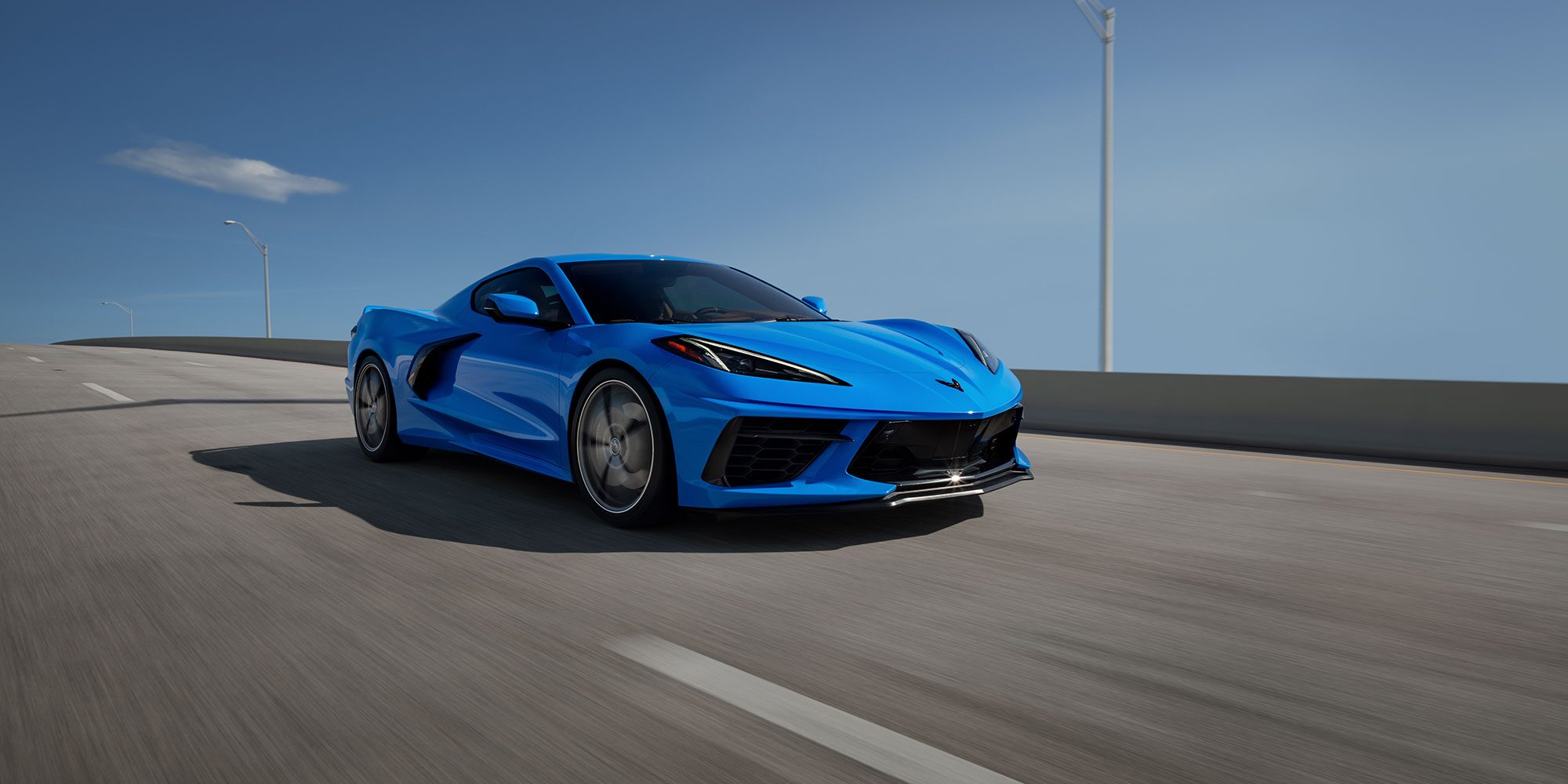
In 2022, GM launched a new dexos R motor oil specification covering 0W-40 and 5W-50 motor oils that can withstand the rigors of high-speed and high-load conditions created during high-performance driving. It was developed for high-performance engines like those in the Corvette*. GM says dexos R oils meet or exceed the performance of dexos2 and dexos1 Gen 2 and Gen 3 oils and are backward compatible, so gasoline engines that used those oils may use a licensed dexos R oil of the appropriate viscosity grade.
These advanced engines with high power density, forced induction, multi-point fuel injection, cylinder deactivation and emissions systems are driving demand for more advanced lubricants. Modern high-performance vehicles push engine technologies to another level, requiring a motor oil that can protect components operating continuously under extreme heat and high-load conditions.
AMSOIL Signature Series 0W-40 and 5W-50 are recommended for applications that require GM dexos R.
The latest American Petroleum Institute (API) specification, API SQ, and the latest International Lubricants Standardization and Approval Committee (ILSAC) specification, GF-7, were first licensed on March 31, 2025. They replaced API SP and ILSAC GF-6.
Like GF-6 before it, ILSAC GF-7 is split into two parts. GF-7A covers the traditional viscosity grades and is backward compatible with earlier specifications. GF-7B covers the ultra-low SAE 0W-16 grade. Both versions focus on wear protection, prevention of LSPI and improved engine cleanliness.
Engine oils can be identified as ILSAC GF-7A or GF-7B by the API emblem on the front label. A shield represents GF-7B, while the traditional starburst indicates GF-7A. Both meet API SQ, which appears in the API service symbol on the back label.
GM dexos1 Gen 3 highlights
GM dexos1 Gen 3 highlights include…
Updated performance standards for deposit and sludge control
Revised stochastic pre-ignition (SPI) test
Fuel-economy test with backward compatibility with previous GM specifications
Engine tests
GM made significant changes to align with ILSAC GF-6, the U.S. auto industry’s specification that launched on May 1, 2020. Gen 3 includes many of the GF-6 engine tests, plus additional requirements. An exception is the Sequence IIIH Test that is being replaced by the GM Oxidation and Deposit Test with tighter limits than previous generations.
The Sequence VH Sludge Test will also be strict to promote improved engine efficiency and cleanliness. In addition, GM will carry over many Gen 2 methods, including a test for turbocharger deposits at stricter limits. Finally, Gen 3 includes a new fuel-efficiency test using a Chevrolet* Silverado*.
Bench tests
In addition to engine tests, changes are being made to some key bench tests and rules for running tests. Notably, the Noack volatility limit will be changed from 13% to an average of 12.5% on three test runs.
AMSOIL and the latest specs
AMSOIL Signature Series, OE, Extended-Life, High-Mileage, Hybrid and Synthetic-Blend motor oils include grades recommended for applications that require API SQ, ILSAC GF-7 and GM dexos1 Gen 3. AMSOIL Signature Series 100% Synthetic Motor Oil 0W-40 and 5W-50 are recommended for applications that require GM dexos R. Check each product’s data sheet for the grade and specifications that match your vehicle.
AMSOIL 10W-40 Synthetic Motor Oil became the first synthetic motor oil in the world to meet American Petroleum Institute service requirements in 1972. We’ve continued developing advanced lubricant formulations to provide our customers with the best protection and performance available for their machines.
Video transcript: Hold On to Your Power
Narrated by Len Groom, AMSOIL Director of Product Marketing, who supports product strategy and technical positioning for automotive, powersports, commercial and original-equipment applications (author profile).
Len Groom: Modern engines provide more horsepower and torque than ever, delivering impressive towing capability, quick acceleration and the confidence to handle demanding workloads. But that performance isn’t guaranteed to last. Over time, internal wear can quietly chip away at engine efficiency, reducing the power you rely on.
AMSOIL Signature Series Motor Oil is built to help engines run stronger, longer.
To evaluate horsepower and torque retention, AMSOIL Signature Series 5W-30 was installed in a 2025 Ford* F-150 Raptor* equipped with a high-output 3.5L engine and run through a 125,000-mile test. Oil changes were performed at 25,000-mile intervals, and dyno sweeps were performed before and after the 125,000-mile test protocol.
As the results show, Signature Series maintained horsepower and torque throughout the entire 125,000-mile test, even under the elevated stresses of a high-output engine.
Hold on to the power you count on every day by ordering now at amsoil.com.
Brad Nelson is an AMSOIL Technical Writer II who develops content about lubricant technology, product performance and vehicle maintenance. He works with engineers and product specialists to translate testing, application requirements and approved performance claims into clear customer guidance. Nelson’s work includes AMSOIL Blog articles, AMSOIL Magazine features and technical explanations concerning motor oils, gear lubricants, vehicle systems and maintenance practices.




Comments
Brad Nelson is an AMSOIL Technical Writer II who develops content about lubricant technology, product performance and vehicle maintenance. He works with engineers and product specialists to translate testing, application requirements and approved performance claims into clear customer guidance. Nelson’s work includes AMSOIL Blog articles, AMSOIL Magazine features and technical explanations concerning motor oils, gear lubricants, vehicle systems and maintenance practices.
Share: