


Back in 2006, original equipment manufacturers (OEMs) offered buyers the choice between an automatic and a manual transmission in 47% of new cars. By 2018, only 2% of vehicles sold had a manual transmission, according to edmunds.com. Today, good luck finding a manual transmission in anything but an enthusiast car.

Video transcript: How Does a Manual Transmission Work?
Featuring John Gardner, ASE Master Certified technician, automotive technology instructor and host of Motorhead Garage, with AMSOIL Director of Product Marketing Len Groom (author profile).
John Gardner: Sitting at a stoplight, revving it up, pop the clutch, and you’re off. Wow. Shifting through the gears and flying. Gotta love it.
Nothing better than a manual transmission. But with it, well, comes a lot of movement. You can see everything down there from the flywheel going through all the gears to the output shaft. Welcome to this AMSOIL Tech Tip.
It’s all about the manual transmission. Where do we start? Well, right here at the input shaft. Now the input shaft comes in, and then there’s all your gears.
The power is gonna go through the counter and then the synchronizer is gonna lock and then what happens it goes to the output shaft. I can show you all the different gears. Here’s first gear right here. Now first gear, you’re coming in through the input shaft, You’re coming down to the counter shaft.
That’s always moving. And then depending on the synchronizer, you can see it’s over here locking this gear to the shaft. That’s first gear. Small gear driving a big gear.
Torque multiplication, first gear.
Now second gear, once again, the input’s coming through, and then I go through almost two gears the same size. Maybe that one’s a little bit bigger, so I’m starting to lose torque and get some speed, but notice the synchronizer’s locking that gear to the shaft. Second gear. Third gear, once again, coming in through the actual input shaft.
It’s locked directly to the output shaft. There’s direct drive, one to one. You’re coming in and going out. And reverse, we just throw another gear in the mix and the output shaft goes backwards.
That’s cool, but I have it for you right here on the table in action. Check this out. I just said it comes in through the input shaft. So the synchronizer’s in the middle.
Nothing’s going on. So what happens if I lock that gear in, now I’m coming in, down, up, and you can see the output shaft is now turning with the input shaft because it’s locked with the synchronizer. Now there’s a lot going inside these manual transmissions, and there’s a lot of problems like leaks, gear problem, noisy teeth, and shift forks. Len,
There’s a lot going on inside of there.
Len Groom: Yeah. And it all needs lubrication.
John Gardner: Especially these synchronizers.
A lot of people don’t know they have to bring these gears up to speed. So when I’m moving over, man, they’re actually causing some friction in there.
Len Groom: Right. It acts kind of like a clutch and there’s some frictional characteristics. So when you’re building a gear lube, you’ve got to really watch what you’re doing because there’s so many things going on. Just the chopping action of those gears meshing together will tend to chop the oil at a molecular level and it tends to thin out, which can compromise protection.
The synchronizers you mentioned, that acts like a clutch. We need to deal with the frictional characteristics. It can’t be too slippery. It can’t be too grippy, so you have a nice smooth shift.
All of that can be affected by the oil. Heat is also a key factor here as well. So the oil needs to be extremely robust, additized properly to be able to protect that transmission and give you, you know, flawless performance.
John Gardner: Now the synchronizers themselves, now they’re brass and there’s some problems with the fluid as well if you don’t have a good fluid.
Len Groom: At certain temperatures, gear lube can develop an appetite for yellow metal. Right? Unless you formulate for that, which we do. So heat doesn’t necessarily become a problem with our transmission fluids.
John Gardner: And that’s awesome. Just go to AMSOIL.com if you have a vehicle with a manual transmission or an automatic transmission. It doesn’t matter what you drive. They have a product for you.
Even with manual transmissions on the endangered species list, questions about automatic vs. manual transmission fluid still arise. Whether you opt for a stick or a slush box, you want to use the correct transmission fluid to maximize its performance and life.
Three responsibilities of a good manual transmission fluid
Just because they’re less complex than automatics doesn’t mean manual transmissions have simple lubrication requirements. A good manual transmission fluid must serve several roles, including…
1) Enable smooth shifts
Nothing connects vehicle and driver like a smooth-shifting manual gearbox. Enthusiasts won’t tolerate a transmission fluid that interferes with that link.
Here, we have some cross-over between automatic and manual transmission fluid. But they go about enabling smooth shifts differently based on different component architecture.
Most manual transmissions are equipped with synchronizers. As the name suggests, the synchro equalizes its speed with that of the gear being engaged, allowing a smooth shift. Without it, the gears spinning at different speeds would clash as they try to mate.
The synchronizer unit is comprised of two main components: the sleeve and the blocker, or synchronizer ring. When the driver selects, for example, first gear, the sleeve moves to the first gear and locks onto the gear engagement teeth, also known as dogs. Depressing the clutch pedal and selecting second gear results in the sleeve moving the other way and selecting second gear in the same fashion.
Before the sleeve can lock onto the gear, the rotational speed of each must first be synchronized. The friction between the blocker ring and a cone on the face of the gear equalizes their speed, allowing gears to mate without clashing. The entire process happens quickly and goes unnoticed in correctly operating transmissions.

Lubricant viscosity plays a vital role in shift feel.
Viscosity that is too high could prevent shifting until the transmission warms up or result in abnormally high temperatures during operation. Viscosity that is too low could cause the synchronizer and dog gear to engage too quickly, resulting in grinding or hard shifts and abnormal transmission wear.

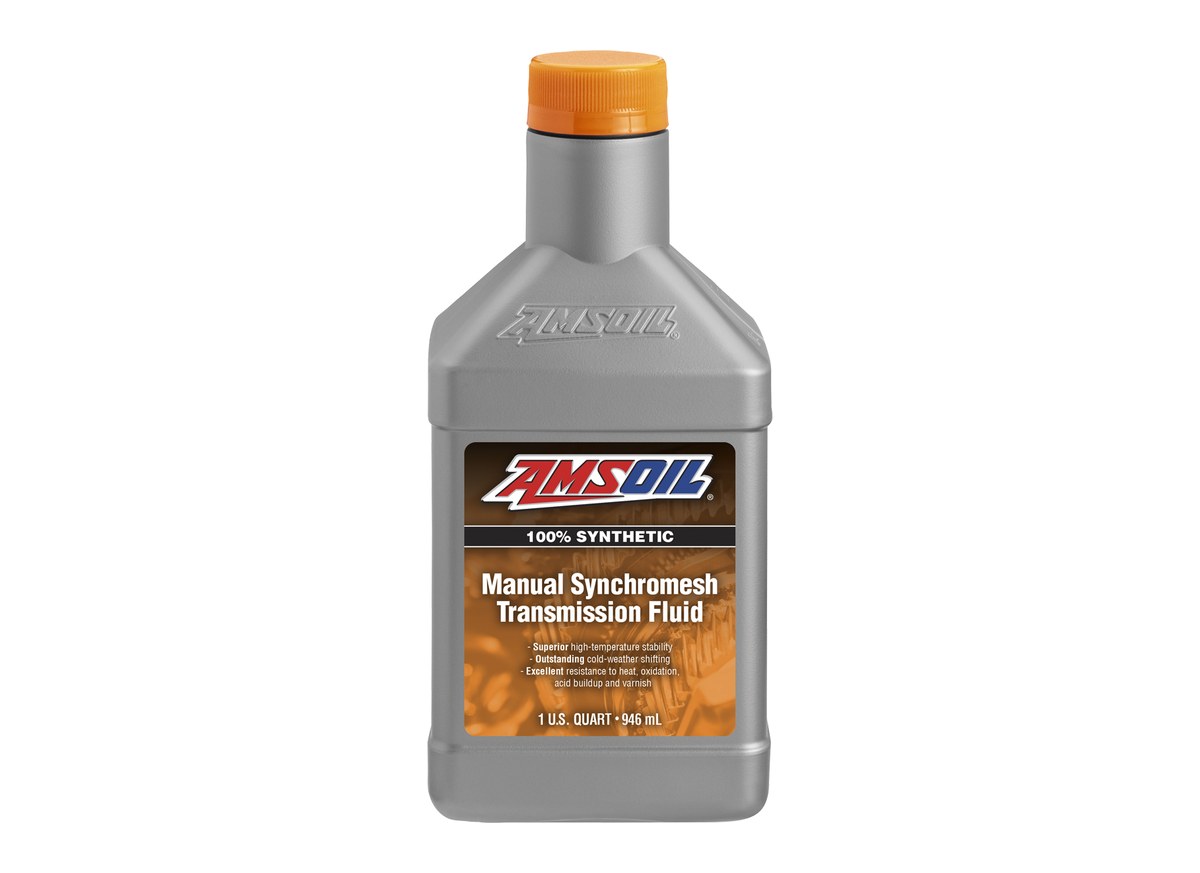
2) Fight wear
Again, manual transmission fluid must protect against wear, just like an automatic transmission fluid. Manual transmission fluid tends to be a higher viscosity than automatic transmission fluid. This helps the fluid develop a thick, durable protective film.
3) Protect brass synchronizers
Synchros are usually made of brass, which is softer than other metals. Certain lubricant additives aren’t compatible with brass and can damage the synchros.
The properly formulated manual transmission fluid for your vehicle will protect synchros to ensure they last as designed and promote smooth shifts.
As you may have figured out, automatic transmission fluid can, in some cases, work fine in manual transmissions.
Four responsibilities of a good automatic transmission fluid
You don’t have to be an engineer to know that an automatic transmission is far more complex than a manual. Fittingly, so is the fluid it requires to function properly.
Automatic transmission fluid must perform several functions, including…
1) Act as a hydraulic fluid
Automatic transmissions use pressurized fluid to change gears. In essence, automatic transmission fluid is hydraulic fluid.
When your vehicle’s computer decides it’s time to shift gears, it sends an electric signal to the appropriate transmission solenoid. The solenoid directs fluid through a complex series of passages in the valve body to engage the correct gear. The fluid squeezes a series of plates together inside a clutch pack to connect the engine to the transmission output shaft and route power to the wheels.

In a properly functioning transmission, this happens instantly and goes largely unnoticed.
However, fluid that’s too thick (its viscosity is too high) can fail to flow quickly for crisp, confident shifts. That’s one reason automatic transmission fluid has a lower viscosity than manual transmission fluid.
Fluid that has accumulated foam can also fail in its role as a hydraulic fluid. The foam bubbles collapse under pressure, causing elongated or inconsistent shifts (not to mention gear wear). For that reason, automatic transmission fluid must contain foam inhibitors.
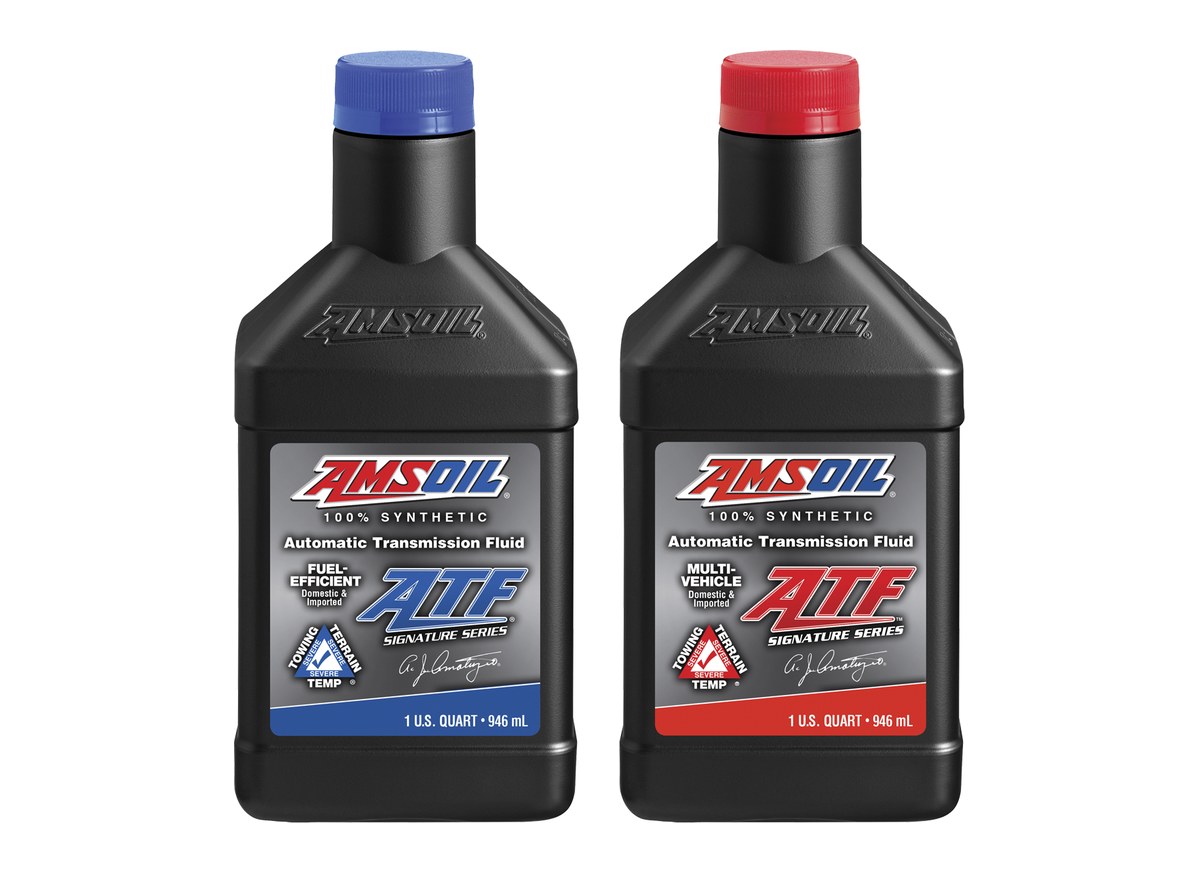
2) Deliver the correct frictional requirements
As noted, pressurized automatic transmission fluid squeezes the clutch packs together to engage the correct gears. These clutch packs are comprised of bare metal plates and plates coated in friction material. Engagement and disengagement must occur seamlessly to provide the driver with the best driving experience.

The fluid’s frictional properties determine whether this complicated choreography of moving metal and fluid creates crisp shifts or has you scheduling a time to change transmission fluid.
As such, automatic transmission fluid is formulated to provide precise frictional properties not required of manual transmission fluid.
3) Protect gears from wear
Automatic transmissions contain an array of sun, planet and ring gears that require lubrication to protect against wear. The fluid must form a durable fluid film on metal surfaces to prevent metal-to-metal contact and wear.

4) Fight heat
Heat is automatic transmission fluid’s number-one enemy. It chemically breaks down the fluid (known as oxidation). Fluid that has broken down leads to sludge and varnish, which can clog narrow oil passages and contribute to clutch glazing. Soon, your vehicle can begin to shift hard, jerk or hesitate.
Automatic transmissions typically run hotter than manuals, meaning the fluid must provide enhanced protection against heat. That’s one reason some vehicles have automatic transmission fluid coolers.
Will automatic transmission fluid work in a manual transmission?
Yes – provided the original equipment manufacturer recommends it. It’s important to check your owner’s manual to make sure before dumping ATF in your manual transmission.
In fact, some manuals may call for a gear lube or even a motor oil in older units.
I should also point out that continuously variable transmissions (CVT), popping up on more vehicles today due to their increased efficiency, take their own fluid. And so do dual-clutch transmissions (DCT), which you’ll find on many sports cars.
Whichever you prefer, AMSOIL formulates a transmission fluid to help maximize transmission performance and life.
This article is part of our Transmission and Gear Oil guide. See every article in the guide.