

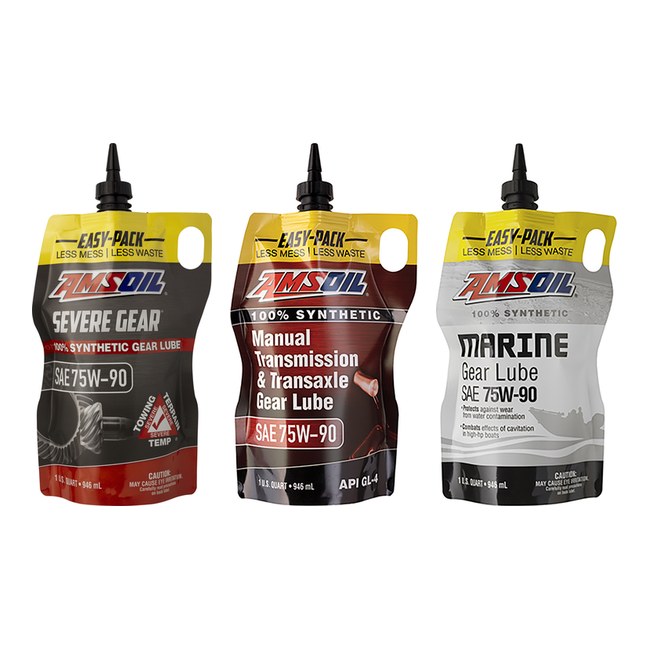
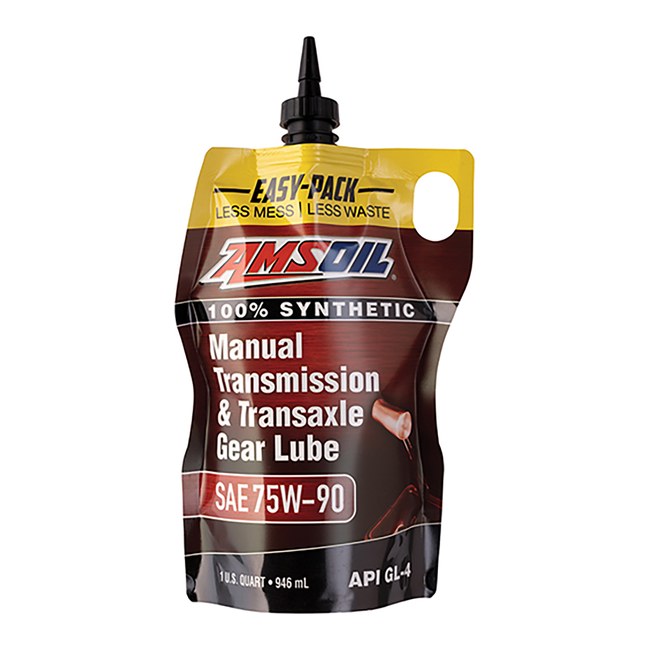

Without the differential beneath your vehicle filled with gears, clutches, bearings and gear lube, your wheels couldn’t rotate at different speeds and traverse different distances when taking a corner, meaning the outside wheel would skip and drag over the pavement.
Video transcript: What’s Going on in Your Differential?
Featuring John Gardner, ASE Master Certified technician, automotive technology instructor and host of Motorhead Garage, with AMSOIL Director of Product Marketing Len Groom (author profile).
John Gardner: Let’s take hundreds and hundreds of horsepower, shove it through this pinion which has to contact this ring gear, and then put the power to the ground. You better have a good oil to do that. Welcome to this AMSOIL tech tip. We’re talking about differentials.
What’s going on inside of there? Well, you can see it right here. The pinion’s coming in from the drive shaft, driving on the ring gear, and we’re getting our power out there. But, boy, there’s a lot of actually torque and stuff going on between those two gears.
So what I wanna do is I actually wanna show you a service and what’s going on here inside of there. We sped it up just for time sake, but we went ahead and took the cover off. Once you take the cover off, you follow your service manual. Everyone’s gonna be a bit different, but you can see the fluid come out of there.
That fluid is only gonna last a amount of time. You’re gonna have to change it after a while. Then you go ahead, clean it off, get you some AMSOIL, brake clean, go in there and clean it off really well. Then you go back, put your bolts back on, make sure make sure you torque it to specification so you don’t have any leaks.
That fluid needs to be changed and it needs to be changed regularly. Now, Len, if this isn’t enough for you, man, this sold me. I know the fluids much more than a package, but you’ve probably done this as well. I mean, you go to put the fluid in there, forget about it.
You’re not gonna get it in there. It just depends on the differential location. This one’s actually an easy one and you still you can never get the whole bottle in there. So what do you do?
Take the top off, switch it over, try to fill the other bottle. You’re making a mess in a shop. Not a good idea.
AMSOIL, well, just this easy. Take it up there, man, the bottle actually fit no matter where we wanted to put it and bam, you’re done. That’s enough to sell me, but I know the fluids much more than that. So talk to us about the fluid.
Len Groom: You know what I’m talking about this easy pack? Yeah. We could put whatever we wanted in here and people would use it because it is so convenient. That was a great video.
Absolutely. The gear lube that’s inside of that package though is also very very special. What you described all of those pressures and all of that action that happens inside of that gear, oil is jammed in between those gears. There’s a lot of pressure.
There’s a lot of wiping that’s happening. Proper additive formulation, good strong base oils, as you’ve heard me say before, they are highly highly important. So you want to make sure you’re using the right oil, making sure that all the gaskets are good, making sure you don’t have any water intrusion or any of those things to make sure that you’re protected. Yeah.
John Gardner: Well, whether it’s gear oil or any kind of oil products, go to AMSOIL.com and you will be protected.
Not good for vehicle handling or tire maintenance.
So engineers developed the automotive differential, which we can organize into three general categories. Here, we present the basics of each and what you need to know to ensure your differential delivers years of solid performance.
1) The open (or standard) differential
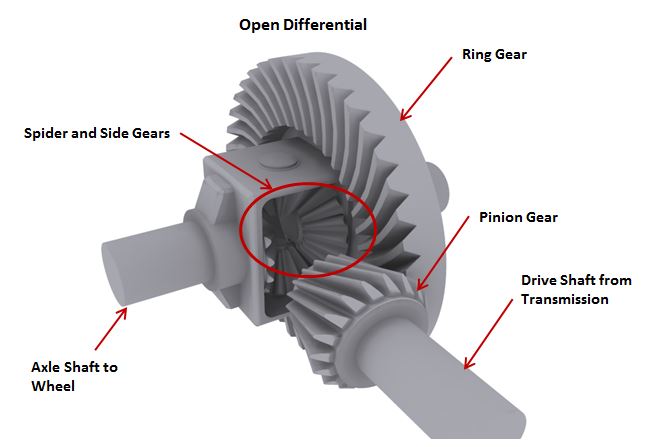
Your pickup, SUV or rear-wheel-drive car likely has an open, or standard, differential.
A carrier holds a ring gear and spider and side gears. When you take a corner, the spider and side gears allow the outside wheel to travel faster and farther than the inside wheel, resulting in a smooth, safe ride.
- PROS: Cost-effective, excellent option for most stock vehicles. Provides predictable handling, reduced tire wear and little maintenance.
- CONS: An open differential directs power to the wheel with the least resistance. Anyone who’s driven on snow or ice quickly finds out what this means – one wheel can spin wildly while the opposite wheel receives insufficient power to move the vehicle, leaving you stuck.
2) The clutch-type limited-slip differential
A clutch-type limited-slip differential attempts to solve the fatal flaw of the open differential, though it’s not a perfect solution.
When driving on a firm, dry surface, a limited-slip differential sends equal power to each wheel. But, when you hit the patch of ice or pit of mud that could leave a vehicle using an open differential spinning one wheel and going nowhere, a limited-slip differential supplies some torque to the wheel with grip, giving you a better chance of getting out of trouble.
A limited-slip differential commonly uses clutches to transmit torque between wheels. It’s effective enough to get the job done in most scenarios despite not achieving 100-percent lock-up.
Those clutches can slip, however
Clutch-based limited-slip differentials are ingenious devices, but they present a unique problem.
When both wheels have ample traction, the clutch plates bind together tightly, sending consistent power to each wheel.
When one wheel slips, however, additional power is sent to the other wheel based on the frictional properties of the clutch packs. This is where the gear lubricant’s frictional properties play an important role in performance and wear.

However, differential manufacturers use different spring pressures and clutch disks made with different materials and surface areas.
Additionally, spring tension and clutch friction properties change with age and wear. Consequently, frictional requirements of the fluid can vary. And if the frictional properties are not correct, abnormal clutch engagement and disengagement – called chatter – can occur.
Quit your chattering
Chatter is when the clutches repeatedly alternate between slipping and sticking instead of smoothly slipping. Chatter not only generates annoying noise and vibration, it causes premature wear.
- PROS: Automatically distributes a percentage of the power to the wheel with better traction, helping eliminate getting stuck on low-traction surfaces.
- CONS: More expensive and can “chatter” if the fluid doesn’t provide the correct frictional properties.
Instead of formulating multiple gear oils of the same viscosity, but different frictional properties to address occasional chatter in limited-slip differentials, you can use a gear-lube additive that alters the fluid’s original frictional properties and eliminates chatter.
AMSOIL synthetic gear lubes are already additized to account for the vast majority of applications. For unique cases where extra additive is recommended, we offer AMSOIL Slip Lock®.

3) The locking differential (or “locker”)
A locking differential uses mechanical devices to literally lock the two axles together. The wheels turn at the same speed and receive an equal distribution of torque.
Lock up can occur manually or automatically depending on the unit. With the axles locked together, both wheels turn at the same time with the same amount of torque. That means one of them can still gain traction and move the vehicle if the other is suspended off the ground, for example in an off-road situation.

While lockers offer tremendous traction, particularly when driving off-road, vehicle handling suffers.
Automatic lockers can send power to individual wheels in stages, resulting in a “ratcheting” effect. They can also disengage suddenly, affecting handling. Lockers are usually reserved for off-road applications and used when moving slowly.
- PROS: Provides maximum traction in the toughest conditions for off-road vehicles.
- CONS: Can be noisy; reduce handling when the differential is locked.
What gear lube should I use?
Check your owner’s manual to find out which type of gear lube to use and how often to change it. Many manufacturers recommend a gear lube that meets specific performance or industry specifications, for example API GL-5.
You can also use our handy Product Guide to find the correct AMSOIL gear lube for your vehicle.
Regardless which type of differential you have of those listed here, use a high-quality synthetic gear lube. Many manufacturers now install synthetic gear lube at the factory and recommend it as the service fill.
That’s because modern differentials direct increased power and torque to the wheels compared to their predecessors, yet the differential gears and bearings remain largely unchanged. Plus, many differentials use less gear lube and lower viscosities than before in an effort to reduce drag and increase fuel economy. In essence, less gear lube is responsible for providing more protection.
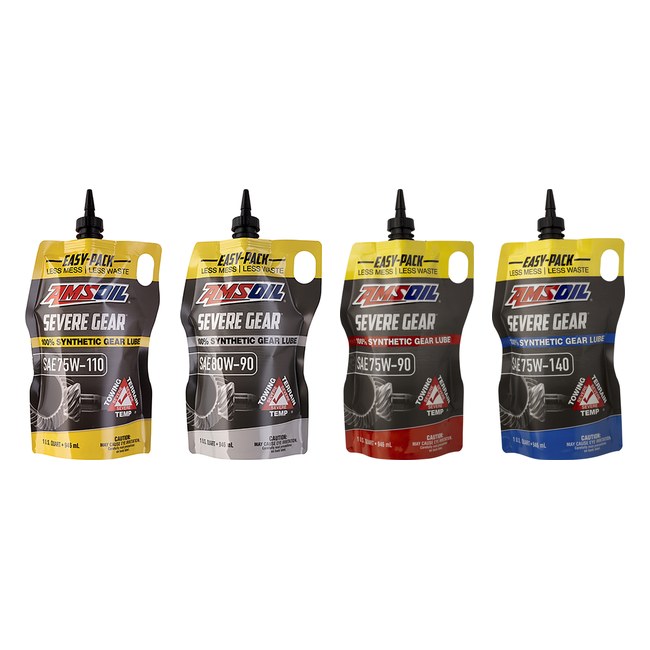
AMSOIL SEVERE GEAR® Synthetic Gear Lube is specifically designed for severe service. Its high viscosity index helps it lubricate better in cold conditions and maintain adequate viscosity to protect gears and bearings under high heat. It also costs less than most OEM-branded gear lubes.
Fighting the grind
Differential designs have inherent weaknesses. In a traditional automotive differential, the pinion gear concentrates intense pressure on the ring gear. As the gear teeth mesh, they slide against one another, separated only by a thin layer of lubricant.
The repeated stress the lubricant film bears can shear gear lubes, causing permanent viscosity loss. Once sheared, the fluid film weakens, ruptures and allows metal-to-metal contact, eventually leading to gear and bearing failure. Severe-service applications, like towing, amplify the situation.
Thermal runaway
The extreme pressures and temperatures placed on gear lubricants can also lead to a serious issue called thermal runaway.
As temperatures in the differential climb, some gear lubes lose viscosity and load-carrying capacity. When extreme loads break the lubricant film, metal-to-metal contact occurs, increasing friction and heat. This increased friction and heat, in turn, results in further viscosity loss, which further increases friction and heat.
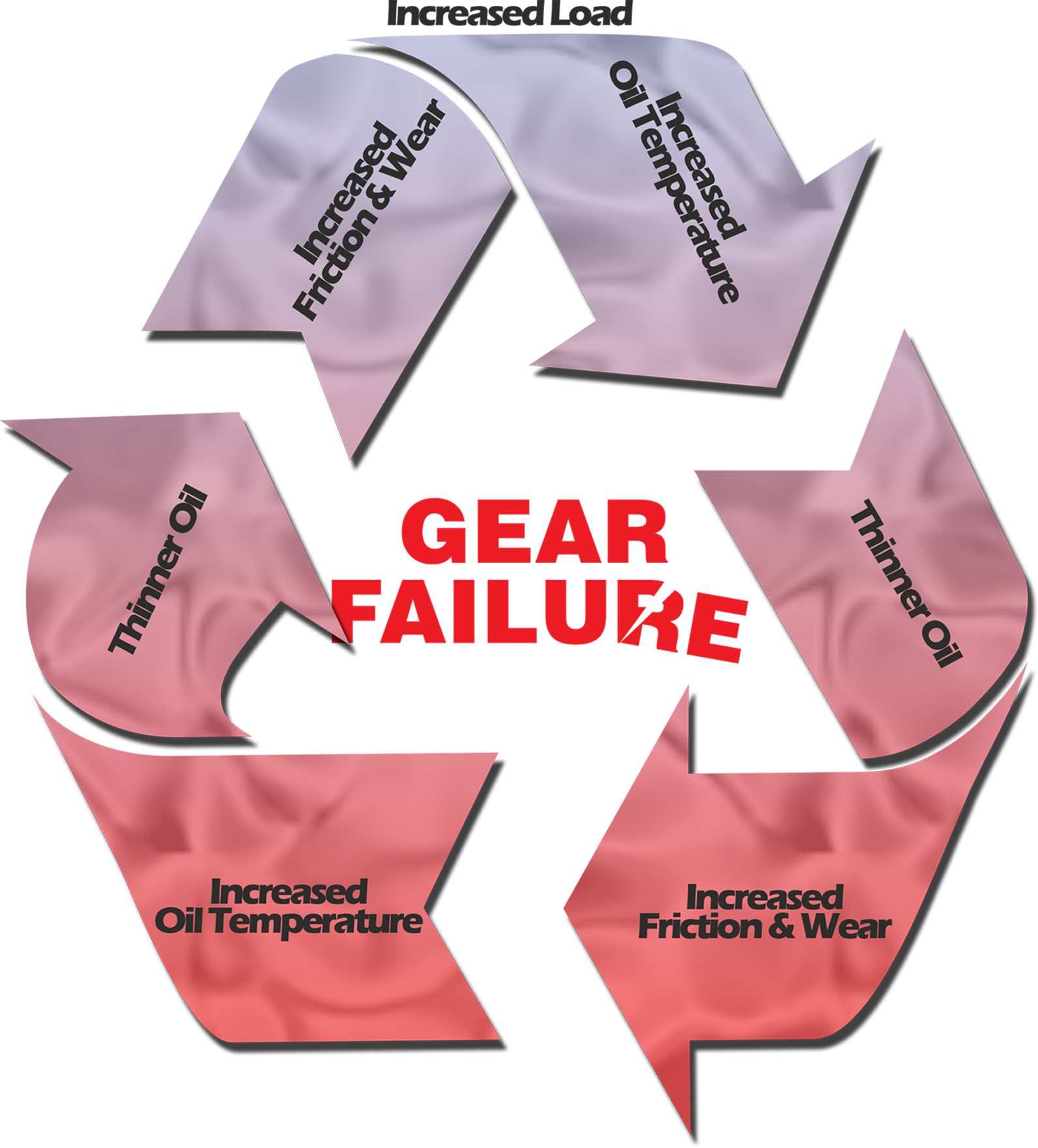
As heat continues to spiral upward, viscosity continues to spiral downward. Thermal runaway is a vicious cycle that leads to extreme wear and eventually catastrophic gear and bearing failure.
Severe-service operation requires more frequent differential fluid changes. Most vehicle manufacturers recommend changing differential fluid every 150,000 miles in normal service but dramatically reduce the change interval to every 30,000 miles when towing frequently at temps above 70ºF. That applies to anyone who pulls a camper, boat or trailer during warmer months.
Keep it cool
AMSOIL SEVERE GEAR is designed to resist breakdown from extreme heat, helping prevent viscosity loss and acid, carbon and varnish formation. Its wax-free formula also improves cold-flow properties for better cold-weather performance.
SEVERE GEAR is also available in the award-winning AMSOIL Easy-Pack. Its flexible design makes performing tricky, hard to reach gear-lube changes easier, faster and cleaner. No more busted knuckles, annoying gear-lube pump and rigid bottles that waste half the fluid.
• Superior film strength to maintain viscosity
• Reduce temperature to control thermal runaway
• Protect against rust and corrosion
• Flexible Easy-Pack for fast, clean installation
This article is part of our Transmission and Gear Oil guide. See every article in the guide.

Comments
Brad Nelson is an AMSOIL Technical Writer II who develops content about lubricant technology, product performance and vehicle maintenance. He works with engineers and product specialists to translate testing, application requirements and approved performance claims into clear customer guidance. Nelson’s work includes AMSOIL Blog articles, AMSOIL Magazine features and technical explanations concerning motor oils, gear lubricants, vehicle systems and maintenance practices.
Share: