

The short answer: it depends on the vehicle. Manufacturer intervals run from about every 30,000 miles to “never” for some filled-for-life transmissions. Check your owner’s manual, and use the severe-service interval if you tow, haul or make frequent short trips. Even a filled-for-life transmission benefits from at least one fluid change.
Motorists sometimes ask, “How often should I change transmission fluid?” It depends on your vehicle and driving habits. Recommended transmission fluid changes run the gamut from every 30,000 miles (48,000 km) to never. Yeah, that’s right. Here are some tips for determining how often to change transmission fluid.
Video transcript: Why You Should Check Your Transmission Fluid
Featuring John Gardner, host of Motorhead Garage, and Leonard “Len” Groom, AMSOIL Director of Product Marketing (author profile).
John Gardner: It’s amazing how a transmission can move a vehicle through multiple gears by using fluid pressure. Welcome to this AMSOIL Tech Tip. We’re talking about the transmission pump. That’s the heart of the system that develops all the fluid pressure inside of the transmission.
Here it is right here. You can see it’s located on the front of the transmission. It’s actually splined to the torque converter and the torque converter is then bolted to the engine. It picks up clean fluid, we hope, Len, and then it circulates it through the system.
But it’s got a pretty tough job to do. So if you give me a hand here, I’m going to try to pull one apart. This is pretty cool. Take that bolt out right there and drop this down.
Hopefully all of our yes. All of our veins and everything’s intact. Talk a little bit about the shear and what’s going on inside of here.
Len Groom: Well, what this pump actually will do to the fluid on a molecular level, and I don’t know that we want to get that crazy today, but what it actually does is it acts like a cleaver. It’ll just chop those molecules up. It’s very, very tough on the oil and what ends up happening then is the oil can get thin and then you can get a pressure loss.
John Gardner: Exactly, and you can see it right here. These are actually a vein stipe pump and these are veins right here. What happens, this is splined to the torque converter, so if I spin it, you can see with centrifugal force those veins are going to sling out and those things are actually pushing the fluid not only around, but we’re going from a big chamber to a small chamber, and we’re developing that pressure, man. Shear is a big problem here.
Also heat. Now heat, man, when it comes to the torque converter, we’re talking about redirected fluid to multiply torque. Manual transmissions don’t even have coolers because they don’t need it because of this guy. This is a major problem.
Len Groom: It is, right. That thing is a giant oven. It cooks the oil like you can’t believe. If the oil can’t hold up to that, it’ll start to oxidize, it’ll start to break down and it can create all kinds of problems downstream like varnish and different things.
John Gardner: Big time. So, it’s important to change your fluid and you want to change it right. Make sure you use the Signature Series Transmission Fluid. Go to their website, check them out there or check one of their local dealers.
Change Transmission Fluid: How Often? Check Your Owner’s Manual
Original equipment manufacturer (OEM) recommendations for how often to change automatic transmission fluid cover a wide mileage range, depending on year, make and model.
Plus, if your driving habits are like most motorists and fall under the “severe” designation (towing, hauling, daily short trips less than 10 miles, etc.), many OEMs recommend changing transmission fluid more frequently.
Here are just a few examples to illustrate the disparity among vehicle makes and models.
| Year/Make/Model | Normal Service | Severe Service |
|---|---|---|
| 2021 RAM* 1500 | Never (filled-for-life transmission) | Change if the fluid becomes “contaminated” |
| 2021 Chevy* Silverado* | Never (filled-for-life transmission) | Every 45,000 miles (72,000 km) |
| 2021 Ford* F-150 | 150,000 miles (240,000 km) | 150,000 miles (240,000 km) |
| 2003 Honda* CR-V* | 90,000 miles (145,000 km) | 30,000 miles (48,000 km) |
These differences illustrate the importance of checking the recommendations in your owner’s manual. It’ll provide maintenance recommendations, typically in a table in the back. Many OEMs provide digital owner’s manuals online, so if you’ve lost yours, try a quick search.
A quick word on “filled-for-life” transmissions.
They’re becoming more prevalent as OEMs seek ways to alleviate motorists from unwanted maintenance. They sound like all upside, but it’s important to change fluid in these units, particularly if you tow or haul.
They’re supposed to last the life of the vehicle, but what do you suppose will happen if the transmission fails once the warranty expires? You’re going to get stuck with a hefty repair bill, that’s what. Be proactive and change fluid at least once during its lifetime.
Change Transmission Fluid: How Often? Go By The Book
Follow the recommendations in your owner’s manual.
But, how many of us dutifully follow them down to the mile? Many motorists completely forget about their transmission until it begins to shift hard, jerk or hesitate. Out of sight, out of mind, right?
Not good, especially if you tow or haul.
Heat Kills Transmissions
Over time, transmission fluid oxidizes (chemically breaks down). High heat generated from towing and hauling speeds the process.
Fluid that has broken down can cause sludge and varnish to form, which clogs narrow oil passages and contributes to clutch glazing. Soon, your vehicle can begin to shift poorly.
In these cases, wouldn’t it be great to use a transmission fluid formulated with reserve protection against heat in case life gets in the way of recommended maintenance?
Why modern transmissions are harder on fluid
Automakers keep adding horsepower and torque, and all of it passes through the transmission on the way to the wheels. Yet today’s transmissions are smaller and lighter than their predecessors, and many use lower-viscosity fluid to help fuel economy. That means thinner fluid protecting a transmission that handles more power and makes more heat.
The fluid is also expected to last longer. Some manufacturers specify intervals of 150,000 miles or more, or no change at all in normal service. “Filled for life” really means filled for the life of the warranty; once it expires, a failure from neglected fluid is your bill. Changing fluid on your own schedule costs far less than replacing a transmission.
Get Reserve Heat Protection For Your Transmission
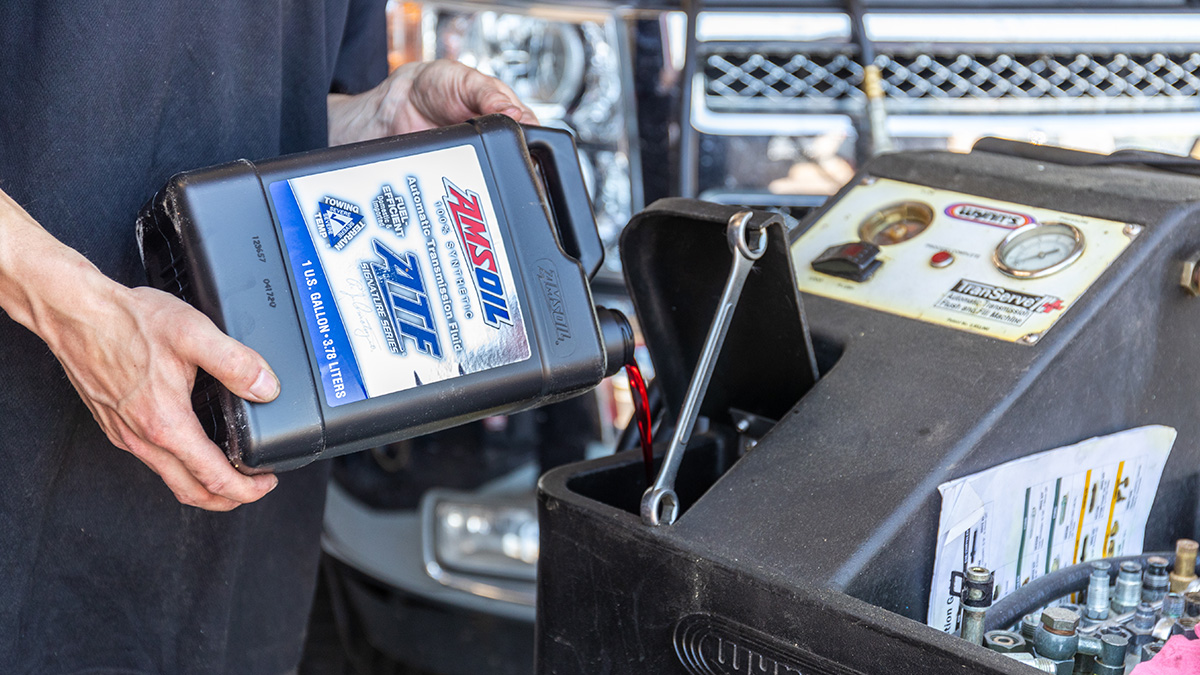
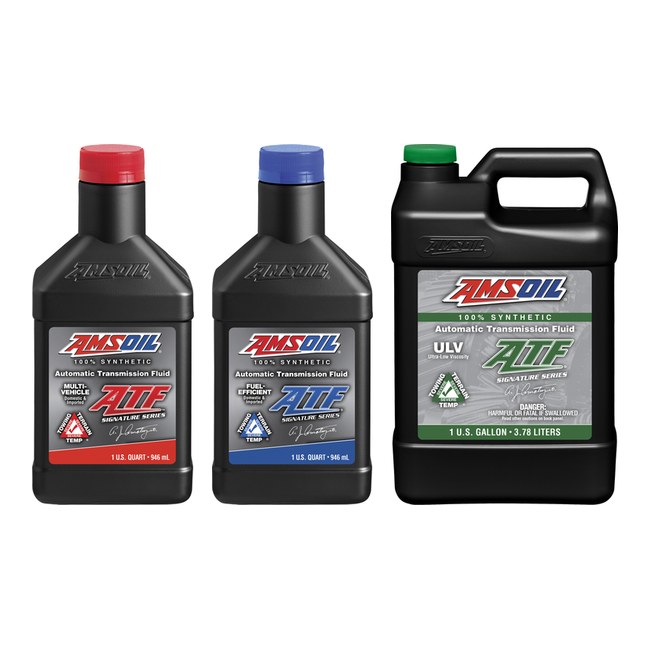
The built-in reserve protection in AMSOIL Signature Series Synthetic Automatic Transmission Fluid means it lasts for 2X the OEM’s severe-service drain interval. That means you can rest assured your transmission is protected, even if service is delayed.
Symptoms Of Low Transmission Fluid
It’s not just heat that leads to poor shifting. Low transmission fluid can also present a number of problems, including…
- Inconsistent, jerky shifts
- Hesitation
- Surging
- Increased transmission temperatures
https://blog.amsoil.com/remember-this-when-trying-to-find-which-transmission-fluid-you-need/
Low Transmission Fluid = Poor Shifting
Transmission fluid serves a number of vital functions, one of which is to act as a hydraulic fluid to enable shifting.
When your vehicle’s computer tells the transmission to change gears, hydraulic pressure (provided by the fluid) squeezes a series of plates together inside a clutch pack to connect the engine to the transmission output shaft and route power to the wheels.
Low fluid can result in the transmission fluid pump drawing air into its inlet. When air and fluid mix, they create foam, which reduces hydraulic pressure and interferes with the crisp, consistent shifts you desire when driving.
Low transmission fluid can also prevent the torque converter from filling completely, which reduces torque transfer and causes hesitation and lost power. In extreme cases, the vehicle won’t even move unless you rev up the engine.
How Much Transmission Fluid Do I Need?
How much transmission fluid your vehicle needs ranges from as few as 8-9 quarts for small passenger vehicles to more than 20 quarts for heavy-duty trucks.
As you do when determining how often to change transmission fluid, check your owner’s manual for the transmission fluid capacity.
You can also check the AMSOIL Product Guide, which shows how much transmission fluid your car needs for most makes and models.
Low Transmission Fluid Can Invite Wear
Transmission fluid also lubricates the gears, clutch plates and seals. It forms a protective layer between meshing gear teeth that prevents metal-to-metal contact and helps reduce wear.
It helps prevent wear on the clutch plates, which bear significant friction during gear shifts. The fluid also lubricates seals and keeps them pliable so they don’t dry out and leak. Find out all the tasks transmission fluid must perform here.
Low fluid can prevent formation of a strong, consistent lubricating film on components, inviting wear. Foam bubbles can collapse when they pass between gear teeth, allowing metal-to-metal contact and further accelerating wear.
Check Your Transmission Fluid
To keep your vehicle running – and shifting – at peak performance, check the fluid about once a month to ensure the correct level. Check out this post on how to check your transmission fluid. If the fluid is consistently low, visit a mechanic to find out why and have the problem fixed.
So, when determining how often to change transmission fluid, follow the recommendations in your owner’s manual. For added peace of mind in case you surpass those recommendations, you can rely on AMSOIL synthetic transmission fluid to deliver reserve protection.
Watch This
This article is part of our Transmission and Gear Oil guide. See every article in the guide.