


The 2023 Performance Industry Racing (PRI) Show is a wrap, and attendees are back home digesting all the latest developments in the racing & motorsports industry. It’s where motorsports professionals of all stripes gather to discuss trends, products, business strategies and more among their peers. The PRI show began in 1986 and has since become the premier trade show for all things racing and performance related.

Like SEMA, PRI is not open to the public. However, the impact it makes is widely reverberated among racers and enthusiasts alike. The PRI Show draws over 1,000 exhibiting companies from around the world to the Indiana Convention Center. There are over 3,400 booths on display and attendance hovers around 40,000. The AMSOIL team was on site with a lot to share.
The 1,000-HP LS
This street-legal engine makes over 1,000 hp and runs on pump gas. – Len Groom

We had a 1,000-hp Supercharged LS Engine on display in the AMSOIL booth, where attendees were given an up-close look at what it takes to produce and maintain a high-performance engine. It generated a lot of interest and excitement over the course of the three-day show.
AMSOIL Sr. Product Marketing Manager Len Groom was on site, adding “This 1,000-horsepower build is the result of a ton of hard work from the team at AMSOIL. We did our best to torture it on our dyno, but our AMSOIL DOMINATOR held up like a champ and the internals remained like new.”

Eight New Products
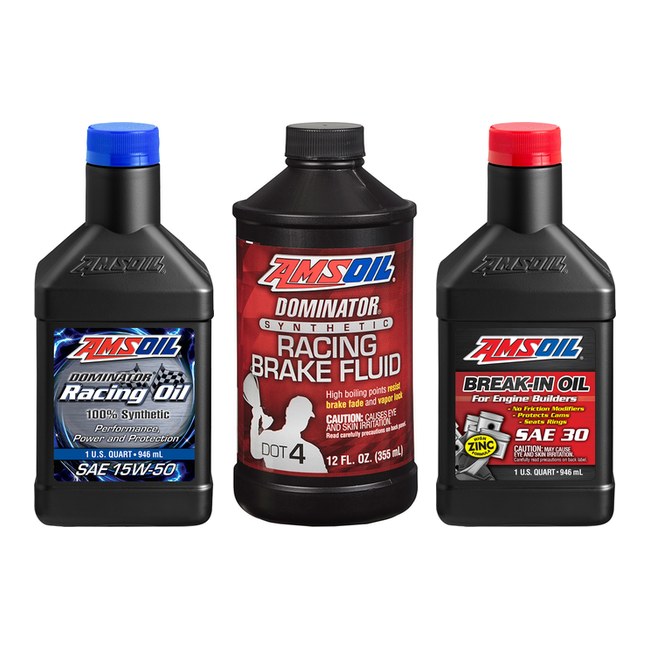
The Featured Product Showcase is another highlight, giving attendees the chance to see what’s new in exhibitor product innovations. AMSOIL had eight new products on display in the 2023 PRI Featured Product Showcase.

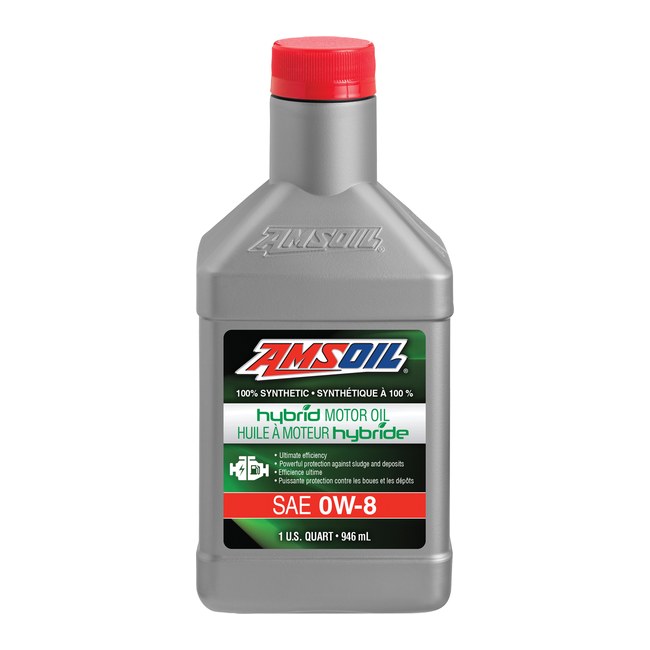
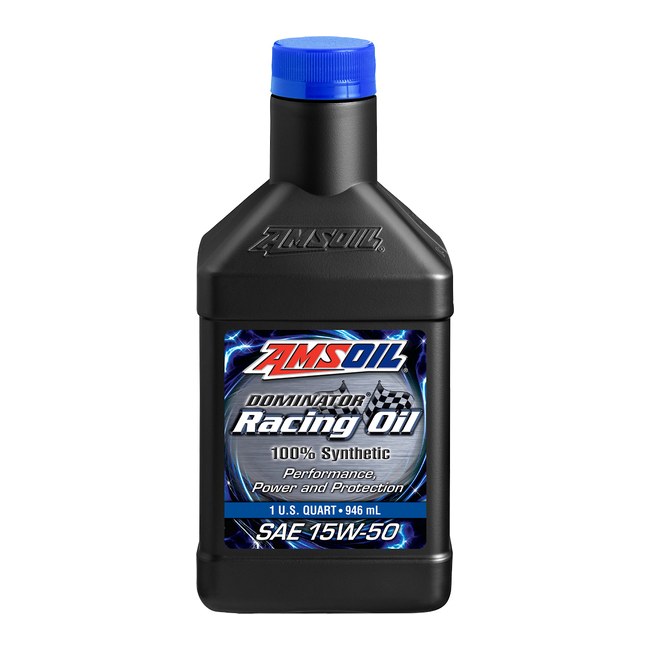
Among hundreds of entries spanning several categories, AMSOIL had the honor of winning two awards. AMSOIL DOMINATOR® 10W-40 Synthetic Racing Oil and AMSOIL 100% Synthetic Hybrid Motor Oil captured the attention of the judges, who deemed both worthy of the “Best Lubricant Product” distinction.

The 2023 PRI Show was a fantastic way for the AMSOIL team to wrap up another exciting year. AMSOIL is well-known in the racing industry, and PRI is the perfect place to showcase our 50 years of synthetic lubrication expertise to those who appreciate the importance of quality products in high-end racing applications.

Check out the video below to discover how AMSOIL products help improve engine performance and protection, no matter how hard you play!
Video transcript: 1,000-hp Supercharged LS Engine Torture Test – Proven Performance
Hey, we’ve been hard at work here at AMSOIL. We’ve built in LS-based engine. It’s making a thousand horsepower. We put it in some cool situations on our dyno, such as drag racing.
Autocross, and even some daily driving. Well, we’ve taken it apart, And we’re here to show you the results. So let’s get into it. We built a motor.
We ran it on the dyno and now we tore it all apart. Garrett, how did we get here. Len, we landed on the LS because it’s a very robust system. It’s very popular, and the aftermarket for it is very deep, which allows us to build this engine how we wanted to build it.
Tell them what the goals were for this engine. Yep. The goals were 1000 horsepower. We wanted to run on pump gas.
We wanted to be able to be driven on the track and also be a daily driver as well. So we ended up running it in three different areas, three different test parameters. We did a drag racing simulator, we did autocross, and then at the very end, daily driving. We took all of those different things and we stuck it all together, which is what kind of made it extreme right.
We did the Drag racing, the Autocross thing, plus we daily drove it. The average person may just do one of those. Exactly. How did we come up with that drag racing profile?
The dyno drag racing profile kind of emulated from what someone would see in a typical season of drag racing. About four weekends, ten passes each weekend totaling 40 total hits. Autocross next. It’s really difficult because it’s so dynamic.
It’s not like going down drag strip at full throttle the whole time. Your throttle is really varying throughout those corners. We based it off of Brainerd International Raceway’s Donnybrook Road course. 2, 2 and a half minutes a lap, three laps, and then a cool down, and we cycled that throughout testing.
Total time on the autocross, do you remember what that was? It was about 8 hours. Last piece of the puzzle was the daily driving We ended up landing on 15 hours for that and that was combination of street driving highway and then freeway too, because you know it’s fun to come down those on ramps full throttle. Exactly.
I know that I would do that if I had a thousand horsepower. It would be as fast as I could go. Me too, Len. And of course staying inside the speed limit.
So Garrett we selected Dominator for this engine, and specifically here we’re talking about the valve train as it relates to the zinc and phosphorus package. Dominator has elevated levels of that. So when you get into the push rod, rocker arm interface area, you’re going to hit a performance level that you need to have that in there or you will see wear. So that was kind of some of our reasoning behind using Dominator instead of the Signature Series on this particular project.
Garrett, we’re standing in front of a table full of engine parts. So after that 25 hours on the dyno, general comments about how this worked? Len, after 25 hours, this engine looks great. The rotating assembly looks amazing, the bearings look good, and the valve train looks great as well.
To get into this thing a little bit deeper, let’s bring in Chris Orr, who actually built this thing. Sounds great, Len. We’ve got Chris Orr here. Chris you are the Mechanical Lab Manager.
Yes, sir. Let’s get into it a little bit. We set out to build a thousand horsepower engine, LS based, and we wanted it to be not something that would just make a thousand horsepower once or twice, but something that would do it consistently for whatever our testing needs might be. You know, we’re in the business, obviously, of testing oil.
We didn’t want to test engine parts. So that was the challenge was to build something that would be durable, something that would run on 91 octane, and we could use it for years to come. You got to start with good foundation. Things have to be round, straight, machining tolerances are key as you make more and more power.
If you don’t have the right tolerance, you don’t have the right clearance, you can put whatever oil you want in it. At that point, it’s not going to work. So we spent a ton of time just making sure all of these high end parts, mind you, were the size that they were supposed to be. For example, crankshaft and rods, the rotator, we selected Molnar Performance.
We’ve got their fully counter weighted, this is actually a billet version of their Crankshaft. Factory Dimensions, OEM rod journals, OEM main journals, good materials and machined correctly. Journals are on dimension, so you can set your bearing clearance correctly. There’s no taper across them when you when you lay the crank in the block, it doesn’t wobble.
It’s true. Same thing with the rods. Tom Molnar his rods tend to be very much on dimension. You look at your side clearances, on your rod journals, which helps develop that oil wedge.
You look at your bearing tolerances. 12 and six, they’re round and they’re straight. And that really helps. And when we’re doing an oil, you know, we’re doing a test where we’re actually looking at the performance of the oil.
All of that critical to getting a good looking bearing. Absolutely it is. And that’s things that, you know, we as assembling it really can’t change. That has to be machined correctly from the beginning.
So so we started we put a lot of time and effort into this thing before it even became an engine. If you remember. Actually bolting the engine together is is a very quick process. It’s all in the design of parts and measuring everything to make sure it’s correct before you put it together.
So once we got that foundation really built and everything was where you wanted it as far as tolerances, measurements, the conversation moved towards, all right, how are we going to get to that thousand horsepower? And you mentioned earlier, you know, we agreed on pump gas. So then we went, oh, how about a Whipple to which, you know, you’ve got some knowledge with. I do, yeah.
I run Whipples in my personal race program I think dating back, the first one I had was in 2011. I’ve run their five liter stuff. I’ve run their old 9.8 liter. This is a three liter modern generation for a thousand horsepower it’s well capable of that without being oversized.
What’s nice about them, they’re a very efficient piece. They move very consistent air. Whipple sells them with the full intercooler. When you’re talking pump gas, keeping your intake air temperature down is very important.
We’ve kind of cleared that pump gas hurdle. The supercharger is going to help us with that. Control system. It’s a fuel injected motor, we selected Holly, tell me a little bit about how that worked.
The Holly system, it worked very, very well. Right out of the gate, they provide canned tune, it wires in very easy. With the detonation concerns and with all the other things we talked about, precisely controlling when that mixture ignites is also critically important. The Holly system provides us the method to tune both the fueling and the and the ignition.
Let’s talk about this thing on the Dyno. So the engines together, we were happy with it. It’s tuned to a certain degree you know, we did three things with this engine, right? It was it was horsepower.
It was autocross. And then it was a decent amount of daily driving was done with this thing. So we started with horsepower pulls, which one could argue was fairly stressful. What was your thoughts on how this thing ran on the dyno?
It ran very, very consistently. Once we got to that thousand horsepower safely, we were able to kind of characterize what that looks like. And then we were just repeating at that point. I remember seeing the dyno pulls, and we both commented on that.
It looked like one line that just kept getting fatter so it was it was fairly consistent as it repeated on those horsepower pulls. And then we threw you a curveball. Then we said, OK, we want to take this thing racing on a track, but we don’t want to put it in a car right right. We don’t have a motoring dyno.
Right, right. So, so the decel is, was interesting, but so you mainly focused on the accel rates or what went into that? I looked at a local track actually. We set up an autocross profile to run through that two and a half mile road course following all the turns we, you know, ballparked the mile an hour that a driving car not necessarily a race car but but but a car that this engine might find its home in might make it around that course in.
And we ended up averaging I think 200 horsepower over the over the two and a half minute lap with a peak up over 800 horsepower. Right. So we were making 800 horse coming out of some of those turns. In a normal car, that doesn’t have good tires on it.
Yeah. It’s not going to go very far. It’s going to spin. Yes.
Absolutely. So we were definitely putting some stress on it. Yeah. When we.
We ran that road course first our oil temperature was going was peaking past 275 heading towards 300 in a matter of minutes. So I mean we were definitely running it hard so. Right. And that was kind of the key for that actual piece of this program was to put some heat in this engine because drag racing, some people don’t understand, it doesn’t put any heat in the oil.
So the last piece of the puzzle was the daily driving. What did we do there? The daily driving ended up looking mostly like a detuned version of the autocross. Because this engine, at the end of the day, we’ll find a home, as you said, in a vehicle that spends time on the street so it couldn’t just run on a dyno or a racetrack.
We had to do that to it. Because the average human is going to drive it to get groceries or pick up the kids, but then also race down the on ramp. Right. It’s a proof of performance so like any proof of performance that we try to do here, we want it to be representative of how something would actually be used in the field.
So we filled it out with that. You guys beat it up on the dyno pretty nicely. We took it all apart and here we stand. How did it come out?
I mean, let’s talk a little bit here about results. Just a conversation. We started on the bearings. Let’s start there.
You can take a look at the bearings and short of a sort of a little bit of a foreign particle that ran through the number one here, and you can see it in the corresponding upper shell. But then we move on. But yeah, I mean, these Start moving down the row here It’s hard to tell these from from new. I don’t think you could get a much better result on the main bearings than what we have there.
So let’s talk about what’s actually going on at this power level and why we were so laser focused on these bearings. What were we really watching for? The elephant in the room is the crank shaft is going to flex. There you go.
That’s what I was looking for. So this thing is not going to stay straight at a thousand horsepower. No, no. The more power you make, the more it’s going to flex.
The key is accounting for it. Yeah. And we did that with bearing clearance. Yep, bearing clearance, and oil viscosity, oil pressure.
What did we what was the tolerance on this? Three and a half on the mains with a 50 weight oil. Moving on to the rod bearings these things are carrying a lot of stress. Well, the rod bearings are, they are like you say they’re pretty well the most highly loaded components in the engine.
So if you want to look for bearing stress. There was a lot of discussion that went into these bearings being uncoated. They’re going to show that they were working. But in your opinion these bearings, these are not bad, these are not beat up.
Certainly not for the conditions. At the end of the test here we have what I’d call just a light polishing. There is no overlay fatigue. There’s no significant wear to the upper bearing.
There’s no indication that these wouldn’t live for a long time to come. You said early on, and it was a statement that I still remember. We’re testing oil, not parts. Right.
It was your idea to dry sump this thing. Let’s explain why we decided to do that. Well, the dry sump, a lot of times you see that in like autocross type of applications or anything with high G-forces side to side. Right.
Obviously, on a on a dyno installation, we’re not going to have that. The reason the real reason behind why I wanted to move to a dry sump system is we’re looking at sustained high RPM. The LS platform uses a crank driven oil pump, which means it spins at crank driven speeds. A lot of engines use, older engines at least, use cam driven oil pumps.
They spin at slower speeds, move higher volumes. The crank driven oil pump can have a tendency to cavitate, especially with sustained high RPM. If you get cavitation, you’re going to put air into your oil supply and air is a lowsy lubricant so it will not produce good looking bearings. And then we’re we’re testing pumps and we’re not testing oil.
Right. And at the end of the day, the oil is going to take the hit for that. And that’s really no fault of the oil. No, that was that was a part selection.
And it’ll be very, very hard to tell what caused that lack of oil there. When we’re looking at the results and we don’t like them. So that was the reasoning behind putting a dry sump on a dyno motor. Let’s talk about pistons.
Let’s talk about how that looked. This is a relatively short skirted piston and the LS are known for when you stroke them a little, they pull the piston out of the block. What do you think? Well, we did an LS X block, number one, I guess out of the gate because that gives us a little bit a little bit longer cylinder that helps the LS three that it’s based on has a factory stroke of 3 6 2 2, 3.622.
We opted for a four inch stroke, which with the longer cylinder bore, puts the piston in relatively the same position that a 3.622 would. In a, in a regular LS block, all in all, like you say, they do pull out the bottom of the bore a little bit. You can see if you get a little bit of rocking this, it’s a J and E Piston. This is a custom piston.
We worked with this dish design here and we’ve got an upgraded pin in it. DLC coated, nice thick wall stuff all for durability in the application. We get a little bit of skirt wear, but dimensionally these aren’t collapsed in any way. They still measure just like they did when they were installed.
The ring grooves are all in excellent condition. Piston rings are all in excellent condition. So there’s and again, the engine vacuum throughout testing was very, very consistent. So we had we had good cylinder seal that wasn’t compromised, so.
These could go right back in. These could certainly go right back in. Yeah. The engine was by no means out of breath or tired in any way.
Right. So people will ask. Why we did why we did that custom piston. And we did that mainly because the compression and the pump gas requirement of this engine.
Absolutely. The bores look really good to. The the little bit of wear that we see in it is from the bottom of the bore, not from the top of the bore where your peak cylinder pressure is. Everything looks really happy up there.
It’s the turnaround on the bottom. Valve train. This is a what I would consider a high end valve train. It is so this is Jesel shaft system Jesel roller lifters DLC coated, very, very nice stuff.
I mean, after all the runtime that we have on it, if you spray the oil off of these and put them in the box, I think you could you can mistake them for new. There’s no way you could tell. No, really are pristine. Got a Trend push rod, custom length for what we needed.
We ran a Manley spring set up, and we ran a fairly high pressure solid roller. We were in the 750 to 800 pounds over the nose. And that’s a chunk. Yeah.
It’s not a that’s not a that’s not a production motor. No, no, definitely not. It’s not a hydraulic roller cam engine. It’s, it’s a solid roller set up to for a valve train that could honestly spin quite a bit higher than we probably ever did.
But our interface here you get some decent amount of pressure and loading that’s going to go between these two surfaces on the intake valve to some extent, even more on the exhaust valve because the exhaust valve has to open against cylinder pressure. And what we what we saw here and what we were looking for, it was no wear here. Yeah. We really have no wear on the push rod tips.
Everything on this. Everything looks very, very, very nice. So and shameless oil plug part of this, that’s where the Dominator oil with that elevated zinc and phosphorus, that zinc really helps to protect that surface, right. Because it’s going to activate in those different areas and that’s what really is going to start separating production type oil that goes in every kind of type of a car to an actual purpose built racing oil.
Cylinder heads on a supercharged motor. We like this AFR why? Yeah. AFR Specifically, again, it kind of goes to my experience.
I’ve run quite a bit of AFR product myself in applications at higher power levels. They have a, they do have, they advertise, it’s big to them and I believe it. They have a very nice thick deck on them that holds a gasket well, we also in this build because we didn’t want to test parts again, we went with a six bolt which an LS engine is typically a 4 bolt design and at a thousand horsepower you’re going to probably get mixed results. If you have any erratic combustion at all, you might get some bad results.
So we were able to upgrade with the six bolt design. And the other deal with these is they are they were actually the Jesel shaft system that we ran is designed for this cylinder head casting. So it was really a nice package to put together something that would be bulletproof. And they do obviously provide plenty of airflow for the horsepower goals that we were looking for with with the given size engine that we had and the RPM that we were looking to run, it worked well.
Well, Chris, I think this was successful. You know, I think we did a pretty good job here of covering our bases. Nothing caught us out of the blue, right? No, I don’t think so.
I think I think the project went well. That’s it for this one. I don’t think we’re done with this engine. So stay tuned for more to come.
Now, regardless of your performance needs, regardless of your oil needs, we’ve got you covered. So check us out at AMSOIL dot com.
This page is part of AMSOIL Racing and Events. See every series, event and show AMSOIL sponsors.
Comments
Jamie Gibson is an AMSOIL administrative professional supporting Marketing and Communications. She contributes customer, vehicle and product stories to the AMSOIL Blog and supports the review, publication and management of technical documents and marketing materials. Gibson’s published work draws on customer interviews, maintenance histories and documented product use to connect lubricant performance with real-world vehicle and equipment experience.
Share: